People mix up sales engagement platforms and CRMs handle completely different parts of your sales process.
A sales engagement platform is for sending outreach, running sequences, and following up.
A CRM is for storing contacts, tracking deals, and managing your pipeline.
If you’re unsure which one your team actually needs, this guide is for you.
In this guide, we will explain the 7 key differences, show the right use cases, and help you understand which fits your team better.
So, let’s begin!
Sales Engagement Platform vs CRM: Quick Comparison
Difference | Sales Engagement Platform | CRM |
Main Purpose | Send outreach, automate follow-ups, get replies | Store contacts, track deals, manage pipeline |
Daily Users | SDRs, BDRs, outbound teams | AEs, managers, RevOps, full sales teams |
Core Actions | Email sequences, calls, LinkedIn steps, reminders | Updating stages, logging activities, forecasting |
Automation | Sequence automation, sending logic, reply handling | Deal workflows, task automation, data updates |
Data Focus | Opens, clicks, replies, sequence performance | Deal value, stages, win/loss, revenue insights |
Communication Tools | Built-in outreach tools (email, call steps, LinkedIn tasks) | Usually requires integrations for outreach |
Role in Workflow | Used before the reply to generate interest | Used after the reply to track progress and close deals |
What is a Sales Engagement Platform?
A sales engagement platform is a tool that helps you send outreach, automate follow-ups, and stay consistent with prospecting.
It’s built for SDRs, founders, and sales teams who need to contact a lot of prospects every day.
With it, you can create email sequences, add call or LinkedIn steps, track opens and replies, and manage all your conversations from one place.
It removes the manual work from outreach and helps you send more messages, stay organized, and get more replies.
What is a CRM?
A CRM is a tool that helps you store contacts, track deals, and manage your entire sales pipeline.
It’s built for keeping all your customer and prospect data in one place, so nothing gets lost.
With a CRM, you can see every deal stage, add notes, track activities, and understand where each prospect is in the buying process.
It’s mainly used by AEs, managers, and teams who need visibility into deals, revenue, and follow-up tasks.
A CRM helps you stay organized, track your pipeline, and manage relationships across the whole sales cycle.
Sales Engagement Platform vs CRM: 7 Key Differences
1. What Are They Built For?
A sales engagement platform is made to help you reach prospects, sending outreach, running follow-up sequences, and getting replies.
It handles all the activity that happens before a conversation starts.
A CRM is made to help you track prospects, storing contacts, updating deal stages, and managing your pipeline from first reply to closed deal.
It handles everything that happens after someone replies or becomes an active lead.
Sales engagement gets the conversation started, whereas a CRM keeps the conversation organized.
2. Who Uses a Sales Engagement Platform vs a CRM Every Day?
A sales engagement platform is used mostly by SDRs and outbound reps, the people sending emails, making calls, and doing daily prospecting.
They spend their day sending emails, adding call steps, checking replies, and running follow-ups.
So they need a tool that’s fast, easy, and built for high-volume prospecting.
A CRM is used mostly by AEs, sales managers, and RevOps, the people tracking deals, updating stages, reviewing forecasts, and checking pipeline health.
Their job is less about sending outreach and more about managing everything after a prospect shows interest.
3. Sales Engagement vs CRM: Core Actions
In a sales engagement platform, your core actions are all about moving outreach forward.
You’re sending sequences, scheduling follow-ups, adding call or LinkedIn steps, and checking who engaged with your messages.
In a CRM, your core actions are about keeping your pipeline updated.
You’re moving deals into stages, adding notes, logging conversations, setting reminders, and reviewing where every deal stands.
Here’s a quick difference of their core actions:
Sales Engagement Platform | CRM |
Send sequences & follow-ups | Update deal stages |
Add call / LinkedIn steps | Add notes & tasks |
Track opens, clicks, and replies | Track deal progress |
Manage outreach workload | Manage pipeline & records |
4. How Automation Works in Each One?
Automation in a sales engagement platform is about keeping your outreach running without manual effort.
It automates email sequences, follow-ups, send timing, call tasks, and reminders so prospects keep moving through your outreach flow even when you’re offline.
Automation in a CRM is focused on keeping your pipeline updated and organized.
It automates deal updates, task creation, data syncing, lead assignment, and reminders whenever a contact moves to a new stage.
Here’s a clear breakdown:
Sales Engagement Platform | CRM |
Automates email sequences & follow-ups | Automates deal stage updates |
Schedules call / LinkedIn tasks | Creates tasks & reminders |
Adjusts send timing & sequencing | Syncs data and assigns leads |
Moves prospects through outreach steps | Keeps pipeline clean & consistent |
5. Type of Data You Get with Sales Engagement and CRM
A sales engagement platform shows data about how prospects interact with your outreach.
For example, you can see:
Who opened your email
Who clicked a link
Which follow-up got the most replies
Which step in your sequence performs the best
For example, if you run a 5-step email sequence, a sales engagement platform will show that Step 3 gets the most replies or that your subject line in Step 1 has a low open rate.
This helps you adjust your outreach to get better results.
A CRM shows data about the deals and revenue moving through your pipeline. For example, you can see:
How many deals are in each stage
Which reps close the most deals
How much revenue you’re forecasted to close
Which deals are stuck or slowing down
Suppose you’re tracking 20 opportunities, your CRM will show that 8 deals are stuck in “Proposal Sent” or that you’re projected to close $35,000 this month.
This helps you manage follow-ups, priorities, and revenue expectations
6. The Channels You Can Use Inside Sales Engagement Platform and CRM?
Another big difference is the type of communication each tool lets you do.
A sales engagement platform gives you real outreach channels you can use directly inside the tool, email outreach, call steps, and LinkedIn steps.
These tools let SDRs send the outreach themselves.
Outreach.io, Salesloft → email + call + LinkedIn inside sequences
Apollo Sequences → emails + call tasks + LinkedIn tasks
Reply.io, Lemlist → multichannel outreach from one place
A CRM doesn’t offer these outreach channels.
It only logs communication after it happens and requires other tools to send anything.
For example:
Salesforce CRM → needs Outreach/Salesloft
HubSpot CRM → CRM alone cannot run cold outreach
Pipedrive, Zoho CRM → need external outreach tools
7. How Each Sales Engagement Platform and CRM Stores and Organizes Contacts?
A sales engagement platform stores contacts mainly for outreach.
You upload prospects, put them into sequences, and track their engagement.
The platform keeps basic information, but it’s mainly focused on helping you work through active prospect lists, not managing every detail of the relationship long-term.
A CRM is your permanent system of record.
It stores every contact, every interaction, every deal, every note, and every stage, all in one place, for the entire customer lifecycle.
This is where teams track deals from first reply to close, and where all past and future touchpoints live.
For example, in Salesforce CRM, HubSpot CRM, Pipedrive, and Zoho CRM, a contact remains in the system with:
full history of emails, calls, and meetings
notes and tasks
deal stages and revenue details
lifecycle status from lead → customer → renewal
Sales Engagement Platform vs CRM: Use Cases
A sales engagement platform is for outreach work.
A CRM is for tracking your pipeline and customers.
Here’s when you should use each one.
Use a Sales Engagement Platform If… | Use a CRM If… |
You need to send cold emails every day | You need to store all your contacts in one place |
You want automatic follow-ups | You want to track deals and stages |
You need call or LinkedIn steps in sequences | You need to log calls, meetings, and notes |
You want to see who opened or replied | You want a clear view of your full pipeline |
You need to manage daily SDR tasks | You need to forecast revenue or check rep performance |
You want faster replies from prospects | You need long-term history for every lead/customer |
How Stamina Replaces Both Your Sales Engagement Platform and Your CRM?
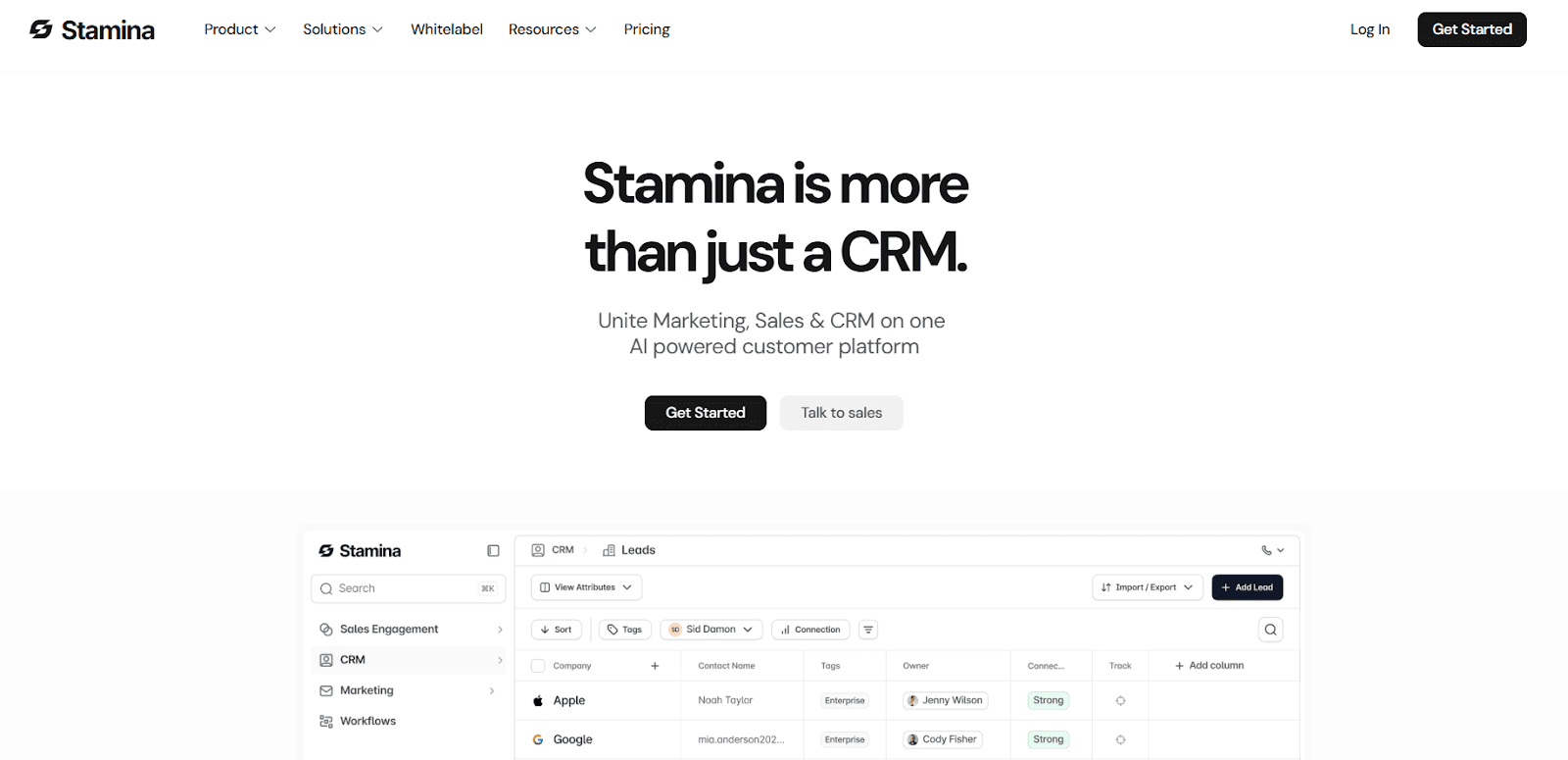
Stamina is a complete sales platform that combines your sales engagement tool and your CRM into one system.
So instead of switching between two tools, syncing data, and managing two databases, you can run your entire workflow in one place.
Here’s how Stamina covers every step from cold outreach → reply → meeting → deal → customer.
1. Stamina acts as your full sales engagement platform
It gives you all the outbound and deliverability tools that SDRs normally need separate tools for.
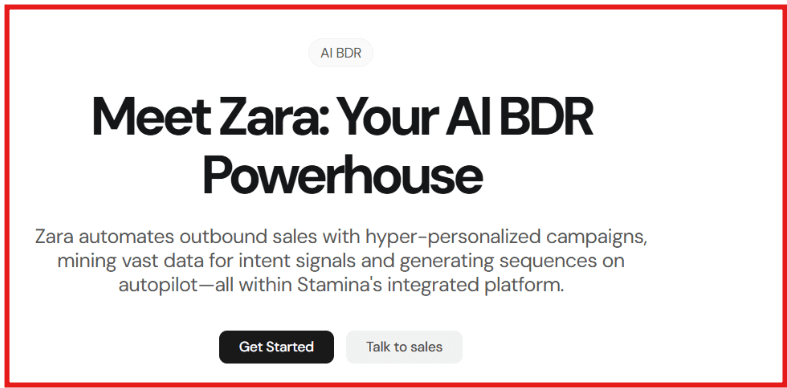
Zara, the AI BDR, handles research and writes personalized sequences automatically. It finds signals like funding, job posts, and case studies, then generates multi-step outreach for you.
You get access to 200M+ verified leads with instant enrichment. You can pull verified contacts and enrich them inside Stamina.
Stamina helps you run email, call, SMS, and LinkedIn steps from one campaign.
Stamina manages warmup, domain rotation, inbox rotation, health scores, and inbox placement tests automatically.
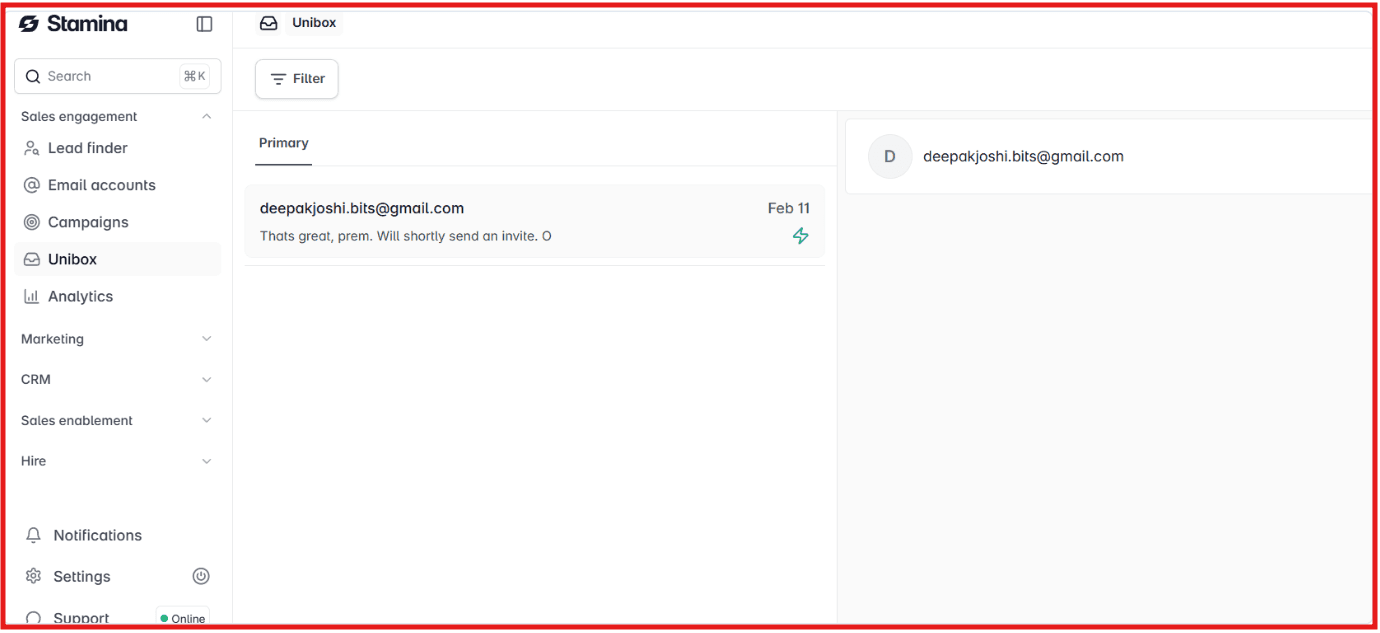
You get a Unified inbox to manage replies from all inboxes and campaigns. Every reply lands in one central place, making it easier to handle responses.
2. Stamina is also your complete CRM
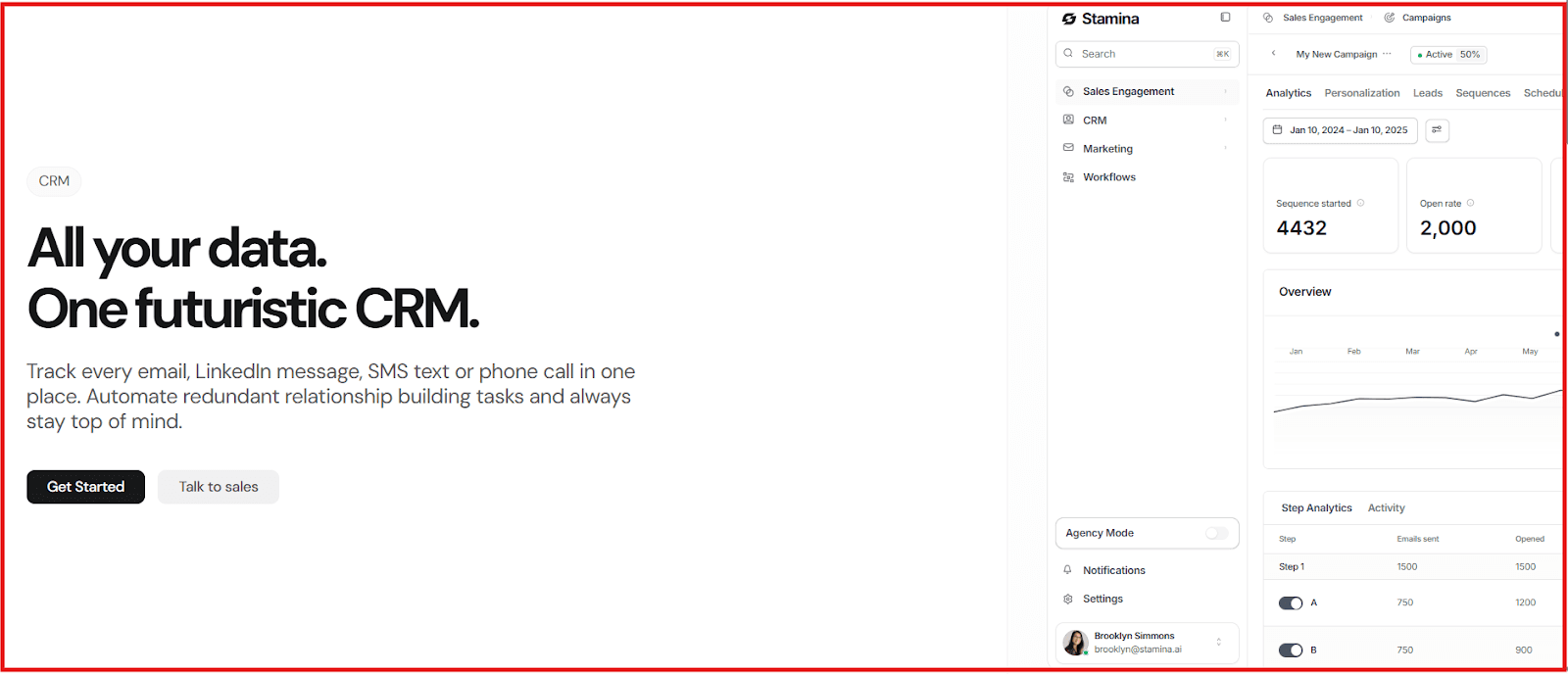
It includes the same structure businesses expect from platforms like HubSpot or Pipedrive.
Every email, call, meeting, SMS, and sequence action is automatically logged.
You can design your own CRM schema, fields, objects, associations, exactly like advanced CRMs offer.
Stamina lets you manage stages, tasks, forecasting, and deal progress inside the CRM.
Calls, texts, emails, and meetings all sync into the CRM in real time.
With AI call intelligence, Stamina transcribes calls, highlights key points, and creates summaries automatically.
3. Stamina also gives you built-in marketing automation
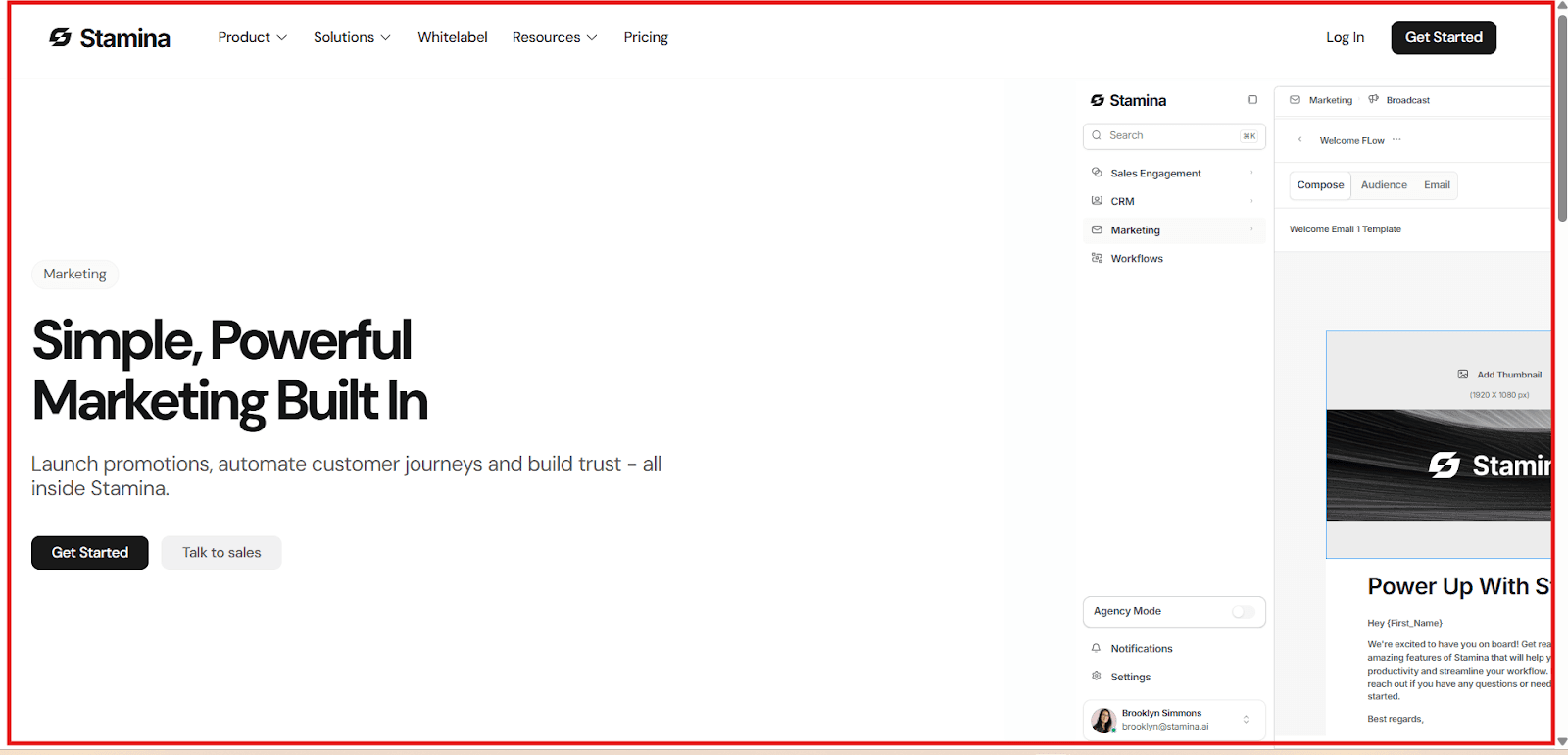
This is something most sales engagement platforms do not offer.
You can send newsletters, onboarding emails, and customer journeys, just like a dedicated marketing tool.
You can trigger actions across sales, CRM, and marketing using one automation builder.
With Stamina, your outreach sequences (sales engagement) and your deal records (CRM) live in the same system.
The emails you send, the replies you get, the calls you make, and the meetings you book automatically update the lead and the deal, without syncing two tools.
Conclusion
When you break down Sales Engagement Platform vs CRM, the difference is simple:
A sales engagement platform helps you send outreach, follow up, and get replies.
A CRM helps you track deals, store contacts, and manage your pipeline.
Most teams use both because they cover two different parts of the sales process.
But running two separate systems comes with constant syncing issues, missing data, and double the admin work.
That’s why tools like Stamina are a better choice, because it doesn’t make you choose.
Stamina gives you:
the outreach, sequencing, and deliverability of a full sales engagement platform, and
the contact management, deals, tasks, and activity tracking of a complete CRM, inside one unified tool.
If you want one system that replaces both your sales engagement platform and your CRM without losing any functionality, Stamina is the best option to start with.
Frequently Asked Questions
1. What’s the main difference between a sales engagement platform and a CRM?
A sales engagement platform helps you send outreach, automate follow-ups, and get replies. A CRM helps you store contacts, track deals, and manage your pipeline after someone responds.
2. Do I need a sales engagement platform if I already have a CRM?
Yes, if you’re doing cold outreach or outbound sales. CRMs can’t run sequences, call steps, or automated follow-ups. A sales engagement tool fills that gap.
3. Can a CRM send cold emails?
Not really. Most CRMs (Salesforce, Pipedrive, Zoho) require integrations. HubSpot can send marketing emails, but the CRM alone can’t run cold outreach sequences.
4. Can a sales engagement platform replace a CRM?
No. A sales engagement tool isn’t designed to store full customer history, manage pipeline stages, or track long-term relationships.
5. Who should use a sales engagement platform?
SDRs, BDRs, founders, and anyone doing high-volume outreach. It’s built for people who need to send emails, make calls, run LinkedIn steps, and follow up consistently.