
You’re probably in one of two situations right now.
Either your team already uses lemlist and the cracks are starting to show. Outreach lives in one tool, pipeline lives somewhere else, marketing runs in another system, and every handoff depends on a sync that breaks at the worst possible moment.
Or you’re buying fresh and trying to avoid that mess altogether.
That’s why lemlist vs stamina.io is a harder comparison than it looks. This isn’t a normal head-to-head between two outreach tools. It’s a decision about how you want your go-to-market machine to work. One approach optimizes a specific job. The other tries to run the whole revenue motion from one place.
Choosing Your Growth Engine Not Just Your Email Tool
Most software comparisons miss the core issue. They compare buttons, channels, and templates. They don’t compare the operating model behind the product.
That’s exactly why this topic is oddly underserved. A review of search results found no direct comparison content between Lemlist and Stamina.io, largely because most articles don’t address the strategic difference between an email-focused point solution and a unified revenue platform, leaving SMBs without guidance on total cost of ownership or the efficiency gains of consolidation, as noted in this market gap analysis.
If you’re a growing SMB, that gap matters. You’re not just choosing where to send cold emails. You’re deciding whether to keep stitching together outreach, CRM, and marketing automation, or move toward a system that treats them as one workflow.
Here’s the blunt version:
Lemlist is a strong tool for creative outbound.
Stamina.io is built more like a revenue operating system.
Those are not the same category, even if they overlap in prospecting.
I’ve seen teams make the wrong choice because they bought for today’s pain instead of next quarter’s complexity. A founder wants better cold email. Three months later the team needs lead routing, nurture, forecasting, campaign reporting, and cleaner ownership across sales and marketing. That’s when the “best outreach tool” turns into one more tab in an already bloated stack.
If your stack already feels tangled, you’re not looking for another feature. You’re looking for less operational drag. That’s the primary lens for this decision, and it’s the same problem behind the broader move toward an all-in-one business platform.
The wrong tool doesn’t usually fail on day one. It fails when your team adds people, channels, and process.
The Point Solution vs The Unified Platform
Lemlist and Stamina.io reflect two very different buying philosophies.
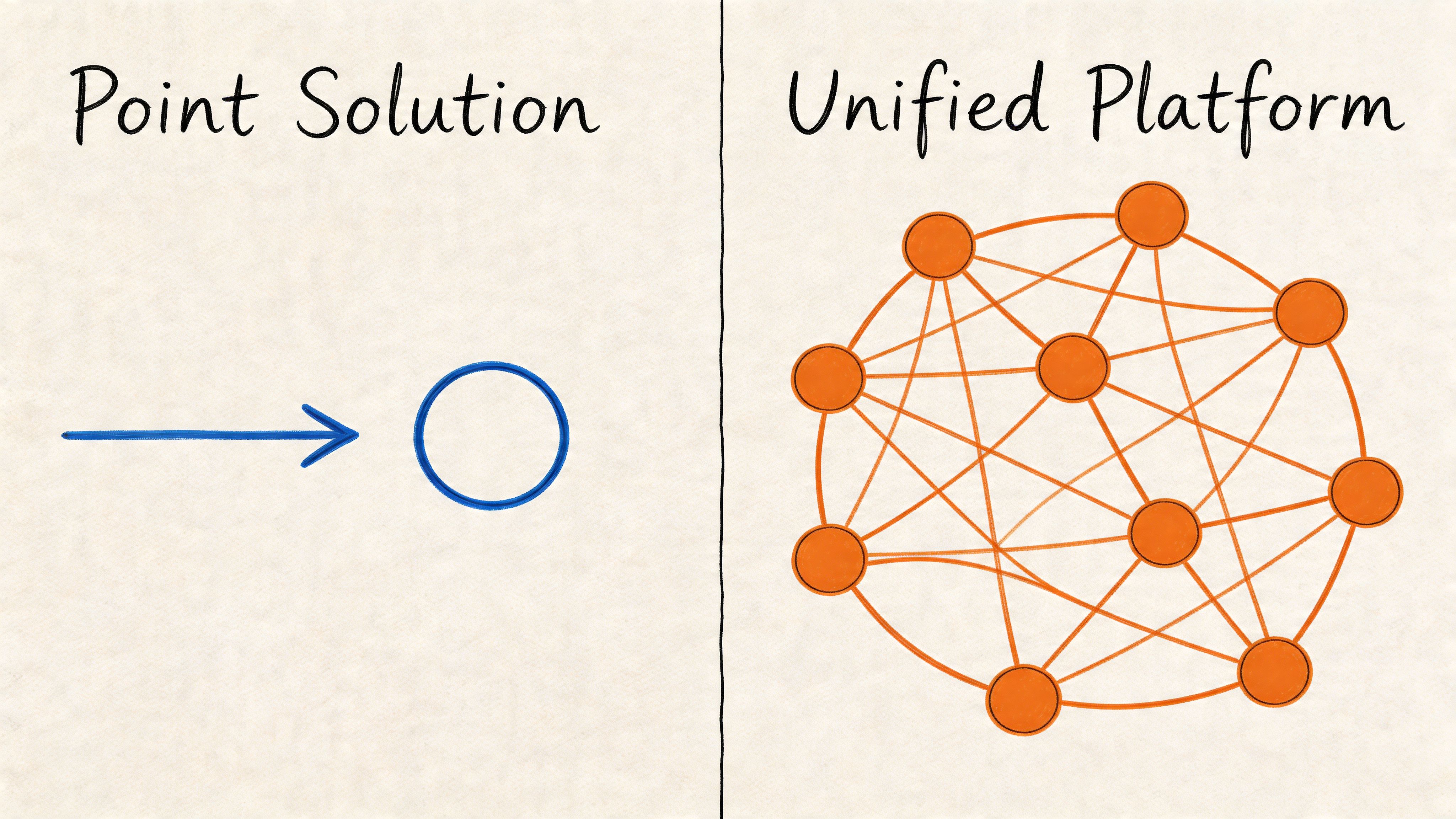
How the two models actually differ
A point solution does one job really well. In Lemlist’s case, that job is personalized outreach across channels like email, LinkedIn, SMS, and calls. It’s the specialist tool in your stack. You buy it because your reps need stronger outbound execution, not because you want to rebuild your entire GTM system around it.
A unified platform takes the opposite approach. Instead of assuming you’ll assemble outreach, CRM, and marketing from separate tools, it puts those functions under one roof. The value isn’t just convenience. The value is one contact record, one workflow layer, and one system of record.
A simple analogy works here. Lemlist is the premium chisel. If you already have the workbench, measuring tools, and storage system, that chisel can be excellent. A unified platform is the integrated workshop. It may not win on one isolated motion in the same way a specialist can, but it reduces friction across the whole job.
That’s the key difference behind the broader debate around a sales engagement platform vs CRM. A specialist tool helps reps execute touches. A unified system helps the business manage the full journey from lead capture to closed deal.
What this means operationally
The practical tradeoff looks like this:
Criteria | Lemlist | Stamina.io |
|---|---|---|
Core philosophy | Specialist outreach tool | Unified GTM platform |
Best fit | Teams optimizing outbound execution | Teams reducing tool sprawl |
Data model | Outreach-first | Shared marketing, sales, and CRM record |
Workflow design | Integrates into a broader stack | Runs more of the stack natively |
Operational burden | Higher if you need multiple connected tools | Lower if you want one source of truth |
Neither model is universally right.
Choose the point solution model if you already love your CRM, your marketing automation is settled, and you only need better outbound. Choose the unified model if your current pain is not “our emails need improvement” but “our revenue motion is fragmented.”
Operator test: If your reps, marketer, and founder each look at different systems to answer “what happened to this lead,” you have a systems problem, not just an outreach problem.
Core Outreach and AI Feature Deep Dive
A founder-led sales team usually feels this choice first. One rep spends half an hour polishing a clever first email in Lemlist. Another rep needs 200 qualified contacts, consistent follow-up, and clean handoff into the rest of the revenue process. Those are different operating models, and these products are built for different ones.
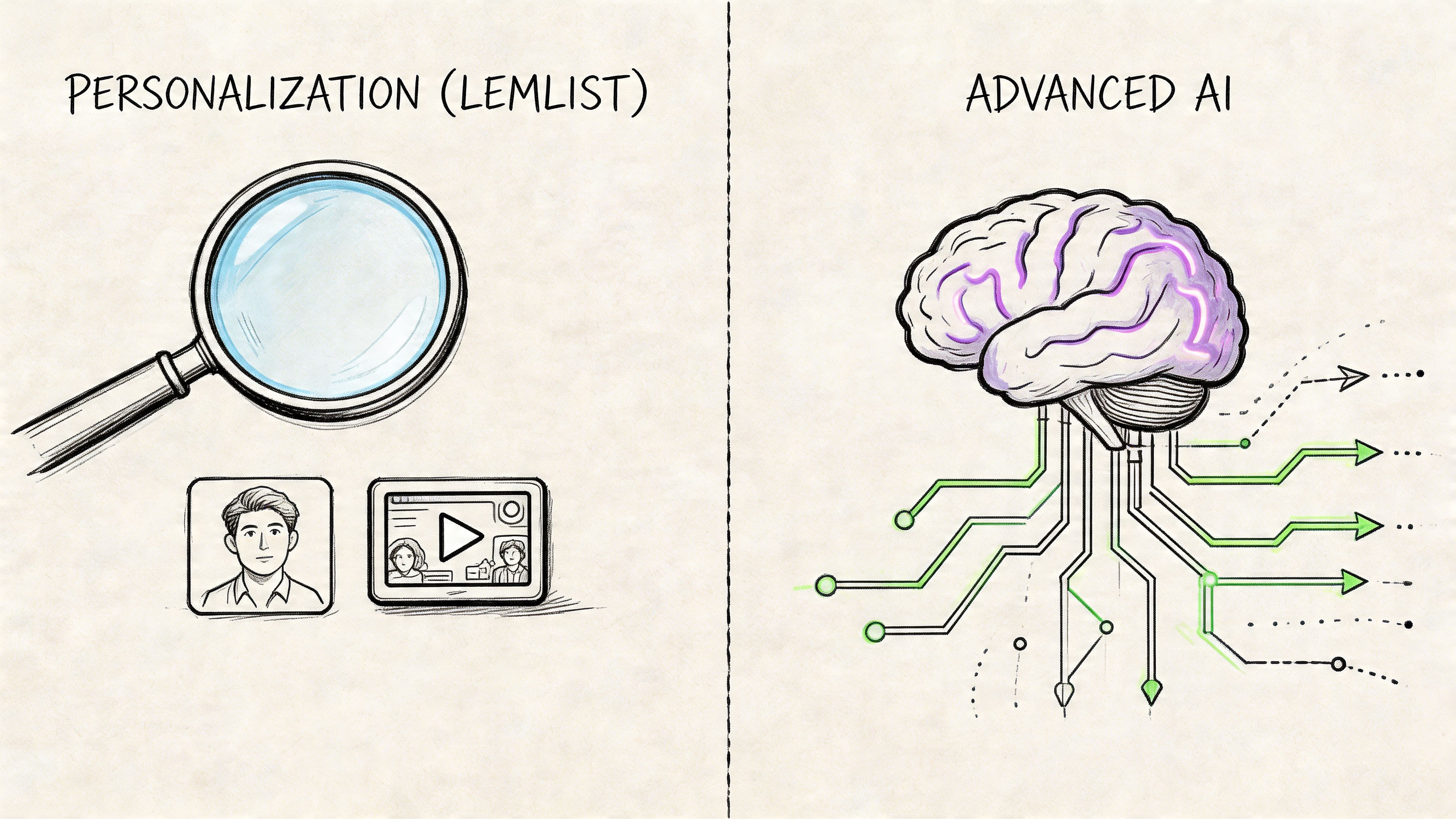
Personalization philosophy
Lemlist is strongest when personalization is the pitch. It built its brand on custom images, personalized videos, and rep-crafted outbound that tries to stand out in a crowded inbox. If you sell into a small list of high-value accounts and want reps obsessing over first-touch creativity, Lemlist fits that job.
Stamina.io takes the opposite approach. Its value is not clever campaign decoration. Its value is reducing the labor around prospecting. AI BDR Zara, built-in lead data, multichannel execution, and automated research point to a system designed to produce consistent outreach without forcing reps to assemble the workflow by hand.
That difference matters because AI is only useful if it removes operational drag. Writing a sharper intro line helps. Eliminating list sourcing, research tabs, copy drafting, and admin work helps more. If you want a broader view of what that should look like in practice, this piece on AI sales assistants lays out the standard clearly.
The core question is simple. Do you want reps doing artisanal outbound, or do you want a machine that produces pipeline with less rep effort?
If you are revisiting campaign design across the whole funnel, this guide to automated email marketing campaigns is useful because it frames the right problem: isolated touches versus behavior-driven journeys.
Sequence building and campaign logic
Lemlist gives reps room to work. That is its edge. Teams can shape multistep outbound around email and nearby channels, adjust copy quickly, and experiment with personalization formats without waiting on a bigger system design.
That flexibility has a cost. Sequence logic mostly lives inside the outreach motion itself, so the team still needs other tools and process rules to connect campaign activity to qualification, pipeline movement, and follow-up outside the sequence.
Stamina.io is stronger when sequence logic needs to reflect the full customer record. Outreach can sit closer to lead status, prior engagement, ownership, and downstream actions. For a small team trying to run outbound, nurture, and basic CRM discipline without adding more software, that is the better design.
Here is the clean recommendation:
Choose Lemlist if your outbound motion depends on rep creativity and your CRM plus marketing stack are already working well.
Choose Stamina.io if your bottleneck is execution consistency and your team is tired of stitching outreach, data, and follow-up together.
Choose Stamina.io if your sales leader also acts as ops, because fewer moving parts usually beats slightly better campaign craftsmanship.
Deliverability and scale
Personalization does not fix weak sending performance.
In a controlled 1,104-lead cold outreach test, lemlist produced a 36.5% open rate and 0.9% reply rate, according to this benchmark comparison. The point is not that Lemlist fails. The point is that creative outbound alone does not guarantee strong results once volume rises and the team needs repeatability.
The underlying philosophy directly impacts the cost. A point solution can look cheaper because the feature list is narrower and the UI feels focused. But if your team must add lead sourcing, CRM syncing, reporting fixes, and workflow cleanup around it, your real cost climbs fast. A unified platform often wins here because it cuts the work around the campaign, not just the work inside the campaign.
My view is straightforward. Lemlist is better for boutique outbound. Stamina.io is better for SMBs that need outreach to behave like part of a system, not a standalone craft tool.
Comparing Workflow Automation and CRM Differences
Most buyers over-focus on first-touch outreach and under-focus on what happens after a prospect engages. That’s where the actual difference between these products shows up.
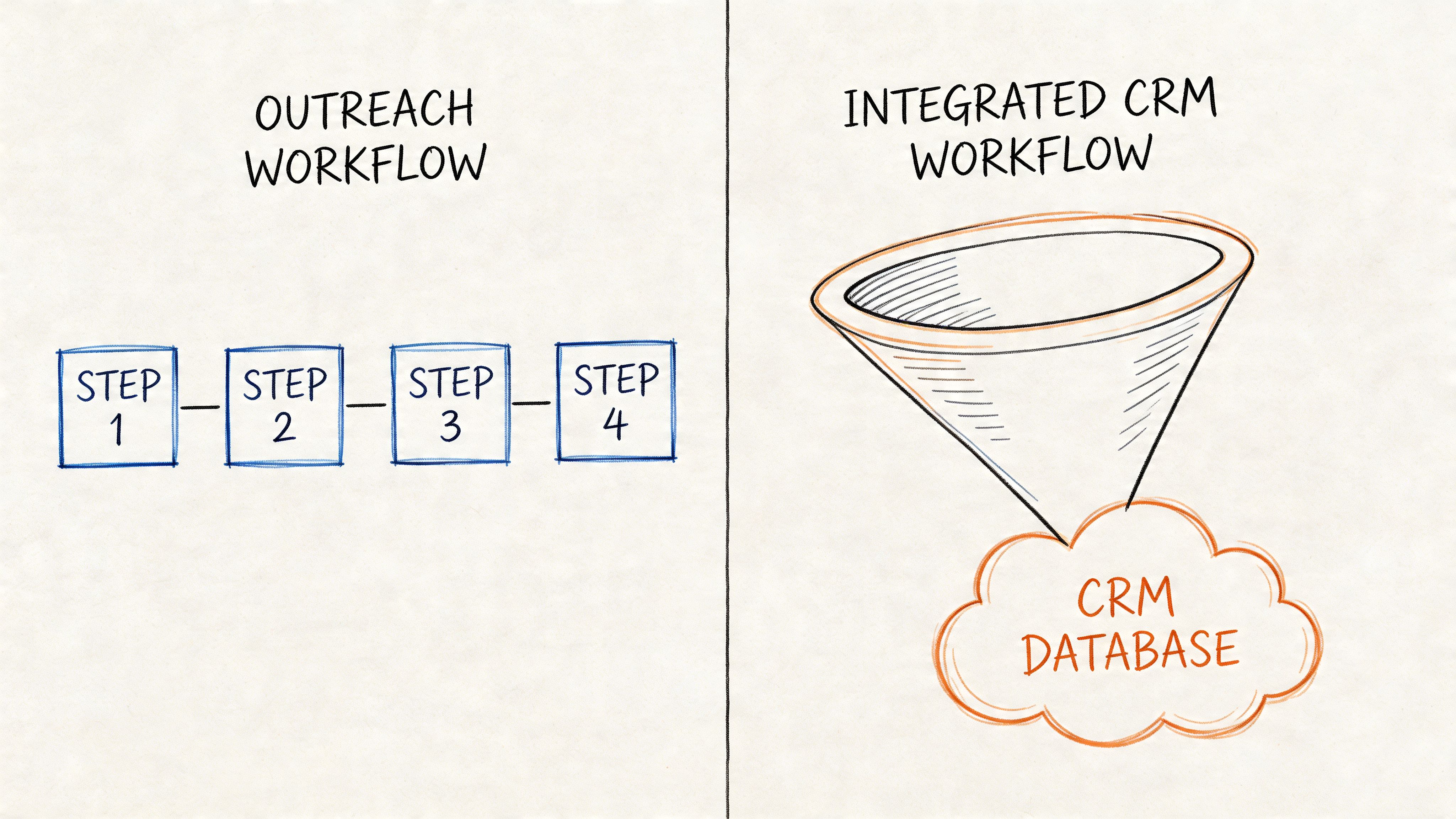
What the Lemlist workflow usually looks like
Lemlist supports email, LinkedIn, SMS, and calls, and includes a Hot Leads dashboard for prioritizing engaged prospects. But it’s also widely described as email-primary and lacking deep native CRM and cross-team workflow support, which means users often need external systems for full pipeline management, as covered in this lemlist review.
That creates a familiar operating pattern:
Outreach happens in Lemlist.
Interested leads get pushed into a CRM.
Marketing activity lives somewhere else.
Reporting gets stitched together later.
That can work. Plenty of teams run this model. But it introduces friction every time a lead changes stage, a rep forgets to log context, or marketing wants to trigger follow-up based on sales activity.
The cost isn’t only technical. It’s managerial. Leaders start spending time reconciling systems instead of improving process.
What the unified workflow changes
A unified platform changes the sequence of work. The lead record, outreach activity, campaign history, and downstream deal movement can sit in the same environment. That makes marketing-to-sales handoffs cleaner and keeps your reporting grounded in one contact history instead of several partial ones.
That difference matters most in these situations:
Marketing-generated demand: A prospect engages with a broadcast or nurture flow, then needs to move into a sales sequence without losing context.
Shared account ownership: SDRs, AEs, and marketers all need visibility into what the buyer has already seen and done.
Operational reporting: Leadership wants one answer to “which campaigns create pipeline” instead of three conflicting dashboards.
One source of truth isn’t a slogan. It’s the difference between running plays and arguing about data.
Multichannel outreach versus cross-team orchestration
This is the biggest misconception in lemlist vs stamina.io.
Multichannel outreach means a rep can contact someone across several channels. Lemlist does that.
Cross-team orchestration means marketing, sales, and CRM actions can work from the same logic layer and the same contact history. That’s a different level of system design.
If your team is small and founder-led, you can survive the first model for a while. If you’re adding SDRs, handing off leads, or trying to run coordinated GTM plays, the second model starts looking less like a luxury and more like basic infrastructure.
Calculating the Total Cost of Scaling Outreach
A founder hires two SDRs, adds more inboxes, and launches outbound across new segments. Six months later, the outreach tool is only one line item. The bigger problem is the stack that grew around it.
In lemlist vs stamina.io, the useful comparison is total cost of ownership. License cost matters. Admin time, extra tools, integration work, and reporting friction matter more once the team starts scaling.
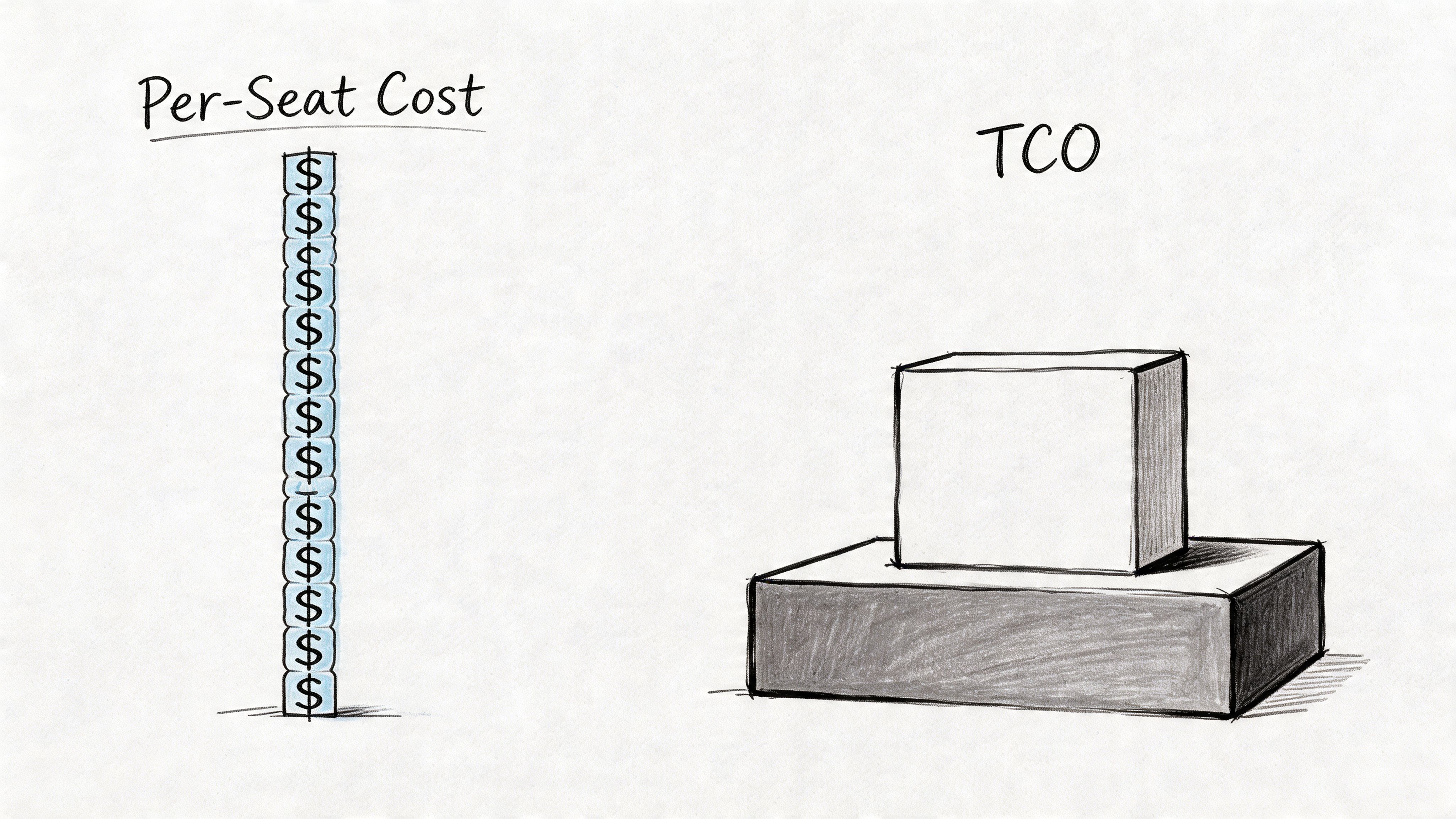
Where Lemlist starts to drag on budget
Lemlist is easier to justify at small scale than at operational scale. The seat-based model works for a focused outbound team. It gets expensive fast for agencies, multi-inbox setups, and SMBs adding reps quarter after quarter.
One published example found that an agency needing 50 inboxes would pay about $14,076 per year on Lemlist versus $1,164 per year on a flat-fee unlimited-inbox alternative, a 12x gap, based on this pricing breakdown.
That kind of pricing changes behavior. Teams delay adding users. Agencies start rationing inboxes. Sales ops spends time controlling tool cost instead of improving pipeline output.
The direct cost is only part of the issue:
More reps raise software spend immediately: headcount growth pushes subscription cost up in parallel.
More inboxes create admin work: setup, permissions, monitoring, and maintenance all expand with the account footprint.
Margin gets tighter: especially for agencies and service-heavy SMBs that need to support multiple client or territory setups.
If you are evaluating other Lemlist alternatives, this is the filter that matters. Do not just compare send features. Compare what it costs to run the system at 10 users, 25 inboxes, and a full quarter of active campaigns.
The operating cost of a point solution
A point solution rarely stays a point solution. It pulls in extra software and extra process.
You usually end up paying for a separate CRM, a marketing automation layer, integration tooling, and the ops hours required to keep records synced and reports usable. None of that looks dramatic in month one. By month six, it shows up as broken field mappings, duplicate records, and managers arguing over which dashboard is correct.
That is the philosophy gap in this comparison. Lemlist is an outreach product. Stamina.io is trying to reduce the number of systems your team depends on. For growing SMBs, that usually produces a better cost structure because fewer handoffs mean fewer places for revenue operations to break.
Why unified pricing wins for many SMBs
Stamina.io starts at $397/month for Base and $797/month for Assisted, as shown on the Stamina.io pricing page. That number looks higher than a stripped-down outreach tool if you ignore everything else your team still needs.
That is the wrong way to buy software.
If one platform covers outreach, CRM, lead data, and AI-assisted execution, you reduce tool sprawl and cut the maintenance burden that comes with stitching together specialist products. The financial benefit is predictability. The operational benefit is speed. Reps spend more time working leads. Ops spends less time fixing the machine.
Cheap software gets expensive when it creates drag. Unified software wins when it removes it.
The Verdict When to Choose Lemlist vs Stamina.io
A 12-person SMB team usually does not fail because its cold emails lack flair. It fails because outreach lives in one tool, pipeline lives in another, lead data sits somewhere else, and nobody trusts the handoff.
That is why this decision is bigger than email.
For most growing SMBs, Stamina.io is the better choice because it solves the operating model, not just the outreach step. Lemlist is a focused outbound product. Stamina.io is built for teams that want prospecting, CRM, campaign execution, and AI support working in one place. If your revenue team is already feeling process drag, the unified platform wins.
Decision Framework Lemlist vs Stamina.io
Criteria | Lemlist (Point Solution) | Stamina.io (Unified Platform) |
|---|---|---|
Best for | Specialist outbound teams | SMBs building a connected revenue engine |
Core strength | Creative, personalized outreach | Unified sales, marketing, and CRM workflows |
CRM depth | Requires external CRM for fuller pipeline management | Native flexible CRM approach |
Scaling model | Seat-based, more painful as teams expand | More predictable platform pricing |
Agency fit | Works for boutique service delivery | Better for scalable agency operations and white-label style needs |
AI orientation | Helps personalize outreach | Automates prospecting, data, and workflow execution |
Operational burden | Higher due to stack coordination | Lower due to system consolidation |
Choose Lemlist if this sounds like you
Pick Lemlist if outbound is a specialist function inside an existing stack.
You already have a CRM your team consistently uses: You do not need your outreach tool to manage the full funnel.
Your reps win on custom messaging: Personalization is the main edge, and your team is willing to do more work manually to get it.
Your team is small and contained: Few handoffs, few users, and limited reporting complexity.
You want a point solution on purpose: You are comfortable connecting tools and managing the ops overhead that comes with that choice.
Lemlist fits freelancers, boutique lead gen agencies, and founder-led teams that need better outbound execution without changing the rest of the stack.
Choose Stamina.io if this sounds like your business
Pick Stamina.io if your real problem is coordination.
Sales, marketing, and ops all touch the same pipeline: One system reduces dropped context and reporting conflicts.
Your stack is getting crowded: You want fewer tools, fewer sync problems, and fewer process patches.
You want AI to reduce manual work: The value is not prettier copy. It is less list building, less admin, and less repetitive follow-up work.
You are adding reps or clients: Growth should not force a bigger mess behind the scenes.
You need structure across accounts or teams: Agencies and multi-user SMB teams benefit more from a unified setup than from stretching an outreach tool beyond its job.
If you are still scanning the category, this list of Lemlist alternatives is useful. It helps clarify whether you need a better sender tool or a better revenue system.
My recommendation
Here is the cleanest way to decide.
Choose Lemlist if outbound is the only problem you are solving, your CRM is already set, and your team can tolerate extra integration work.
Choose Stamina.io if you are building a repeatable growth engine and want less operational drag as you scale.
That is the philosophy gap in lemlist vs stamina.io. Lemlist gives you a sharper point solution. Stamina.io gives you a simpler system to run. For a growing SMB, the second option usually produces better execution, clearer ownership, and lower total cost over time.
If you’re tired of patching together outreach, CRM, and marketing tools, take a serious look at Stamina. It’s built for SMB teams that want one system for prospecting, nurture, pipeline management, and AI-assisted execution instead of another disconnected app in the stack.

