You're staring at a blank draft, a sponsor list in a spreadsheet, and a deadline that doesn't care how busy you are. The next letter can't read like a favor request. It has to read like a decision-ready business case, because that's how sponsors evaluate it.
A strong request sponsorship letter template is built to make the sponsor's job easier. The letter should answer fit, audience, ROI, and next steps fast, using the kind of specificity that makes a buyer keep reading instead of forwarding it to the bin. That's why vague language underperforms, while concrete metrics, a clear ask, and a simple path to yes keep showing up in the strongest guidance, including the long-standing advice to use figures like “5,000 attendees” instead of saying “thousands of attendees” (Visme's sponsorship request letter guide).
Why Most Sponsorship Letters Get Ignored
The worst sponsorship letters usually fail before anyone with budget authority sees them. They're written like emotional appeals, so the reader has to do extra work just to figure out what the ask is, who it's for, and why it matters. Sponsors don't reward effort, they reward clarity.
I've seen this play out over and over. An organizer spends an hour writing a warm, thoughtful note, then sends it to a marketing manager who's scanning a crowded inbox between meetings. The letter talks about passion, community, and hope, but never answers the simple questions that drive approval, so it gets archived with the rest.
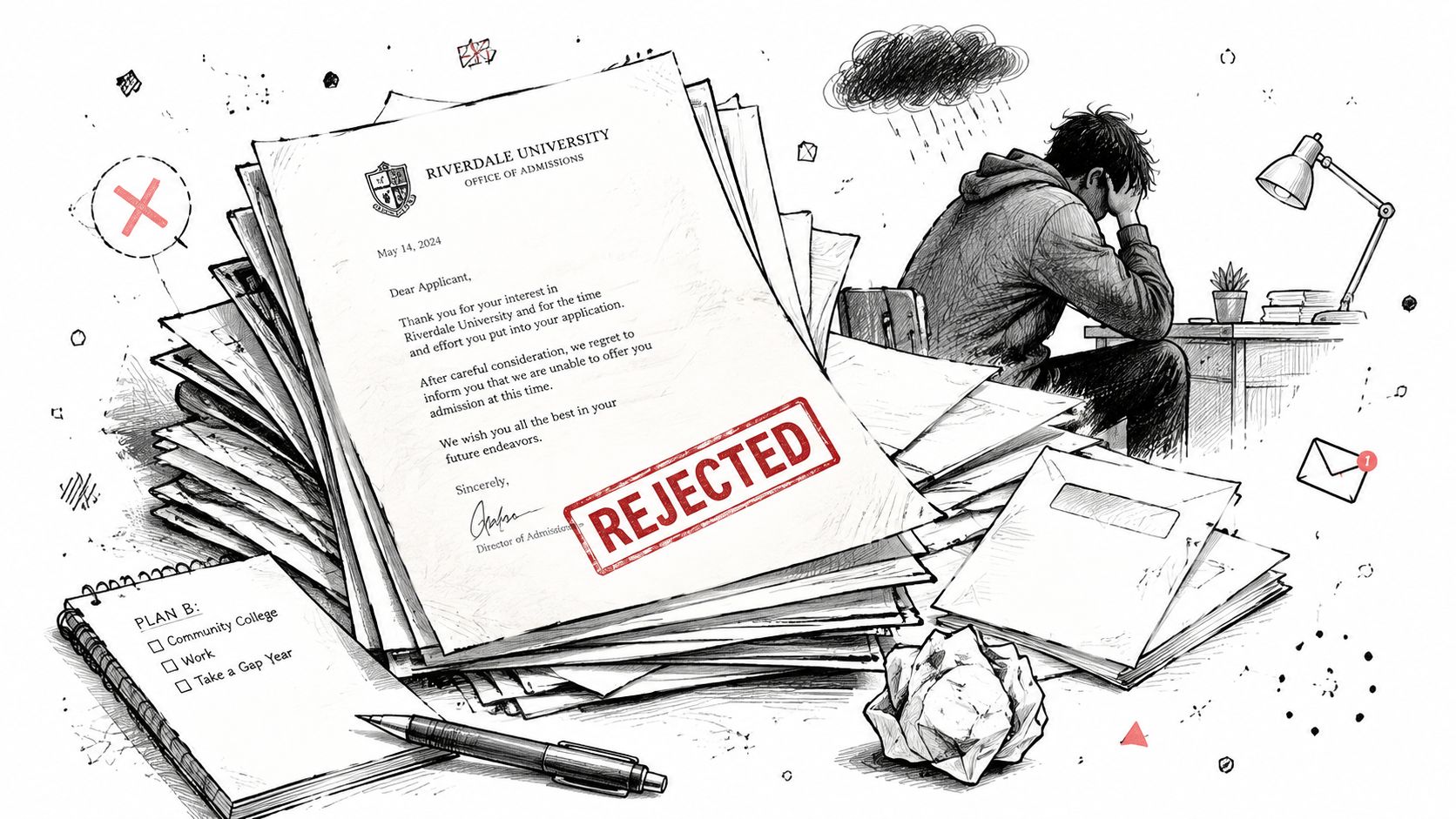
Practical rule: if the sponsor can't tell what you want and what they get within a few seconds, the letter is already losing.
A better lens is outbound sales. A sponsorship letter is not a goodwill note, it's a sales asset, so it needs the same discipline you'd use for any campaign that depends on response. That means a named recipient, a clear category fit, a measurable benefit, and a reply path that doesn't ask for more effort than the sponsor is willing to give.
A useful test is to ask what the sponsor is evaluating. They're checking whether the audience matches their brand, whether the return feels credible, whether approval will be easy internally, and whether the ask is specific enough to judge quickly. If your letter makes those checks easier, you've moved from persuasion to pipeline.
You can also see how subject-line and inbox strategy affects whether your outreach gets opened in the first place, which is why email open-rate improvements matter as much as the body copy. The letter can be beautiful and still fail if no one reads it.
The Reusable Seven-Part Template Structure
A strong sponsorship letter does not need to be long. It does need a repeatable shape you can use across prospects without sounding copied. The strongest versions usually include a personalized greeting, a short mission or event summary, a specific ask, sponsor benefits, sponsorship tiers, one proof point, and a clear call to action with contact details. That structure works because it gives the sponsor a fast way to judge fit, return, and internal approval, which is the same discipline you'd use in any outbound sales sequence (Bonterra's sponsorship letter guide).
Start with the person, not the brand
Open with the recipient's name and role if you have it. “Dear Maya” beats “To whom it may concern” every time because it shows the letter was routed with intent, not blasted to a generic inbox. If the message is likely to be forwarded inside a company, that personal entry still matters because it gives the first reader a reason to keep moving it.
State the mission and the ask in one breath
The next line should do two jobs at once. It should explain what you do and state exactly what you need, whether that is cash, in-kind support, or a package level. The cleanest version reads like a proposal, and that matters because sponsors decide faster when the ask is specific and the trade is easy to understand.
Make the sponsor's benefit concrete
Benefits need to be explicit, not implied. If the sponsor gets logo placement, speaking visibility, product sampling, category exclusivity, or recognition in front of a specific audience, say so. Clear exchanges get approved faster than vague goodwill, especially when the person reading the letter has to justify the decision to someone else.
Add proof and next steps
The last part is where many letters lose momentum. Include one proof point, such as attendance, audience size, or another credible metric, then close with a direct next action and a response window. If you want better reply rates, treat the close the same way you would a sales email, tight copy, one clear ask, and a next step that does not require extra work. For practical copywriting patterns that help with that kind of writing, see copywriting for email.
Keep the template short enough to read in one pass, but rich enough that the sponsor can evaluate it without calling you first.
Five Ready-to-Use Templates for Common Scenarios
The right request sponsorship letter template depends on who you're asking and what they care about. An event sponsor wants audience reach and visibility. A nonprofit sponsor wants mission alignment. A corporate buyer wants internal approval ease and a reason to say yes without opening a second spreadsheet.
Sponsorship Letter Template Quick Reference | Best Length | Key Benefit Angle | Response Window |
|---|---|---|---|
Event sponsorship | 150 to 220 words | Audience exposure and tiered visibility | 3 to 5 days |
Nonprofit program support | 160 to 230 words | Mission impact and community goodwill | About a week |
Student or school team | 140 to 200 words | Local pride and visible support | About a week |
Influencer or creator deal | 120 to 180 words | Audience match and content activation | 3 to 5 days |
Corporate partnership | 180 to 250 words | Measurable brand or CSR value | 3 to 5 days |
Event sponsorship letter
Use this when you're selling sponsorship around a conference, tournament, gala, fundraiser, or community event. The strongest angle is a tiered package with visible benefits that make the decision easy to compare, rather than one open-ended donation request.
Subject line, Sponsorship opportunity for [Event Name] and your brand
Dear [Name],
I'm reaching out about [Event Name], a [brief event description] taking place on [date]. We're looking for a Gold Sponsor at [amount] or an in-kind partner to help us deliver the event and reach a qualified audience aligned with your market.
In return, sponsors receive [visible benefit], [second benefit], and recognition across event materials. If this is a fit, I'd love to send the sponsorship sheet and schedule a short call.
Best,
[Signature]
Customization tip: swap the benefit line to match the sponsor's actual marketing channel, not your favorite perk.
Nonprofit fundraising letter
Use this when the sponsor is supporting a specific program, not just a one-time event. The letter works best when the donation connects to a named outcome, because sponsors can evaluate mission fit more quickly when the use case is concrete.
Subject line, Support for [Program Name] through a sponsorship partnership
Dear [Name],
I'm writing from [Organization] to request support for [Program Name], which helps [who it serves]. We're seeking [amount] in sponsorship or [in-kind item] to help us deliver this work over the next [timeframe].
Your support would be recognized through [benefit], and it would directly strengthen our ability to serve the community. If you're open to exploring a sponsorship, I'd be glad to share a brief overview and answer questions.
Sincerely,
[Signature]
Customization tip: keep the mission sentence short, then spend the rest of the letter on sponsor value.
Student or school team sponsorship letter
Use this for clubs, teams, trips, uniforms, or competition costs. Local sponsors usually respond better when the letter sounds practical and modest, not inflated, so keep the ask direct and the community benefit easy to see.
Subject line, Sponsorship request for [School Team or Club Name]
Dear [Name],
I'm writing on behalf of [Team or Club Name] to ask for sponsorship support for [season, trip, or project]. We're looking for [amount] or in-kind help with [specific item] so our students can participate fully.
In exchange, we'll offer [visible recognition], [event mention], and a direct connection to the school community. If you're interested, I can send the sponsorship details and a simple next-step option.
Thank you,
[Signature]
Customization tip: if you have a parent, alumni, or neighborhood connection, mention it in the opening line.
Influencer or creator brand-deal letter
Use this when you're pitching a creator partnership to a brand. The letter should feel like a mini media proposal, with audience fit and content format spelled out fast, because brands need to know where the activation will happen.
Subject line, Creator partnership idea for [Brand Name]
Hi [Name],
I create content for [audience description] across [platform]. I'd love to explore a sponsored partnership for [campaign, launch, or theme], with deliverables that include [content format] and [second format].
The value for your team is straightforward, your brand gets access to a relevant audience, repeat exposure, and content that can be repurposed across channels. If this sounds useful, I can send a one-page media kit and suggested package options.
Best,
[Signature]
Customization tip: keep the first paragraph focused on audience overlap, not your origin story.
Corporate partnership letter
Use this when you're targeting CSR, community affairs, or marketing budget holders. These letters need a stronger business case, because they often move through more than one approver before anyone signs off.
Subject line, Partnership opportunity for [Company Name] and [Organization]
Dear [Name],
I'm reaching out from [Organization] to explore a partnership with [Company Name] around [program or event]. We're seeking [specific ask] and we'd like to align it with a sponsor package that supports your community, marketing, or employee engagement goals.
A partnership would give your team [benefit], while helping us deliver [outcome]. If this belongs in your current planning, I'd be glad to send the details and discuss next steps.
Kind regards,
[Signature]
Customization tip: write this as if it may be forwarded to finance, CSR, and leadership, because often it will be.
Researching Sponsors and Personalizing at Scale
The fastest way to waste a sponsorship campaign is to send the same letter to everyone. Real personalization isn't about inserting a first name, it's about matching the sponsor's priorities, their visible programs, and the format they're likely to approve internally. That starts with a clean list, not a pile of random names.
Build the list around fit signals
Look for companies that already touch your audience, support similar causes, or have a community or CSR pattern you can reference. Then research the contact, the recent campaigns, the public leadership team, and any clues about what the company wants to be known for. A sponsor list gets much better when you separate “possible” from “worth the effort.”
If you want a practical comparison framework for that part of the process, compare prospect research tools before you settle on a workflow. The point is not to collect more data, it's to collect the right signals fast enough to use them.
Put the intel into fields you can reuse
A CRM should hold the same basics for every sponsor, name, title, category, segment, last touch, preferred channel, internal notes, and the sponsorship angle you plan to use. That lets you route warm prospects differently from colder ones, and it keeps the team from rewriting the same context every time a lead is touched.
Use AI to draft the opening, not the strategy
An AI SDR becomes useful here. It can generate the personalized opening paragraph, pull in the sponsor-specific hook, and adapt the benefit language while leaving the structure intact. That means you stay in control of the offer, but you don't waste time rewriting the same first three sentences fifty times.
For a more detailed workflow on list enrichment and segmentation, prospect research tools for sponsorship outreach can help you think about the inputs before you draft the copy. The heavy lift is still judgment, but the mechanical parts should be automated.
Subject Lines, Send Times, and Follow-Up Sequences
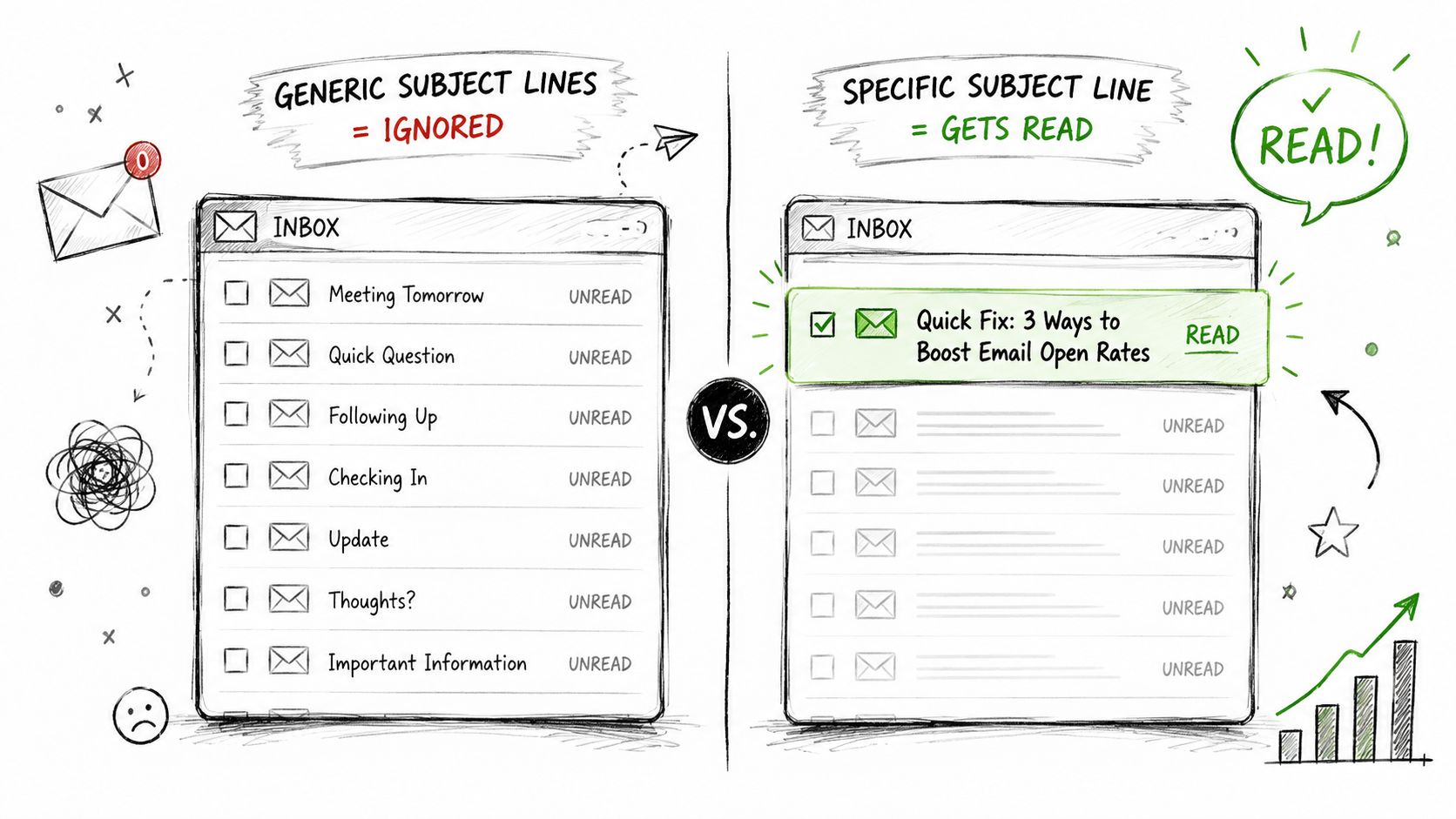
The subject line is the front door, and it gets judged fast. If it reads like a mass send, the letter dies before the sponsor sees the offer. The strongest subject lines are short, specific, and tied to a concrete outcome, not a vague “partnership opportunity.”
Subject lines that earn the open
Use the event name and the audience type for event sponsors. Use the program and the mission for nonprofit asks. Use the campaign concept or audience fit for creators and B2B partners. If you want more patterns for reply-driven outreach, subject line ideas for follow-up email gives you a useful set of examples.
Good subject lines sound like this:
Sponsorship for [Event Name], [Audience Type]
Partnership for [Program Name]
Creator collaboration for [Brand Name]
Support for [Team or Project Name]
I've sent enough sponsorship letters to know what gets ignored. Generic subject lines usually get skipped because they don't tell the sponsor why the email matters to them right now.
Follow-up should feel respectful, not needy
A follow-up works when it adds value, not when it just asks whether they saw the first email. The cleanest cadence is usually an initial send, one follow-up if there's no response, and a clear next step inside a short window. The goal is to make replying easy, not to pressure someone into a decision.
A good follow-up isn't “just circling back.” It gives the sponsor a cleaner reason to respond.
For a warm prospect, the sequence can stay simple, email first, one LinkedIn touch if it makes sense, then a direct call or message if the relationship already exists. For a colder prospect, keep the tone lighter and the ask narrower. A smaller next step is easier to accept than a full sponsorship package decision, especially when the letter is one of many requests sitting in a busy inbox.
If you want a useful benchmark for how direct outreach should read, proven cold email tactics is a practical reminder that clarity, relevance, and brevity beat polished filler. Sponsors are still readers with inbox fatigue, and the letters that perform best respect that reality.
Common Mistakes That Kill Response Rates
The biggest mistake is leading with your story instead of the sponsor's value. Your backstory matters, but only after the reader understands why this belongs in their world. If you start with paragraphs of mission language, you've already made the sponsor do work they didn't sign up for.
Another common error is the one-size-fits-all letter. The wording changes, but the message stays generic, so it never feels like it was written for the recipient. A better line is, “We're reaching out because your team's support for [specific initiative] fits this audience and this activation.”
If you want a practical cold-outreach benchmark for what not to do, proven cold email tactics are a useful reminder that clarity, relevance, and brevity beat polished filler. The same principle applies here, sponsors are still readers with inbox fatigue.
Other avoidable mistakes are easier to fix:
Hiding the ask: state the sponsorship amount or in-kind need early, not after five paragraphs.
Skipping the deadline: give the sponsor a response window so the request feels actionable.
Attaching too much: bulky files create friction and sometimes drag the email into the wrong folder.
Ignoring internal forwarding: write as if the email may be passed from marketing to finance to legal.
The cleanest version survives that chain. It tells each person what the partnership is, what it costs, what the company gets, and how to move forward without hunting for context.
Your 30-Day Sponsorship Outreach Plan
Week 1 is list building and enrichment. Week 2 is template selection and personalization, then sending the first batch of letters through your CRM. Week 3 is follow-up and LinkedIn touches, while Week 4 is the close, payment links, confirmation, and post-sponsorship reporting that sets up renewal.
The metric set should stay simple, reply rate, qualified meeting rate, signed sponsorship rate, and average sponsorship value. Track those in one place so you can see which sponsor segment, subject line, or ask is pulling its weight and which one needs to be cut.
If you want this kind of sponsorship outreach to run like a real pipeline, Stamina gives you the CRM, AI SDR, and sequencing layer to research prospects, personalize each ask, and keep the follow-up moving without living in spreadsheets. Visit Stamina and turn your next sponsorship letter into a repeatable system instead of another one-off send.

