
You're staring at a half-written follow-up, the invoice is overdue, the client has gone quiet, and the phrase in your subject line is doing more work than it looks like it should. Friendly reminder sounds small, but it can make an email feel considerate, vague, or annoyed, depending on who receives it and when. If you write for customers, coworkers, or prospects, the wording you choose affects whether your message reads as a helpful nudge or a passive-aggressive poke.
Why the Words You Choose to Remind Matter
A freelancer waiting on payment and an SDR waiting on a reply from a prospect are dealing with the same problem from different angles. Both need action, and both want to avoid sounding pushy. The instinct is to soften the message with friendly reminder, because it feels safe and professional.
That safety is partly real. The phrase sits inside a long English tradition of softened requests, which is why language commentary treats it as a politeness strategy rather than a literal statement of warmth. The point is not to describe the sender's personality, it's to lower friction while still asking for something.
The practical consequence in inboxes
In a busy inbox, the opener often shapes the rest of the email. A phrase that sounds warm to one reader can sound guarded or even irritated to another, especially if they already know they've missed a deadline.
Practical rule: if the relationship is fragile, the ask is sensitive, or this is your first nudge, your opener matters more than your full paragraph.
That's why copy choices belong in the same category as subject lines and CTA placement. Strong email writing depends on tone as much as structure, which is why copywriting for email is worth studying alongside reminder language. A good reminder doesn't just ask for action, it protects the relationship you need for the next message too.
What Friendly Reminder Actually Means in Modern English
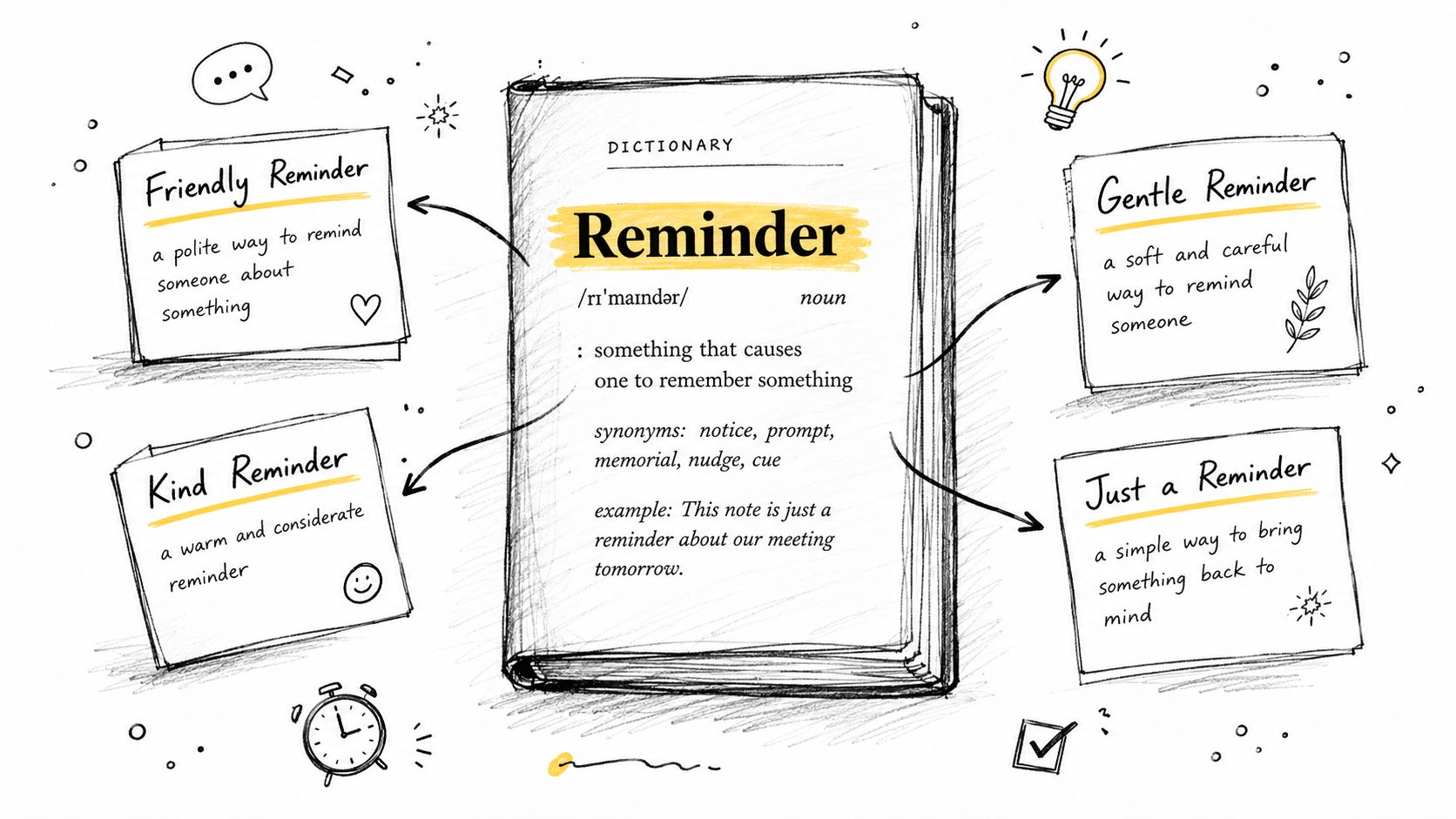
The friendly reminder meaning starts with a much older word, reminder. Dictionaries trace it to the 1650s and define it as something that helps a person remember or prompts memory, so the core idea is simple, direct, and old. The modern twist is the softener, because friendly is attached as a politeness strategy, not because the message is always emotionally warm.
A short history of softened reminders
English speakers have been using softened reminder formulas for a long time. Historical evidence shows that gentle reminder appears in print as early as the 1830s in Britain and the 1840s in the United States, which tells you this habit didn't begin with email. It grew out of correspondence and public notices, where people needed to prompt action without sounding harsh.
A working definition you can actually use
In modern English, friendly reminder is a conventional opener for a message that prompts someone to do something they may have forgotten, delayed, or not yet completed. It's common in email and workplace communication, especially around deadlines, payments, meetings, and status updates, and it's usually understood as polite and non-intrusive.
Plain-English version: it means, “I'm nudging you without wanting to sound confrontational.”
That's also why the phrase matters in pragmatics. It softens a directive by reducing the face threat of being told you missed something. The message still asks for action, but the wording tries to preserve rapport while doing it.
Picking the Right Tone for Personal, Team, and Sales Emails
A reminder to a friend doesn't land the same way as a reminder to your manager, and neither sounds like a follow-up to a prospect. The phrase may be grammatically fine in all three, but the tone changes with the relationship. That's where a lot of people get tripped up, because they treat friendly reminder as a universal default.
Tone fit depends on who's reading
For a friend, the phrase can feel casual and caring. For a teammate, it usually works when the ask is routine and the relationship is already established. For a prospect, the same opener can feel either polished or awkward, depending on how far along the conversation is and how much trust you've built.
A useful way to think about it is register, not correctness. The words are often acceptable, but the context decides whether they sound natural.
Context | Best Opener | Why It Works |
|---|---|---|
Personal note | Friendly reminder | Feels warm and familiar when the relationship is already informal |
Team email | Friendly reminder or gentle reminder | Keeps the nudge low-friction while signaling a shared work rhythm |
Sales follow-up | Relationship-aware opener instead of a fixed formula | Avoids sounding like a canned chase and gives the message more context |
If you write outreach for brands, Victoria OHare's outreach email template for brands is a helpful companion resource because it shows how much the opener affects the rest of the message. That same sensitivity shows up inside internal communication too, which is why the ideas in how to improve team communication belong in the same mental toolkit.
A quick decision rule
Use friendly reminder when the other person expects the nudge. Use a more specific opener when the relationship is new, the ask is delicate, or the inbox context is sales-facing and you need the message to feel individualized.
When Friendly Reminder Backfires and What to Say Instead
The trap with friendly reminder is that it can spotlight the very problem it's trying to soften. If the person has already missed something, the phrase can sound like you're wrapping irritation in a polite bow. Independent commentary on the phrase points out that it can read as passive-aggressive, especially when used in a first-touch or high-stakes message.
Why the phrase can feel loaded
The issue isn't that the words are rude on their own. It's that the reader may hear an implied judgment, as if the sender is saying, “I know you forgot, and I'm pretending not to care.” That risk rises when the reminder follows silence, a missed payment, or a sensitive request.
Use it only when rapport already exists and the recipient expects a prompt.
When that's not true, a softer or more contextual opener usually lands better. If you're scanning your own outreach for overly dominant or one-sided language, the same awareness that helps you recognize dominating speakers in sales interviews can also help you spot reminder copy that takes up too much emotional space.
Better alternatives for different situations
Just a heads up: Works when the message is informational and you want lightness instead of pressure.
Wanted to make sure this is on your radar: Fits when the recipient may be juggling priorities and you want to stay collaborative.
Circling back on: Good for follow-ups where the prior conversation already established context.
The goal is not to sound clever. It's to match the emotional weight of the ask. If you need a broader set of follow-up patterns, how to follow up no response email gives you a useful way to think about sequencing without sounding repetitive.
The simple filter before you hit send
If the person already knows the task is pending, friendly reminder can work. If the message is the first nudge, the relationship is thin, or the situation is critical, switch to wording that sounds less self-conscious and more specific.
Ready to Send Email Templates You Can Use Today
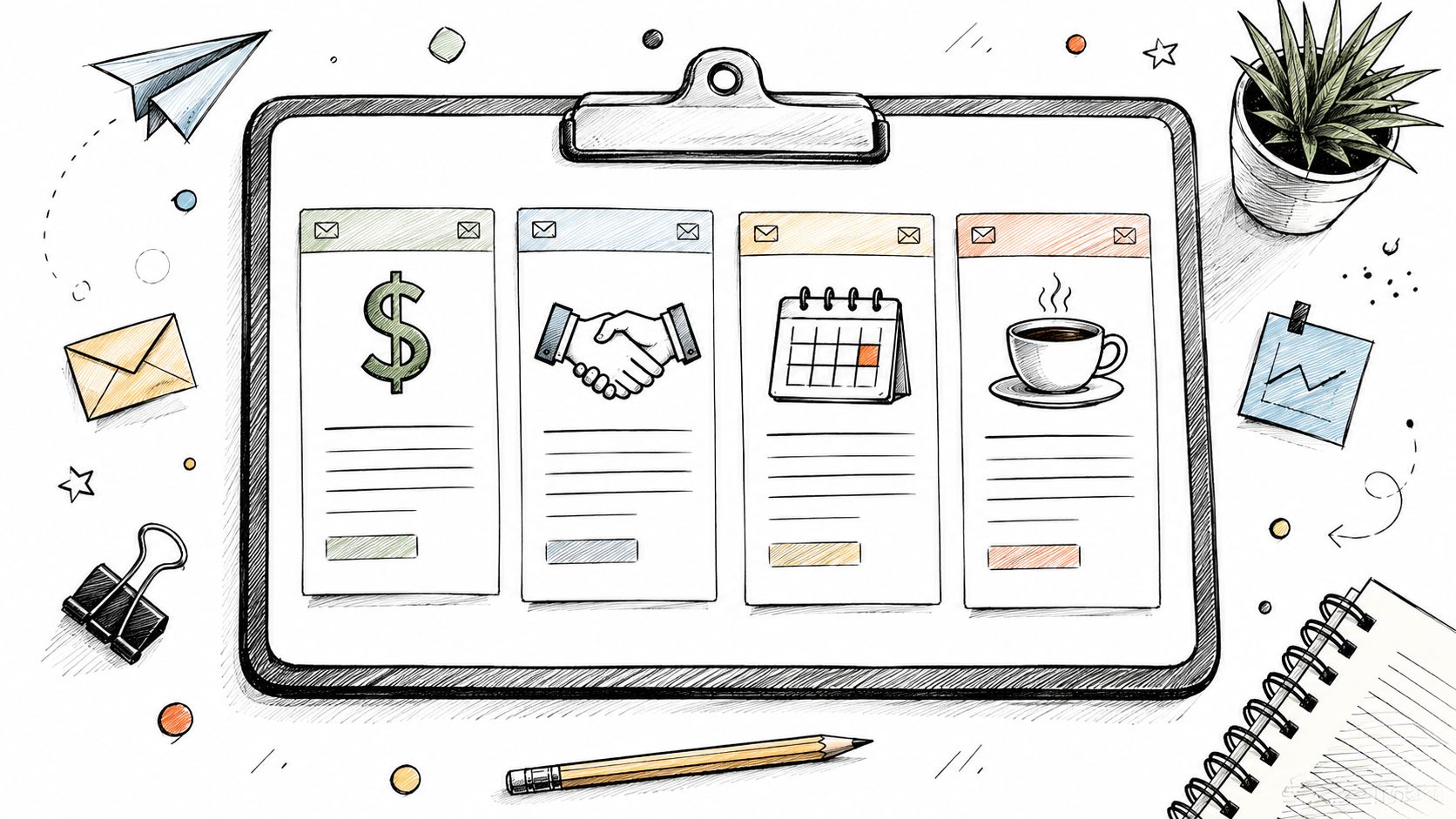
A good reminder template gives you structure without making you sound like a machine. The trick is to keep the opener aligned with the relationship, then make the action unmistakable. The examples below stay polite, but each one avoids the flatness that makes reminder emails easy to ignore.
Overdue invoice reminder
Subject: Friendly reminder about invoice #[number]
Hi [Name], Just a quick reminder that invoice #[number] is still outstanding. If you've already sent it, thank you, and please ignore this note. If not, I'd appreciate it if you could take a look when you get a chance.
This works because it's direct about the action, but it leaves room for a simple oversight. The phrase if you've already sent it, thank you, and please ignore this note lowers tension without turning the message into a lecture.
Stalled deal follow-up
Subject: Circling back on our conversation
Hi [Name], I wanted to follow up on our last conversation and see whether this is still a priority on your side. If timing has shifted, I'd be glad to reconnect later. If you're moving forward, I'm happy to send anything else that would help.
This version avoids sounding like a canned chase. The wording gives the prospect an easy path to reply, and it doesn't pretend the silence isn't there.
Meeting confirmation nudge
Subject: Just a heads up about tomorrow's meeting
Hi [Name], I'm confirming our meeting for tomorrow at [time]. If you need to reschedule, just let me know and I'll adjust on my end.
This opener feels lighter than friendly reminder because it frames the message as coordination, not correction. That makes it especially useful when you want to keep the tone efficient and collaborative.
A short reminder video can also help your team standardize tone across repeated follow-ups.
Personal note for someone you haven't heard from
Subject: Checking in
Hey [Name], Just wanted to see how you've been. No pressure to reply right away, I just didn't want to let too much time pass without reaching out.
This works because it removes the transactional feel completely. The message sounds like a person, not a queue reminder.
If you want more automation-friendly language patterns, marketing automation with AI is useful for thinking about how personalized sequences can still sound human when the timing and variations are handled by software.
How Cultural and Formality Cues Change Reader Perception
The same reminder can feel warm in one market and too casual in another. That's because people don't just read the words, they read hierarchy, familiarity, and expected formality. Guidance on reminder language already points to a useful distinction, friendly reminder for informal or semi-formal settings, and gentle reminder when more formality is needed.
The checklist that matters before you send
Start with the relationship. If the recipient is a peer or someone you already know well, a friendly opener may fit. If the message goes upward in a hierarchy, crosses regions, or involves a sensitive ask, a more restrained phrase often feels safer.
Then look at the stakes. A low-stakes scheduling nudge gives you more room for warmth. A payment reminder or compliance-related note usually benefits from cleaner, less performative wording.
Practical rule: tone is never just about the phrase, it's about how much social pressure the recipient is likely to feel.
That's why global SMBs need more than a dictionary definition. A message that sounds appropriately warm in one office can feel overly casual in another, even when the English is correct. The job is to calibrate for relationship, region, formality, and stakes at the same time.
A simple mental filter
Before you send, ask yourself four questions.
Who is this going to? A peer, manager, client, or prospect changes the acceptable tone.
How formal is the setting? Internal chat, standard email, and customer-facing outreach don't carry the same weight.
What's at stake? The more sensitive the request, the less playful the wording should be.
Will this feel like a nudge or a correction? If it leans toward correction, soften less and clarify more.
Used well, friendly reminder still has a place. It just isn't a universal default.
Automating Personal Reminders Without Sounding Robotic
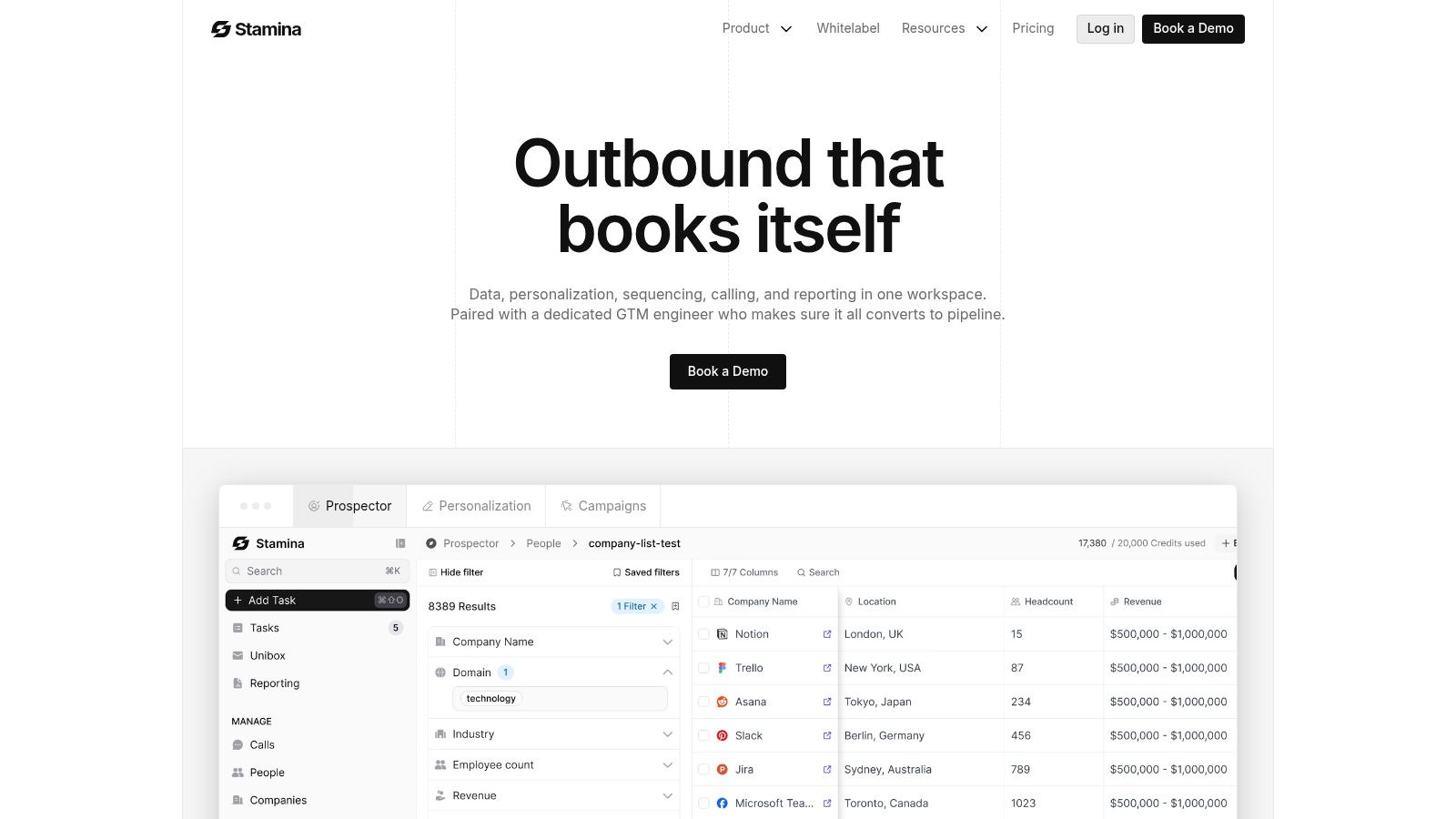
Automation can help with timing, sequencing, and personalization, but it can't fix a bad tone choice. A system like Stamina can create reminder workflows and personalized email variants, including follow-ups from its AI SDR, Zara, but the copy still needs the judgment you've seen above. If the message sounds canned, automation only makes that problem arrive faster.
The best setup is simple. Build one reminder sequence for each use case, keep the opener matched to the relationship, and review the wording before you let it run. If your team already uses a reminder workflow inside a CRM, you can pair that with a shared tone standard so every follow-up sounds like it came from the same company, not the same template.
For teams planning this kind of workflow, the internal approach in marketing automation with AI is a useful reference point because it connects automation with personalized messaging rather than volume alone. The practical win is consistency, because a reminder sequence can stay timely without losing the human tone that earns replies.
If you want reminder emails that sound polite, specific, and get answered, build them in Stamina. It gives SMB teams a way to organize reminders, personalize follow-ups, and keep tone consistent across sales and customer outreach. Use it when you want your reminders to feel human instead of mass-produced.

