
You're probably staring at a messy mix of job board posts, inbound forms, half-finished outreach, and a CRM that looks busy but doesn't produce enough real openings. The recruiter is chasing applicants who aren't a fit, the founder wants more hiring conversations, and the sales lead keeps asking why the pipeline feels thin even though the team is “doing everything.” That's the job lead generation trap, too much activity, not enough timing, and almost no system for spotting which accounts are about to hire.
The market has clearly shifted toward lead generation as a core growth function, not a side task. One 2024 roundup says lead generation was 2x more popular in 2022 than in 2017, and that inbound marketing-dominated organizations experience a 61% lower cost per lead Editorninja's lead generation statistics roundup. Separate benchmark data shows lead gen is now multi-channel and highly qualified-funnel dependent, with organizations generating 1,877 leads per month on average, mean cost per lead at $198.44, and 53% of marketers spending more than 50% of their budget on lead generation Exploding Topics' lead generation stats. The missing piece isn't more hustle. It's a repeatable system that identifies hiring intent early, scores it properly, and uses the right channel at the right time.
The Job Lead Generation Reality Check
A lot of teams confuse motion with momentum. A recruiter refreshes LinkedIn, checks job boards, sends a few cold emails, and maybe gets a vague response from a company that “may have something next quarter.” A founder sees activity in the CRM, but the opportunities do not move because the team is chasing listed vacancies after the market has already seen them.

The bigger issue is that lead volume is rarely the bottleneck. Teams can find plenty of contacts, postings, and half-formed signals, but most of those never turn into live job briefs. What usually separates a working outbound engine from a noisy one is lead quality scoring, the discipline of weighting hiring signals, growth events, and role urgency before a rep spends time.
A posting alone does not tell you much. It may already be saturated with applicants, or it may be the first visible sign that a team is about to build quickly and needs help fast. The practical move is to score the account before you chase it, then decide whether the signal is strong enough to merit outreach now or weak enough to leave for later. That is the difference between guessing and predicting.
What the best teams do differently
They stop treating every “possible hiring account” as equal. Instead, they build a loop that starts with signal-based targeting, then moves through multi-channel outreach, qualification, routing, and measurement. That sequence matters because teams that rely on generic blasts usually spend more effort than they recover, while accounts with clear intent deserve faster follow-up and a tighter cadence.
Practical rule: If a company has no hiring signal, no urgency signal, and no engagement signal, it does not deserve the same effort as an account that just raised, opened a new office, or hired a new leader.
The old workflow is simple but weak. Wait for the vacancy. Scrape the board. Send a generic pitch. Follow up once. Then move on when nobody answers.
The better workflow starts before the posting exists. It ranks accounts by likely hiring need, uses a channel mix that matches the stage of intent, and keeps the handoff to sales clean enough that nobody has to rediscover context later. That is the system this playbook is built around.
For teams that want a cleaner way to define the accounts worth chasing, a practical ideal customer profile framework gives the baseline. Job lead generation still needs its own scoring layer on top of that, because buying fit and hiring urgency are related, but they are not the same thing.
Defining the Target Before You Touch a Channel
A lot of job lead generation breaks at the start because the target is too wide. “Tech companies hiring” sounds useful until you try to work it. It turns into a pile of accounts with no shared urgency, no common role pattern, and no clear reason to reach out first. If the goal is predictable output, the list needs an ideal hiring profile, not just a buyer persona.
Start with firmographics. Define the industries, company sizes, and geographies that consistently produce roles you can place or sell into. Then add role-specific urgency. A company hiring a frontline coordinator after a growth spurt behaves differently from one backfilling a strategic leader after an executive departure, and the outreach should reflect that difference.
Build the list from hiring intent, not logo envy
The target list should include companies that are both a fit and active. That means layering signals like funding rounds, executive hires, office expansion, product launches, and other public growth moves on top of the base firmographic profile. If a company fits your market but shows no sign of hiring, it should not sit near the top of the queue.
The distinction between ideal customer profile and ideal hiring profile matters here. An ICP tells you who can buy. An ideal hiring profile tells you who is most likely to open a live job brief soon. Those groups overlap, but they are not identical, and chasing only logo fit wastes time on accounts that look good on paper but have no hiring motion yet. For a clean baseline, this ICP framework helps separate fit from wishful thinking.
Use a one-page definition a rep can follow. Include the role families, the trigger events, the disqualifiers, and the response window you care about. If the team cannot explain why a company made the list, it is not a real target list.
A good target list is less about who looks impressive and more about who looks active.
If you already have an ICP framework, anchor the hiring side to it instead of rebuilding from zero. The practical version is a shortlist of accounts that can be ranked, reviewed, and updated weekly. That keeps the team focused on companies that have both the right profile and a reason to act now.
Rank accounts by urgency
Once the base list exists, score it manually or with AI support. Recent hiring signals should outrank static firmographics. A brand-new office opening with a matching role family is more useful than a well-known company that has not moved in months.
That ranking discipline keeps reps from burning time on accounts that look strong in theory but have no live need. It also gives marketing and sales a shared definition of what qualified means before outreach starts. Each account should carry a clear reason for being contacted, because that reason shapes the message, the channel, and the follow-up speed.
Choosing the Right Channels for Predictable Pipeline
A rep opens Monday with a clean list, a few new hiring signals, and three channels on the table. One path gives volume, another gives speed, and a third only works if the team can keep it warm. Predictable pipeline comes from matching the channel to the signal, not from spraying the same message everywhere.
Channel Comparison for Job Lead Generation | Predictability | Cost per Qualified Lead | Time to First Lead | Best Fit |
|---|---|---|---|---|
Inbound | High over time, lower at the start | Lower when the content engine is working | Slower | Teams building a compounding asset |
Outbound | High if targeting is tight | Can be efficient with strong signal data | Fast | SMBs and agencies that need pipeline now |
Referrals | Very strong, but hard to control | Usually low | Fast when active | Small teams with a trusted network |
Partnerships | Moderate to high when maintained | Often favorable | Moderate | Agencies and service firms with aligned offers |
Job boards | Low for proactive pipeline | Can get expensive in time | Fast for visibility, weak for precision | Catching active demand, not forecasting it |
Inbound deserves respect because it compounds. Content, SEO, and educational pages pull in people who are already researching, and teams that build that motion well often see a lower cost per lead over time, as noted in Editorninja's lead generation statistics roundup. That still does not make inbound the right first move for teams that need live hiring opportunities now.
Outbound is the fastest path when the target list is grounded in hiring signals. It also breaks down fast when reps start from generic firmographics instead of role urgency, growth events, or fresh openings. Benchmarks in Digital Applied's 2026 lead generation data show how weak conversion can get once early funnel steps are missed, so the channel only works when the targeting is tight enough to carry the message.
Referrals convert because trust already exists, but they only scale as far as the network does. Partnerships work better for agencies and staffing firms than they usually get credit for, especially when the offer lines up with the same buyers and the same hiring motion. Job boards still matter for visibility and active demand, but they are a poor choice if the goal is to predict the next opening before everyone else does.
How to split effort without overcomplicating it
For smaller teams, I'd start with signal-based outbound and one compounding channel. That gives you a near-term pipeline source while the slower motion builds in the background. If outbound is already working, a targeted research process helps the team keep the list fresh, and this prospect research tools guide is useful when you need to compare options by data freshness, contact quality, and handoff speed.
The practical split depends on how much time the team can spend on research and follow-up. A staffing team with a strong referral base can keep referrals in the mix, but it still needs outbound to create volume. A SaaS team with content already in motion can let inbound do more of the heavy lifting, then use outbound only where the hiring signals are strongest.
If you are comparing systems for list building and research, use compare lead generation platforms to sort tools by breadth, precision, and how quickly reps can act on the data. That trade-off matters more than feature count when the job is finding companies that are likely to hire, not just companies that look busy.
Building Outreach Sequences That Get Replies
The strongest recruiting sequences start before a vacancy is visible. A funding round, executive hire, expansion announcement, or product launch can justify a prospecting sprint before the posting goes live. That timing advantage is where a lot of reply lift comes from, because you are reaching out while the hiring motion is still forming.

A benchmark workflow using 4 to 7 touches across email, LinkedIn, and phone produced 287% more responses than single-channel outreach, and 82% of replies came from follow-ups rather than the first touch Execue's recruitment lead generation benchmark. That matches what outbound recruiters and revenue ops teams see in the field. The first email rarely wins the conversation, the second or third touch usually creates it.
A sequence that adds new information every time
The mistake many teams make is repeating the same ask. If the first email says “Are you hiring?” and the second says the same thing with different wording, momentum dies fast. Each touch needs a different reason to respond.
Opener with the trigger. Mention the specific event and why it matters.
Example, “I saw your team's recent expansion into new markets and thought you'd probably need support on the hiring side before roles hit the board.”Value-led follow-up. Add a useful observation about the role family, hiring pattern, or common bottleneck.
Example, “Teams usually move quickly from this kind of growth event into two tracks, backfill and net-new headcount. If that's what's happening here, I can send a short list of profiles that match the market.”Social proof touch. Refer to a similar situation without pretending it is a case study.
Example, “We've seen similar accounts move from quiet planning into active hiring once the first manager role gets approved.”Channel switch. Move to LinkedIn or phone instead of repeating email.
Example, “I sent a note earlier this week because your growth update looked like the kind of signal that usually precedes new hiring.”Breakup email. Keep it calm and useful.
Example, “I haven't heard back, so I'll close the loop for now. If hiring becomes active, I'm happy to reconnect with a tighter shortlist.”
If the follow-up does not add context, it is just a reminder that you are still waiting.
Timing matters too. A short, focused cadence usually beats a long, noisy one because the prospect's attention window is limited. The follow-up should never feel like pressure, it should feel like a relevant continuation of a specific signal.
For teams that want message structure without sounding robotic, these sales email templates are a useful starting point, especially when the goal is to write something concise enough for a busy hiring manager to read.
You can also use a sequencing tool to manage handoffs, but the message still has to sound human. If the account is active, lead with relevance. If it is not, do not force a sequence just to keep the machine busy.
If you are comparing systems for list building and research, compare lead generation platforms to sort tools by breadth, precision, and how quickly reps can act on the data. That trade-off matters more than feature count when the job is finding companies that are likely to hire, not just companies that look busy.
Qualifying Leads So Sales Stops Wasting Time
Qualification is where most job lead generation systems break. The team gets excited about response volume, but the replies don't all mean the same thing. Some are curiosity. Some are polite deferrals. Some are real hiring intent.
A workable scoring model should weigh recent hiring signals, growth events, role-specific urgency, and engagement depth. That gives sales a way to focus on accounts that are likely to become live briefs rather than accounts that fit the market. It also stops the pipeline from filling with dead weight.
Set thresholds before anyone asks for a handoff
Define what qualifies as marketing-qualified, sales-qualified, and nurture. Don't leave that interpretation to each rep. If one person routes every interested account to sales and another routes only urgent ones, the handoff turns into guesswork.
A clean structure looks like this:
MQL: The account matches the ideal hiring profile and has at least one meaningful hiring signal.
SQL: The account shows urgency, a response, or a confirmed hiring conversation.
Nurture: The account fits the market but the signal is too weak or too old to justify active outreach.
The disqualification rules matter just as much. If the company has no active hiring signal, no relevant growth trigger, or no engagement after a defined sequence, it should move out of the active queue. That keeps SDRs and recruiters from spending the week on accounts that won't move.
For a practical framework on this part of the process, the BANT and lead scoring tips are useful context, especially if you need a simple way to map budget, authority, need, and timing into hiring conversations.
Ask hiring questions that expose real intent
BANT-style questions still work when they're adapted for recruitment or staffing. Ask about role timing, approval status, team pressure, and whether the need is backfill or growth. Those answers tell you whether the account is warm, half-warm, or not worth immediate time.
The fastest way to waste a sales hour is to confuse interest with intent.
The handoff should include the trigger that started the conversation, the channel history, and any role clues already uncovered. If a rep has to rediscover all of that on the first call, the lead was not routed properly. Clean routing is what keeps the system from leaking context on the way to sales.
Automating the Workflow Without Losing the Human Touch
Automation should remove friction, not judgment. The point is to make the next action obvious, not to replace the rep's thinking. In job lead generation, the best automation work happens behind the scenes.
A useful workflow starts with signal capture, then enrichment, then list building, sequence assignment, reply handling, and follow-up triggers. If a company hits the right signal threshold, the record should land in the right queue without anyone exporting spreadsheets or copying fields by hand. That's where a CRM earns its keep.
The automations worth building first
The first automation should be auto-enrollment from form fills or intent signals. The second should be routing by score, so stronger accounts go to a rep immediately. The third is deduping across channels, because the same account often enters the system from multiple places.
You also want re-engagement sequences for stalled leads, plus SLA timers and task reminders so opportunities don't go stale while everyone assumes someone else followed up. If the team runs on hope instead of alerts, leads rot.
For teams evaluating workflow options, a web scraping api can be useful when the process depends on pulling structured company signals into a CRM or enrichment layer, especially if the rest of the stack already manages routing and messaging.
Keep the handoff visible
Every automation needs an owner. If a lead gets scored up, someone needs to know whether it moved to sales, stayed in nurture, or hit a disqualification rule. Weekly pipeline reviews should focus on those transitions, not just on how many records entered the system.
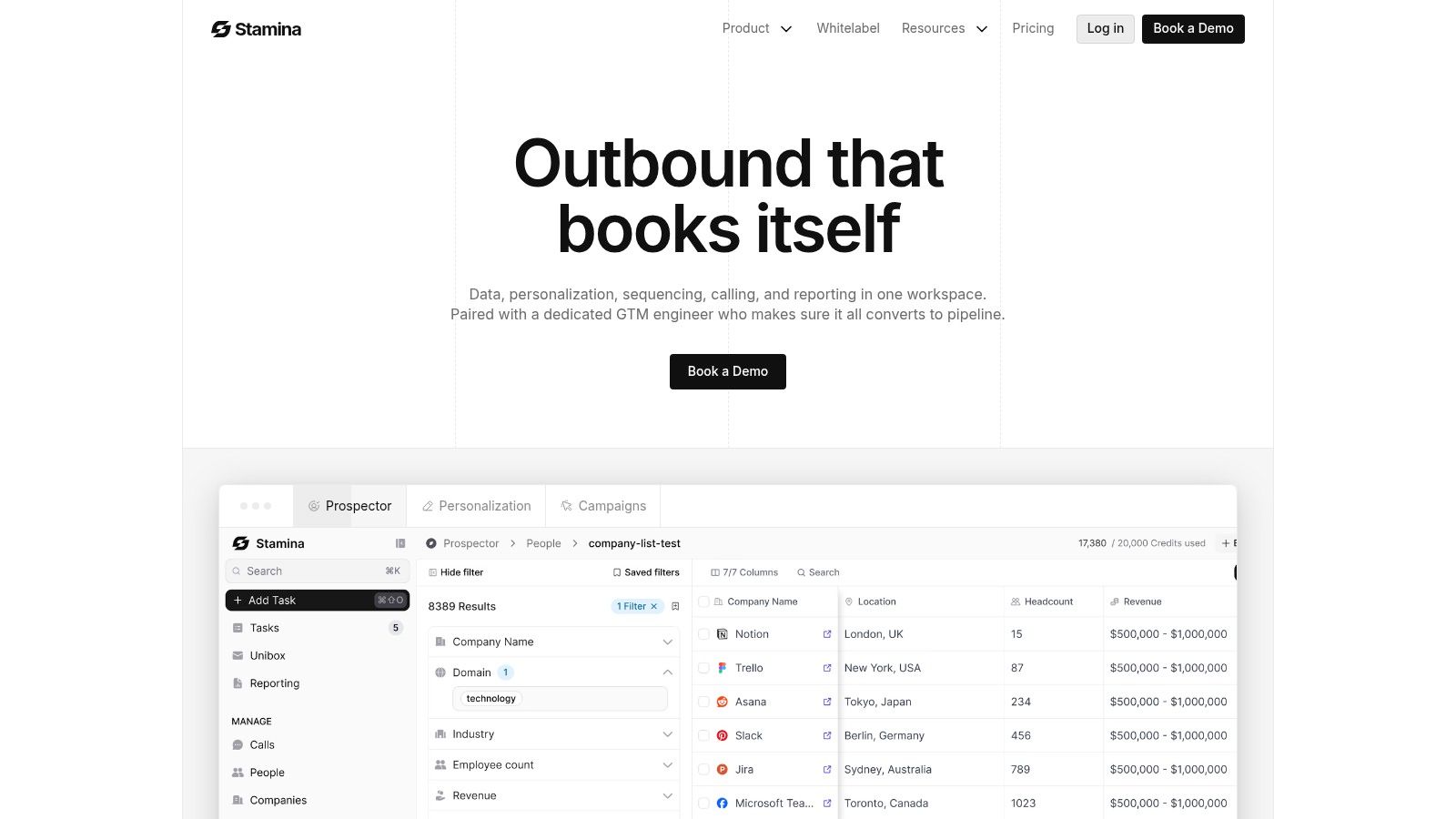
Stamina fits naturally here as one option because it unifies lead sourcing, enrichment, outreach, and CRM workflows in one place. That matters when the team wants one shared record instead of three disconnected tools.
For teams experimenting with assisted follow-up, AI sales assistants are most useful when they handle repetitive research and first-draft personalization, not when they make the qualification call for you.
Measuring What Matters and Optimizing the Loop
A rep can send a full day of outreach and still tell the team everything is moving if the dashboard only shows activity. The useful view is narrower. For job lead generation, track qualified lead rate, cost per qualified lead, sequence-to-reply rate, time-to-first-touch, and pipeline velocity. Those numbers show whether your scoring model and follow-up process are producing conversations that can turn into hires or placements.
The test is where the funnel leaks. Earlier benchmarking showed that conversion drops fast after the first touch, so weak internal performance usually points to targeting, qualification, or slow response. If your team is reacting late, scoring the wrong accounts too high, or sending the same sequence to every lead, the problem is in the loop, not the volume.
A simple weekly review loop
Spend 30 minutes on three questions.
Which signals produced the best replies? Keep the hiring cues, growth events, or urgency markers that led to real conversations, then score them higher next time.
Where did leads stall? Fix the handoff, message, or routing issue before you add more accounts.
Which accounts should be re-scored? Move weak accounts back to nurture before reps spend another round on them.
The most common breakdowns are falling reply quality, rising acquisition costs, and opportunities that sit untouched after routing. When that happens, the fix is usually tighter qualification, a cleaner sequence, or a faster SLA. Spraying more volume into the same process only hides the problem for a little longer.
A solid 30-day launch plan stays simple. Define the ideal hiring profile, build a ranked account list, create one multi-touch sequence, set routing rules, and review results every week. That gives the team a repeatable scoring and follow-up loop instead of a pile of leads that all look active but behave differently.

