Writing sales emails can feel like working a slot machine. You tweak the subject line, tighten the copy, swap in a new CTA, and then wait for replies that never come. Many organizations don't have a template problem. They have an implementation problem. They send decent emails without a system for signal-based personalization, sequence design, or measurement.
That's where better sales email templates help. High-performing case-study style emails are typically built around a measurable customer outcome, then supported with a short problem-solution narrative and one clear CTA, which keeps attention on the proof point instead of the full story, according to guidance on case study email templates. In practice, that's the difference between "we offer a great platform" and "we helped a similar team fix a specific bottleneck."
Modern AI changes the execution layer. Instead of asking reps to research every account from scratch, tools like Zara inside Stamina can help teams identify relevant signals, draft variants, and keep testing moving. For SMBs, that's a pivotal advantage. You don't need more templates sitting in a doc. You need templates tied to signals, stages, and follow-up logic so you can effectively scale what works. If you're trying to improve your follow-up emails for outreach, start with the playbook below.
1. The Cold Open with Social Proof
The fastest way to lose a prospect is to make them do the work of figuring out why you're emailing. A cold open with social proof fixes that by borrowing trust from something they already recognize. A recent funding announcement. A website visit. A mutual connection. A known customer in the same category.
For SMB teams, this template works best when you have a real trigger. If someone from the account visited your pricing page, or the company just announced expansion, that gives your opener weight. The message doesn't need a long backstory. It needs one specific fact and a logical bridge to why that fact matters.

Template
Subject: Noticed your team's recent momentum
Hi [First Name],
Saw that [Company] recently [specific milestone or signal].
Usually when teams hit that point, they start running into [relevant pain point]. We've helped similar teams tighten that part of the process without adding more manual work.
Worth a quick conversation next week?
Best, [Your Name]
A good example is an SDR who sees a prospect visited the website, then references the company's latest announcement and ties it to a likely operational pain. Another is a rep who mentions a shared LinkedIn connection before introducing the problem they solve. If your team is still building lists manually, this guide on how to find someone's email on LinkedIn is useful operationally.
Practical rule: Keep the social proof to one or two sentences. If the credibility setup is longer than the pitch, the email drags.
What works in practice
Use a verifiable opener: Mention something the prospect can confirm instantly, like a role change, launch, hiring push, or site activity.
Match proof to pain: Funding news should connect to growth complexity. A website visit should connect to active evaluation.
Test the angle: Compare milestones, mutual connections, and intent signals instead of assuming one opener fits every segment.
Teams looking for more first-touch ideas can borrow structure from these cold email templates for B2B prospecting, then tighten them around real signals. Zara is useful here because it can draft multiple opener variants from account research, but the human judgment still matters. If the signal and the pain don't connect, the email feels forced.
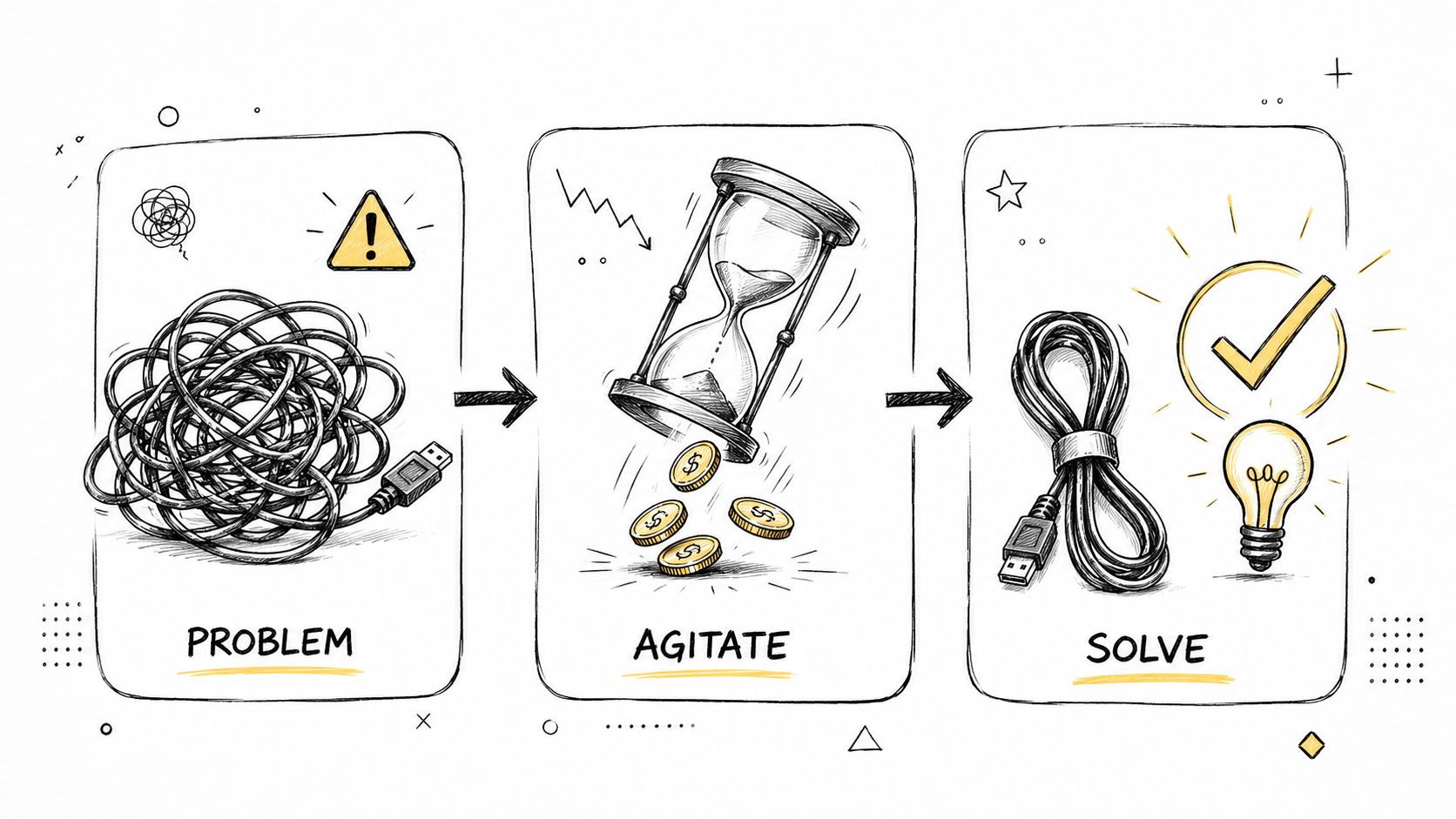
2. The Problem-Agitate-Solve Framework
Some offers need more tension. If you're selling into a messy workflow, fragmented process, or hidden operational cost, a PAS email often beats a softer opener. It names the pain directly, raises the cost of ignoring it, and then gives the buyer a simple path forward.
This works especially well for growing SMBs because they often know something feels inefficient, but they haven't named the root issue cleanly. A PAS email helps them see it. That's why I like it for finance ops, RevOps, and sales leaders who live with process debt every day.
Template
Subject: Still managing [problem] the hard way?
Hi [First Name],
Your team is likely dealing with [specific problem].
That usually creates [business consequence], which makes [decision or workflow] harder than it should be.
[Product or approach] helps teams fix that by [clear solution]. Open to seeing whether it fits your setup?
Best, [Your Name]
The strongest PAS emails don't invent drama. They reflect a problem the buyer already feels. If you're writing these regularly, sharpen your messaging with practical guidance on copywriting for email.
Where teams get this wrong
They overdo the agitation. Instead of making the cost clear, they sound theatrical. Prospects don't need a lecture. They need a clean diagnosis.
A finance example might be: your sales and marketing data sits in separate tools, so leadership can't get one clear revenue view. A sales example might be: reps spend too much time researching accounts manually, so pipeline coverage drops because selling time disappears into admin.
The agitation should sound like a business consequence, not a scare tactic.
For implementation, create PAS variants by persona. The same product can solve different pains for a founder, a head of sales, and a marketing lead. Zara can help generate those variants quickly, but only if you've defined the audience clearly first. Generic PAS emails are just generic sales email templates with a fancier label.
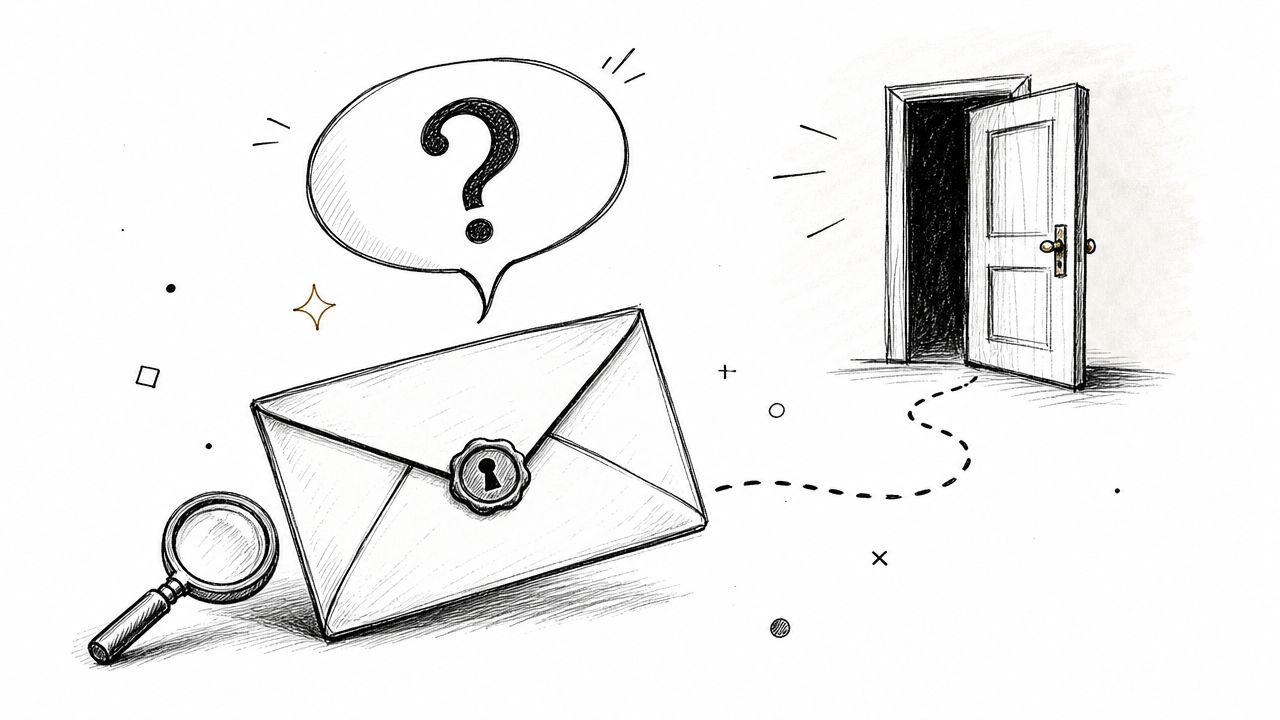
3. The Curiosity-Driven Hook Email
A prospect opens your email between meetings, sees a wall of explanation, and archives it. A curiosity hook works in that moment because it asks for almost no effort. It gives the reader one clear tension and a reason to reply.
I use this format for buyers who know the problem category but have not started a formal search. Founders, sales leaders, and ops leads often fit here. They are not ignoring the issue. They just have not prioritized it yet.
Template
Subject: Quick question about your outreach
Hi [First Name],
Many teams I talk to are not short on pipeline activity. They are short on clarity about what is creating it.
Curious if that's true for [Company] too?
Best, [Your Name]
The job of this email is to start a thread, not close a deal. That distinction matters. If the first message tries to explain your product, prove your credibility, and ask for a meeting all at once, curiosity disappears.
Good curiosity comes from a specific observation. Weak curiosity comes from copy that sounds clever but says nothing. "Saw something interesting" is vague. "Noticed your team is hiring AEs while reps still research accounts manually" gives the buyer something concrete to react to.
How to use it without sounding like a teaser campaign
Anchor the hook in a real business tension: point to a gap the buyer likely recognizes, such as strong activity but weak attribution, or heavy prospecting effort with little pipeline clarity.
Answer the question in the next touch: if email one raises tension, email two should resolve it with an insight, a short example, or a useful benchmark.
Write variants by segment: a founder may care about wasted headcount. A head of sales may care about rep time and conversion. A marketing lead may care about source quality.
Use AI for scale, not shortcuts: Zara can generate first-pass hooks by persona, trigger, and account context, but the prompt quality decides the output. Feed it clean inputs like role, likely pain, recent company signal, and desired CTA.
For SMB teams, this format is practical because it is fast to test. Build three to five hooks around one offer, then measure reply quality, not just opens. I care less about whether someone clicked and more about whether the response gave us a live pain point, an objection, or a referral. That is what tells you the hook is doing useful work.
One pattern I have seen work well is pairing a curiosity opener with a short proof point in the follow-up. For example, after asking whether a team has clarity on what is driving outreach results, the next email can share a brief customer example, such as how Summit Life Group improved outbound efficiency with Stamina. That keeps the sequence coherent. Each email adds a new reason to respond instead of repeating the same ask.
A practical version might ask whether the team is measuring activity more closely than revenue contribution. Another might point out that reps can spend too much time researching accounts before they ever start selling. The email stays short. The follow-up does the heavier lifting.
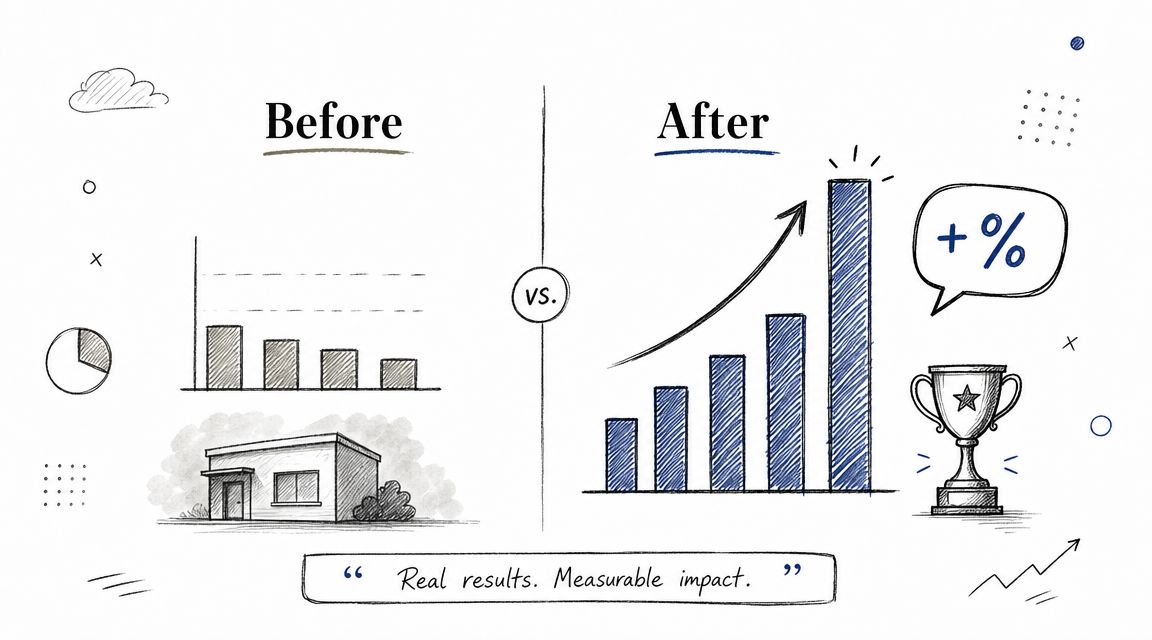
4. The Case Study and Results-Focused Email
A prospect opens your email between meetings and gives you eight seconds. A long customer story loses them. A tight result tied to a familiar problem gets a reply.
That is the job of a case study email. Show a credible before-and-after, keep the scope narrow, and ask for a small next step. The best versions read like a pattern match. "We helped a team like yours fix a problem like yours, and here is what changed."
Template
Subject: How a similar team handled [problem]
Hi [First Name],
We recently worked with a company facing [specific challenge].
They were dealing with [before state]. After changing their process, they got to [measurable customer outcome].
If that's relevant, I can send the short version or walk you through how they approached it.
Best, [Your Name]
This format works because it respects inbox behavior. Buyers rarely want the full story in email one. They want enough evidence to decide whether your example is relevant to their situation.
The trade-off is specificity. If the result is too broad, it sounds like marketing copy. If it is too detailed, it stops feeling transferable. I usually anchor the story to one business outcome, one operational change, and one reason the prospect should care.
Matching the story to the buyer
Relevance beats brand recognition in outbound. A founder at a twenty-person company will usually respond better to a story about speed, headcount efficiency, or pipeline clarity than to an enterprise logo with a different operating model. If you cannot match on industry, match on team shape, sales motion, or growth stage.
For a concrete example, the Summit Life Group customer story on outbound efficiency shows the level of detail that works well. It stays focused on the business problem, the change in process, and the outcome. That is the structure to copy.
AI helps you scale this without turning every email into the same case study with new company names. In Zara, build a small library of proof points by persona and use prompts that specify role, likely pain, company context, and acceptable outcomes to mention. Then review the output like a manager, not a spectator. Check that the example is close enough to the buyer's world and that the CTA asks for a reply or a short send-over, not a full meeting by default.
A short demo can support the email if the buyer asks for more context. Put it after the proof point, not before.
Good case study emails create curiosity around proof. They create enough confidence to earn the next conversation.
5. The Value-First, No-Pitch Email
This is one of the most underused templates in outbound because it feels slower than pitching. In reality, it often speeds things up with skeptical buyers. If your first useful interaction with a prospect is useful, you earn attention most reps never get.
The trap is fake value. Sending a generic blog post with "thought this might help" isn't value-first. It's lazy packaging. Real value is specific to the account, role, or moment they're in.
Template
Subject: Thought this might help
Hi [First Name],
Noticed [specific company context], and it made me think of [specific resource, observation, or recommendation].
The part that seemed most relevant for your team is [brief takeaway in the email body].
No need to reply if it's not useful, but happy to send over a few more ideas if it is.
Best, [Your Name]
A good example is sharing an operational recommendation with a finance leader after a systems change. Another is sending a founder a concise note on how other teams handle handoff problems after a hiring surge. The value should live in the email itself. Don't make them click just to discover your point.
Why this template earns replies
It lowers resistance: You're not forcing a meeting ask in every touch.
It proves relevance: Specificity shows you did the work.
It builds sequence depth: Later soft-pitch emails work better after you've been useful first.
This is also where AI can help without making the note feel robotic. Zara can summarize company news, site behavior, and role context into a draft. But someone still has to decide whether the insight is worth sending. That's the primary trade-off with AI-assisted sales email templates. It increases speed. It doesn't replace judgment.
6. The Soft Pitch with Clear Next Step
A prospect has opened two earlier emails, clicked once, and still hasn't replied. That is usually the moment reps either push too hard or get timid. Both mistakes kill momentum.
The soft pitch works when interest is present but uncommitted. The job is simple. Connect your offer to a real signal, make the ask easy to evaluate, and give the buyer a next step that feels small enough to say yes to.
Template
Subject: Worth a quick look?
Hi [First Name],
Based on [signal, issue, or prior context], I think [product or approach] could help with [specific outcome].
Happy to show you what that could look like for your team. Would you prefer a 10-minute walkthrough, a short call, or a reply with the main question you're trying to solve?
Best, [Your Name]
Timing matters here. Send this in the middle or later part of the sequence, after you've earned enough relevance to make an ask. If your team is tightening up meeting asks, this guide to appointment setting for B2B covers the mechanics well.
What separates a good soft pitch from a weak one is specificity. "Open to chatting?" creates work for the buyer. "Would a 10-minute walkthrough help you evaluate X?" gives them a clear decision. I also like offering two low-friction response paths. A meeting option for interested buyers, and a simple reply option for people who are not ready to book time.
AI helps at this stage, but only if you use it with discipline. Zara can pull in recent buying signals, summarize prior touches, and draft variants by segment so the ask matches the account context. The trade-off is familiar. AI speeds up production, but bad inputs create polished irrelevance at scale. Review the signal, tighten the outcome, and keep the CTA concrete.
Why this template books meetings
It reduces decision friction: The buyer sees exactly what happens next.
It protects tone: The email stays calm without sounding hesitant.
It scales well: Teams can use AI to personalize the setup while still measuring which CTA format gets replies.
For SMB sales teams, templates function as a system, rather than a mere copywriting exercise. Track which next step wins by segment. Some buyers respond to walkthroughs. Others prefer a one-line reply. Use that data to adjust the sequence, not just the wording of one email.
7. The Personal Referral or Introduction Email
Warm intros still beat almost every cold tactic when they're real. The reason is simple. Credibility arrives before your pitch does. But this template only works when the referral is genuine and the reason for the introduction is clear.
I've seen teams ruin warm intros by treating them like a shortcut. They name-drop a contact, then immediately launch into a broad pitch. That's wasted trust. If someone made the introduction, your email should show you understand why.
Template
Subject: [Referrer Name] suggested we connect
Hi [First Name],
[Referrer Name] mentioned you're focused on [specific initiative or challenge] and thought a conversation could be useful.
We've been helping teams work through [relevant issue], and it sounded adjacent to what you're tackling.
Open to a brief chat next week?
Best, [Your Name]
The best examples are specific. An advisor says the company is reworking pipeline visibility. A partner mentions the team is trying to unify scattered customer data. A customer points out that another operator is facing the same growth-stage friction they already solved.
Rules that keep it credible
Get permission first: Never assume you can use someone's name.
State the reason clearly: Explain why the intro makes sense.
Keep it conversational: Warm emails should read like warm emails, not polished automation.
A referral doesn't replace relevance. It just buys you a fair hearing.
AI can support this template by pulling shared context and recent company signals into a first draft. But don't automate the relationship itself. Warm outreach still needs a human touch, especially when trust is the entire asset.
8. The Sequence Breakup and Re-engagement Email
A prospect has ignored four emails. The rep sends one last note that says "Should I close your file?" and waits for the guilt reply. That move rarely works with experienced buyers. A good breakup email does one job well. It ends the sequence cleanly and protects future access to the account.
I use this email to reduce noise and get a real signal. If the prospect is uninterested, they can opt out without friction. If timing was the issue, this message often gets the honest response the earlier emails did not.
Template
Subject: I'll close the loop
Hi [First Name],
I've sent a few notes about [relevant issue] and haven't heard back, so I'll stop reaching out for now.
If the timing changes later, feel free to reply and pick things up then.
Either way, wishing you and the team the best.
Best, [Your Name]
What makes this work is restraint. No guilt. No fake urgency. No last attempt to cram in a pitch.
For SMB outbound teams, this email also creates a clean decision point in the system. Zara can help draft a breakup email using the thread history, account notes, and recent company activity, but the rule set matters more than the wording. Reps need to know which accounts should exit the sequence, which should shift to nurture, and which deserve a later re-engagement based on new intent.
How to run breakup and re-engagement well
Separate silence by signal level: A prospect who opened, clicked, or visited pricing should not be treated the same as a contact who never engaged.
Change the motion after the breakup: Stop the direct sequence. Move relevant accounts into a lighter nurture cadence or a monitored re-engagement list.
Wait for a real trigger: Reach back out when something changed, such as new funding, a hiring push, a product launch, or repeat site activity.
Track the outcome: Measure reply rate on the breakup email, re-engagement rate by segment, and meeting conversion after the account returns to active outreach.
Smaller teams can often beat bigger ones. They usually have fewer accounts, which means they can be stricter about who gets another shot and why. The payoff is better list hygiene, better rep focus, and cleaner performance data on the sequence itself.
A breakup email is not a throwaway courtesy note. It is a control point in your outbound system. Use it to end weak sequences, preserve goodwill, and tee up smarter re-engagement later.
8 Sales Email Template Comparison
Template | Implementation complexity | Resource requirements | Expected outcomes | Ideal use cases | Key advantages |
|---|---|---|---|---|---|
The Cold Open with Social Proof | Medium, requires targeted research and personalization; scales with AI | Social signals, prospect research, AI personalization tools | Higher open rates and trust; improved reply rates | Warm outbound, SMBs using social data, scaled sequences | Establishes credibility quickly; reduces skepticism; personalized at scale |
Problem-Agitate-Solve (PAS) Framework | Medium, structured copy + testing for right pain points | Market research, segmentation, automation for nurture flows | Strong emotional engagement and urgency; good conversions in nurture | Nurture campaigns, growing teams, broadcast sequences | Drives prospect self-identification; adaptable; high conversion when accurate |
Curiosity-Driven Hook Email | Low–Medium, needs tight, skilled copywriting and testing | Creative copywriters, A/B testing, minimal personalization | Very high opens and replies; lower immediate closes | First touch in sequences, cold email/LinkedIn outreach | High open rates; lowers resistance; easy to iterate |
Case Study and Results-Focused Email | Medium, requires tailored, recent case studies and metrics | Customer metrics, case study content, content library | High credibility and conversions at evaluation stage | Prospects in decision/evaluation stage, demo drive | Proof-based, reduces perceived risk; evidence-driven persuasion |
Value-First, No-Pitch Email | Medium, needs highly relevant value and segmentation | Strong content library, research, segmentation tools | Increased goodwill and engagement; longer sales cycle | Account-based marketing, early-stage nurture, broadcast sequences | Builds trust and reciprocity; stands out by not pitching |
Soft Pitch with Clear Next Step | Medium–High, sequencing, engagement tracking, and timing | Engagement analytics, workflow logic, scheduling options | Higher conversion after nurture; clear commitments | Mid-sequence outreach (emails 4–6), nurtured prospects | Low-friction CTAs; natural progression; higher acceptance rates |
Personal Referral or Introduction Email | Low (per instance) but high effort to scale | Referral network, coordination, referrer permission | Highest response and conversion rates; warm conversations | Warm intros, partner/VC referrals, high-trust outreach | Pre-established credibility; minimal resistance; strong conversions |
Sequence Breakup and Re-engagement Email | Low, simple copy but requires proper sequencing logic | Sequence automation, cadence rules, re‑engagement lists | Recovers some silent prospects; preserves brand reputation | Final touch after silence, list cleaning, long-term nurture | Graceful exit; can trigger re-engagement; improves brand perception |
From Templates to Revenue Your Action Plan
The right sales email templates won't save a broken process. They only work when the team treats them like living assets. That means each template has a job, a place in the sequence, and a clear signal for when to use it. A cold open earns attention. A PAS email sharpens pain. A value-first note builds trust. A soft pitch converts interest into a next step. The breakup email protects the relationship when timing isn't there.
If I were setting this up for an SMB team today, I'd start small. Pick one audience. Build one short sequence. Use one first-touch template and two follow-ups that each add new value instead of repeating the same ask. That's the gap many template libraries still miss. They give you isolated messages, but they don't help you decide what should happen after the first email. Newer guidance has started to acknowledge that each follow-up should layer in fresh value and that a single clear next step tends to outperform open-ended asks, but most collections still stop short of turning that into sequence strategy tied to buyer stage and signal quality, as discussed earlier in the AISDR material.
Then measure relentlessly. Not just opens. Opens can be directionally helpful, but they don't tell the whole story. Watch replies, positive replies, booked meetings, and where prospects stall. If your first email gets attention but the second dies, the problem isn't the template category. It's the sequence logic. If nobody opens the emails at all, don't keep rewriting body copy and ignore deliverability. Template quality doesn't matter if messages are landing in promotions or spam. That's one of the biggest blind spots in typical advice, especially for SMB teams trying to scale with lean resources.
AI can help without turning your outreach into mush. Use Zara to draft variants based on company signals, recent activity, and persona context. Use it to create multiple angles for one template rather than forcing reps to write every version from zero. But don't let AI decide your strategy. The rep or manager still has to choose the right trigger, decide when to push for a meeting, and know when to back off.
Build the system around repeatable decisions. Which signal justifies a social-proof opener. Which pain points deserve a PAS email. Which accounts get a value-first touch before any ask. Which prospects move into nurture instead of more outbound. Once those decisions are clear, the templates become multipliers instead of placeholders.
If you want to keep improving after launch, borrow a few strategies to streamline sales follow-up and review your sequence performance on a regular cadence. Stamina is one option that fits this workflow because it combines CRM, outreach, and AI SDR capabilities in one place, which makes it easier for SMB teams to personalize, test, and track outreach without stitching together a pile of separate tools.
If you want to turn these ideas into a working outbound system, take a look at Stamina. It gives growing teams one place to manage CRM, outreach, nurturing, and AI-assisted personalization with Zara, so your sales email templates can become a repeatable process instead of a copy-and-paste exercise.

