
You're probably staring at a homepage, a pitch deck, or a landing page draft that sounds busy but still doesn't make the buyer lean in. The problem usually isn't the product, it's the promise. A strong value proposition tells the right person exactly what they get, why it matters, and why your option is the better fit, which is why frameworks from Harvard Business School Online and Salesforce keep pushing teams toward clarity, customer pain, and proof. If you're comparing approaches or refining your messaging, it also helps to look at product discovery techniques for 2026 so the promise matches what buyers need. Below are 8 value proposition examples broken down the way a strategist would use them, with the mechanics, trade-offs, and practical templates that help turn a generic message into something buyers can act on.
1. All-in-One Platform Consolidation for SMBs
A consolidation message lands when it speaks to a daily operational headache, too many tools, too many handoffs, and too much context switching. SMB buyers usually are not looking for more software. They want fewer logins, cleaner data, and a stack their team can maintain. That is why all-in-one platforms like HubSpot, Zoho, and Pipedrive keep winning attention because they promise one operating system instead of a pile of disconnected point tools.

For Stamina, the promise is sharper because it brings marketing, sales, CRM, and automation into one system. That matters because the strongest version of this value proposition is not “we do everything,” it is “we remove the overhead of stitching everything together.” The internal story has to stay simple, and the buyer story has to be even simpler. Stamina's own all-in-one business platform positioning makes that consolidation angle concrete. The same logic also shows up in broader workflow and visibility tools, including the Nuwtonic Agentic SEO and GEO Platform, which reflects how buyers respond to fewer disconnected systems and clearer control.
What makes it work
This kind of proposition works when it describes one outcome, not a product catalog. A value proposition has to explain what the customer gets and why it is better than the alternative, which is the point emphasized by Harvard Business School Online. Strong positioning also needs a practical fit between the promise and the buyer's workflow, because SMB teams are comparing time saved, tools removed, and implementation burden, not just feature depth.
Practical rule: if your platform replaces three or more tools, lead with the operational simplification, not the feature list.
For a message like this, the best template is simple, For [customer type] who are managing [tool sprawl problem], [product] replaces [categories] with one connected system so they can [business outcome]. Stamina's framing around an all-in-one business platform shows how to connect the promise to real workflow consolidation, not abstract efficiency. The mistake to avoid is selling each module separately on the homepage, because that fragments the story and weakens the core promise.
2. AI-Powered Personalization at Scale
A strong personalization promise has to solve a simple problem, relevance drops fast when every message takes manual effort. AI matters here because it lets revenue teams keep outreach specific without asking reps to research every prospect from scratch. The best AI value proposition examples do not sell AI as a feature for its own sake. They sell faster relevance, at a scale that manual work cannot match.
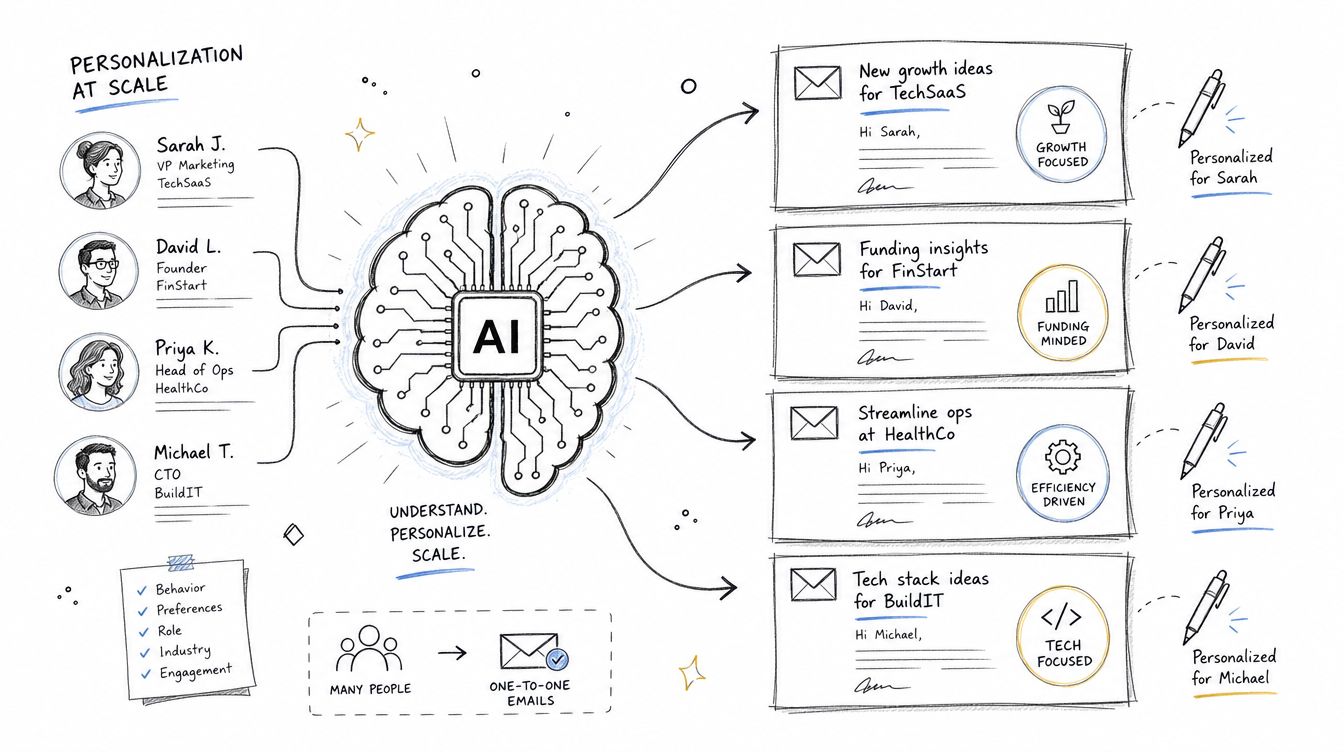
Stamina's Zara is a clear example because the promise is operational, identify ideal customers, research them, and contact them automatically, then generate personalized emails, sequences, and variants. That is stronger than a vague “AI-powered outreach” line because it matches a job buyers already recognize. The right buyer does not care that the system sounds intelligent, they care that the message reads as researched without adding more work to the team.
Stamina's approach to AI-powered personalization makes the trade-off easier to evaluate. It gives teams a way to keep the output customized while still protecting time, brand consistency, and rep capacity.
Proof matters more here than hype
AI claims draw skepticism quickly, especially from SMBs and agencies that have already seen generic automation create more noise than value. The strongest positioning stays close to the workflow, what the AI researched, what it wrote, and where it removes human effort. Shopify's guidance on value propositions points in the same direction, buyers respond better to concrete benefits and clear outcomes than to aspirational language Shopify.
Check out the Nuwtonic Agentic SEO and GEO Platform for more on AI-driven content strategies.
If the AI cannot be explained in plain language, the buyer will assume it adds complexity instead of removing it.
A practical template is, [Product] uses AI to help [team] [specific task] so they can [business result] without [common manual burden]. That structure leaves room to explain what the AI does well, and where human review still matters. The common mistake is trying to sound futuristic, because futurism does not close deals, operational usefulness does.
One useful way to validate this promise is to pilot it with a small group before rolling it out broadly. That gives you a cleaner read on message quality, brand voice, and whether the AI improves output or only increases throughput with mediocre results. If the first impression is that it saves time but still needs fixing, the proposition needs tighter boundaries, not more hype.
3. Warm Prospecting Through Intent and Behavioral Signals
Cold outreach is expensive because it asks for attention before there's evidence of interest. A warmer promise is more persuasive, website visits, social activity, company news, and technographic fit all suggest timing, and timing changes the whole conversation. That's why intent-based positioning lands so well, especially in crowded B2B categories where the first vendor to notice a buying signal often gets the meeting.
The best examples in this space, like 6sense, Demandbase, Clearbit, and LinkedIn Sales Navigator, all orbit the same idea, don't treat every lead the same. Stamina's angle around website visitor tracking and social signals fits the same pattern, because it helps sales teams focus on prospects who've already shown some level of curiosity. That's a more credible promise than “better leads,” because it explains why the lead is warmer in the first place.
The mechanics buyers understand
Buyers get this message quickly when you define intent in terms they already use. A practical version sounds like, we help your team spot buying signals, prioritize accounts that are already active, and reach out while interest is still high. That's the heart of the proposition, and it's more useful than talking about data enrichment in the abstract.
The strongest intent message doesn't promise magic, it promises better timing.
The trade-off is precision versus false positives. If the signal is too loose, reps waste time chasing noise. If it's too strict, the team misses opportunities that never looked urgent on paper. That's why the best operators combine multiple signals, website behavior, social activity, and account context, then give sales a clear rule for what counts as warm enough to act on.
For Stamina, the internal link to what intent data is fits naturally because the buyer needs education before they need persuasion. The best template here is, [Product] helps [sales team] identify prospects showing [signals] so they can contact the right accounts before competitors do. That framing works because it makes outreach feel timely instead of intrusive.
4. Demand Generation as an Integrated Cross-Functional Play
Most demand generation failures come from handoff problems, not bad campaigns. Marketing runs one motion, sales runs another, and customer success often enters too late to shape the journey. An integrated value proposition works because it promises coordination, not just lead volume, and that's exactly what growth leaders need when they're tired of siloed execution.
HubSpot, Marketo, and Salesforce all lean into this kind of promise because it aligns with how revenue teams operate. Stamina's cross-team orchestration is compelling for the same reason, it ties marketing actions to sales activity, keeps nurturing alive after sequences, and gives everyone visibility into the same customer journey. That's a stronger promise than “better marketing automation,” because it speaks to how revenue gets managed across functions.
Why coordination beats isolated effort
A coordinated proposition works when the buyer can see each team's role in the same flow. Marketing should know when a lead is routed, sales should know what campaign created the interest, and customer success should know what was promised before the deal closed. If those details live in different tools, the organization ends up debating ownership instead of moving revenue forward.
For a practical message, use this structure, [Platform] connects marketing, sales, and customer success so teams can turn shared data into coordinated demand generation and faster follow-up. That sentence is useful because it describes the system, the teams, and the outcome without slipping into feature overload. The wrong move is promising “alignment” as if it were the outcome, because alignment is only valuable when it improves speed, conversion, or retention.
The internal guide on demand generation in marketing belongs here because the buyer needs the operating model, not just the software category. A solid rollout usually starts with one workflow, like lead scoring to routing, then expands once the team trusts the process. That phased approach reduces friction and makes the promise feel realistic.
5. Agency Mode and White-Label Capabilities for Agencies and Consultants
Agencies don't evaluate software the same way SMB operators do. They're asking a second question under the surface, can this platform help me deliver services faster, protect margins, and create something I can resell? That's why agency mode and white-label capability are such strong positioning levers, they speak to business model advantage, not just tool utility.
HubSpot's partner ecosystem, Klaviyo's agency network, and Salesforce's reseller structure all show how important this market can be. Stamina's agency mode fits because it gives partners a way to manage multiple client accounts from one interface while presenting the platform under their own brand. For many agencies, that's the difference between being a reseller and being stuck as a service operator.
What agencies actually need
The proposition only works if it solves operational pain for the partner, not just convenience for the vendor. Agencies need onboarding that doesn't drag, support that doesn't create escalations, and pricing that leaves room for margin. If the platform looks flexible but requires too much internal engineering, the value prop collapses quickly.
A useful template is, [Platform] helps agencies manage multiple clients, automate onboarding, and deliver branded services without building everything from scratch. That message sells time, control, and revenue expansion in one line. It also avoids one of the biggest mistakes in partner positioning, overemphasizing the platform's features while underexplaining the agency's path to profit.
Agencies buy outcomes they can package, not software they have to babysit.
The most effective white-label proposition usually includes a clear partner journey, sell, onboard, deploy, support, and scale. When that path is visible, the agency can see how the platform becomes part of its own offer instead of a separate tool it has to explain to clients. That's the kind of clarity that moves a partner from curiosity to commitment.
6. Flexible CRM Customization for Industry-Specific Workflows
Generic CRMs break down when the deal process doesn't look generic. A staffing firm, a recruiting agency, and a SaaS team all move through different stages, and if the CRM forces every team into the same pipeline, users end up building workarounds. Flexible customization is a strong value proposition because it gives buyers control without making them hire developers.
Pipedrive and Zoho CRM are good reference points because they show how much buyers value configurable pipelines, fields, and workflows. Salesforce is in the same conversation, although it often demands more technical setup. Stamina's positioning is attractive when it makes customization feel accessible, not heavyweight, because SMBs want a CRM that adapts to their process instead of forcing process conformity.
The message buyers need to hear
The core message here is, your CRM should mirror the way your team sells, not force your team to mirror the CRM. That's simple, but it's also one of the clearest ways to differentiate against rigid systems. Buyers don't need endless customization freedom, they need enough flexibility to fit the way they work.
A practical template is, [CRM] lets [industry or team] customize pipelines, fields, and workflows so they can manage deals in a way that matches their process. That line works because it speaks to fit, not just flexibility. It also hints at the operational payoff, fewer workarounds, cleaner reporting, and less admin overhead.
The trade-off is governance. Too much customization creates sprawl, unclear field names, and reporting chaos. The best teams start with an industry template, document why changes are made, and review the setup regularly so the CRM doesn't turn into a junk drawer. When buyers can see that balance, flexibility feels like a strength instead of a risk.
7. Sales Engagement Through Automated Warm Sequences and Variants
Manual outreach breaks down when sales teams try to scale it by brute force. The promise of sales engagement software is not “send more emails,” it's “run more relevant sequences without multiplying headcount.” That's why tools like Outreach, SalesLoft, Apollo, and Lemlist have such durable appeal, they make structured follow-up feel manageable.
Stamina's sales engagement angle gets sharper when it blends warm prospecting signals with automated sequences. That creates a better proposition than a static cadence, because the system can adapt based on opens, clicks, replies, and timing. Buyers understand the difference immediately, one version is a mail merge, the other is an organized outreach engine.
How to sell the outcome, not the workload
The best message centers on consistency and relevance. Sales teams want follow-up that doesn't depend on memory or manual scheduling, and managers want a process that can be inspected and improved. If the proposition makes the rep's life easier while also raising the quality of the touchpoints, it lands well.
A practical template is, [Platform] helps SDRs run multi-touch sequences with personalized variants so they can keep outreach consistent, timely, and relevant. That's strong because it bundles three buyer benefits into one promise, structure, personalization, and scale. The bad version is promising “automation” with no explanation of why the buyer should care.
Good sequences feel human because they respect timing, context, and frequency.
This is also where specificity in the first touch matters. If the opening message is weak, the rest of the sequence inherits that weakness. So the value proposition should make it obvious that the first outreach is relevant, the timing is thoughtful, and the follow-ups are controlled instead of spammy. That's the difference between a sequence buyers tolerate and a sequence they answer.
8. Revenue Operations Infrastructure for Cross-Functional Visibility and Accountability
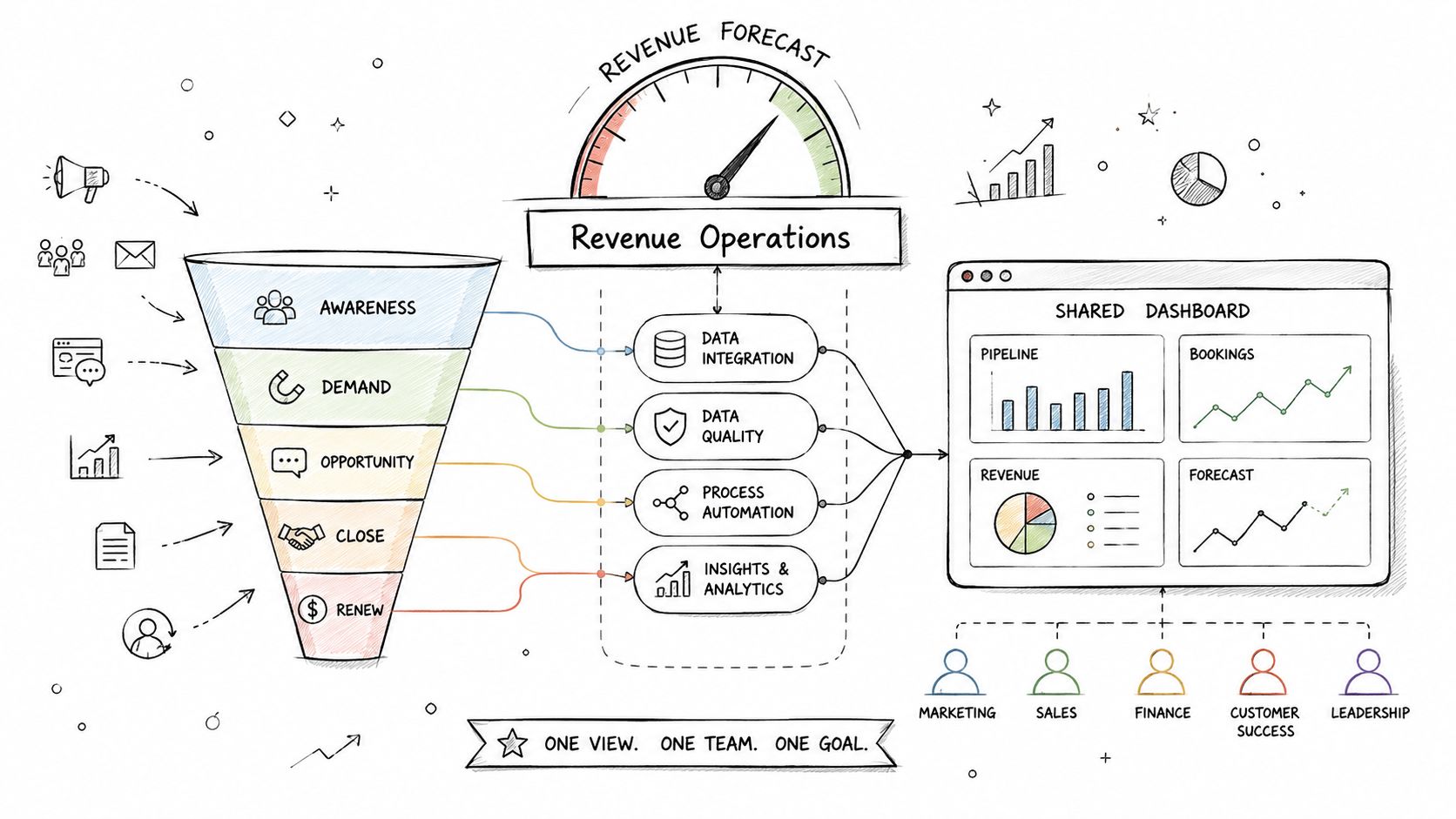
RevOps value propositions work best when leaders are done making decisions from scattered reports. If pipeline data sits in one system, campaign performance in another, and customer activity somewhere else, forecasting turns into interpretation instead of management. The promise has to be clear, one source of truth, tighter accountability, and better decisions.
Salesforce's Einstein Analytics, Tableau, Clari, and other analytics-led tools all point to the same buyer need. Stamina's unified analytics across marketing, sales, and CRM fits that pattern too, because it shows where deals stall, which campaigns underperform, and where resources should move next. That is the kind of proposition that resonates with operators who want less opinion and more visibility. For a broader framing of how revenue operations connects teams and data, Revenue Operations Alliance discusses the operating model behind shared revenue visibility.
What makes the infrastructure story compelling
The buyer is not purchasing dashboards alone, they are buying clearer decisions. The message needs to connect data visibility to team behavior, routing, prioritization, forecasting, and resource allocation. If the platform can show where friction sits in the pipeline, it becomes much easier for leaders to justify the investment.
A workable template is, [Platform] gives revenue teams a shared view of pipeline, conversion, and customer activity so they can spot bottlenecks and make better decisions faster. That sentence works because it translates infrastructure into management value. It also avoids sounding like a reporting tool when the buyer wants operational control.
If the team cannot agree on the data, it cannot agree on the decision.
This proposition gets stronger when it is tied to weekly or bi-weekly reviews, because the platform becomes part of how the business operates, not just a passive analytics layer. RevOps messaging should feel disciplined and practical. Buyers want to know what they can see, who can act on it, and how quickly they can close the loop.
8-Point Value Proposition Comparison
Title | Implementation complexity | Resource requirements | Expected outcomes | Ideal use cases | Key advantages |
|---|---|---|---|---|---|
All-in-One Platform Consolidation for SMBs | Medium, migration and change management across teams | Moderate, integrations, training, subscription consolidation | Lower TCO, unified data, faster onboarding | SMBs with fragmented tool stacks and limited IT | Single source of truth; simplified workflows; cost savings |
AI-Powered Personalization at Scale | Medium–High, requires AI models, governance, and tuning | High, clean data, model training, monitoring, human review | Higher open/CTR, scalable personalized outreach, time savings | Outbound-heavy B2B SaaS and growth teams scaling outreach | Personalized messaging at scale; reduces SDR workload |
Warm Prospecting Through Intent and Behavioral Signals | Medium, integrates multiple signal sources and scoring | Moderate–High, signal feeds, enrichment, real-time alerts | Higher response rates and better-qualified leads | ABM, enterprise B2B, time-sensitive sales outreach | Engage prospects at peak intent; more efficient pipeline generation |
Demand Generation as Integrated Cross-Functional Play | High, cross-team orchestration and workflow design | High, automation, shared data, governance and coordination | Improved lead-to-revenue conversion; faster deal cycles | Organizations needing coordinated marketing, sales, success ops | Aligned teams; clearer attribution; fewer handoff delays |
Agency Mode and White-Label Capabilities for Agencies and Consultants | Medium, multi-tenant setup and branding configuration | Moderate, provisioning automation, partner support, billing | New recurring revenue streams; improved client retention | Marketing agencies, resellers, consultancies managing many clients | Multi-client management; white-label resale; partner margins |
Flexible CRM Customization for Industry-Specific Workflows | Low–Medium, no-code setup but requires governance | Moderate, admin users, templates, training | Higher CRM adoption; processes mapped to business needs | Staffing, professional services, agencies with unique pipelines | Tailors CRM to process quickly without coding |
Sales Engagement Through Automated Warm Sequences and Variants | Medium, sequence logic, conditional automation, testing | Moderate, clean data, templates, monitoring and A/B testing | Increased contact and response rates; reduced manual follow-up | SDR teams and SMBs scaling multi-touch outreach | Automated multi-touch personalization and optimized timing |
Revenue Operations Infrastructure for Cross-Functional Visibility and Accountability | High, unified data model, integrations, analytics setup | High, RevOps expertise, data hygiene, BI integrations | Better forecast accuracy; identifies bottlenecks; data-driven decisions | Scaling SMBs with complex multi-team revenue processes | Unified analytics and forecasting; improved accountability |
From Example to Execution Crafting Your Own Value Prop
The best value proposition examples don't just sound polished, they make a hard choice. They choose a target customer, a painful problem, a clear outcome, and proof that the promise is real. That's why the strongest examples above work across different models, they don't try to say everything, they say the one thing that matters most to the buyer who's already feeling the pain.
Harvard Business School Online's definition is useful here because it keeps the focus on what the brand does, who it's for, and how it differs, while Salesforce's framework reminds teams to move from pain points to proof Harvard Business School Online. MarketingSherpa's case study also shows that clearer explanation can materially change conversion, which is a good reminder that message depth isn't decoration, it's part of performance MarketingSherpa. If you're building for a complex product, especially an all-in-one platform or AI-driven revenue tool, the message has to be specific enough to earn trust and narrow enough to feel believable.
Start by writing one sentence for each of these, who it's for, what pain it solves, what outcome it creates, and why you're different. Then pressure-test the sentence against real buyer behavior, not internal enthusiasm. If a prospect can't repeat the promise in plain English after one read, the positioning still needs work.
For Stamina, that means connecting the promise of unified marketing, sales, CRM, AI personalization, and engagement into one coherent story that helps SMBs simplify their stack and grow revenue with less friction. If that's the kind of platform you're looking for, visit Stamina and see how a connected, AI-powered revenue system can replace tool sprawl with one practical operating layer.

