What Is Intent Data and How to Use It in 2026

Learn what is intent data, the types and sources that matter, and how SMBs can use it to prioritize accounts, personalize outreach, and grow pipeline faster.

0 - Minute Read

You've got a target list, a decent outbound motion, and a nagging feeling that some accounts were already comparing vendors before your team ever saw them. That's the exact gap intent data is meant to close, because a lot of B2B research happens long before a form fill or demo request shows up in your CRM. Google's research from 2013 and 2015 showed buyers were already deep into self-directed research before contacting suppliers, which is why silent accounts are often only silent on your side, not on theirs. The practical question isn't whether people are researching. It's whether you can see the signal early enough to act on it.

Why Buyers Disappear Before You Hear From Them

A founder usually feels this gap the hard way. Two accounts look perfect on paper, the sales team has them on the list, and marketing has the right sequences ready. Then one account books a demo with a competitor, the other goes dark, and nobody can point to the exact moment when either buyer started researching in earnest.

That's the problem with relying on form fills alone. By the time a prospect raises a hand, they may already have compared your product, read review sites, spoken to peers, and narrowed the field. Google found in 2013 that buyers don't contact suppliers until 57% of the purchase process is complete, and in 2015 that B2B buyers conduct an average of 12 online searches before visiting a specific brand's website, which shows how much work happens before your team sees a direct signal. Those facts matter because they explain why a clean CRM can still hide active demand. Google's buyer research milestone summary

The hidden part of the funnel

A lot of buying behavior looks like ordinary browsing. Someone reads comparison pages, checks a category review, comes back a few days later, and never fills out a form. On your side, that can look like nothing happened. On the buyer's side, the shortlist is already getting tighter.

Practical rule: if you only react to inbound raises of hand, you're arriving after the buyer has already done most of the deciding.

That's why intent data became useful before the AI stack made everyone talk about prediction. It gave teams a way to watch the behavioral layer underneath the form fill. In 2017, only 25% of B2B companies were using intent data and monitoring tools, which shows how early the category still was compared with where it sits now. ABM and intent data adoption context

For a founder, the takeaway is simple. Deals don't always disappear because your message was weak. Sometimes they disappear because the buyer was already researching, and nobody on your side had a way to see the pattern before the decision was made.

What Intent Data Means

At its simplest, intent data is a set of digital behavioral signals that suggest someone is researching a solution and may be getting ready to buy. Those signals can come from your own website, from content they consume elsewhere, or from broader web activity that points to topic interest. The important part is not one isolated action, it is the pattern across actions.

A thermostat reading gives you more context than a single temperature number. One page view is a tiny blip. Several related actions, taken over time, give you a more useful read on whether an account is heating up. That is why intent data works best as a layer, not as a standalone truth.

A conceptual illustration showing a magnifying glass searching for data leading to a glowing lightbulb idea.

Signals, scores, and buying intent

Raw signals are the individual behaviors. A pricing-page visit, a webinar registration, a review-site comparison, or repeated searches on a topic all fit here. On their own, they are just events.

An intent score is what happens when a system weights those events and rolls them up. That score helps revenue teams decide who deserves attention first. Account-level intent is the next step, where multiple signals across different people inside the same company get combined into a stronger read on whether that account is in market. If you want a broader definition of how this sits inside the revenue stack, this overview of sales intelligence helps place intent data in context.

The behaviors that matter

The most useful signals usually come from a few familiar places.

  • Content consumption: repeated reading of guides, comparisons, and solution pages often shows topic interest.

  • Search activity: keyword research can reveal what problem the buyer is trying to solve.

  • Review and comparison visits: checking software review platforms often means the buyer is narrowing options.

  • Competitor research: comparison behavior can signal urgency, especially when it happens across multiple sessions.

A founder or revenue lead should treat these signals like clues on a desk, not a verdict in court. One clue can be misleading. A small cluster of related behaviors, especially when it shows up in your own web data and connects to an account already in the pipeline, gives you a much better read on whether there is real demand. That is also why teams inside a unified platform like Stamina look at intent alongside other revenue signals, then validate whether the activity lines up with pipeline movement instead of treating every click as a buying event.

The cleanest way to explain it to a colleague is this. A signal is an event. A score is the math. Intent is the buying read you infer from both. If you keep those three layers separate, it becomes much easier to avoid treating every click like a purchase.

The Three Types of Intent Sources You Should Know

Intent data isn't one feed. It's a mix of sources, and the source you choose changes what you can trust. A small team usually needs to balance fidelity, reach, cost, and how quickly the signal shows up. That tradeoff matters more than the buzzword.

First-party, second-party, and third-party in plain language

First-party intent comes from your own properties. That includes pricing-page views, email clicks, content downloads, form activity, and repeat visits from the same account. It's usually the highest-confidence view of interest because the buyer is already touching your brand.

Second-party intent comes from a partner or trusted platform that shares its audience behavior with you. A co-hosted webinar, a publisher partnership, or a review platform can all surface this kind of signal. It expands your reach without pushing you into the broadest possible web-level data.

Third-party intent comes from broader web patterns collected by external providers. It's the earliest and widest net, but it also needs more validation because the signal is farther from your own funnel. For a concise framework on how these categories behave, this overview of the three types of behavioral triggers maps nicely to what revenue teams do with them.

Intent Data Source Comparison

Fidelity

Reach

Cost

Best For

First-party

Highest

Narrowest

Usually lower if you already track it

Pricing-page visits, demo interest, nurture prioritization

Second-party

High

Moderate

Depends on partner access

Co-marketing, review-platform interest, shared audiences

Third-party

Variable

Broadest

Often higher

Early account discovery, category surge monitoring

How to choose the right mix

If you're an SMB, start with what you already own. First-party intent gives you the clearest signal, and it's usually the easiest to operationalize because your team controls the data flow. Third-party can be useful when you need earlier visibility, but it's not a magic shortcut. It's a wider net, not a guarantee.

The best mix isn't the one with the most feeds. It's the one your team can actually validate, route, and act on without creating noise.

A practical way to think about the three sources is this. First-party tells you who is already leaning in to your brand. Second-party tells you who is warming up in adjacent channels. Third-party tells you who may be entering the market before they ever reach your site.

How SMB Marketing and Sales Teams Use Intent Data

A small team does not need a long menu of use cases. It needs a few plays it can run without adding more confusion. Intent data is useful when it changes a decision, not when it just fills a dashboard.
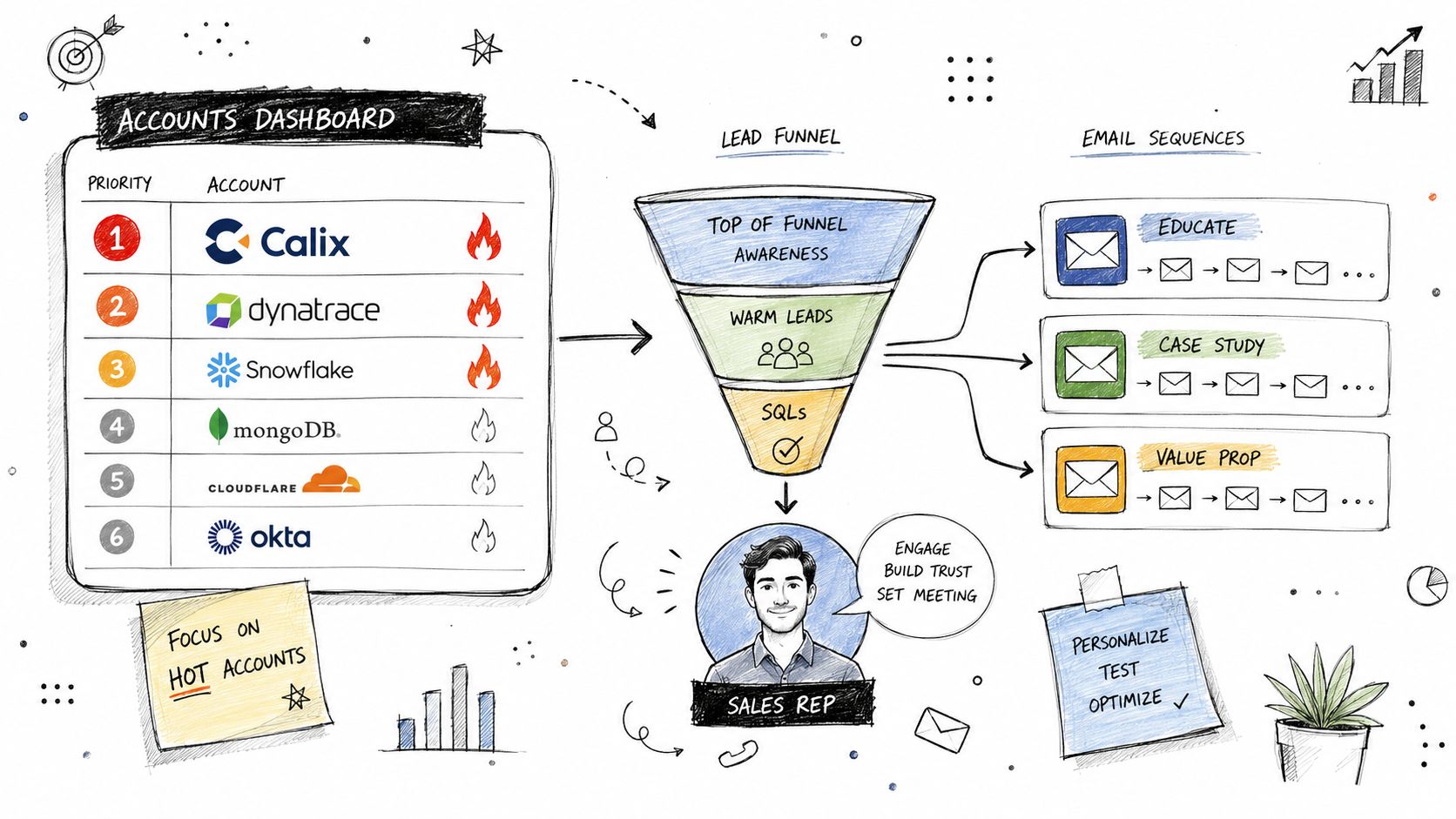
A hand-drawn illustration showing a sales account dashboard funneling hot leads into targeted email marketing sequences.

Marketing uses it to stop wasting spend

When an account starts showing strong topic interest, marketing can shift spend toward that account or that topic cluster instead of sending the same campaign to everyone. A founder running paid acquisition does not need to be everywhere. They need to show up where the buyer is already paying attention. Intent data helps focus budget on accounts that are more likely to care now, which is the point.

Sales uses it to decide who gets a human touch

An SDR queue full of cold accounts is a time sink. When intent signals show repeated research, sales can move those accounts up the list and send a more relevant first touch. That might mean referencing the topic they have been exploring, the comparison page they visited, or the category they seem to be narrowing down.

Nurture gets smarter when topic interest changes

A marketing manager can route an account into a sequence tied to the exact theme showing up in the signal. If the buyer is suddenly reading content about integrations, do not send the same generic product overview again. If the signal shifts toward competitor comparisons, the sequence should change too.

Practical rule: use intent to change the next message, not to justify more messages.

Competitor spikes should trigger fast follow-up

When an account starts comparing alternatives, speed matters. That is the moment to alert sales, tighten the messaging, and make sure the CRM reflects the latest activity. The goal is simple, reach the buyer while they are still deciding, not after the shortlist is already set.

A good SMB workflow also checks whether the signal is worth trusting before anyone acts on it. High-intent activity inside a platform like Stamina becomes more useful when it can be compared against website visits, CRM history, and outreach engagement in the same place. That is where teams can separate a real buying pattern from a random spike and connect the signal to pipeline later. For a closer look at how the systems fit together, this guide on customer data integration is a useful companion read.

Putting Intent to Work Inside a Unified Revenue Platform

Intent data becomes more useful when it sits inside the same system that handles outreach, CRM updates, and nurture. Otherwise, it turns into another tab that people check once and forget. A unified platform like Stamina can combine first-party website and social signals with broader intent inputs, then use those signals to drive sequences, broadcasts, and CRM activity in one place, which is the cleaner model SMB teams usually need.
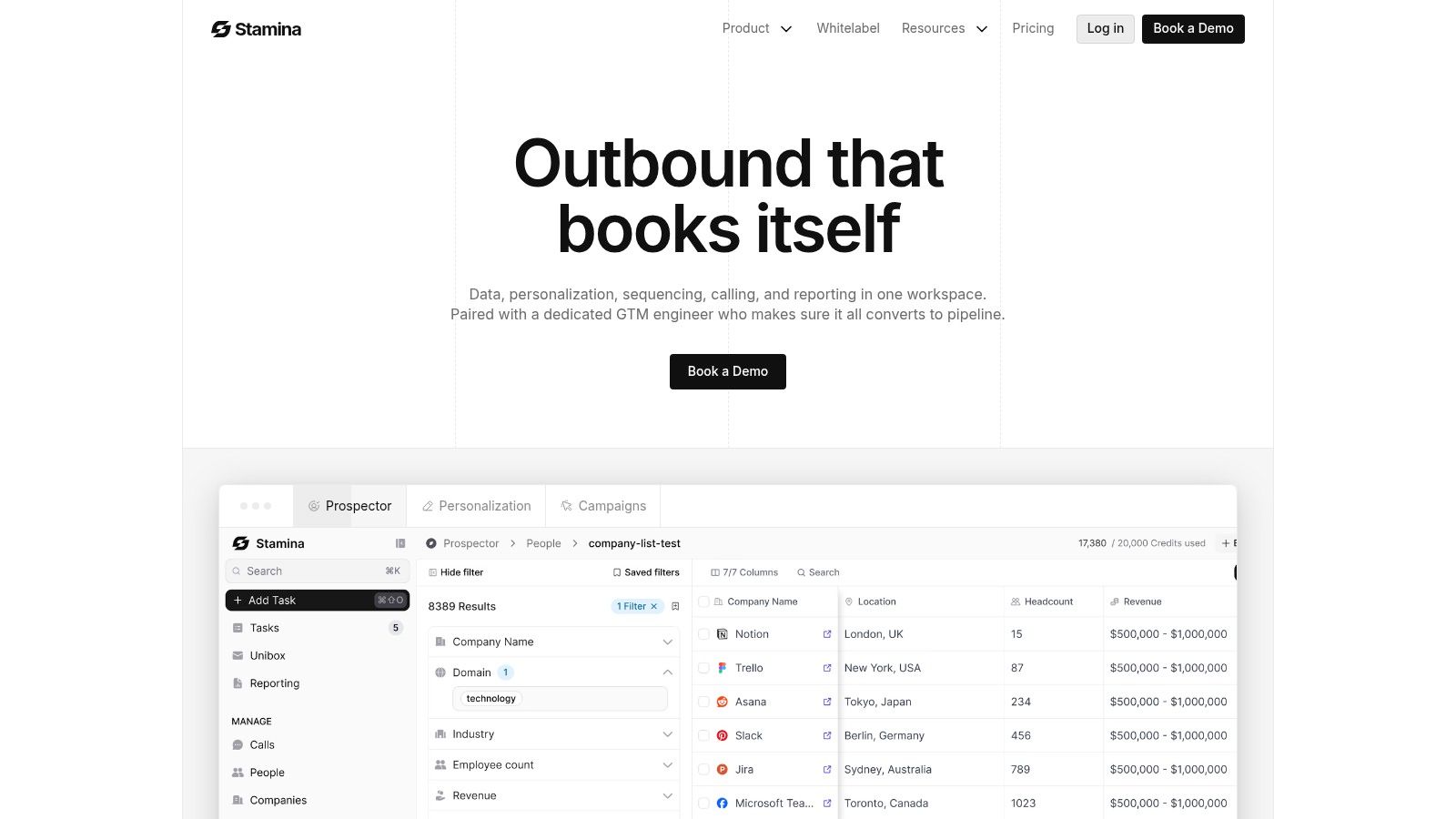
Screenshot from https://stamina.io

What the workflow looks like

An account shows a topic surge. Zara, the built-in AI SDR in Stamina, can prioritize that account, research it, and generate a personalized sequence based on the available signals. Marketing can also use the same platform to send broadcasts or move the account into a relevant automated flow, while sales sees the activity in the CRM instead of chasing it in a spreadsheet. For a broader look at how systems like this are stitched together, this guide on customer data integration is a useful companion read.

The benefit is not just speed. It's consistency. The same account no longer lives in separate tools with different views of the truth.

Why unified systems matter for SMBs

Small teams lose momentum when they have to manually copy signals from one platform to another. A dashboard can tell you an account is warm. A unified platform can turn that warmth into a sequence, a task, a broadcast, and a logged activity without extra handoffs. That's the difference between knowing and doing.

If you're comparing tools, focus on whether the system can do three things well. Capture the signal, move it into the right workflow, and keep the CRM updated so the team doesn't lose context. If it can't do all three, you're probably buying visibility instead of motion.

How to Determine Whether Intent Data Is Trustworthy

A rep gets a signal that looks warm, the account opens one pricing page, someone else on the same company visits a blog post, and the dashboard starts flashing green. That does not mean the team should act yet. Intent data is more like smoke than a fire alarm. One puff can come from curiosity, a competitor, a student, or someone doing background research for a future project.

The useful question is whether the signal behaves like a real buying pattern. DemandScience's framing helps here, because it warns that much of what gets labeled as intent is really a cluster of topic signals that only matters when it repeats over time. Apollo takes a similar view by treating intent as a prioritization layer, not a lead list to work from blindly. For an SMB team, that mindset matters because bad signal quality sends sales down the wrong path fast. For a practical way to turn that idea into action, this guide on data activation strategies for 2026 is a useful companion.

A simple quality filter

Use four questions before you trust a signal.

  • Is it repeated? One action is thin. A pattern across sessions is stronger, like seeing the same account return to the same topic more than once.

  • Is it topical? The activity should cluster around one problem, product category, or buying need, not scatter across unrelated pages.

  • Is the source credible? Signals from your own site usually carry more weight than vague off-site activity, because you can see the context more clearly.

  • Can it lead to a meeting? If a signal never changes timing, messaging, or follow-up, it is probably just noise in the dashboard.

These checks help teams separate curiosity from buying motion. They also keep marketing and sales aligned on what deserves attention.

False positives are expensive in small teams

For an SMB, a weak signal does more than waste time. It pulls reps away from real opportunities, gives marketing a false sense of account health, and makes pipeline coverage look stronger than it is. A single wrong priority can ripple through a small team for days.

Recency filters help reduce that risk. Old behavior can look fresh if the system does not weigh timestamps carefully, and stale interest is a common source of false confidence. The easiest test is practical. If a signal regularly leads to a conversation, a reply, or a demo request, keep using it. If it only looks interesting inside a dashboard, ignore it until something stronger appears.

Privacy, Compliance, and the Rules You Cannot Ignore

Intent data sits in a real legal environment, not a theoretical one. GDPR, CCPA, and newer US state privacy laws shape what you can collect, how you can use it, and what you need to tell people. The safest default is to treat account-level intent very differently from individual tracking.

Aggregated account-level signals are usually the lower-risk route because they focus on company behavior rather than personally identifying a single person. Individual-level tracking needs more care, especially when you connect it directly to outreach. If your process depends on consent, retention rules, or cross-site tracking, bring legal into the loop before you launch.

A practical SMB checklist is straightforward.

  • Lawful basis: know why you're collecting the data.

  • Data minimization: keep only what you need.

  • Vendor diligence: ask how the provider gathers and stores signals.

  • Opt-out handling: make sure suppression lists and preferences are respected.

  • Recordkeeping: document what you collect and how you use it.

The cleanest rule is simple. Use intent to prioritize and personalize, not to surprise people with tracking they didn't expect.

Measuring Impact and Avoiding the Most Common Pitfalls

If intent is working, you'll see it in the speed and quality of follow-up, not just in more activity. Track account-to-meeting velocity, pipeline contribution from intent-sourced accounts, and whether personalized outreach gets better reply and demo rates. If you're using scoring, a guide like lead scoring automation can help connect the model to actual handoffs instead of vanity volume.

The biggest mistakes are predictable. Teams over-credit intent for deals that were already going to close, they optimize for MQLs instead of qualified meetings, and they ignore recency so old behavior keeps shaping fresh decisions.

A simple rollout path works better than a big-bang launch.

  • First 30 days: validate which signals correlate with real meetings.

  • Next 60 days: connect those signals to routing, nurture, and rep alerts.

  • By 90 days: review pipeline contribution and cut any feed that only creates noise.

If you can't point to a better decision, the signal isn't pulling its weight yet.

If you want intent data to do more than sit in a report, Stamina gives you one place to capture signals, route them into outreach, and keep CRM activity aligned. That makes it easier to test signal quality, reduce false positives, and connect interest to pipeline without stitching together a pile of tools. Visit Stamina if you want to turn buyer behavior into a workflow your team can run.

You've got a target list, a decent outbound motion, and a nagging feeling that some accounts were already comparing vendors before your team ever saw them. That's the exact gap intent data is meant to close, because a lot of B2B research happens long before a form fill or demo request shows up in your CRM. Google's research from 2013 and 2015 showed buyers were already deep into self-directed research before contacting suppliers, which is why silent accounts are often only silent on your side, not on theirs. The practical question isn't whether people are researching. It's whether you can see the signal early enough to act on it.

Why Buyers Disappear Before You Hear From Them

A founder usually feels this gap the hard way. Two accounts look perfect on paper, the sales team has them on the list, and marketing has the right sequences ready. Then one account books a demo with a competitor, the other goes dark, and nobody can point to the exact moment when either buyer started researching in earnest.

That's the problem with relying on form fills alone. By the time a prospect raises a hand, they may already have compared your product, read review sites, spoken to peers, and narrowed the field. Google found in 2013 that buyers don't contact suppliers until 57% of the purchase process is complete, and in 2015 that B2B buyers conduct an average of 12 online searches before visiting a specific brand's website, which shows how much work happens before your team sees a direct signal. Those facts matter because they explain why a clean CRM can still hide active demand. Google's buyer research milestone summary

The hidden part of the funnel

A lot of buying behavior looks like ordinary browsing. Someone reads comparison pages, checks a category review, comes back a few days later, and never fills out a form. On your side, that can look like nothing happened. On the buyer's side, the shortlist is already getting tighter.

Practical rule: if you only react to inbound raises of hand, you're arriving after the buyer has already done most of the deciding.

That's why intent data became useful before the AI stack made everyone talk about prediction. It gave teams a way to watch the behavioral layer underneath the form fill. In 2017, only 25% of B2B companies were using intent data and monitoring tools, which shows how early the category still was compared with where it sits now. ABM and intent data adoption context

For a founder, the takeaway is simple. Deals don't always disappear because your message was weak. Sometimes they disappear because the buyer was already researching, and nobody on your side had a way to see the pattern before the decision was made.

What Intent Data Means

At its simplest, intent data is a set of digital behavioral signals that suggest someone is researching a solution and may be getting ready to buy. Those signals can come from your own website, from content they consume elsewhere, or from broader web activity that points to topic interest. The important part is not one isolated action, it is the pattern across actions.

A thermostat reading gives you more context than a single temperature number. One page view is a tiny blip. Several related actions, taken over time, give you a more useful read on whether an account is heating up. That is why intent data works best as a layer, not as a standalone truth.

A conceptual illustration showing a magnifying glass searching for data leading to a glowing lightbulb idea.

Signals, scores, and buying intent

Raw signals are the individual behaviors. A pricing-page visit, a webinar registration, a review-site comparison, or repeated searches on a topic all fit here. On their own, they are just events.

An intent score is what happens when a system weights those events and rolls them up. That score helps revenue teams decide who deserves attention first. Account-level intent is the next step, where multiple signals across different people inside the same company get combined into a stronger read on whether that account is in market. If you want a broader definition of how this sits inside the revenue stack, this overview of sales intelligence helps place intent data in context.

The behaviors that matter

The most useful signals usually come from a few familiar places.

  • Content consumption: repeated reading of guides, comparisons, and solution pages often shows topic interest.

  • Search activity: keyword research can reveal what problem the buyer is trying to solve.

  • Review and comparison visits: checking software review platforms often means the buyer is narrowing options.

  • Competitor research: comparison behavior can signal urgency, especially when it happens across multiple sessions.

A founder or revenue lead should treat these signals like clues on a desk, not a verdict in court. One clue can be misleading. A small cluster of related behaviors, especially when it shows up in your own web data and connects to an account already in the pipeline, gives you a much better read on whether there is real demand. That is also why teams inside a unified platform like Stamina look at intent alongside other revenue signals, then validate whether the activity lines up with pipeline movement instead of treating every click as a buying event.

The cleanest way to explain it to a colleague is this. A signal is an event. A score is the math. Intent is the buying read you infer from both. If you keep those three layers separate, it becomes much easier to avoid treating every click like a purchase.

The Three Types of Intent Sources You Should Know

Intent data isn't one feed. It's a mix of sources, and the source you choose changes what you can trust. A small team usually needs to balance fidelity, reach, cost, and how quickly the signal shows up. That tradeoff matters more than the buzzword.

First-party, second-party, and third-party in plain language

First-party intent comes from your own properties. That includes pricing-page views, email clicks, content downloads, form activity, and repeat visits from the same account. It's usually the highest-confidence view of interest because the buyer is already touching your brand.

Second-party intent comes from a partner or trusted platform that shares its audience behavior with you. A co-hosted webinar, a publisher partnership, or a review platform can all surface this kind of signal. It expands your reach without pushing you into the broadest possible web-level data.

Third-party intent comes from broader web patterns collected by external providers. It's the earliest and widest net, but it also needs more validation because the signal is farther from your own funnel. For a concise framework on how these categories behave, this overview of the three types of behavioral triggers maps nicely to what revenue teams do with them.

Intent Data Source Comparison

Fidelity

Reach

Cost

Best For

First-party

Highest

Narrowest

Usually lower if you already track it

Pricing-page visits, demo interest, nurture prioritization

Second-party

High

Moderate

Depends on partner access

Co-marketing, review-platform interest, shared audiences

Third-party

Variable

Broadest

Often higher

Early account discovery, category surge monitoring

How to choose the right mix

If you're an SMB, start with what you already own. First-party intent gives you the clearest signal, and it's usually the easiest to operationalize because your team controls the data flow. Third-party can be useful when you need earlier visibility, but it's not a magic shortcut. It's a wider net, not a guarantee.

The best mix isn't the one with the most feeds. It's the one your team can actually validate, route, and act on without creating noise.

A practical way to think about the three sources is this. First-party tells you who is already leaning in to your brand. Second-party tells you who is warming up in adjacent channels. Third-party tells you who may be entering the market before they ever reach your site.

How SMB Marketing and Sales Teams Use Intent Data

A small team does not need a long menu of use cases. It needs a few plays it can run without adding more confusion. Intent data is useful when it changes a decision, not when it just fills a dashboard.

A hand-drawn illustration showing a sales account dashboard funneling hot leads into targeted email marketing sequences.

Marketing uses it to stop wasting spend

When an account starts showing strong topic interest, marketing can shift spend toward that account or that topic cluster instead of sending the same campaign to everyone. A founder running paid acquisition does not need to be everywhere. They need to show up where the buyer is already paying attention. Intent data helps focus budget on accounts that are more likely to care now, which is the point.

Sales uses it to decide who gets a human touch

An SDR queue full of cold accounts is a time sink. When intent signals show repeated research, sales can move those accounts up the list and send a more relevant first touch. That might mean referencing the topic they have been exploring, the comparison page they visited, or the category they seem to be narrowing down.

Nurture gets smarter when topic interest changes

A marketing manager can route an account into a sequence tied to the exact theme showing up in the signal. If the buyer is suddenly reading content about integrations, do not send the same generic product overview again. If the signal shifts toward competitor comparisons, the sequence should change too.

Practical rule: use intent to change the next message, not to justify more messages.

Competitor spikes should trigger fast follow-up

When an account starts comparing alternatives, speed matters. That is the moment to alert sales, tighten the messaging, and make sure the CRM reflects the latest activity. The goal is simple, reach the buyer while they are still deciding, not after the shortlist is already set.

A good SMB workflow also checks whether the signal is worth trusting before anyone acts on it. High-intent activity inside a platform like Stamina becomes more useful when it can be compared against website visits, CRM history, and outreach engagement in the same place. That is where teams can separate a real buying pattern from a random spike and connect the signal to pipeline later. For a closer look at how the systems fit together, this guide on customer data integration is a useful companion read.

Putting Intent to Work Inside a Unified Revenue Platform

Intent data becomes more useful when it sits inside the same system that handles outreach, CRM updates, and nurture. Otherwise, it turns into another tab that people check once and forget. A unified platform like Stamina can combine first-party website and social signals with broader intent inputs, then use those signals to drive sequences, broadcasts, and CRM activity in one place, which is the cleaner model SMB teams usually need.

Screenshot from https://stamina.io

What the workflow looks like

An account shows a topic surge. Zara, the built-in AI SDR in Stamina, can prioritize that account, research it, and generate a personalized sequence based on the available signals. Marketing can also use the same platform to send broadcasts or move the account into a relevant automated flow, while sales sees the activity in the CRM instead of chasing it in a spreadsheet. For a broader look at how systems like this are stitched together, this guide on customer data integration is a useful companion read.

The benefit is not just speed. It's consistency. The same account no longer lives in separate tools with different views of the truth.

Why unified systems matter for SMBs

Small teams lose momentum when they have to manually copy signals from one platform to another. A dashboard can tell you an account is warm. A unified platform can turn that warmth into a sequence, a task, a broadcast, and a logged activity without extra handoffs. That's the difference between knowing and doing.

If you're comparing tools, focus on whether the system can do three things well. Capture the signal, move it into the right workflow, and keep the CRM updated so the team doesn't lose context. If it can't do all three, you're probably buying visibility instead of motion.

How to Determine Whether Intent Data Is Trustworthy

A rep gets a signal that looks warm, the account opens one pricing page, someone else on the same company visits a blog post, and the dashboard starts flashing green. That does not mean the team should act yet. Intent data is more like smoke than a fire alarm. One puff can come from curiosity, a competitor, a student, or someone doing background research for a future project.

The useful question is whether the signal behaves like a real buying pattern. DemandScience's framing helps here, because it warns that much of what gets labeled as intent is really a cluster of topic signals that only matters when it repeats over time. Apollo takes a similar view by treating intent as a prioritization layer, not a lead list to work from blindly. For an SMB team, that mindset matters because bad signal quality sends sales down the wrong path fast. For a practical way to turn that idea into action, this guide on data activation strategies for 2026 is a useful companion.

A simple quality filter

Use four questions before you trust a signal.

  • Is it repeated? One action is thin. A pattern across sessions is stronger, like seeing the same account return to the same topic more than once.

  • Is it topical? The activity should cluster around one problem, product category, or buying need, not scatter across unrelated pages.

  • Is the source credible? Signals from your own site usually carry more weight than vague off-site activity, because you can see the context more clearly.

  • Can it lead to a meeting? If a signal never changes timing, messaging, or follow-up, it is probably just noise in the dashboard.

These checks help teams separate curiosity from buying motion. They also keep marketing and sales aligned on what deserves attention.

False positives are expensive in small teams

For an SMB, a weak signal does more than waste time. It pulls reps away from real opportunities, gives marketing a false sense of account health, and makes pipeline coverage look stronger than it is. A single wrong priority can ripple through a small team for days.

Recency filters help reduce that risk. Old behavior can look fresh if the system does not weigh timestamps carefully, and stale interest is a common source of false confidence. The easiest test is practical. If a signal regularly leads to a conversation, a reply, or a demo request, keep using it. If it only looks interesting inside a dashboard, ignore it until something stronger appears.

Privacy, Compliance, and the Rules You Cannot Ignore

Intent data sits in a real legal environment, not a theoretical one. GDPR, CCPA, and newer US state privacy laws shape what you can collect, how you can use it, and what you need to tell people. The safest default is to treat account-level intent very differently from individual tracking.

Aggregated account-level signals are usually the lower-risk route because they focus on company behavior rather than personally identifying a single person. Individual-level tracking needs more care, especially when you connect it directly to outreach. If your process depends on consent, retention rules, or cross-site tracking, bring legal into the loop before you launch.

A practical SMB checklist is straightforward.

  • Lawful basis: know why you're collecting the data.

  • Data minimization: keep only what you need.

  • Vendor diligence: ask how the provider gathers and stores signals.

  • Opt-out handling: make sure suppression lists and preferences are respected.

  • Recordkeeping: document what you collect and how you use it.

The cleanest rule is simple. Use intent to prioritize and personalize, not to surprise people with tracking they didn't expect.

Measuring Impact and Avoiding the Most Common Pitfalls

If intent is working, you'll see it in the speed and quality of follow-up, not just in more activity. Track account-to-meeting velocity, pipeline contribution from intent-sourced accounts, and whether personalized outreach gets better reply and demo rates. If you're using scoring, a guide like lead scoring automation can help connect the model to actual handoffs instead of vanity volume.

The biggest mistakes are predictable. Teams over-credit intent for deals that were already going to close, they optimize for MQLs instead of qualified meetings, and they ignore recency so old behavior keeps shaping fresh decisions.

A simple rollout path works better than a big-bang launch.

  • First 30 days: validate which signals correlate with real meetings.

  • Next 60 days: connect those signals to routing, nurture, and rep alerts.

  • By 90 days: review pipeline contribution and cut any feed that only creates noise.

If you can't point to a better decision, the signal isn't pulling its weight yet.

If you want intent data to do more than sit in a report, Stamina gives you one place to capture signals, route them into outreach, and keep CRM activity aligned. That makes it easier to test signal quality, reduce false positives, and connect interest to pipeline without stitching together a pile of tools. Visit Stamina if you want to turn buyer behavior into a workflow your team can run.

Share this article

Share this article

Send a shareable link to your team or anyone who might find it useful.

Send a shareable link to your team or anyone who might find it useful.

Copy link

Copied

Share directly to

Table of contents

Give Your Business the Stamina it needs to Thrive

PRODUCT

COMPANY

RESOURCES

© 2026 Stamina Software Technologies Inc. All rights reserved.

PRODUCT

COMPANY

RESOURCES

© 2026 Stamina Software Technologies Inc. All rights reserved.

PRODUCT

COMPANY

RESOURCES

© 2026 Stamina Software Technologies Inc. All rights reserved.