10 B2B Lead Generation Best Practices for 2026

Explore the top B2B lead generation best practices for SMBs in 2026. Learn actionable tactics from ABM to AI-powered scoring and marketing alignment.

0 - Minute Read

Monday starts with a familiar mess. Sales is chasing leads from last week's webinar, marketing is pushing a new campaign, the CRM is missing fields that reps need, and nobody agrees on which accounts deserve attention first. Activity is high. Confidence in the pipeline is low.

That operating model breaks down fast for SMBs. Teams waste time on weak-fit accounts, follow-up slips between tools, and good intent signals die in a spreadsheet instead of reaching a rep at the right moment.

A better system starts with orchestration. The strongest lead gen programs I've seen do not rely on one tactic or one channel. They run on a prioritized playbook that connects targeting, scoring, outreach, content, and handoff rules inside one working stack. If you're refining your Modern LinkedIn lead approach, the same discipline applies across the full demand engine.

That is the lens for this guide. Not a collection of disconnected tips, but a practical sequence for SMB teams that need to decide what to set up first, what to automate next, and where human judgment still matters. Tools like Stamina fit here as operating infrastructure. They help tie research, buyer signals, outreach steps, and CRM actions into one process your team can operate.

These are the b2b lead generation best practices I'd prioritize for 2026 if I were building from scratch with a growing SMB team.

1. Account-Based Marketing with Personalized Outreach
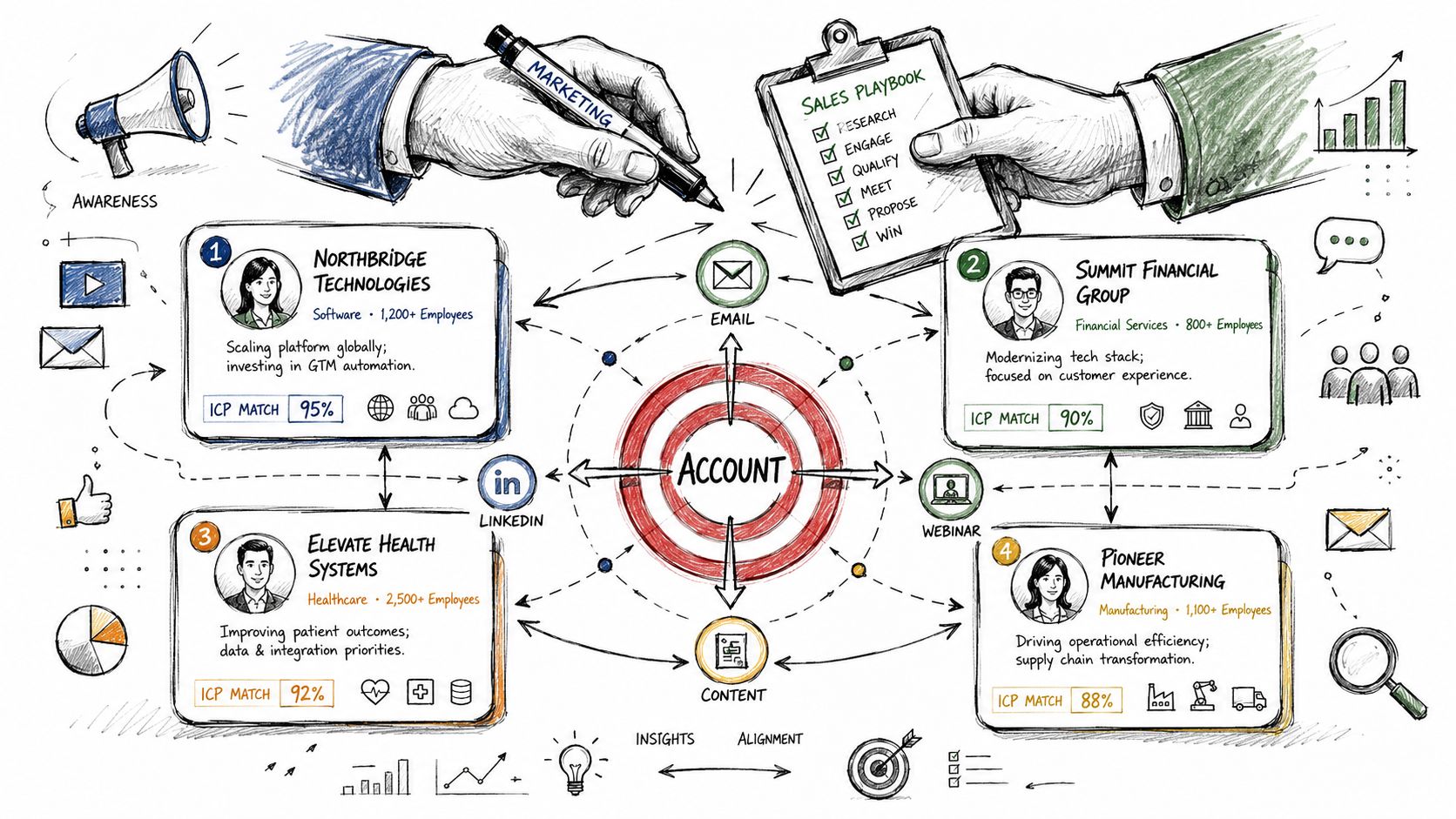
A hand-drawn illustration depicting B2B lead generation strategies, showing marketing and sales alignment with target accounts.

A rep sends 80 outbound emails in a week and gets one reply from an account that was never a fit to begin with. That is not an outreach problem. It is a targeting problem.

Account-based marketing fixes that by forcing a decision early. Which accounts are worth time, which stakeholders shape the deal, and what message fits each person. For SMBs, that matters more than running a bigger top-of-funnel machine. A smaller list with the right accounts will usually beat a larger list built on weak fit and generic messaging.

The payoff is focus. Sales stops chasing every inbound name. Marketing stops handing off accounts with no buying path. Both teams work from the same account view, with a clear reason each company made the list.

What good ABM looks like for SMBs

For an SMB, ABM is usually a focused operating model, not a large program with heavy ad spend. Start with a narrow ICP, build a target account list you can cover, map the buying group, and coordinate touches across email, LinkedIn, and CRM tasks. If the team cannot explain why an account is on the list, it should not be there.

A practical ABM motion usually includes:

  • ICP-first account selection: Choose accounts based on firmographic fit, buying triggers, and real sales potential.

  • Stakeholder mapping: Identify the economic buyer, day-to-day user, evaluator, and internal blocker.

  • Role-based messaging: Write different outreach for finance, operations, IT, or leadership instead of recycling one pitch.

  • Shared workflows: Keep sales and marketing in the same system so research, touches, and follow-up do not split across tools.

One mistake shows up constantly. Teams add a custom first line to a cold email and call it ABM. Real ABM changes more than copy. It changes which accounts enter the motion, which offer they see, when outreach starts, and what happens after the first response.

That is where the tech stack either helps or creates drag. LinkedIn Sales Navigator, Demandbase, and 6sense are common inputs. SMB teams still need a practical way to turn that research into action. Stamina helps by keeping account research, engagement history, task orchestration, and CRM updates in one workflow, which is the difference between a strategy deck and an execution system. If you are building that handoff layer, this guide to lead scoring and automation workflows is a useful next step.

The trade-off is straightforward. ABM gives better-fit conversations, but it limits volume and requires cleaner data, tighter coordination, and more discipline from reps. For SMBs, that is usually a good trade if the goal is pipeline quality instead of activity for its own sake.

2. AI-Powered Lead Scoring and Qualification

Monday morning, the SDR queue is full. One lead downloaded a guide two weeks ago. Another came from your target segment, visited pricing twice, and replied to an outbound email. If both land in the same bucket, reps waste time on the wrong conversations.

This is the primary job of lead scoring. It should help a small team decide who gets attention now, who enters nurture, and who should stay out of the sales queue until the signal improves.

A useful model combines two inputs:

  • Fit: industry, company size, role, geography, current tools

  • Behavior: pricing-page visits, demo requests, repeat sessions, email replies, meeting acceptance, sales engagement

Zendesk's overview of lead qualification supports this approach by tying scoring to buyer stage and sales-readiness, not just raw activity. The practical takeaway is simple. A good score reflects purchase likelihood, not content consumption alone.

AI helps because it applies those rules consistently across more records than a rep or ops manager can review by hand. For SMBs, that matters. The team usually does not have spare headcount to audit every handoff between marketing and sales, and inconsistency is expensive. Good accounts sit too long. Weak leads get worked too early. Pipeline reports look healthier than the pipeline is.

The trade-off is worth calling out. More scoring inputs can improve prioritization, but they also make the system harder to trust if the data is messy. Start with a smaller model that sales can understand and challenge. Then add complexity only after the team sees that high-scoring leads are converting.

A practical first version usually includes:

  • Firmographic fit score: based on ICP traits your closed-won deals already share

  • Buying-intent score: based on high-value actions like pricing visits, demo requests, or direct replies

  • Disqualification rules: students, competitors, bad-fit geographies, tiny companies if your ACV does not support them

  • Routing thresholds: clear cutoffs for sales follow-up, nurture, or hold

If you want this to work in production, connect scoring to action. A score should trigger routing, task creation, enrichment, suppression, and follow-up timing inside the same system. Stamina supports that operating model, and this guide to lead scoring automation workflows shows how to turn scoring logic into day-to-day execution.

Bad lead scoring wastes rep time. Good lead scoring protects it.

3. Multi-Channel Warm Prospecting and Engagement
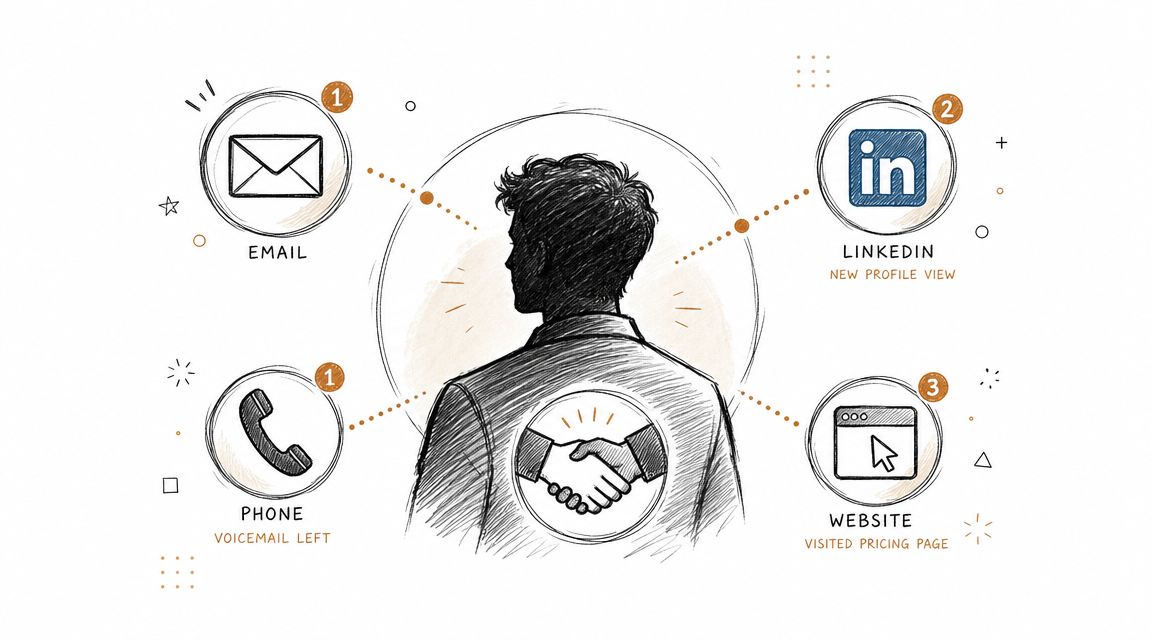
A hand-drawn illustration showing multi-channel B2B lead generation touchpoints including email, phone, LinkedIn, and website visits.

A target account visits your pricing page on Tuesday, a director from the same company views a rep's LinkedIn profile on Wednesday, and no one follows up until the next week. That is how warm interest goes cold.

Multi-channel prospecting works when the channels are coordinated around buyer signals, not run as separate activities. SMB teams do not have the margin for disconnected email sends, isolated LinkedIn outreach, and call tasks with no context. They need one operating motion that turns intent into timely action.

The practical shift is simple. Stop asking which channel is best in general. Decide which channel fits the signal in front of you. A repeat website visitor may justify an email within hours. A prospect engaging with leadership content may be better approached on LinkedIn first. A direct visit to pricing or product pages can justify a call task if the account matches your ICP.

Build around warm signals, then choose the channel

Warm prospecting usually gets stronger when teams organize it in this order:

  • Capture first-party activity: repeat visits, high-intent page views, form starts, email clicks, demo-page traffic

  • Add account context: job title, company fit, open opportunities, prior conversations, shared contacts

  • Pick the next touch by signal strength: email for early interest, LinkedIn for familiarity, calls for clear buying activity

  • Track every touch in one system: outreach history, ownership, replies, and suppression rules need to stay visible

The trade-off is speed versus noise. If reps jump on every page view, they waste time on weak intent and create a bad buying experience. If they wait for perfect certainty, real opportunities stall. The middle ground is to define what counts as a warm trigger and what only deserves light nurture.

That is also why the stack matters. Outreach gets messy fast when website activity lives in one tool, LinkedIn tasks in another, and email history somewhere else. A unified setup gives reps the full picture before they reach out. It also keeps marketing and sales from stepping on each other.

For teams building that motion, Stamina's visitor and social-signal workflows can tie site activity, enrichment, and outreach steps together in one place. The same orchestration logic used in email marketing for lead generation should apply here too. Signals should trigger the next action, not sit in a dashboard waiting for someone to notice them.

Warm prospecting is not about showing up everywhere. It is about showing up at the right time, with the right context, in the channel the buyer is most likely to answer.

4. Personalized Email Sequences and Automation

Personalized email still carries a big part of B2B pipeline creation. But one-off emails don't scale, and fully generic automation gets ignored.

The middle ground is a structured sequence with real personalization built in. That means changing more than the first sentence. Good sequences adapt by role, company context, buyer stage, and the action you want next. A CFO should not get the same sequence as an operations manager. A prospect who viewed pricing should not get the same sequence as a new newsletter subscriber.

Sequence design that holds up in the real world

Start with a simple cadence and earn the right to add complexity later. Most SMB teams do better with a few strong touches than a long sequence full of filler.

A solid sequence usually includes:

  • A clear first email: one pain point, one reason for relevance, one CTA

  • A follow-up with context: add a use case, objection answer, or short proof point

  • A channel shift: move to LinkedIn or a call task if the signal supports it

  • A closeout touch: give the prospect an easy out or a lighter next step

The operational win comes from automation. Trigger the sequence when a prospect takes a meaningful action, exits a form, or reaches a score threshold. Then let reps step in when the engagement justifies human attention.

If you're using AI to help write variants, keep the guardrails tight. Stamina's Zara can generate message variations quickly, but the team still needs to define the ICP, the message hierarchy, and the CTA. This guide to email marketing for lead generation is useful because it stays grounded in practical email execution instead of vague copy advice.
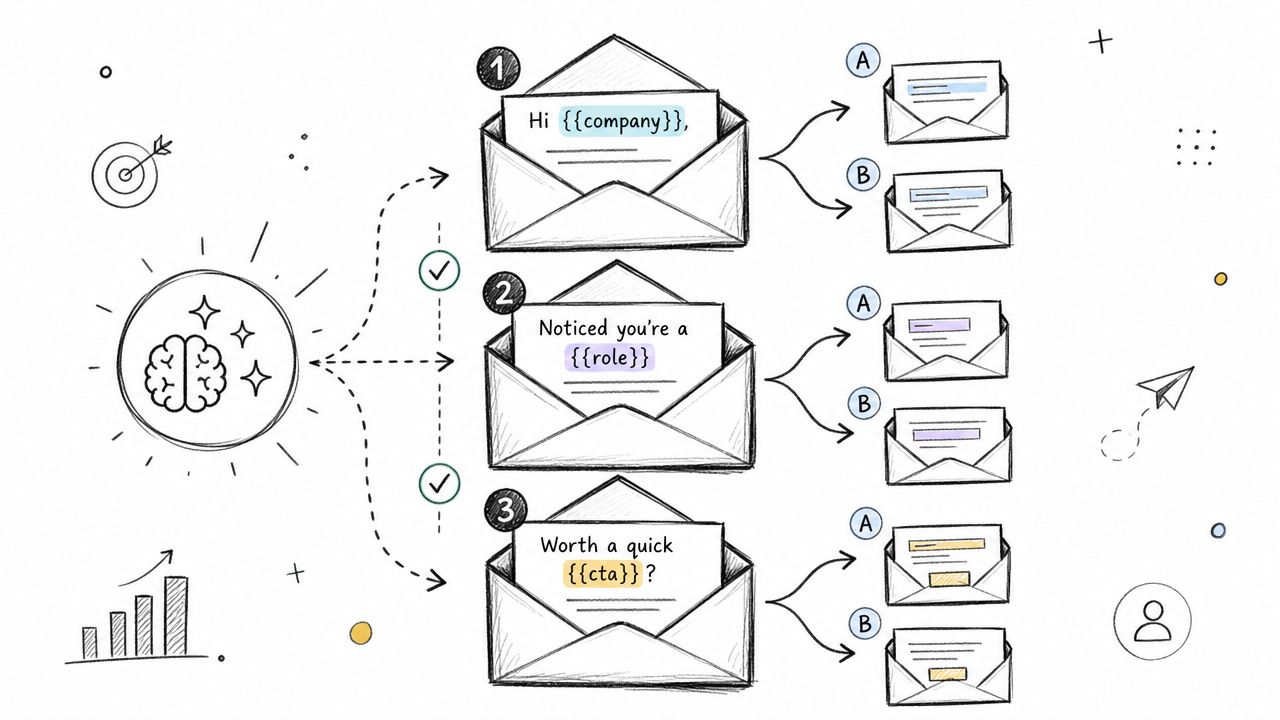
A hand-drawn illustration showing automated email personalization strategies with three steps leading to A/B testing variations.

What doesn't work is easy to spot. Long intros. Too many asks. Personalization that sounds machine-made. Sequences should feel deliberate, not stuffed.

5. Intent Data and Buyer Signal Integration

A rep sees the right account come in on Monday, sends a generic sequence on Tuesday, and gets ignored. On Thursday, three people from that same company hit pricing, compare product pages, and open a follow-up email. The account was never wrong. The timing and response were.

That is the job of intent data. It helps teams act on buying motion instead of treating every lead the same. For SMBs, the practical starting point is first-party signals you already control: pricing-page visits, repeat product-page sessions, webinar attendance, high-value email clicks, form activity, and return visits from the same company. Third-party intent can add coverage, but it should sit on top of a clean first-party setup, not replace it.

The trade-off is straightforward. More signals create more noise unless the team agrees on what deserves rep time.

Build a signal hierarchy your team can use

Intent only improves pipeline if sales and marketing use the same definitions. A simple hierarchy works better than an elaborate scoring model nobody trusts:

  • Low-intent signals: blog visits, light social engagement, single-page sessions

  • Mid-intent signals: repeat visits, webinar attendance, asset downloads from the right role or account

  • High-intent signals: pricing behavior, demo requests, direct replies, multiple stakeholders visiting within a short window

A buyer reading one article is researching. A buying group that returns to pricing twice in a week is giving the team a reason to act.

This is where orchestration matters. If your stack is disconnected, signals sit in separate tools and nobody moves fast enough. In a unified setup, the signal triggers the next step automatically. A high-intent visit can create a sales task. A score jump can route the contact into a tighter workflow. Multiple visits from one company can shift the motion from lead follow-up to account-level outreach.

That matters because SMB teams do not have spare bandwidth for manual signal review. They need a system that filters weak intent out and pushes strong intent to the right owner fast.

One rule keeps this section honest: intent data should change priority, not create fantasy certainty. A pricing-page visit is a strong clue. It is not a closed deal. The right play is to pair signals with account fit, recent engagement, and role relevance, then decide whether the next move is sales outreach, more nurture, or no action at all.

The best teams use intent data this way. Not as a dashboard to admire, but as a routing system that turns scattered buyer activity into timely, coordinated action.

6. Content-Driven Lead Generation and Nurturing

A common SMB scenario looks like this. The team publishes articles for months, collects a steady stream of downloads, and still struggles to turn that activity into qualified pipeline. The problem usually is not volume. It is mismatch. Content gets created in one system, captured in another, and followed up inconsistently, so buyers receive the wrong next step or no next step at all.

Content should map to buying stage and feed a single operating motion. As noted earlier, strong lead generation follows a simple sequence. Attract the right audience, capture interest with an offer that fits their level of intent, qualify what comes in, then nurture based on behavior. For SMB teams, that only works if the stack is connected enough to move someone from content engagement into the right follow-up without manual cleanup.

Match format to stage and action

A practical content mix usually looks like this:

  • Awareness content: educational blog posts, category explainers, short tactical guides

  • Consideration content: comparison pages, webinars, use-case breakdowns, implementation checklists

  • Decision content: demo offers, ROI conversations, customer proof, procurement and rollout content

The trade-off is straightforward. Ungated educational content gets more reach and helps buyers self-educate. Gated mid-funnel assets give the team a clear hand-raise, but only if the ask matches the value. If you gate a basic blog-level asset, form fills go up and lead quality goes down. If you leave decision-stage content too thin, buyers who are ready to evaluate have no reason to talk to sales.

Good nurturing depends on content depth, not just email frequency. A prospect who reads a category article should get a useful next asset, not a demo request three hours later. A prospect who attends a webinar and returns to a comparison page should move into tighter follow-up, ideally with sales context attached.

That orchestration is where a unified stack earns its keep. Stamina's broadcasts and automation flows can route prospects based on what they consumed, which account they belong to, and what action they took next. That means one system can handle the practical handoff from education to nurture to outreach, instead of forcing marketing and sales to piece together intent from disconnected tools.

Content also works better when it supports rep outreach. If sales is sending follow-ups on LinkedIn or email, the asset has to match the conversation. A generic ebook rarely helps. A sharp comparison page, a short implementation guide, or advice on writing a better LinkedIn connection message can.

The goal is not to publish more. It is to build a content path that moves buyers forward and gives the team a clear signal for what to do next.

7. LinkedIn Outreach and Social Selling Strategy

LinkedIn remains the core social channel for B2B because that's where a lot of professional identity, context, and relationship building already lives.

But most LinkedIn outreach is still poor. Generic connection requests. Pitch-slaps right after acceptance. No context, no relevance, no patience. If you want LinkedIn to support pipeline, use it as a warm-up and trust-building channel, not just a direct message channel.

Use LinkedIn before you ask for a meeting

The strongest pattern is simple. Research the prospect. Engage with their content when there's a genuine reason. Send a connection request that references a real point of relevance. Wait for enough context to earn a conversation.

A better LinkedIn motion includes:

  • Strong rep profiles: buyers look at the person before they reply to the message

  • Reason-based connection requests: tie the outreach to role, topic, event, or company context

  • Light engagement first: comment intelligently, don't perform networking theater

  • Channel coordination: LinkedIn should support email and CRM follow-up, not compete with them

One practical guide for message quality is this Stamina post on writing a better message for LinkedIn connection. It's useful because the small details matter here. A decent connection note and a bad one often look almost identical at first glance.

LinkedIn works best when the prospect has already seen your name, your company, or your point of view somewhere else. That's why it pairs so well with multi-channel outreach.

8. Sales and Marketing Alignment with Unified Workflows

Monday morning looks the same in a lot of SMB revenue teams. Marketing is pleased with form fills from last week. Sales is staring at a queue of names with thin context, unclear ownership, and no agreed next step. By the time someone sorts it out, the best opportunities have cooled off.

Alignment problems rarely start as strategy problems. They start as workflow problems.

For SMBs, the fix is shared operating logic across the stack. Every qualified lead should move through one visible path from capture to routing to follow-up to CRM status. That sounds simple, but it forces the hard decisions teams often avoid. What counts as qualified. Which signals justify a handoff. How fast sales responds. What happens when sales rejects a lead, and how that feedback changes future campaigns.

A working model usually includes:

  • Joint qualification rules: sales and marketing agree on fit, intent, and handoff thresholds

  • Response SLAs: inbound leads with buying signals get acted on fast, not whenever a rep has time

  • Closed-loop feedback: sales marks bad leads with a reason that marketing can use

  • Shared reporting: both teams look at source, stage movement, follow-up activity, and pipeline contribution in the same system

The trade-off is real. Tight routing and stricter qualification usually reduce reported lead volume, especially early on. They also improve trust between teams, which matters more than inflated top-of-funnel numbers that never turn into pipeline.

This is why unified workflows matter more than another alignment meeting. If marketing automation, outbound sequencing, and CRM updates all live in separate tools with loose handoffs, teams end up debating spreadsheets instead of fixing conversion points. A practical way to operationalize this is to map the handoff in advance, then build it in software. Stamina's guide on how to create a workflow is useful here because it connects the process decision to the actual setup work.

For broader process design, Fypion Marketing's alignment strategies are also worth reviewing.

Alignment shows up in response time, lead context, and CRM discipline. If those three are weak, the team is not aligned.

9. Referral and Community-Based Lead Generation

A lot of SMB teams underinvest in referrals because they assume referrals happen naturally. Some do. Most don't.

If customers like your product, partners trust your team, or peers in your niche already mention you informally, there's a real lead source sitting there. It needs structure. The same goes for community-led lead generation. Buyers often ask peers for advice long before they fill out a form or reply to outbound.

Build channels trust already supports

Recent guidance has started paying more attention to places buyers self-educate outside classic demand gen flows. One 2026 guide recommends engaging in Facebook groups, LinkedIn, and Reddit because decision-makers ask buying questions there, summarized in Heyflow's B2B lead generation guide. That channel is still underexplained in mainstream playbooks, especially for SMBs.

A practical referral and community motion often includes:

  • A formal referral ask: make introductions easy with templated language

  • Partner enablement: tell agencies, consultants, and adjacent vendors how to spot fit

  • Customer advocacy: identify happy customers who are willing to speak or refer

  • Community listening: track where buyers ask for recommendations and what language they use

This works especially well when trust matters more than brand size. Smaller companies often win here because they can engage more directly and credibly than larger teams using canned outreach.

The weak version of community-led lead gen is dropping links in groups. The strong version is participating often enough that people recognize your expertise before they need your product.

10. Landing Pages and Conversion Rate Optimization

A click is expensive. Wasting it on a generic page is one of the fastest ways to kneecap pipeline.

Teams often do the hard part well. They build a solid outbound sequence, run paid campaigns, or publish useful content. Then they send every visitor to the same page, with broad copy, a weak CTA, and a form that asks for information nobody will use. That creates two problems at once. Conversion rates drop, and the leads that do convert are harder for sales to work.
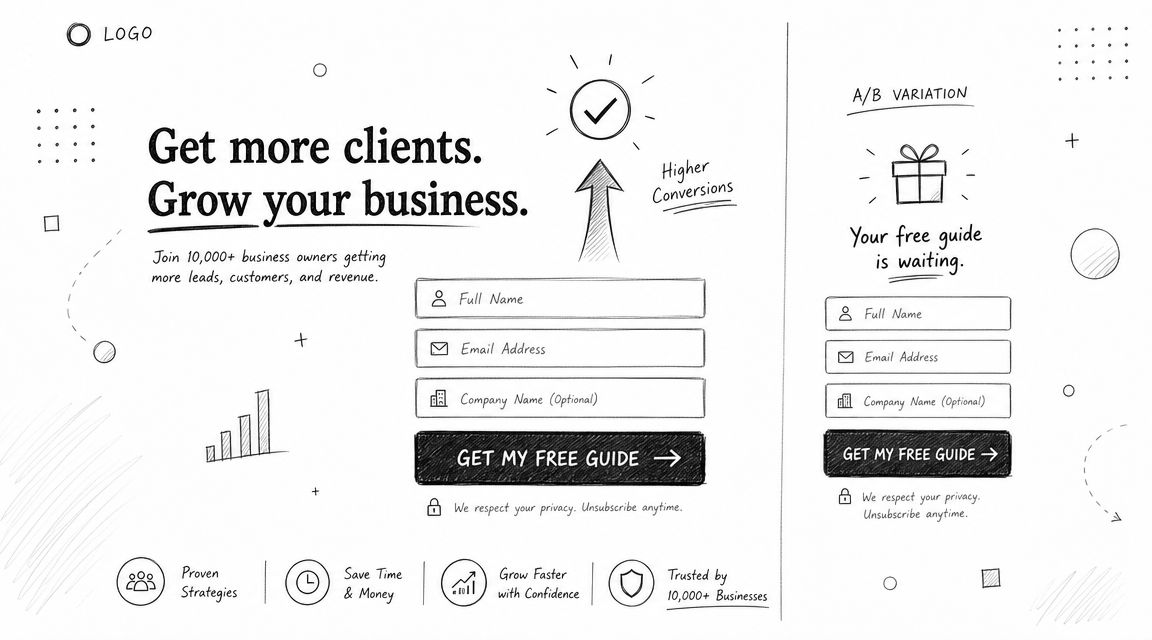
A hand-drawn sketch of a B2B lead generation landing page layout with forms and benefit icons.

Reduce friction without lowering standards

Shorter forms can help, but form length is the wrong primary metric. The better rule is simple: ask only for data your team will use in the next step, and collect the rest later.

That trade-off matters for SMBs. If sales capacity is tight, a page that drives more low-fit submissions can create more work without producing more revenue. Guidance from Livestorm's B2B lead generation best practices points to the same operational issue: cleaner data capture, conditional logic, and better qualification rules improve what enters the funnel in the first place.

The highest-performing setup is usually a connected one. The ad, email, or outreach message sets the promise. The landing page repeats that promise in plain language. The form captures just enough context to route the lead correctly. Then the data passes into the CRM and automation stack without manual cleanup. If you use a unified system such as Stamina alongside your CRM and form tools, this is easier to orchestrate because campaign source, offer, routing, and follow-up stay tied together.

A strong landing page process usually includes:

  • Dedicated pages by campaign: paid, outbound, partner, and content traffic should each land on a page built for that intent

  • Message match: the headline, supporting copy, and CTA should mirror the click source closely

  • Conditional form paths: change questions, routing, or next steps based on company size, use case, or urgency

  • Visible proof: add the minimum proof needed to reduce hesitation, such as customer logos, a short testimonial, or a concrete outcome

  • Fast follow-up: trigger the right sequence, owner, or calendar option as soon as the form is submitted

Another practical point. As noted earlier, a meaningful share of qualified demand comes from traffic you already earned through content, search, and referrals. That makes CRO more than a paid acquisition tactic. Good pages help you capture existing demand more efficiently.

For a quick way to sanity-check the impact of small conversion changes, use the BlazeHive conversion rate calculator.

One more useful reference on page thinking and form intent:

10-Point B2B Lead-Gen Best Practices Comparison

Strategy

Implementation Complexity

Resource Requirements

Expected Outcomes

Ideal Use Cases

Key Advantages

Account-Based Marketing (ABM) with Personalized Outreach

High, intensive account research and coordination

High, ICP research, bespoke content, sales/marketing alignment, CRM/automation

Higher conversion rates; larger deal sizes; measurable account ROI

Enterprise or high-value accounts; long, complex sales cycles

Highly personalized relevance; efficient use of resources; aligned teams

AI-Powered Lead Scoring and Qualification

Medium–High, models, training, ongoing monitoring

Medium, clean data, ML expertise, integration with CRM

Better prioritization; faster SDR focus; improved conversion efficiency (+30–50%)

High lead volume environments; teams needing automated prioritization

Scalable, real-time prioritization; reduces time on low-value leads

Multi-Channel Warm Prospecting and Engagement

Medium, orchestration across channels and signals

Medium, tracking tools, channel integrations, personalized content

Higher response rates (2–3x); warmer initial conversations

Outbound that leverages web/social signals; ABM support

Warmer opens; multi-touch credibility; improved reply rates

Personalized Email Sequences and Automation

Low–Medium, set up templates and triggers

Low–Medium, email platform, templates, content, CRM links

Scalable personalized outreach; improved open/click rates

Nurture cadences; SDR follow-ups; scale outreach efficiently

Scales personalization; A/B testing; consistent cadence

Intent Data and Buyer Signal Integration

High, complex data integration and activation

High, third-party feeds, analytics, integration work

Timely outreach; higher conversion when buying intent is detected

Prioritizing in-market accounts; trigger-based outreach

Identifies buying readiness; reduces wasted outreach

Content-Driven Lead Generation and Nurturing

Medium–High, content strategy and automation

High, content creation, design, distribution, nurturing workflows

Steady pipeline of qualified leads; authority building over time

Long sales cycles; inbound and education-focused strategies

Builds trust and thought leadership; multiple conversion points

LinkedIn Outreach and Social Selling Strategy

Low–Medium, consistent personal engagement required

Low–Medium, time investment, Sales Navigator subscription

Warm connections; increased credibility; variable conversion

Targeting decision-makers; relationship-driven sales

Direct access to prospects; social proof; effective warm openers

Sales and Marketing Alignment with Unified Workflows

High, cultural change and process redesign

High, unified CRM, SLAs, training, leadership commitment

Improved lead quality; faster handoffs; higher conversion (10–20%)

Organizations with siloed teams or handoff issues

Single source of truth; automated handoffs; measurable SLAs

Referral and Community-Based Lead Generation

Medium, program and community setup

Medium, incentives, community management, tracking systems

Highest-quality leads; lower CAC; faster close rates

Customer-success driven businesses; strong partner networks

Low CAC; high conversion and loyalty; sustainable pipeline

Landing Pages and Conversion Rate Optimization (CRO)

Medium, design, testing, iterative optimization

Medium, designers, CRO tools, sufficient traffic for tests

Improved conversion rates; lower CAC; clearer attribution

Campaign-specific acquisition; paid traffic and offer testing

Direct conversion lift; clear attribution; continuous improvement through testing

Unifying Your Lead Generation Engine

The strongest b2b lead generation best practices don't work as isolated tactics. ABM without lead scoring becomes opinion-driven targeting. Email automation without intent signals turns into noise. Content without qualification creates lead volume that sales won't trust. Landing pages without workflow automation slow down response and waste good buying moments.

That's why the main advantage comes from orchestration.

For SMBs, this matters even more because every operational gap is expensive. If your team is small, you can't afford duplicate records, unverified contacts, slow handoffs, or disconnected channel activity. You need one system that helps you identify the right accounts, enrich the right contacts, verify data before outreach, score intent accurately, and route leads into the next action without manual cleanup in the middle.

The list-building layer is part of that foundation. Practitioner guidance from DataBees recommends a workflow that starts with LinkedIn Sales Navigator for decision-maker discovery, then enriches account data with tools such as BuiltWith, Clearbit, or Clay, and verifies deliverability with Hunter, NeverBounce, or ZeroBounce before sequences go live, as outlined in DataBees' lead research techniques. That's not busywork. It's what keeps outbound from collapsing under bad data and weak fit criteria.

The same logic applies on the capture side. If you gate content, score leads, and trigger sales follow-up, all of those steps should live in a shared operating model. Buyers don't experience your team in departments. They experience one buying journey. When your internal systems don't line up, the buyer feels the gaps immediately.

A unified platform can make those handoffs much cleaner. Stamina is one option for SMBs that want marketing, sales engagement, workflows, and CRM activity connected in one place. The practical benefit isn't novelty. It's fewer breaks between signal, action, and follow-up.

If you're rebuilding your lead generation motion for 2026, start with the basics that compound. Tighten targeting. Improve qualification. Verify data before you send. Respond faster. Coordinate channels. Build workflows that remove manual handoffs. That's how lead generation stops feeling random and starts behaving like a revenue system.

If you want to run these b2b lead generation best practices from one connected system, take a look at Stamina. It brings marketing, sales, CRM, workflows, and AI-assisted outreach into a single platform built for growing SMB teams.

Monday starts with a familiar mess. Sales is chasing leads from last week's webinar, marketing is pushing a new campaign, the CRM is missing fields that reps need, and nobody agrees on which accounts deserve attention first. Activity is high. Confidence in the pipeline is low.

That operating model breaks down fast for SMBs. Teams waste time on weak-fit accounts, follow-up slips between tools, and good intent signals die in a spreadsheet instead of reaching a rep at the right moment.

A better system starts with orchestration. The strongest lead gen programs I've seen do not rely on one tactic or one channel. They run on a prioritized playbook that connects targeting, scoring, outreach, content, and handoff rules inside one working stack. If you're refining your Modern LinkedIn lead approach, the same discipline applies across the full demand engine.

That is the lens for this guide. Not a collection of disconnected tips, but a practical sequence for SMB teams that need to decide what to set up first, what to automate next, and where human judgment still matters. Tools like Stamina fit here as operating infrastructure. They help tie research, buyer signals, outreach steps, and CRM actions into one process your team can operate.

These are the b2b lead generation best practices I'd prioritize for 2026 if I were building from scratch with a growing SMB team.

1. Account-Based Marketing with Personalized Outreach

A hand-drawn illustration depicting B2B lead generation strategies, showing marketing and sales alignment with target accounts.

A rep sends 80 outbound emails in a week and gets one reply from an account that was never a fit to begin with. That is not an outreach problem. It is a targeting problem.

Account-based marketing fixes that by forcing a decision early. Which accounts are worth time, which stakeholders shape the deal, and what message fits each person. For SMBs, that matters more than running a bigger top-of-funnel machine. A smaller list with the right accounts will usually beat a larger list built on weak fit and generic messaging.

The payoff is focus. Sales stops chasing every inbound name. Marketing stops handing off accounts with no buying path. Both teams work from the same account view, with a clear reason each company made the list.

What good ABM looks like for SMBs

For an SMB, ABM is usually a focused operating model, not a large program with heavy ad spend. Start with a narrow ICP, build a target account list you can cover, map the buying group, and coordinate touches across email, LinkedIn, and CRM tasks. If the team cannot explain why an account is on the list, it should not be there.

A practical ABM motion usually includes:

  • ICP-first account selection: Choose accounts based on firmographic fit, buying triggers, and real sales potential.

  • Stakeholder mapping: Identify the economic buyer, day-to-day user, evaluator, and internal blocker.

  • Role-based messaging: Write different outreach for finance, operations, IT, or leadership instead of recycling one pitch.

  • Shared workflows: Keep sales and marketing in the same system so research, touches, and follow-up do not split across tools.

One mistake shows up constantly. Teams add a custom first line to a cold email and call it ABM. Real ABM changes more than copy. It changes which accounts enter the motion, which offer they see, when outreach starts, and what happens after the first response.

That is where the tech stack either helps or creates drag. LinkedIn Sales Navigator, Demandbase, and 6sense are common inputs. SMB teams still need a practical way to turn that research into action. Stamina helps by keeping account research, engagement history, task orchestration, and CRM updates in one workflow, which is the difference between a strategy deck and an execution system. If you are building that handoff layer, this guide to lead scoring and automation workflows is a useful next step.

The trade-off is straightforward. ABM gives better-fit conversations, but it limits volume and requires cleaner data, tighter coordination, and more discipline from reps. For SMBs, that is usually a good trade if the goal is pipeline quality instead of activity for its own sake.

2. AI-Powered Lead Scoring and Qualification

Monday morning, the SDR queue is full. One lead downloaded a guide two weeks ago. Another came from your target segment, visited pricing twice, and replied to an outbound email. If both land in the same bucket, reps waste time on the wrong conversations.

This is the primary job of lead scoring. It should help a small team decide who gets attention now, who enters nurture, and who should stay out of the sales queue until the signal improves.

A useful model combines two inputs:

  • Fit: industry, company size, role, geography, current tools

  • Behavior: pricing-page visits, demo requests, repeat sessions, email replies, meeting acceptance, sales engagement

Zendesk's overview of lead qualification supports this approach by tying scoring to buyer stage and sales-readiness, not just raw activity. The practical takeaway is simple. A good score reflects purchase likelihood, not content consumption alone.

AI helps because it applies those rules consistently across more records than a rep or ops manager can review by hand. For SMBs, that matters. The team usually does not have spare headcount to audit every handoff between marketing and sales, and inconsistency is expensive. Good accounts sit too long. Weak leads get worked too early. Pipeline reports look healthier than the pipeline is.

The trade-off is worth calling out. More scoring inputs can improve prioritization, but they also make the system harder to trust if the data is messy. Start with a smaller model that sales can understand and challenge. Then add complexity only after the team sees that high-scoring leads are converting.

A practical first version usually includes:

  • Firmographic fit score: based on ICP traits your closed-won deals already share

  • Buying-intent score: based on high-value actions like pricing visits, demo requests, or direct replies

  • Disqualification rules: students, competitors, bad-fit geographies, tiny companies if your ACV does not support them

  • Routing thresholds: clear cutoffs for sales follow-up, nurture, or hold

If you want this to work in production, connect scoring to action. A score should trigger routing, task creation, enrichment, suppression, and follow-up timing inside the same system. Stamina supports that operating model, and this guide to lead scoring automation workflows shows how to turn scoring logic into day-to-day execution.

Bad lead scoring wastes rep time. Good lead scoring protects it.

3. Multi-Channel Warm Prospecting and Engagement

A hand-drawn illustration showing multi-channel B2B lead generation touchpoints including email, phone, LinkedIn, and website visits.

A target account visits your pricing page on Tuesday, a director from the same company views a rep's LinkedIn profile on Wednesday, and no one follows up until the next week. That is how warm interest goes cold.

Multi-channel prospecting works when the channels are coordinated around buyer signals, not run as separate activities. SMB teams do not have the margin for disconnected email sends, isolated LinkedIn outreach, and call tasks with no context. They need one operating motion that turns intent into timely action.

The practical shift is simple. Stop asking which channel is best in general. Decide which channel fits the signal in front of you. A repeat website visitor may justify an email within hours. A prospect engaging with leadership content may be better approached on LinkedIn first. A direct visit to pricing or product pages can justify a call task if the account matches your ICP.

Build around warm signals, then choose the channel

Warm prospecting usually gets stronger when teams organize it in this order:

  • Capture first-party activity: repeat visits, high-intent page views, form starts, email clicks, demo-page traffic

  • Add account context: job title, company fit, open opportunities, prior conversations, shared contacts

  • Pick the next touch by signal strength: email for early interest, LinkedIn for familiarity, calls for clear buying activity

  • Track every touch in one system: outreach history, ownership, replies, and suppression rules need to stay visible

The trade-off is speed versus noise. If reps jump on every page view, they waste time on weak intent and create a bad buying experience. If they wait for perfect certainty, real opportunities stall. The middle ground is to define what counts as a warm trigger and what only deserves light nurture.

That is also why the stack matters. Outreach gets messy fast when website activity lives in one tool, LinkedIn tasks in another, and email history somewhere else. A unified setup gives reps the full picture before they reach out. It also keeps marketing and sales from stepping on each other.

For teams building that motion, Stamina's visitor and social-signal workflows can tie site activity, enrichment, and outreach steps together in one place. The same orchestration logic used in email marketing for lead generation should apply here too. Signals should trigger the next action, not sit in a dashboard waiting for someone to notice them.

Warm prospecting is not about showing up everywhere. It is about showing up at the right time, with the right context, in the channel the buyer is most likely to answer.

4. Personalized Email Sequences and Automation

Personalized email still carries a big part of B2B pipeline creation. But one-off emails don't scale, and fully generic automation gets ignored.

The middle ground is a structured sequence with real personalization built in. That means changing more than the first sentence. Good sequences adapt by role, company context, buyer stage, and the action you want next. A CFO should not get the same sequence as an operations manager. A prospect who viewed pricing should not get the same sequence as a new newsletter subscriber.

Sequence design that holds up in the real world

Start with a simple cadence and earn the right to add complexity later. Most SMB teams do better with a few strong touches than a long sequence full of filler.

A solid sequence usually includes:

  • A clear first email: one pain point, one reason for relevance, one CTA

  • A follow-up with context: add a use case, objection answer, or short proof point

  • A channel shift: move to LinkedIn or a call task if the signal supports it

  • A closeout touch: give the prospect an easy out or a lighter next step

The operational win comes from automation. Trigger the sequence when a prospect takes a meaningful action, exits a form, or reaches a score threshold. Then let reps step in when the engagement justifies human attention.

If you're using AI to help write variants, keep the guardrails tight. Stamina's Zara can generate message variations quickly, but the team still needs to define the ICP, the message hierarchy, and the CTA. This guide to email marketing for lead generation is useful because it stays grounded in practical email execution instead of vague copy advice.

A hand-drawn illustration showing automated email personalization strategies with three steps leading to A/B testing variations.

What doesn't work is easy to spot. Long intros. Too many asks. Personalization that sounds machine-made. Sequences should feel deliberate, not stuffed.

5. Intent Data and Buyer Signal Integration

A rep sees the right account come in on Monday, sends a generic sequence on Tuesday, and gets ignored. On Thursday, three people from that same company hit pricing, compare product pages, and open a follow-up email. The account was never wrong. The timing and response were.

That is the job of intent data. It helps teams act on buying motion instead of treating every lead the same. For SMBs, the practical starting point is first-party signals you already control: pricing-page visits, repeat product-page sessions, webinar attendance, high-value email clicks, form activity, and return visits from the same company. Third-party intent can add coverage, but it should sit on top of a clean first-party setup, not replace it.

The trade-off is straightforward. More signals create more noise unless the team agrees on what deserves rep time.

Build a signal hierarchy your team can use

Intent only improves pipeline if sales and marketing use the same definitions. A simple hierarchy works better than an elaborate scoring model nobody trusts:

  • Low-intent signals: blog visits, light social engagement, single-page sessions

  • Mid-intent signals: repeat visits, webinar attendance, asset downloads from the right role or account

  • High-intent signals: pricing behavior, demo requests, direct replies, multiple stakeholders visiting within a short window

A buyer reading one article is researching. A buying group that returns to pricing twice in a week is giving the team a reason to act.

This is where orchestration matters. If your stack is disconnected, signals sit in separate tools and nobody moves fast enough. In a unified setup, the signal triggers the next step automatically. A high-intent visit can create a sales task. A score jump can route the contact into a tighter workflow. Multiple visits from one company can shift the motion from lead follow-up to account-level outreach.

That matters because SMB teams do not have spare bandwidth for manual signal review. They need a system that filters weak intent out and pushes strong intent to the right owner fast.

One rule keeps this section honest: intent data should change priority, not create fantasy certainty. A pricing-page visit is a strong clue. It is not a closed deal. The right play is to pair signals with account fit, recent engagement, and role relevance, then decide whether the next move is sales outreach, more nurture, or no action at all.

The best teams use intent data this way. Not as a dashboard to admire, but as a routing system that turns scattered buyer activity into timely, coordinated action.

6. Content-Driven Lead Generation and Nurturing

A common SMB scenario looks like this. The team publishes articles for months, collects a steady stream of downloads, and still struggles to turn that activity into qualified pipeline. The problem usually is not volume. It is mismatch. Content gets created in one system, captured in another, and followed up inconsistently, so buyers receive the wrong next step or no next step at all.

Content should map to buying stage and feed a single operating motion. As noted earlier, strong lead generation follows a simple sequence. Attract the right audience, capture interest with an offer that fits their level of intent, qualify what comes in, then nurture based on behavior. For SMB teams, that only works if the stack is connected enough to move someone from content engagement into the right follow-up without manual cleanup.

Match format to stage and action

A practical content mix usually looks like this:

  • Awareness content: educational blog posts, category explainers, short tactical guides

  • Consideration content: comparison pages, webinars, use-case breakdowns, implementation checklists

  • Decision content: demo offers, ROI conversations, customer proof, procurement and rollout content

The trade-off is straightforward. Ungated educational content gets more reach and helps buyers self-educate. Gated mid-funnel assets give the team a clear hand-raise, but only if the ask matches the value. If you gate a basic blog-level asset, form fills go up and lead quality goes down. If you leave decision-stage content too thin, buyers who are ready to evaluate have no reason to talk to sales.

Good nurturing depends on content depth, not just email frequency. A prospect who reads a category article should get a useful next asset, not a demo request three hours later. A prospect who attends a webinar and returns to a comparison page should move into tighter follow-up, ideally with sales context attached.

That orchestration is where a unified stack earns its keep. Stamina's broadcasts and automation flows can route prospects based on what they consumed, which account they belong to, and what action they took next. That means one system can handle the practical handoff from education to nurture to outreach, instead of forcing marketing and sales to piece together intent from disconnected tools.

Content also works better when it supports rep outreach. If sales is sending follow-ups on LinkedIn or email, the asset has to match the conversation. A generic ebook rarely helps. A sharp comparison page, a short implementation guide, or advice on writing a better LinkedIn connection message can.

The goal is not to publish more. It is to build a content path that moves buyers forward and gives the team a clear signal for what to do next.

7. LinkedIn Outreach and Social Selling Strategy

LinkedIn remains the core social channel for B2B because that's where a lot of professional identity, context, and relationship building already lives.

But most LinkedIn outreach is still poor. Generic connection requests. Pitch-slaps right after acceptance. No context, no relevance, no patience. If you want LinkedIn to support pipeline, use it as a warm-up and trust-building channel, not just a direct message channel.

Use LinkedIn before you ask for a meeting

The strongest pattern is simple. Research the prospect. Engage with their content when there's a genuine reason. Send a connection request that references a real point of relevance. Wait for enough context to earn a conversation.

A better LinkedIn motion includes:

  • Strong rep profiles: buyers look at the person before they reply to the message

  • Reason-based connection requests: tie the outreach to role, topic, event, or company context

  • Light engagement first: comment intelligently, don't perform networking theater

  • Channel coordination: LinkedIn should support email and CRM follow-up, not compete with them

One practical guide for message quality is this Stamina post on writing a better message for LinkedIn connection. It's useful because the small details matter here. A decent connection note and a bad one often look almost identical at first glance.

LinkedIn works best when the prospect has already seen your name, your company, or your point of view somewhere else. That's why it pairs so well with multi-channel outreach.

8. Sales and Marketing Alignment with Unified Workflows

Monday morning looks the same in a lot of SMB revenue teams. Marketing is pleased with form fills from last week. Sales is staring at a queue of names with thin context, unclear ownership, and no agreed next step. By the time someone sorts it out, the best opportunities have cooled off.

Alignment problems rarely start as strategy problems. They start as workflow problems.

For SMBs, the fix is shared operating logic across the stack. Every qualified lead should move through one visible path from capture to routing to follow-up to CRM status. That sounds simple, but it forces the hard decisions teams often avoid. What counts as qualified. Which signals justify a handoff. How fast sales responds. What happens when sales rejects a lead, and how that feedback changes future campaigns.

A working model usually includes:

  • Joint qualification rules: sales and marketing agree on fit, intent, and handoff thresholds

  • Response SLAs: inbound leads with buying signals get acted on fast, not whenever a rep has time

  • Closed-loop feedback: sales marks bad leads with a reason that marketing can use

  • Shared reporting: both teams look at source, stage movement, follow-up activity, and pipeline contribution in the same system

The trade-off is real. Tight routing and stricter qualification usually reduce reported lead volume, especially early on. They also improve trust between teams, which matters more than inflated top-of-funnel numbers that never turn into pipeline.

This is why unified workflows matter more than another alignment meeting. If marketing automation, outbound sequencing, and CRM updates all live in separate tools with loose handoffs, teams end up debating spreadsheets instead of fixing conversion points. A practical way to operationalize this is to map the handoff in advance, then build it in software. Stamina's guide on how to create a workflow is useful here because it connects the process decision to the actual setup work.

For broader process design, Fypion Marketing's alignment strategies are also worth reviewing.

Alignment shows up in response time, lead context, and CRM discipline. If those three are weak, the team is not aligned.

9. Referral and Community-Based Lead Generation

A lot of SMB teams underinvest in referrals because they assume referrals happen naturally. Some do. Most don't.

If customers like your product, partners trust your team, or peers in your niche already mention you informally, there's a real lead source sitting there. It needs structure. The same goes for community-led lead generation. Buyers often ask peers for advice long before they fill out a form or reply to outbound.

Build channels trust already supports

Recent guidance has started paying more attention to places buyers self-educate outside classic demand gen flows. One 2026 guide recommends engaging in Facebook groups, LinkedIn, and Reddit because decision-makers ask buying questions there, summarized in Heyflow's B2B lead generation guide. That channel is still underexplained in mainstream playbooks, especially for SMBs.

A practical referral and community motion often includes:

  • A formal referral ask: make introductions easy with templated language

  • Partner enablement: tell agencies, consultants, and adjacent vendors how to spot fit

  • Customer advocacy: identify happy customers who are willing to speak or refer

  • Community listening: track where buyers ask for recommendations and what language they use

This works especially well when trust matters more than brand size. Smaller companies often win here because they can engage more directly and credibly than larger teams using canned outreach.

The weak version of community-led lead gen is dropping links in groups. The strong version is participating often enough that people recognize your expertise before they need your product.

10. Landing Pages and Conversion Rate Optimization

A click is expensive. Wasting it on a generic page is one of the fastest ways to kneecap pipeline.

Teams often do the hard part well. They build a solid outbound sequence, run paid campaigns, or publish useful content. Then they send every visitor to the same page, with broad copy, a weak CTA, and a form that asks for information nobody will use. That creates two problems at once. Conversion rates drop, and the leads that do convert are harder for sales to work.

A hand-drawn sketch of a B2B lead generation landing page layout with forms and benefit icons.

Reduce friction without lowering standards

Shorter forms can help, but form length is the wrong primary metric. The better rule is simple: ask only for data your team will use in the next step, and collect the rest later.

That trade-off matters for SMBs. If sales capacity is tight, a page that drives more low-fit submissions can create more work without producing more revenue. Guidance from Livestorm's B2B lead generation best practices points to the same operational issue: cleaner data capture, conditional logic, and better qualification rules improve what enters the funnel in the first place.

The highest-performing setup is usually a connected one. The ad, email, or outreach message sets the promise. The landing page repeats that promise in plain language. The form captures just enough context to route the lead correctly. Then the data passes into the CRM and automation stack without manual cleanup. If you use a unified system such as Stamina alongside your CRM and form tools, this is easier to orchestrate because campaign source, offer, routing, and follow-up stay tied together.

A strong landing page process usually includes:

  • Dedicated pages by campaign: paid, outbound, partner, and content traffic should each land on a page built for that intent

  • Message match: the headline, supporting copy, and CTA should mirror the click source closely

  • Conditional form paths: change questions, routing, or next steps based on company size, use case, or urgency

  • Visible proof: add the minimum proof needed to reduce hesitation, such as customer logos, a short testimonial, or a concrete outcome

  • Fast follow-up: trigger the right sequence, owner, or calendar option as soon as the form is submitted

Another practical point. As noted earlier, a meaningful share of qualified demand comes from traffic you already earned through content, search, and referrals. That makes CRO more than a paid acquisition tactic. Good pages help you capture existing demand more efficiently.

For a quick way to sanity-check the impact of small conversion changes, use the BlazeHive conversion rate calculator.

One more useful reference on page thinking and form intent:

10-Point B2B Lead-Gen Best Practices Comparison

Strategy

Implementation Complexity

Resource Requirements

Expected Outcomes

Ideal Use Cases

Key Advantages

Account-Based Marketing (ABM) with Personalized Outreach

High, intensive account research and coordination

High, ICP research, bespoke content, sales/marketing alignment, CRM/automation

Higher conversion rates; larger deal sizes; measurable account ROI

Enterprise or high-value accounts; long, complex sales cycles

Highly personalized relevance; efficient use of resources; aligned teams

AI-Powered Lead Scoring and Qualification

Medium–High, models, training, ongoing monitoring

Medium, clean data, ML expertise, integration with CRM

Better prioritization; faster SDR focus; improved conversion efficiency (+30–50%)

High lead volume environments; teams needing automated prioritization

Scalable, real-time prioritization; reduces time on low-value leads

Multi-Channel Warm Prospecting and Engagement

Medium, orchestration across channels and signals

Medium, tracking tools, channel integrations, personalized content

Higher response rates (2–3x); warmer initial conversations

Outbound that leverages web/social signals; ABM support

Warmer opens; multi-touch credibility; improved reply rates

Personalized Email Sequences and Automation

Low–Medium, set up templates and triggers

Low–Medium, email platform, templates, content, CRM links

Scalable personalized outreach; improved open/click rates

Nurture cadences; SDR follow-ups; scale outreach efficiently

Scales personalization; A/B testing; consistent cadence

Intent Data and Buyer Signal Integration

High, complex data integration and activation

High, third-party feeds, analytics, integration work

Timely outreach; higher conversion when buying intent is detected

Prioritizing in-market accounts; trigger-based outreach

Identifies buying readiness; reduces wasted outreach

Content-Driven Lead Generation and Nurturing

Medium–High, content strategy and automation

High, content creation, design, distribution, nurturing workflows

Steady pipeline of qualified leads; authority building over time

Long sales cycles; inbound and education-focused strategies

Builds trust and thought leadership; multiple conversion points

LinkedIn Outreach and Social Selling Strategy

Low–Medium, consistent personal engagement required

Low–Medium, time investment, Sales Navigator subscription

Warm connections; increased credibility; variable conversion

Targeting decision-makers; relationship-driven sales

Direct access to prospects; social proof; effective warm openers

Sales and Marketing Alignment with Unified Workflows

High, cultural change and process redesign

High, unified CRM, SLAs, training, leadership commitment

Improved lead quality; faster handoffs; higher conversion (10–20%)

Organizations with siloed teams or handoff issues

Single source of truth; automated handoffs; measurable SLAs

Referral and Community-Based Lead Generation

Medium, program and community setup

Medium, incentives, community management, tracking systems

Highest-quality leads; lower CAC; faster close rates

Customer-success driven businesses; strong partner networks

Low CAC; high conversion and loyalty; sustainable pipeline

Landing Pages and Conversion Rate Optimization (CRO)

Medium, design, testing, iterative optimization

Medium, designers, CRO tools, sufficient traffic for tests

Improved conversion rates; lower CAC; clearer attribution

Campaign-specific acquisition; paid traffic and offer testing

Direct conversion lift; clear attribution; continuous improvement through testing

Unifying Your Lead Generation Engine

The strongest b2b lead generation best practices don't work as isolated tactics. ABM without lead scoring becomes opinion-driven targeting. Email automation without intent signals turns into noise. Content without qualification creates lead volume that sales won't trust. Landing pages without workflow automation slow down response and waste good buying moments.

That's why the main advantage comes from orchestration.

For SMBs, this matters even more because every operational gap is expensive. If your team is small, you can't afford duplicate records, unverified contacts, slow handoffs, or disconnected channel activity. You need one system that helps you identify the right accounts, enrich the right contacts, verify data before outreach, score intent accurately, and route leads into the next action without manual cleanup in the middle.

The list-building layer is part of that foundation. Practitioner guidance from DataBees recommends a workflow that starts with LinkedIn Sales Navigator for decision-maker discovery, then enriches account data with tools such as BuiltWith, Clearbit, or Clay, and verifies deliverability with Hunter, NeverBounce, or ZeroBounce before sequences go live, as outlined in DataBees' lead research techniques. That's not busywork. It's what keeps outbound from collapsing under bad data and weak fit criteria.

The same logic applies on the capture side. If you gate content, score leads, and trigger sales follow-up, all of those steps should live in a shared operating model. Buyers don't experience your team in departments. They experience one buying journey. When your internal systems don't line up, the buyer feels the gaps immediately.

A unified platform can make those handoffs much cleaner. Stamina is one option for SMBs that want marketing, sales engagement, workflows, and CRM activity connected in one place. The practical benefit isn't novelty. It's fewer breaks between signal, action, and follow-up.

If you're rebuilding your lead generation motion for 2026, start with the basics that compound. Tighten targeting. Improve qualification. Verify data before you send. Respond faster. Coordinate channels. Build workflows that remove manual handoffs. That's how lead generation stops feeling random and starts behaving like a revenue system.

If you want to run these b2b lead generation best practices from one connected system, take a look at Stamina. It brings marketing, sales, CRM, workflows, and AI-assisted outreach into a single platform built for growing SMB teams.

Share this article

Share this article

Send a shareable link to your team or anyone who might find it useful.

Send a shareable link to your team or anyone who might find it useful.

Copy link

Copied

Share directly to

Table of contents

Give Your Business the Stamina it needs to Thrive

PRODUCT

COMPANY

RESOURCES

© 2026 Stamina Software Technologies Inc. All rights reserved.

PRODUCT

COMPANY

RESOURCES

© 2026 Stamina Software Technologies Inc. All rights reserved.

PRODUCT

COMPANY

RESOURCES

© 2026 Stamina Software Technologies Inc. All rights reserved.