You’re probably dealing with some version of the same problem most growing teams face.
Marketing is collecting leads through forms, webinars, and content downloads. Sales is working from a separate list, following up on some contacts and missing others entirely. The CRM is only half current. Someone opens three emails, visits the pricing page, and then disappears because nobody owns the handoff.
That’s why email marketing for lead generation still matters. Not as a standalone channel, and not as a weekly newsletter machine. It works best as the operational layer between interest and pipeline. Done well, email is how you capture intent, nurture it, surface sales-ready leads, and move them into real conversations before momentum dies.
Beyond the Blast Your Modern Email Lead Gen Playbook
A lead fills out a form on Tuesday, opens two follow-ups on Wednesday, visits your pricing page on Thursday, and still never speaks to sales. The problem usually is not email volume or copy quality. It is the gap between systems. Marketing can see engagement. Sales can see accounts. Nobody owns the workflow that turns intent into pipeline.
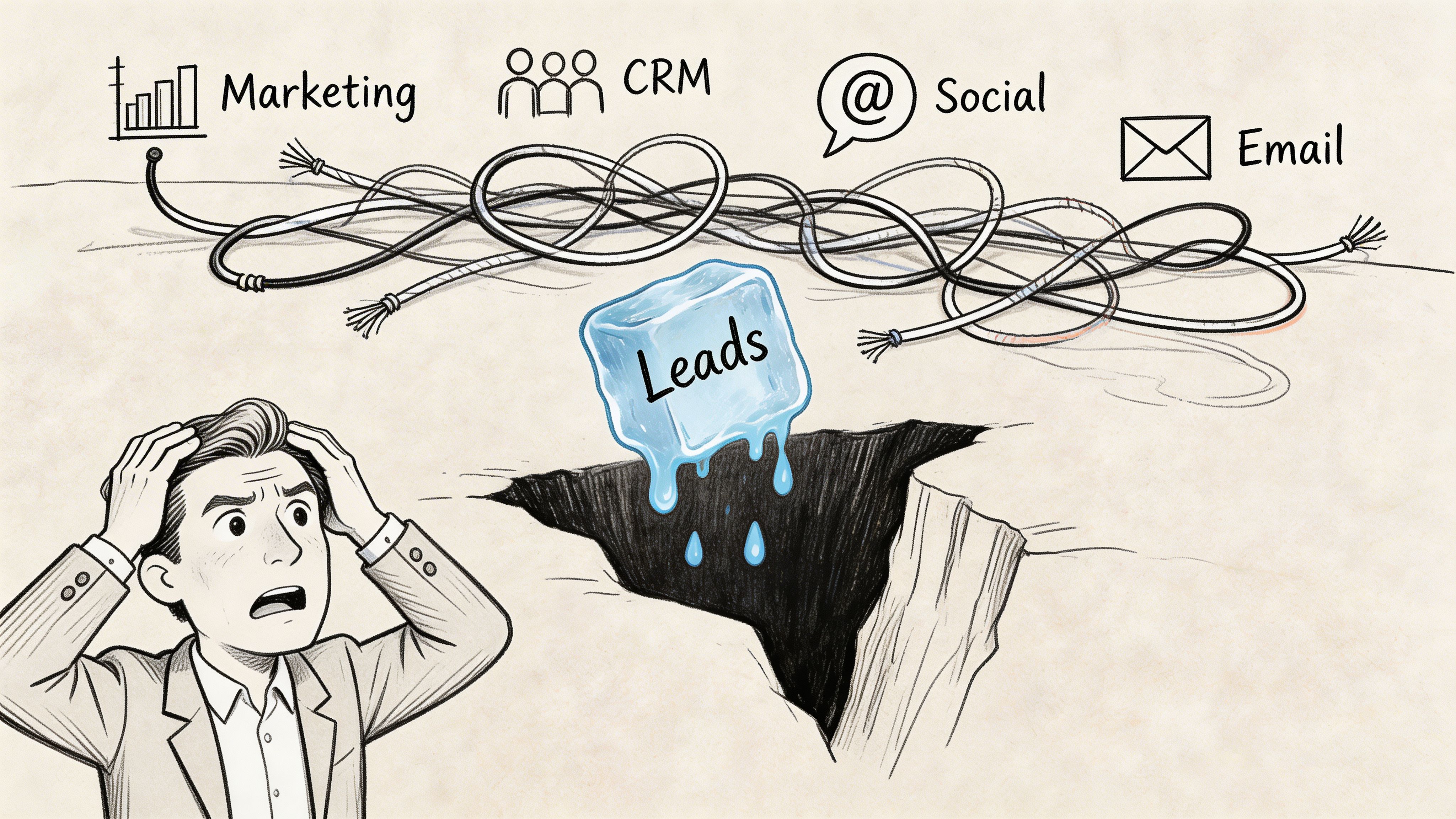
Teams that get consistent results use email as the operating layer between demand capture and sales action. In practice, that means forms, lead magnets, welcome sequences, scoring, CRM updates, rep alerts, and demo booking all run in one system with shared logic. At Stamina, that is the difference between sending campaigns and building a revenue engine.
What the old model gets wrong
The old model treats email as a batch send. Marketing writes copy, exports a list, and measures clicks. Sales hears about leads later, often with thin context and no clear priority.
The result is predictable:
Intent decays: A prospect shows interest, then sits in a generic nurture track with no response tied to what they did.
Sales works blind: Reps get a name and email address, but not the page views, content topics, or product interest behind the lead.
Reporting stops at engagement: Opens and clicks make the dashboard look healthy while pipeline stays flat.
Practical rule: If sales cannot see marketing engagement next to account activity, and marketing cannot trace email influence to demos or opportunities, email becomes busywork instead of a source of growth.
What a modern playbook looks like
A stronger system runs on one principle. Every email should do one of four jobs: capture intent, qualify it, deepen it, or route it to the right next step.
That changes how the whole program is built:
List growth stays tied to buyer intent, so the database gets better, not just bigger.
Segmentation starts at entry, using source, role, company fit, and behavior to shape the path.
Automation handles follow-up, with structured drip campaign workflows that react to signals instead of fixed calendars.
Sales handoff runs on triggers, so high-intent activity creates tasks, alerts, or meeting prompts automatically.
Reporting connects email to revenue, which lets both teams adjust based on meetings booked, pipeline created, and deals influenced.
Email does not need to do everything.
It needs to keep marketing and sales working from the same buyer signal, in the same workflow, while the lead still has momentum.
Build a High-Intent Email List from Scratch
A weak list makes every downstream tactic worse.
You can write sharp copy, build a clean sequence, and connect your CRM properly. None of it matters if the people entering your system have low intent, poor fit, or no clear reason to hear from you again. Good email marketing for lead generation starts before the first send.
Start with a specific conversion asset
The easiest mistake is offering a generic newsletter signup and hoping enough of the right people opt in.
That rarely works for B2B lead generation. Prospects trade email addresses for immediate value, not vague promises. Your lead magnet needs to solve one narrow problem for one clear buyer.
Good examples include:
Operational templates: A sales handoff checklist, outbound QA sheet, campaign brief, or qualification rubric.
Short decision tools: ROI calculators, self-assessment quizzes, audit forms, or benchmarking worksheets.
Focused education: A workshop replay, mini-course, teardown, or implementation guide tied to a real pain point.
Process shortcuts: Swipe files, email frameworks, onboarding docs, or reporting dashboards.
The magnet should sit close to your offer. If you sell CRM software, a broad ebook about “business growth” won’t help much. A pipeline inspection template or lead routing playbook will.
Match the offer to buying stage
Not every subscriber should enter through the same door.
Someone early in research may want a checklist or diagnostic. Someone comparing vendors may want a template, implementation guide, or demo-focused asset. If you collapse all traffic into one signup form, you lose buying context at the first step.
A cleaner way to think about list building is by intent band:
Entry point | Likely intent | Best next asset |
|---|---|---|
Blog reader | Early research | Checklist, guide, short course |
Webinar registrant | Active problem awareness | Replay, related workflow, case-based email sequence |
Pricing page visitor | Solution evaluation | Comparison sheet, implementation email, demo CTA |
Community or social follower | Light interest | Diagnostic, audit, or practical template |
That’s also where enrichment helps. If your team uses prospecting tools to build context before outreach, this guide to the ZoomInfo Chrome extension is useful background on how teams gather company and contact signals.
Keep forms simple and the promise explicit
Long forms reduce completion and usually don’t improve lead quality enough to justify the friction.
Ask only for what you’ll use immediately. In many cases, name and work email are enough. If you need one more field, use it to improve routing or messaging. Don’t ask for five extra details just because a form builder allows it.
Your CTA should also say what happens next. “Get the template” beats “Submit.” “Send me the audit checklist” beats “Download now.” Clarity filters in the right leads and filters out the wrong ones.
The best signup forms don’t feel like data collection. They feel like the first useful interaction with your brand.
Build list growth into existing touchpoints
Focusing on a single dominant acquisition tactic is a common pitfall. That’s the wrong framing.
High-intent list growth usually comes from placing relevant offers in the paths people already take. Add them where prospects are already evaluating, learning, or hesitating.
A few reliable placements:
Within high-intent blog posts: Offer a checklist or template that helps execute what the post explains.
On webinar registration and replay pages: Move attendees into a role-specific follow-up track.
On product and pricing pages: Offer implementation help, not just “contact sales.”
Inside outbound follow-up: If a prospect isn’t ready for a meeting, offer a practical resource instead of forcing a calendar link.
After interactive tools: Route users into education based on their result or self-identified pain.
Protect list quality early
A lot of lead gen problems get blamed on poor copy or weak sales execution when the root issue is list hygiene.
If someone signs up from a low-intent source, never engages, and keeps receiving campaigns, they drag down the whole system. That affects relevance, reporting, and deliverability over time.
Set basic rules from day one:
Tag by source immediately: Don’t wait to organize leads later.
Separate buyers from browsers: A pricing-page subscriber and a top-of-funnel blog subscriber should not get the same sequence.
Suppress obvious misfits: Wrong geography, student emails, competitors, and personal addresses may need separate handling.
Create re-engagement logic: If people stop interacting, don’t keep blasting them forever.
A healthy list is smaller than generally desired and better than typically built. That’s fine. Quality gives the rest of the machine something to work with.
Mastering Segmentation and Email Deliverability
Once leads enter your list, two things determine whether email will produce pipeline.
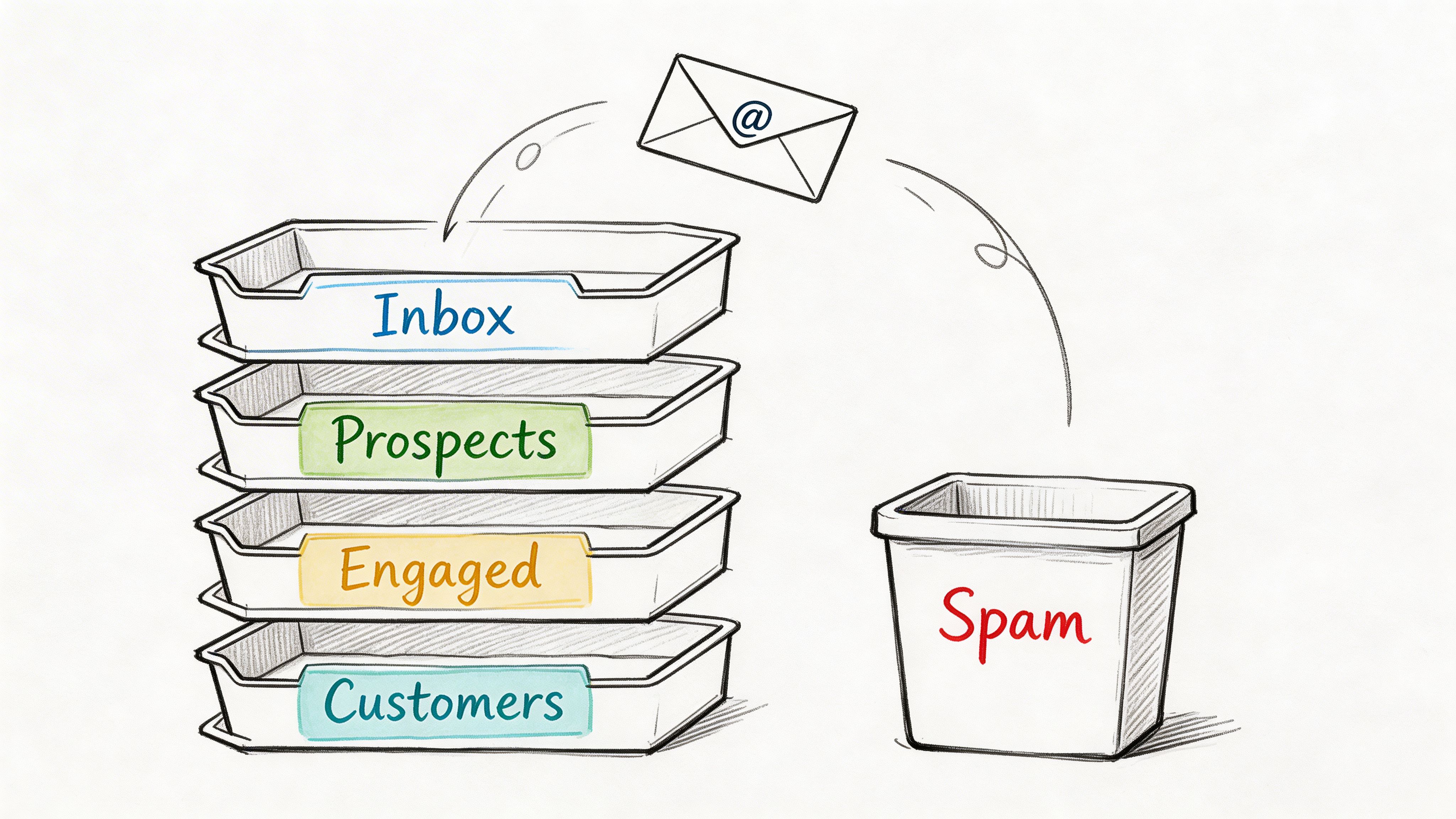
First, are you sending the right message to the right subset of people? Second, are those emails landing in the inbox at all? Teams often obsess over copy and ignore both.
Segment by decision context, not just demographics
Basic segmentation by industry or company size is useful, but it’s not enough on its own.
What matters more is decision context. Why did this person enter your system, what have they done since, and how close are they to a sales conversation? Those signals should shape the message before role or vertical details do.
A practical segmentation model usually includes four layers:
Source: Webinar, content download, outbound reply, direct signup, product page, referral.
Behavior: Opened, clicked, visited key pages, ignored, replied, returned.
Buyer profile: Role, seniority, team function, company type.
Lifecycle stage: New lead, nurtured lead, evaluation stage, opportunity, customer.
That gives you message logic like this: a head of sales who came from a webinar and clicked a demo-related link should get different follow-up from a founder who downloaded a checklist and never revisited the site.
The first emails matter most
Welcome and automated nurture flows consistently outperform ad hoc sends because they match the moment of highest attention. Welcome and automated nurture emails achieve 68.6% open rates and 2.7% conversion rates, according to MyEmailVerifier’s benchmark roundup.
That’s why segmentation should begin before the first automated message goes out.
A strong early-stage flow often includes:
Immediate delivery email: Send the promised asset fast and keep the message clean.
Context email: Explain how to use the asset based on the lead’s likely job or use case.
Intent check email: Offer two or three next paths, such as education, audit, or demo.
Behavior branch: If they click buying signals, move them to a sales-aware track. If not, continue nurture.
The same source also notes that cart abandonment emails see 40.14% opens and 28.64% CTRs, with three-email sequences yielding 69% more orders than single emails. The B2B equivalent is lead drop-off. If someone starts but doesn’t complete a high-intent action, sequence logic beats a one-off reminder.
Deliverability is not a technical afterthought
Teams lose good leads because they treat deliverability as a setup chore instead of an ongoing operating discipline.
You need proper authentication, stable sending behavior, and list hygiene. You also need to warm new sending infrastructure gradually, monitor engagement trends, and separate different campaign types when necessary. If outbound prospecting, newsletter sends, and nurture automation all share the same reputation without controls, one weak motion can hurt the rest.
For teams tightening this part of the stack, this breakdown of cold email infrastructure services for better deliverability is a helpful reference point.
A simple deliverability checklist
You don’t need a huge ops team to stay out of trouble. You need consistency.
Area | What to check | Why it matters |
|---|---|---|
Authentication | SPF, DKIM, and DMARC are configured correctly | Helps inbox providers trust your mail |
Sending domain health | New domains are warmed carefully and used consistently | Sudden spikes create risk |
List hygiene | Invalid, irrelevant, and inactive contacts are managed | Poor data lowers engagement quality |
Content mix | Sales emails, nurture flows, and bulk sends are separated logically | Different motions create different risk |
Monitoring | Replies, bounces, unsubscribes, and spam signals are reviewed regularly | Problems compound if ignored |
Inbox rule: Relevance helps deliverability. People open, click, reply, and save the emails that match their needs. That engagement becomes part of your reputation.
What doesn’t work
Three habits hurt almost every program:
Sending the same email to the whole list
Treating inactive leads like active interest
Scaling volume before infrastructure is stable
Deliverability and segmentation reinforce each other. Better targeting improves engagement. Better engagement supports inbox placement. Better inbox placement makes every later optimization easier.
Automating Personalized Outreach at Scale
Manual personalization breaks once volume rises.
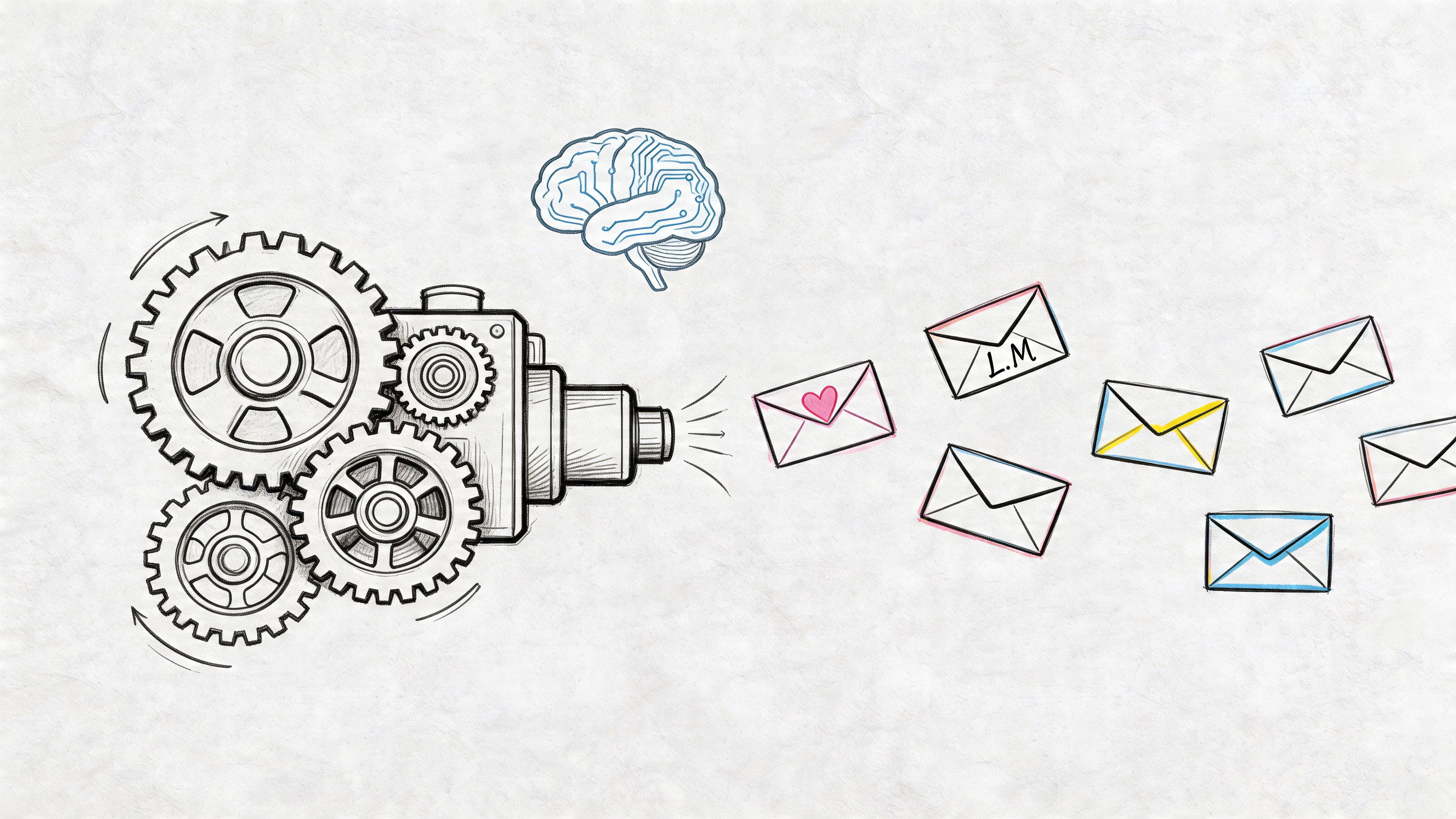
A rep can handcraft ten solid emails a day. They can’t reliably produce customized outreach, follow-ups, nurture replies, and role-specific variants across hundreds of leads without quality dropping. That’s where automation earns its place. Not by making messages robotic, but by making relevance repeatable.
Personalization should be modular
Many marketers think personalization means writing a unique email for every lead.
A better model is modular personalization. Build reusable blocks that adapt by role, pain point, trigger, and offer. Then let automation assemble the right version based on available signals.
Useful variable blocks include:
Problem framing: Different copy for pipeline visibility, lead response speed, or CRM hygiene
Role angle: Founder, SDR leader, marketer, or ops owner
Proof path: Educational resource, process suggestion, or meeting CTA
Trigger reference: Webinar attendance, asset download, pricing page visit, reply inactivity
This gives you scale without sending generic templates. If your team is exploring AI support for this process, this overview of AI sales assistants is a good place to compare how automation fits into outreach workflows.
Use a sequence, not a heroic first email
Most qualified leads don’t convert on the first touch. That’s normal.
What matters is whether your sequence adds context over time instead of repeating the same ask. B2B email sequence workflows using a 4-email sweet spot capture 76% more leads than single sends, with a 220% reply lift on the first follow-up. Best practice is to limit each email to 1 to 2 CTAs and keep the word count under 150 words, according to Warmly’s lead generation statistics.
That data lines up with what works in practice. Short emails with one clear action beat long persuasive essays.
A practical 4-email structure
Here’s a sequence structure that works for many B2B teams.
Email one with a clear problem
Open with the business issue, not your company intro.
Good opening angles:
A bottleneck the role already feels
A workflow gap between systems or teams
A costly delay in lead follow-up
A mismatch between campaign activity and pipeline visibility
Keep the CTA light. Ask whether the issue is relevant, or offer a related resource.
Email two with a sharper angle
The second touch should not be a copy-paste “following up.”
Add a different reason to respond. Mention a specific workflow pattern, a common friction point, or a more concrete offer. This is often the message where the lead recognizes you understand the operating problem, not just the category.
Send the follow-up because the first email was easy to miss, not because the prospect owes you a reply.
Email three that handles friction
By the third email, the job is usually objection reduction.
Address the likely blocker. Maybe they already have tools. Maybe the process is manual but “good enough.” Maybe they don’t want another system. Your reply here should lower perceived switching pain and move toward a practical next step.
Email four that closes the loop
The final email should be respectful and decisive.
Give the prospect a clear path to continue, pause, or opt out. A clean breakup email often earns replies because it removes pressure and makes the choice simple.
Timing and branching matter
A sequence isn’t just copy. It’s timing plus logic.
Use automation to branch based on behavior:
If they click a high-intent link, move them into a sales-aware path.
If they open repeatedly but don’t click, test a softer CTA or different angle.
If they reply with timing objections, pause outreach and schedule re-entry later.
If they ignore all touches, suppress them for a period instead of forcing more volume.
For teams to save the most time, the system should decide which path a lead takes next based on behavior, not on someone manually rebuilding lists every day.
A short walkthrough helps if you’re mapping this inside a live sequence environment:
What scalable personalization actually looks like
You don’t need every email to read like it took half an hour.
You need the recipient to feel that the message fits their role, timing, and likely problem. That usually comes from three things:
A relevant trigger
A believable pain statement
One sensible next action
Everything else is support.
The trade-off is real. More personalization usually means less throughput. More automation usually risks flatter messaging. The right answer is not choosing one side. It’s building a system where the first draft is automated, the segmentation is thoughtful, and the high-intent paths get human attention.
Bridge the Gap Between Marketing Emails and Sales Demos
Most lead generation systems don’t fail at capture. They fail at transfer.
Marketing gets the opt-in. The nurture flow runs. Engagement happens. Then the lead stalls because nobody converts that activity into a sales action at the right time. That gap costs more than weak copy ever will.
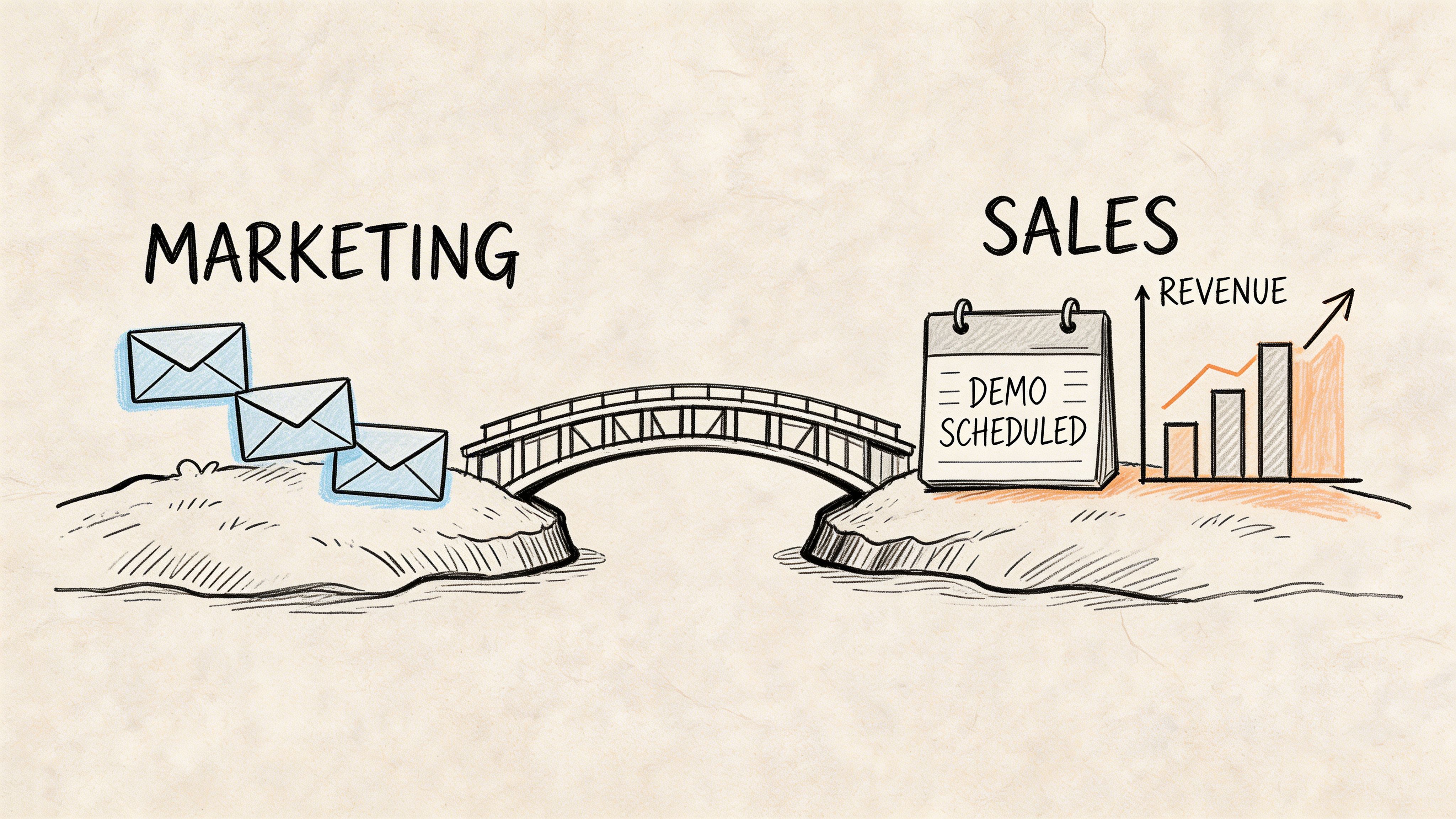
The case for fixing it is straightforward. In longer B2B cycles, rigid silos waste 30% to 50% of nurtured leads. Unified platforms can improve handoff conversion through shared lead scoring from email engagement and social signals, and they report up to 25% faster pipeline velocity, as noted in CleverTap’s discussion of email marketing lead generation.
Shared scoring beats separate opinions
Sales and marketing often disagree because they’re looking at different evidence.
Marketing sees downloads, opens, clicks, and return visits. Sales sees replies, meetings, objections, and deal movement. Both are useful. Neither is enough alone. The solution is a shared scoring model that turns behavior into an agreed handoff signal.
The score doesn’t need to be complicated. It needs to be visible and consistently used.
A practical model can include behavior such as:
Email opens
Link clicks
Visits to high-intent pages
Form submissions
Replies
Negative actions like unsubscribes or explicit disinterest
The verified methodology from American Eagle’s lead scoring guide suggests assigning scores such as +5 for opens, +10 for clicks, +15 for website visits, and +25 for form submissions, then using thresholds like 50+ for high-value leads, adjusting over time based on actual conversion behavior.
Handoff should be event-driven
A sales handoff shouldn’t happen because a rep checked a report at the right time.
It should happen automatically when the lead crosses a threshold or triggers a meaningful event. That’s the operating advantage of a unified stack. The same system that sends the nurture email can update the contact record, raise the lead score, create a task, and place the lead into the correct pipeline stage.
A clean handoff workflow usually looks like this:
Lead enters by source
System tags and segments the contact
Nurture emails run based on role and intent
Engagement updates score in real time
Threshold or trigger creates a sales action
Rep sees full activity history before outreach
Marketing can track whether handoff became a meeting or opportunity
That sequence removes guesswork. It also stops the common handoff mistake where sales gets a “qualified lead” with no real context.
Use different thresholds for different motions
Not every path to demo looks the same.
A lead who visits a pricing page after two nurture clicks signals something different from a cold outbound prospect who replies to the second follow-up. Treating them with one universal threshold creates noise.
A better model uses separate qualification logic for:
Motion | Strong signal | Sales action |
|---|---|---|
Inbound content lead | Repeat engagement plus high-intent page visit | SDR outreach or demo invite |
Webinar lead | Attended or consumed follow-up content and clicked next-step CTA | Fast personalized follow-up |
Outbound prospect | Reply, return visit, or form completion | Owner assignment and direct contact |
Re-engaged lead | Inactive before, now interacting with sales-adjacent content | Short qualification sequence |
Operator’s note: The best handoff systems reduce debate. Everyone can see why the lead moved, what happened before, and what should happen next.
Don’t stop at “MQL created”
A lot of reporting still ends too early.
If marketing celebrates lead qualification and sales never books the meeting, the system is unfinished. The handoff should be measured all the way through demo attendance, opportunity creation, and pipeline movement. Otherwise, teams optimize for stage changes instead of revenue progress.
That’s why email marketing for lead generation works best inside a shared operating environment. The email isn’t the finish line. It’s the trigger that should activate the next coordinated action.
Measure What Matters and Optimize Your Revenue Engine
A revenue team can post strong open rates all month and still miss pipeline targets.
That usually happens because email is being measured as a channel, not as part of a buying motion. Marketing sees engagement. Sales sees a thin calendar. Leadership sees two dashboards that do not explain each other. The fix is a reporting model that connects sends, responses, handoffs, meetings, and pipeline in one system.
Build a KPI stack that mirrors the funnel
The cleanest scorecard has three layers, and each one should roll into the next inside the same platform.
Layer one is message health. Track opens, clicks, replies, unsubscribes, spam complaints, and bounce trends. These metrics help diagnose whether your targeting, copy, and deliverability are working.
Layer two is conversion to sales activity. Track how many engaged contacts become qualified leads, how fast they get assigned, how often reps act on them, and how many booked meetings come from each email motion. This is the layer that exposes the sales-marketing gap.
Layer three is pipeline contribution. Measure demo attendance, opportunity creation, deal progression, and revenue influenced by source, sequence, and segment.
Teams often jump from engagement metrics straight to pipeline and miss the handoff layer. That blind spot creates bad decisions. A campaign can look healthy in the email dashboard while revenue stalls because follow-up is late, routing rules are loose, or sales is getting the wrong leads.
Inside Stamina, this is where the model starts to matter. Email engagement, qualification rules, ownership, and downstream sales actions should sit in one workflow so the team can trace exactly where a lead moved or got stuck.
Use benchmarks as context, not targets
Benchmarks help with diagnosis. They do not tell you whether your system is healthy.
If your welcome sequence beats a market average but the leads never convert to meetings, the benchmark did not solve the underlying problem. Use outside numbers to spot underperformance early, then judge success by conversion to revenue.
Email Lead Generation KPIs and Benchmarks
KPI | What It Measures | How to Use It |
|---|---|---|
Email ROI | Return compared with program spend | Sanity check for channel efficiency, not a standalone success metric |
Welcome email open rate | Early interest from new leads | Good for judging list quality and first-touch relevance |
Welcome email conversion rate | Movement to the next step | Better signal than opens if the goal is lead progression |
General open rate | Subject line fit and inbox placement | Useful diagnostic, weak as a revenue metric on its own |
General click-through rate | Engagement with the offer | Helps validate message-to-offer alignment |
Sequence performance | Impact of follow-up structure | Useful for testing cadence and persistence |
Follow-up reply lift | Response change after additional touches | Helps tune outbound and nurture timing |
As noted earlier, the ROI reference came from MailerLite. The engagement benchmarks came from the MyEmailVerifier benchmark roundup cited earlier. The sequence and follow-up references came from the Warmly source cited earlier.
Diagnose the leak before you change the campaign
Optimization gets faster when the team names the failure pattern clearly.
High opens, low clicks: The subject line earned attention, but the offer or email body did not carry enough value.
High clicks, low meeting rate: The landing page, form, CTA, or post-click handoff is slowing conversion.
Healthy engagement, weak pipeline: Qualification thresholds are off, or sales is not acting on the right leads quickly enough.
Low opens across multiple segments: Deliverability, sender reputation, targeting, or list quality needs work.
Strong campaign metrics, inconsistent revenue: Reporting is rewarding channel activity instead of buyer progress.
This is why disconnected tools create noise. If email performance lives in one dashboard and rep activity lives somewhere else, every team explains the same result differently. A unified setup removes that ambiguity.
Run fewer tests with higher stakes
Small tests rarely change revenue. Bigger operational tests do.
Start with variables that affect buyer movement across the full journey:
Offer type. Demo request versus audit, template, guide, or consultation
Sequence timing. Whether shorter or longer delays improve replies, meetings, or no-show rates
Segment logic. Which behaviors should trigger different messaging, owners, or CTAs
CTA style. Reply-based asks versus direct scheduling asks
Handoff rules. Whether a lead should go to sales after a click, a repeat visit, a reply, or a combined intent threshold
Change one meaningful variable at a time. Then wait long enough to judge downstream impact, not just early engagement.
Review the system, not isolated campaigns
The best reporting reviews happen at the journey level.
Look at which lead sources create the highest meeting rates. Look at which sequences produce attended demos instead of empty clicks. Look at which segments move from first engagement to opportunity fastest. Look at where response time drops after handoff. Look at which inactive leads return when the offer changes.
That is how email marketing becomes a revenue engine instead of a publishing calendar. The list gets cleaner. Sales gets better-timed intent. Marketing stops claiming wins that never reach pipeline. Leadership gets one view of performance instead of competing stories from separate tools.
If you want one platform to run that whole system, from list growth and automated nurture to lead scoring, sales handoff, CRM visibility, and AI-assisted outreach, Stamina is built for it. It gives growing teams a single place to generate demand, personalize follow-up, route intent to sales, and turn email activity into qualified demos without stitching together a pile of point tools.

