The 10 Best CRM for Agencies in 2026

Searching for the best CRM for agencies? We review 10 top platforms, comparing agency-specific features like white-labeling, client management, and AI outreach.

0 - Minute Read

You already know the feeling. New leads live in one inbox, client notes sit in Slack, proposals are buried in Drive, and nobody's fully sure what happens after a deal closes. That setup works until the agency gets busy. Then handoffs break, follow-ups slip, and account managers start asking sales for context they should've had from the start.

That's why your CRM can't just be a contact database. For an agency, it has to hold together prospecting, pipeline management, delivery context, reporting, and often a client-facing layer too. The best CRM for agencies is the one that matches how you sell and service work, not the one with the longest feature list.

CRM use is no longer a niche behavior. Agile CRM's industry roundup says 91% of businesses with 10 or more employees now use CRM software. For agencies, that matters because buyers expect tighter follow-up, cleaner reporting, and fewer dropped balls across the client lifecycle. If you're still stitching that together manually, you're competing at a disadvantage.

This guide focuses on what generic roundups usually skip: white-labeling, multi-client management, service reselling, and client reporting. If you need practical advice beyond a basic sales tracker, these CallZent insights on client management are worth bookmarking too.

1. Stamina
Stamina

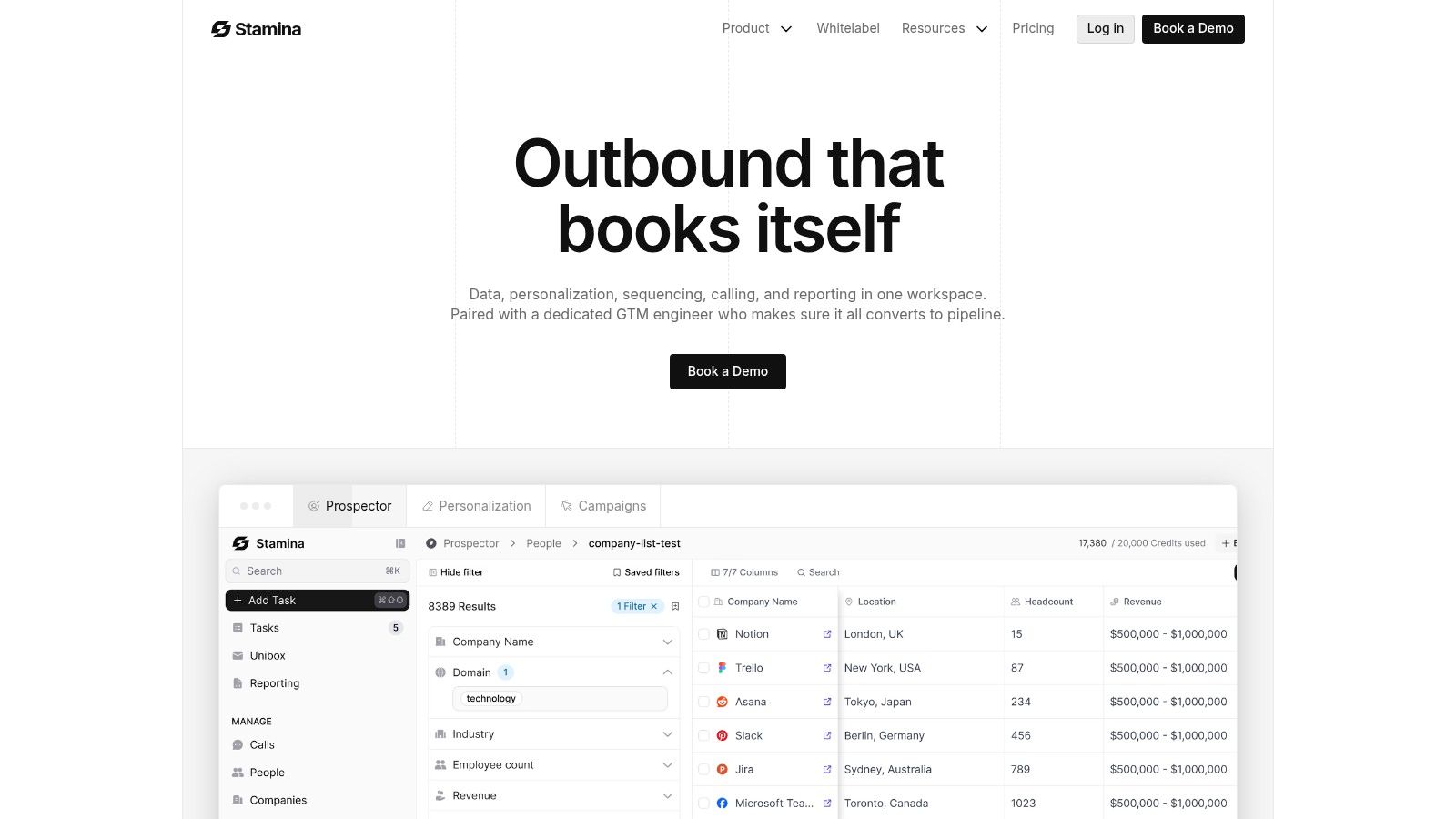
An agency owner feels the pain fast when outbound lives in one tool, contact data in another, and client context somewhere else. Stamina stands out because it was built around that revenue workflow first. For agencies that win business through outbound and need to manage multiple client programs without stitching together five separate systems, it covers more of the stack than a typical CRM.

The practical advantage is consolidation. Stamina brings prospect data, sequencing, dialing, inbox infrastructure, reply handling, and CRM records into one workspace. If your team is still exporting lists, cleaning spreadsheets, loading contacts into an outreach tool, and then updating pipeline status by hand, this type of stack reduction saves time and removes failure points. Its own guide to marketing automation and CRM integration for agencies is useful context if you're comparing unified systems against a patched-together setup.

Why agencies pick it

Stamina makes the most sense for outbound-led agencies, appointment setting firms, SDR-as-a-service teams, and consultants selling lead generation as an ongoing service. Multi-tenant workspace structure and white-label options matter here. They let agencies separate client programs cleanly and package the platform as part of a service offer, instead of forcing everyone into one internal sales database. If that's your model, Stamina's guide to white-label CRM for agencies is relevant.

It also goes further than a standard sales CRM on the prospecting side. The platform includes a built-in data layer and targeting filters, so list building and campaign execution happen in the same system. That matters for agencies because every handoff between vendors creates delays, sync issues, and accountability problems.

Practical rule: If your agency sells outbound, lead gen, or appointment setting, CRM quality matters less than whether the platform can run acquisition workflows end to end.

Another feature worth weighing is Zara, the built-in AI SDR. It helps with message drafts, personalization angles, and prospect research. Used well, that cuts down rep time on repetitive prep work. It does not replace strategy, offer positioning, or list quality, so agencies still need senior oversight.

Trade-offs to know

Stamina is less compelling for agencies that need deep post-sale operations. If your work depends on project delivery management, retainers tied to utilization, or PSA-style finance controls, you'll hit limits faster than you would in a service operations platform.

Pricing is also not public, which slows down comparison shopping. Some agency owners will accept that if they want fewer tools and a stronger outbound engine. Others will prefer transparent entry pricing, even if it means more integration work.

One more consideration is fit. Agencies focused on local lead gen and software resale may still compare it with HighLevel, especially if they want a heavier white-label client portal and packaged automations. In that case, reviewing how Gohighlevel automation specialists position implementation can help clarify the difference between an outbound-first system and a resale-first one.

For agencies that treat prospecting, pipeline control, multi-client management, and white-label delivery as part of the same operating system, Stamina is one of the more practical options in this category.

2. HighLevel
HighLevel (GoHighLevel)

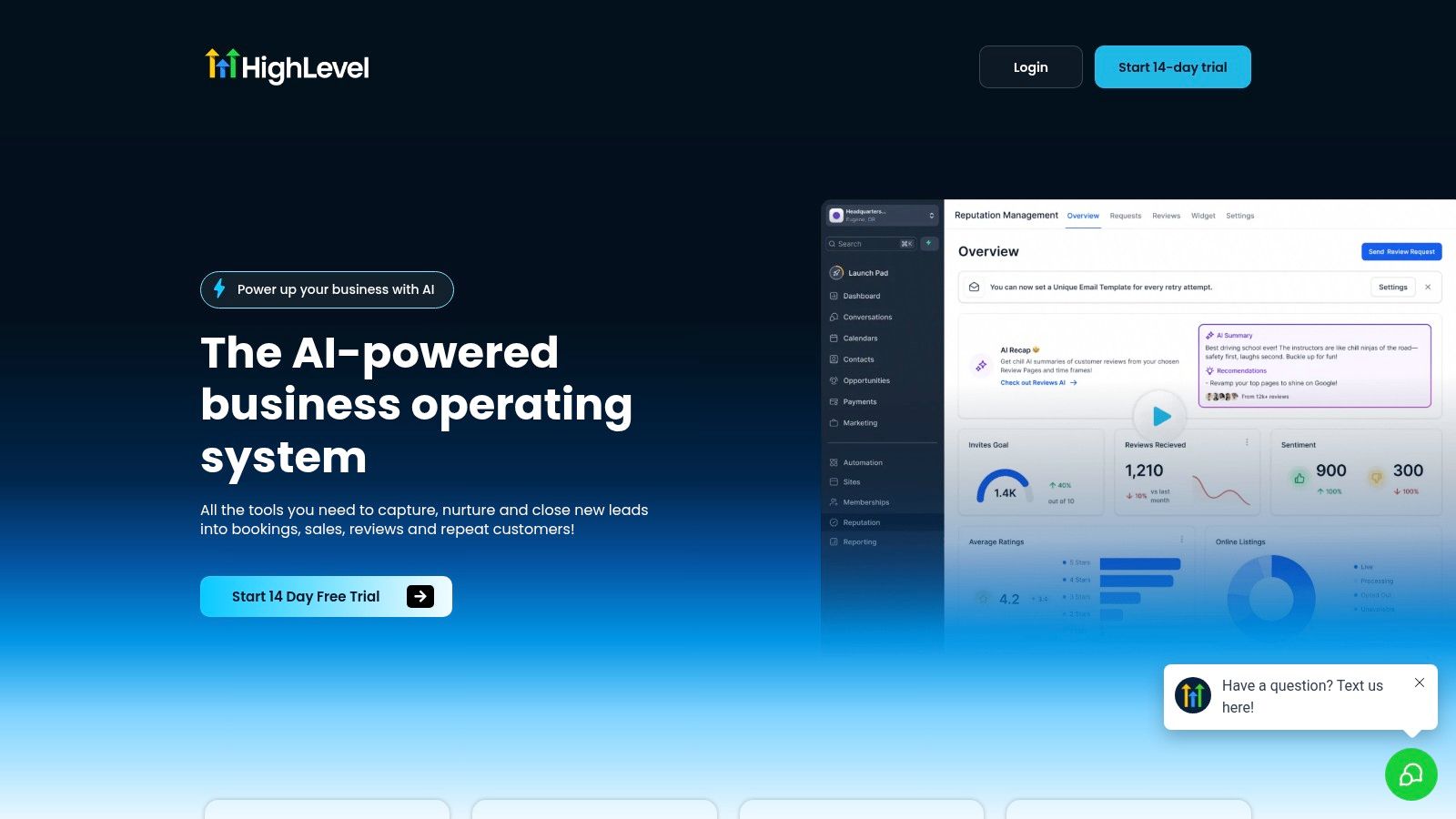
HighLevel is one of the most agency-native products in the market. It wasn't designed as a generic CRM and then adapted for agencies later. Its structure revolves around sub-accounts, white-labeling, and service resale from the start, which is why so many lead gen, local marketing, and automation agencies build offers around it.

The big advantage is packaging. You can set up client accounts, manage automations, run funnels, handle messaging, and rebill software usage inside the same ecosystem. If your agency wants to sell recurring software-backed services under its own brand, HighLevel is built for that motion.

Where it works best

HighLevel is strongest for agencies serving multiple SMB clients with repeatable service packages. Think lead capture, SMS follow-up, appointment funnels, review generation, chat widgets, or nurture automations. Its client sub-account model is practical and easier to operationalize than trying to fake multi-client separation in a standard sales CRM.

It also helps agencies reduce tool sprawl. Instead of paying for separate funnel software, calendar booking, CRM, messaging tools, and light automation, you can often run the core stack inside one platform. For firms that specialize in setup and retention, that matters more than having the deepest native reporting.

For implementation-heavy shops, this perspective on Gohighlevel automation specialists is useful because the platform rewards agencies that know how to templatize delivery.

HighLevel is less about elegant CRM craftsmanship and more about operational leverage for agencies that resell systems.

What to watch

The trade-off is complexity. HighLevel can do a lot, but not all of it feels refined in the way a focused CRM does. Teams that only need a simple deal pipeline and contact management layer may find it bloated.

White-labeling also gets better as you move up the plan stack. If your entire business model depends on branded apps and SaaS resale, you need to confirm the exact tier and feature access you'll require before committing. If that's your agency model, though, HighLevel deserves a serious look.

3. SharpSpring by Constant Contact
SharpSpring by Constant Contact

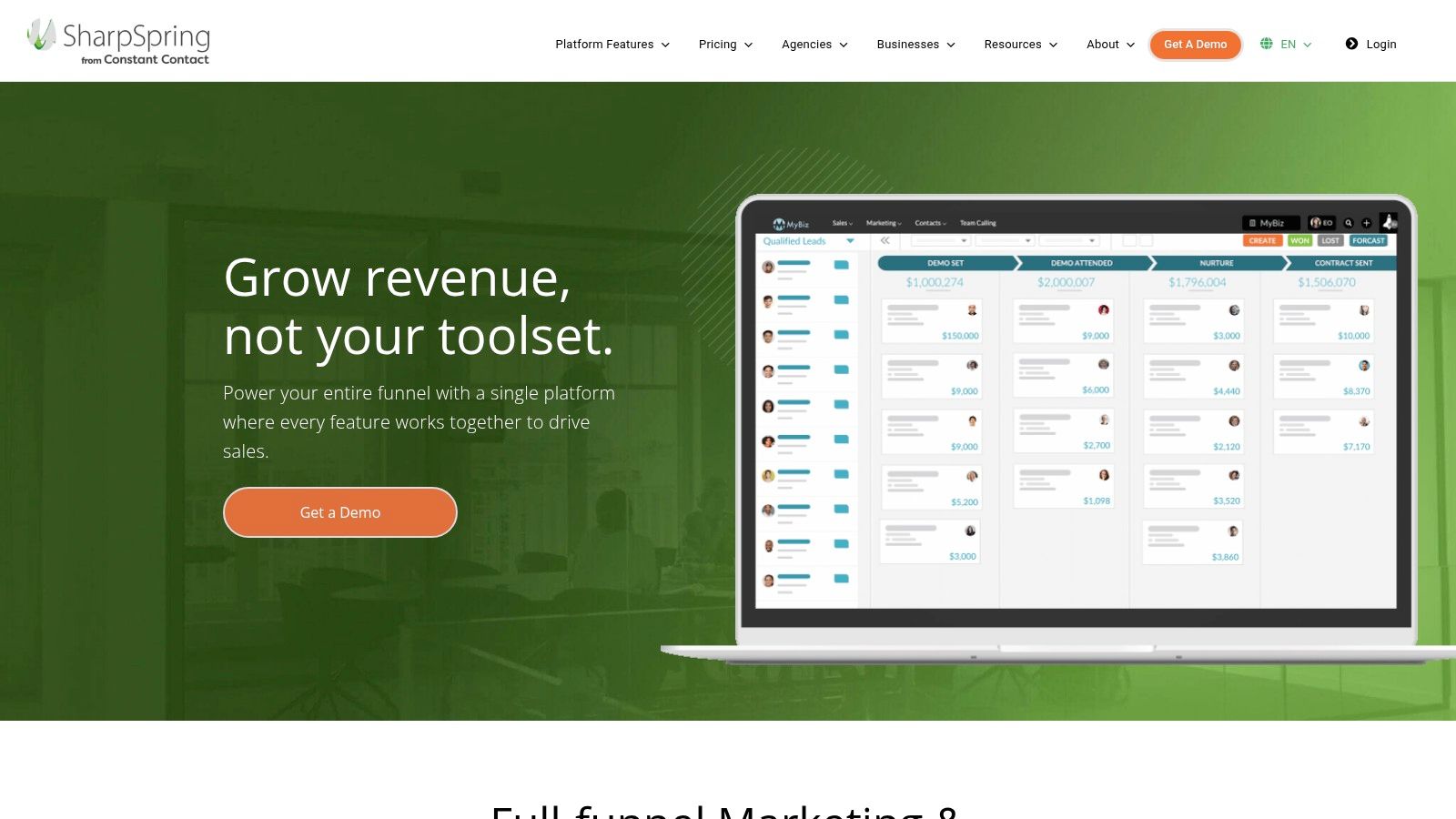
SharpSpring has long appealed to agencies that want marketing automation and CRM in one environment without forcing every client into a patchwork of add-ons. It's less trendy than some newer agency platforms, but that's also part of its appeal. Agencies tend to choose it when they care about repeatable campaign execution and predictable packaging more than novelty.

Its agency orientation shows up in practical areas: rebrandable experience, unlimited users, and an agency program that supports onboarding and rollout. That combination is useful when you've got strategists, account managers, contractors, and client stakeholders touching the same environment.

Best fit

SharpSpring works well for agencies that run email-centric nurture programs, landing pages, and ongoing lifecycle marketing. If your service mix leans toward marketing automation retainers, this kind of integrated setup is usually easier to manage than bolting a CRM onto a separate campaign engine.

That's also why the connection between automation and CRM matters so much. If sales activity lives in one system and campaign engagement lives in another, account context degrades fast. Consequently, marketing automation and CRM integration becomes more than a technical preference. It affects handoffs, segmentation, and how quickly a team can act.

  • Strongest advantage: It's built for agencies that need to support multiple internal users without turning seat management into a pricing headache.

  • Main limitation: It can feel expensive if you only need a lightweight CRM and basic automations.

  • Operational upside: Agencies can standardize a service offer around one platform instead of rebuilding the stack account by account.

SharpSpring won't be the best CRM for agencies that prioritize white-label SaaS resale or aggressive outbound. But if your agency sells managed automation and campaign orchestration, SharpSpring by Constant Contact remains a credible choice.

4. Vendasta
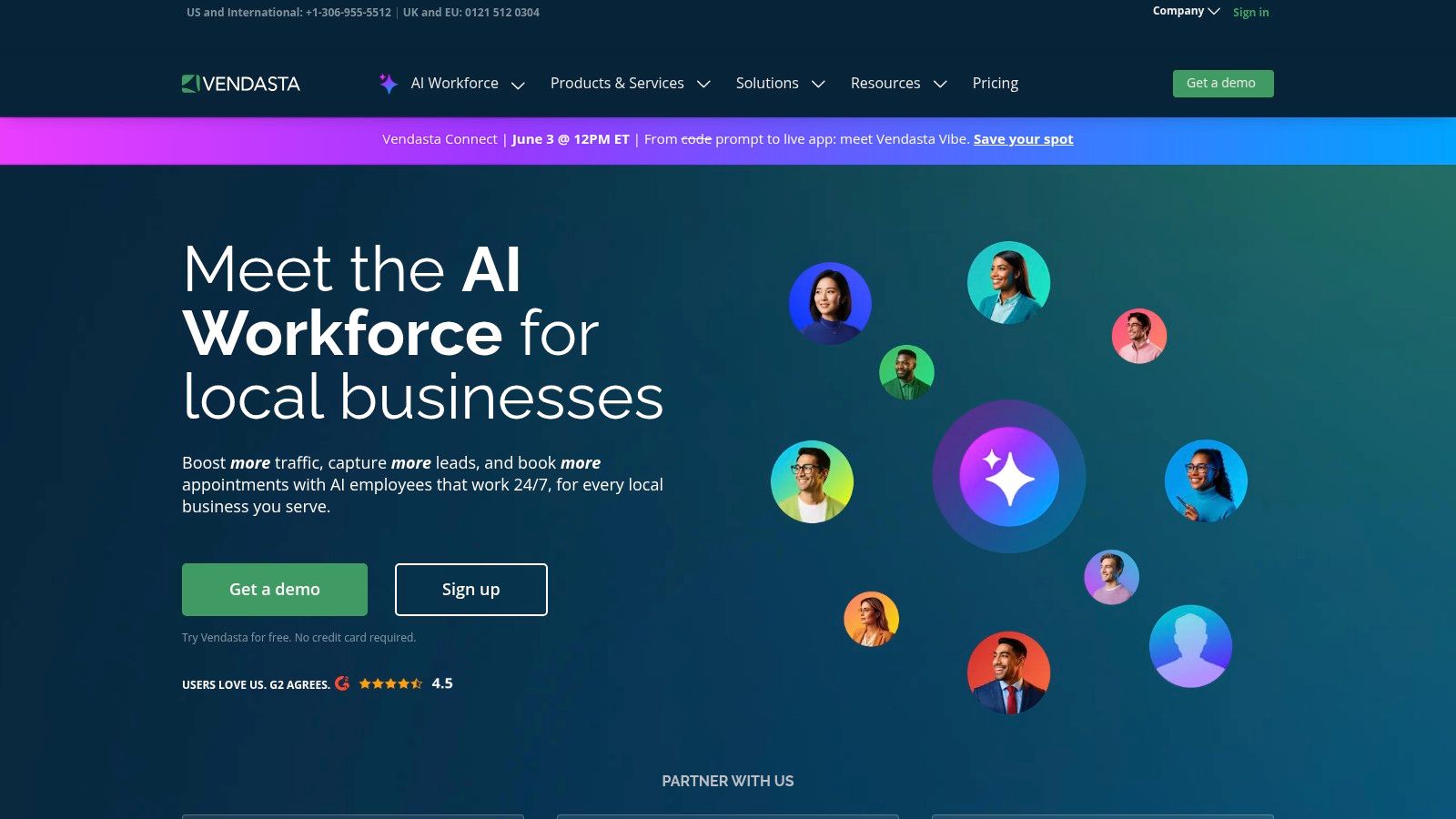
Vendasta

Vendasta is less of a pure CRM and more of an agency commerce platform with CRM built in. That distinction matters. If your goal is to resell services, package recurring offers, and give clients a branded experience, Vendasta has a logic that many standard CRMs don't.

The white-label angle is the headline. Agencies can use the CRM internally, resell it to clients, and layer in marketplace services or fulfillment workflows around it. For local-business-focused agencies, that can create a cleaner operating model than stringing together separate proposal, billing, fulfillment, and client-access tools.

Where it stands out

Vendasta is especially useful for agencies that want to move beyond labor-only revenue. If you sell digital services to SMBs and want software-backed recurring revenue attached to those accounts, this platform was built for that kind of business. It also fits agencies that want a proof-of-performance layer in sales conversations.

A lot of agencies underestimate how important service packaging is. The CRM itself may be adequate, but the bigger benefit is everything around it: marketplace access, billing, fulfillment support, and a branded client environment. That's why Vendasta can work even when another tool might be stronger as a standalone CRM.

The question with Vendasta isn't “Is this the cleanest CRM?” It's “Do you want a resellable operating system for your agency?”

The trade-off

The catch is cost creep. If you keep adding marketplace services, fulfillment layers, and platform components, your margin structure can get harder to read. Agencies should evaluate whether the convenience and speed justify the stack cost compared with a more custom setup.

Some teams also find that CRM flexibility and export behavior aren't as smooth as they want. If your agency is highly process-specific, Vendasta may feel more opinionated than a configurable CRM. But for agencies built around white-label services and local SMB growth packages, it's a serious contender.

5. HubSpot
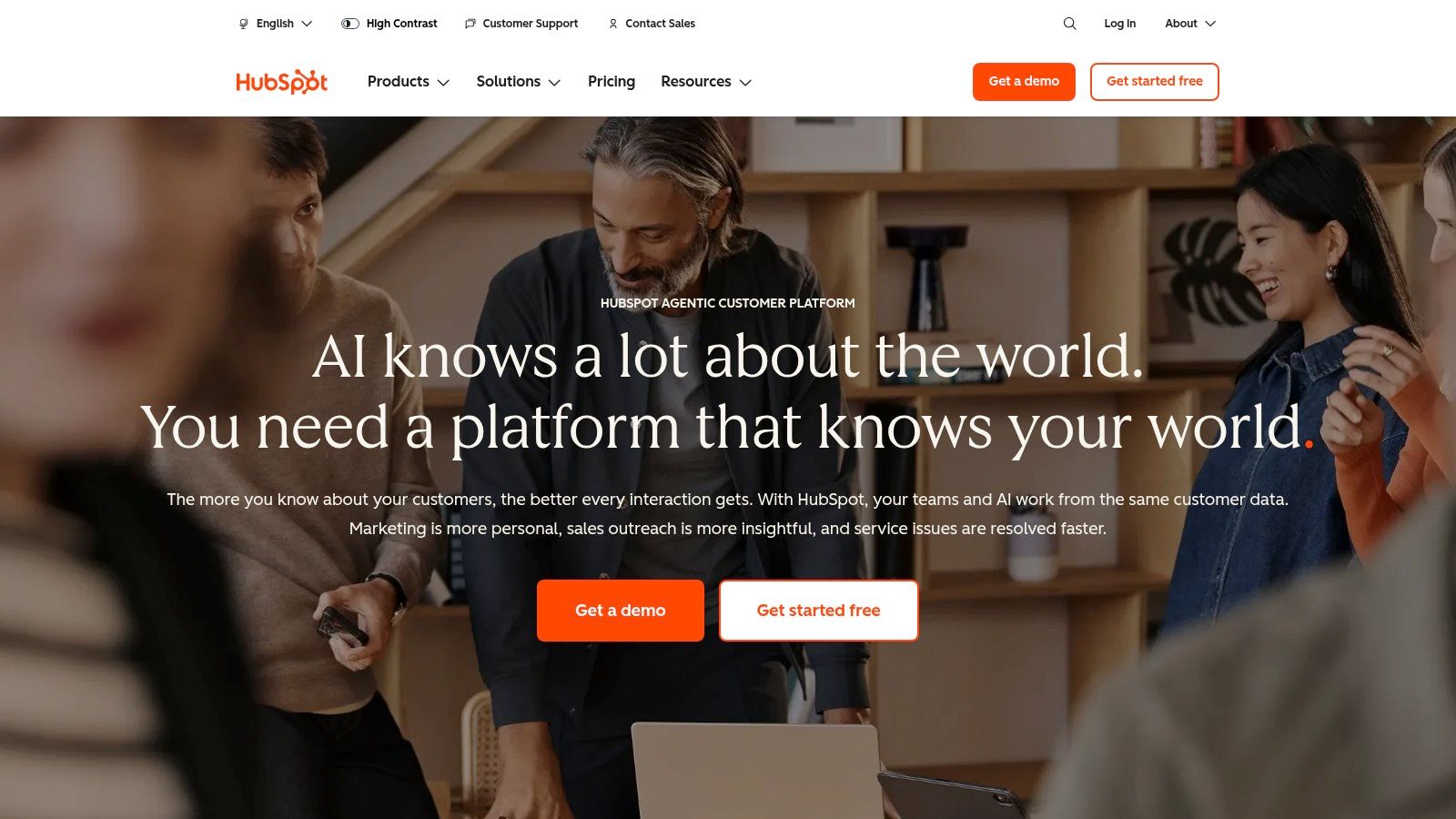
HubSpot (Sales Hub & Customer Platform)

HubSpot is the safest mainstream pick on this list. It's polished, widely understood, and supported by a large ecosystem. If you're buying for a growing agency and want lower vendor risk, that matters. Function Fox notes that HubSpot is used by 205,000+ companies worldwide, which is a meaningful adoption signal when you're thinking about integrations, available consultants, and long-term viability.

HubSpot is usually the right answer when your agency needs a mature CRM, strong reporting, solid sales workflows, and the option to expand into marketing, service, or CMS later. It's also an easy platform to hire around because many operators already know the basics.

What agencies like

HubSpot gives agencies a dependable core system for deal stages, sequences, playbooks, automation, and reporting. For agencies implementing CRM for clients, the partner ecosystem is a practical advantage. There's enough market familiarity that clients often feel comfortable with the platform before kickoff.

It's also one of the few tools here that can support your internal new-business process while also becoming a client delivery platform in selected use cases. Not every agency needs that symmetry, but when you do, HubSpot is flexible enough to support it. If your team is still tightening its process discipline, these CRM best practices for teams are worth applying no matter which platform you choose.

Where it falls short

HubSpot isn't especially agency-native in white-labeling or multi-client account architecture. You can support clients on it, but it's not designed like HighLevel or Vendasta for reselling under your own brand. Costs can also rise as you add seats, hubs, and more advanced requirements.

For agencies that want a broad, proven platform and don't mind paying for maturity, HubSpot remains one of the best CRM options available. For agencies that need true white-label SaaS packaging, it's often the wrong fit.

6. Pipedrive
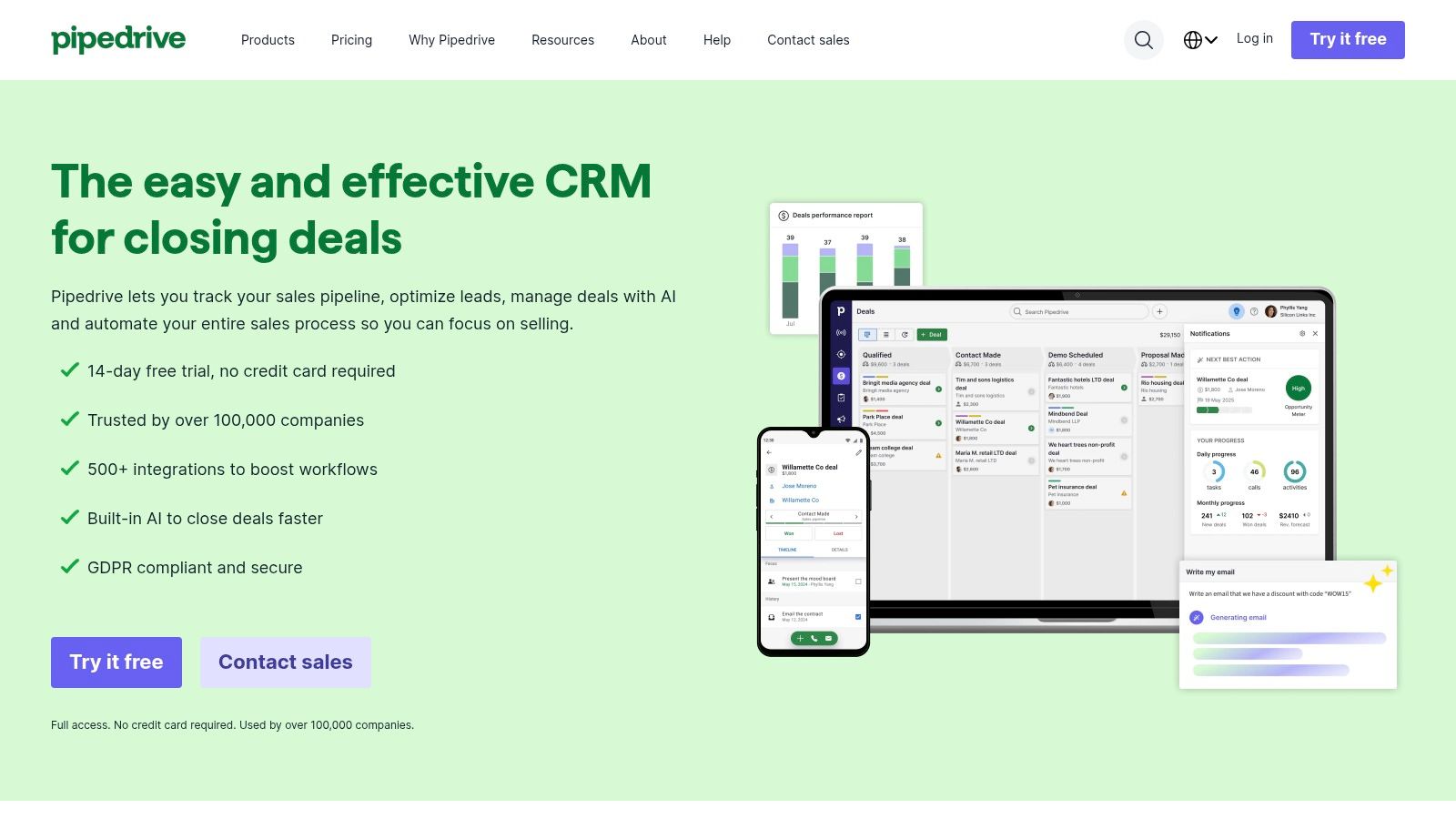
Pipedrive

Pipedrive is the best choice here for agencies that need a clean sales machine, not a sprawling platform. It's straightforward, visual, and easy for reps to adopt quickly. That matters more than people admit. A CRM with fewer features often wins if the team actively uses it.

Agencies with founder-led sales, compact BD teams, or a simple outbound process tend to do well with Pipedrive. The pipeline views are intuitive, activity management is solid, and it doesn't require a long implementation cycle just to become useful.

Why it works

Pipedrive's strength is focus. It helps teams move deals, schedule next actions, and keep the pipeline current without much admin burden. If your main issue is inconsistent follow-up or poor visibility into opportunities, it solves that problem well.

That said, it's not trying to be an all-in-one agency operating system. Once you need deeper marketing automation, more advanced client reporting, or a more complete outbound execution layer, you'll either add tools or outgrow it. That's a critical juncture, and it helps to understand the line between a sales engagement platform and CRM.

  • Best for: Smaller agencies that need sales accountability fast.

  • Less ideal for: Agencies that want white-labeling, service resale, or client-facing software packaging.

  • Common upgrade trigger: Adding too many adjacent tools and realizing the CRM is only handling one part of the workflow.

If you want speed, usability, and a low-friction sales setup, Pipedrive is still one of the easiest tools to recommend.

7. Zoho CRM

Zoho CRM is the practical choice for agencies that want flexibility without paying premium-platform pricing. It can do a lot, but you have to be willing to shape it. Teams that enjoy customization often get strong value out of Zoho. Teams that want elegance out of the box usually don't.

Its appeal is broader than CRM alone. Zoho fits agencies that also want room to connect operations, finance, support, and back-office workflows through the wider ecosystem. That makes it a sensible option for agencies trying to standardize on one vendor family instead of buying point tools one by one.

Where agencies benefit

Zoho is good at custom modules, workflow automation, layouts, and process control. If your sales process has quirks, or you need fields and stages that generic CRMs don't model well, Zoho usually gives you the freedom to build around that. Budget-sensitive agencies often accept the steeper setup curve because the long-term economics make sense.

It can also work well for agencies that need telephony tied into CRM operations. That's a niche requirement until it isn't. If your team relies on call-heavy outreach or client service, this guide to mastering Zoho CRM telephony shows the type of setup depth buyers should think about.

Zoho rewards agencies that know their process. It punishes agencies that hope the software will define the process for them.

The compromise

The interface and configuration experience can feel dense. New users often need stronger admin ownership than they would in Pipedrive or HubSpot. But if your agency values control, cost discipline, and ecosystem breadth, Zoho CRM is a strong option.

8. Freshsales
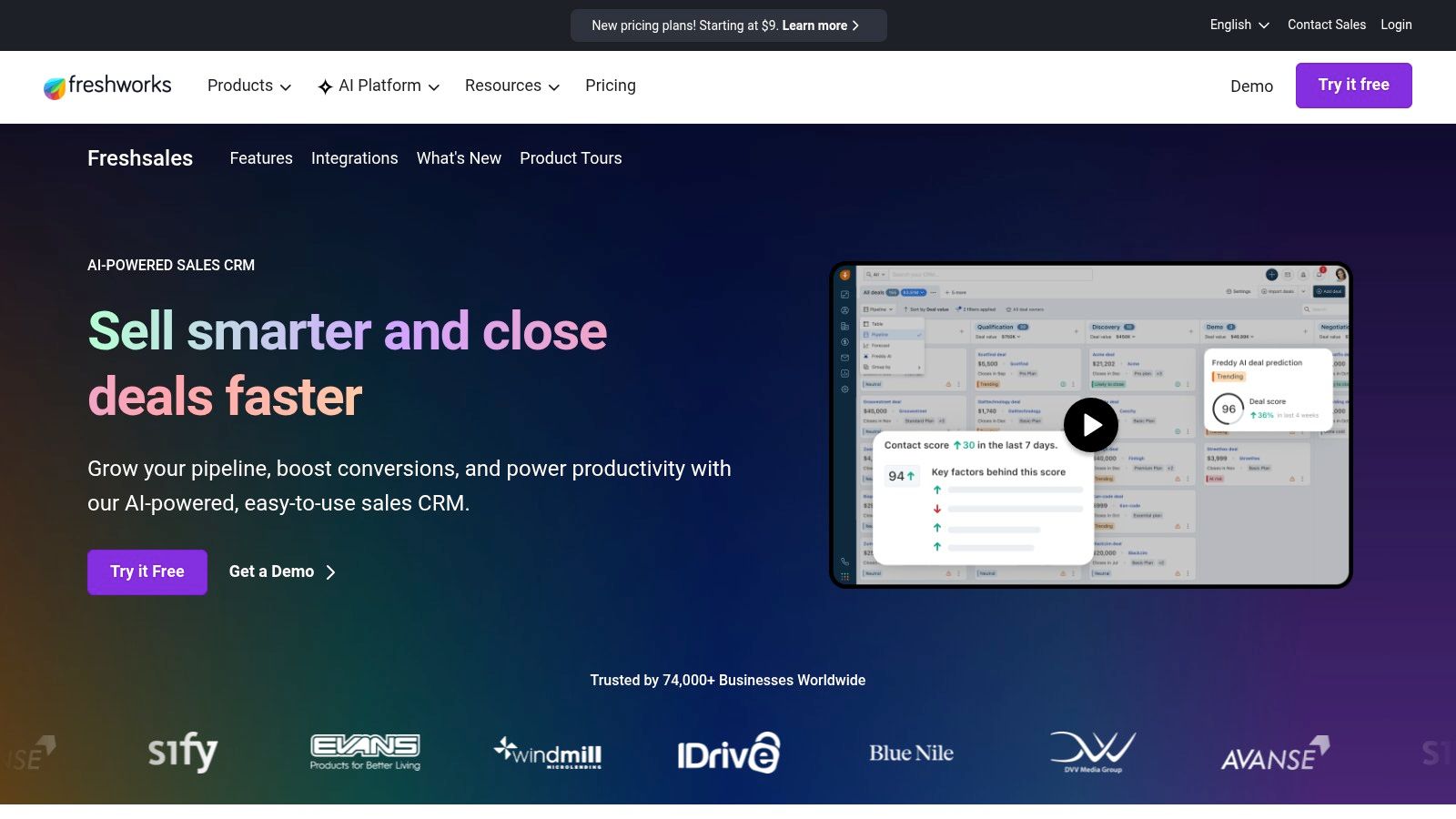
Freshsales (Freshworks)

Freshsales sits in a useful middle tier. It's more capable than a bare-bones pipeline tracker, but it usually feels less heavy than enterprise CRM platforms. Agencies that want built-in telephony, email workflows, and approachable automation often land here when HubSpot feels too expansive and Pipedrive feels too narrow.

The UX is fairly friendly, which matters for smaller teams. Freshsales doesn't ask for a huge operational commitment to get started, and that's often what agencies need. Not every shop wants to spend weeks designing a perfect CRM schema.

Best use case

Freshsales is a strong fit for agencies that want internal sales discipline, decent communication tracking, and some AI-assisted guidance without rebuilding the whole tech stack. Native calling and email are practical advantages for teams doing active prospecting or lead qualification.

It's also a reasonable option if your agency wants sales software that won't intimidate non-sales users. Account managers, founders, and ops leads can usually use it easily. That cross-functional usability matters more in agencies than it does in larger sales orgs.

  • What it does well: Combines CRM, communication, and automation in a package that feels manageable.

  • What it doesn't do best: White-labeling, SaaS resale, and deeper agency-specific client environments.

  • Who should shortlist it: Agencies that want an affordable all-around internal CRM without turning the platform into a separate business line.

If you need polished internal sales operations and don't need agency-first white-label features, Freshsales is worth considering.

9. Keap

Keap is a niche but useful pick for agencies serving smaller service businesses. If many of your clients need CRM, follow-up automation, appointments, invoicing, and simple payments in one place, Keap can be easier to package than a more complex stack.

This is not the best CRM for agencies that run large account teams or complex multi-client delivery frameworks. It is, however, quite good for agencies that productize simple business-growth systems for local services, coaches, consultants, and owner-led SMBs.

Why it still matters

Keap's strength is workflow practicality. You can automate follow-ups, manage appointments, send quotes or invoices, and keep client communications in one operational rhythm. Agencies that templatize those workflows can deploy them repeatedly across similar clients.

That repeatability is the point. If your agency wins by creating a standard growth engine for many small businesses, a platform like Keap can support the offer without too much technical overhead. It's less sexy than broader platforms, but often more usable for small-business end clients.

Limitation to consider

The platform can get expensive relative to what some teams think of as “just a CRM,” especially once onboarding and setup effort enter the picture. It also isn't designed as a white-label agency operating system in the way HighLevel or Vendasta are.

Still, for agencies serving service-based SMBs with strong automation needs, Keap remains a practical option that's often easier to operationalize than more ambitious software.

10. Accelo
Accelo

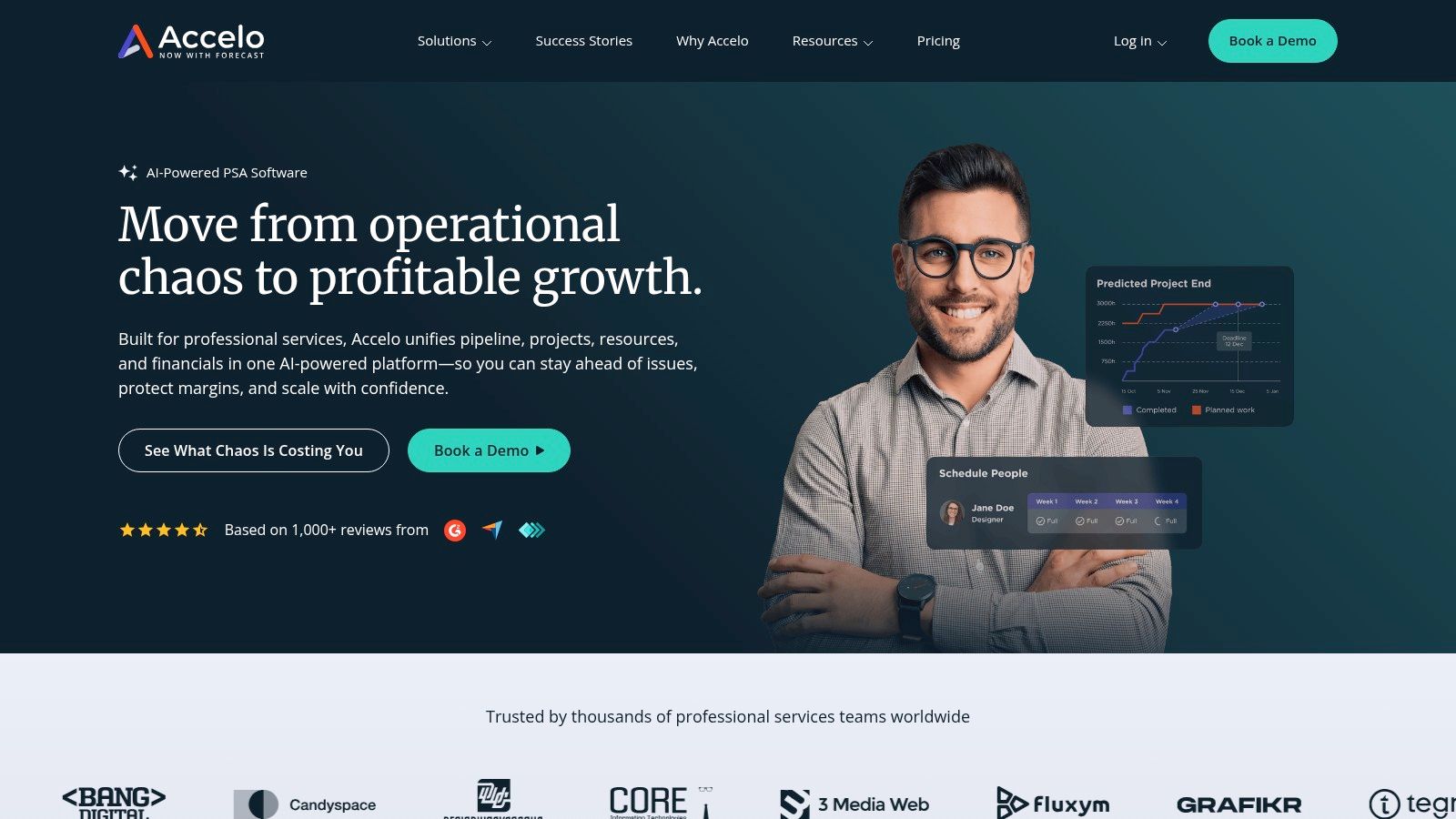
Accelo earns its place because it addresses a problem many CRM roundups barely touch. Agencies don't just need to win deals. They need to move cleanly from lead intake to project delivery, retainers, tickets, billing, and ongoing client work. Independent agency coverage keeps pointing in that direction. Campaign Monitor highlights Insightly's connection between sales management and project management, and Function Fox emphasizes pipeline visibility and workflow linkage in agency tools via this agency CRM comparison.

That's the lens for evaluating Accelo. It's closer to a professional services platform with CRM at the core than a classic sales-only system. For agencies with recurring work, project teams, and delivery complexity, that often matters more than having the flashiest automation builder.

Why agencies choose it

Accelo ties CRM to projects, retainers, ticketing, time tracking, and billing. That makes it valuable for agencies where significant pain starts after the sale. If your team constantly copies deal details into project tools, rebuilds scopes manually, or loses context during handoff, Accelo solves a pressing operational issue.

It also aligns with a broader agency buying pattern. Industry coverage keeps favoring tools that reduce handoff friction and tool sprawl over tools that only deepen sales automation. That's a useful reminder when you're evaluating the best CRM for agencies in the abstract. In reality, many agencies need a service-operations system more than a pure sales CRM.

If sales-to-delivery handoff is where your agency breaks, a PSA-style CRM is often smarter than buying another outreach feature.

The downside

Accelo isn't a lightweight purchase. Pricing is quote-based, and the product usually makes the most sense when you extensively use the agency operations depth. If you only need straightforward lead tracking, it's too much.

But for consultancies and agencies with retainers, projects, and service tickets all in play, Accelo is one of the better fits.

Top 10 CRMs for Agencies, Features & Pricing Snapshot

Product

Core features

Target audience

Unique selling points

Pricing

Stamina (Recommended)

AI SDR (Zara), unified 500M+ contact data, CRM, sequences, dialer, deliverability, workflows, analytics

SMBs, SDR teams, growth marketers, agencies

Built-in AI SDR + dedicated GTM engineer, deep B2B data, agency/white‑label support

Custom / demo & quote

HighLevel (GoHighLevel)

CRM, funnels, email/SMS, call tracking, sub‑accounts, automations

Agencies, resellers, local marketing firms

Agency-first multi‑tenant model, native white‑label (mobile on Pro), SaaS resell features

Tiered; white‑label on highest tier

SharpSpring by Constant Contact

Marketing automation, email, landing pages, social, rebrandable agency UI

Agencies managing multi‑client marketing

Contact‑tier pricing, unlimited users, agency onboarding & rebrand

Contact‑based pricing; no permanent free plan

Vendasta

White‑label CRM, marketplace, billing/fulfillment, proof‑of‑performance tools

Agencies serving local SMBs, resellers

Rebrandable services + built‑in fulfillment and billing marketplace

Scales with services; can add up

HubSpot (Sales Hub)

CRM, sequences, playbooks, calling, analytics, large app marketplace

Agencies, mid‑market to enterprise clients

Mature ecosystem, partner program, strong reporting & integrations

Free starter → enterprise; pricing complex

Pipedrive

Visual pipelines, activity management, email sync, automations, add‑ons

Small sales teams, agencies needing fast onboarding

Highly usable pipeline UX, quick adoption, competitive base price

Affordable base; add‑ons raise total cost

Zoho CRM

Custom modules, workflows, blueprints, Zia AI, webhooks

Budget‑sensitive agencies, SMBs, Zoho One users

Deep customization, strong value per user, bundle option with Zoho One

Per‑user pricing; cost‑effective tiers

Freshsales (Freshworks)

Freddy AI, native telephony, email, pipelines, workflows

SMBs and mid‑market agencies seeking simplicity

Native phone + AI insights, good price‑to‑features, improved UX

Competitive tiered pricing

Keap

Visual automations, CRM + payments, appointments, quotes/invoices, SMS

Small service businesses and agencies serving SMBs

Built‑in payments & checkout, templated SMB playbooks

Higher than basic CRMs; onboarding fees possible

Accelo

CRM + PSA: projects, retainers, billing, time tracking, resource planning

Agencies & consultancies managing retainers and projects

Tight CRM→project→billing flow, profitability reporting, ticketing

Quote / demo required

The Verdict Unify Your Stack for Agency Growth

Most agencies don't fail because they picked a CRM with the wrong checkbox. They fail because the stack creates friction between teams. Sales uses one tool. Delivery uses another. Reporting lives somewhere else. Client communication is split across inboxes, Slack threads, and project comments. Then leadership expects one clean view of pipeline, account health, and revenue.

That's why the best CRM for agencies usually isn't the one with the most features. It's the one that reduces handoffs, cuts duplicate work, and fits how your agency makes money. If you resell software and need branded client environments, HighLevel and Vendasta make sense. If you need a mature mainstream platform with ecosystem depth, HubSpot is the safe bet. If sales-to-delivery handoff is a primary problem, Accelo is the more honest answer than a pure pipeline CRM.

There's also a broader market shift behind this decision. CRM has become core business infrastructure, not an optional sales add-on, and agencies are feeling that pressure directly. At the same time, agency-focused coverage keeps highlighting linked workflows between sales and delivery, not just better contact management. That's an important signal. The buying question has changed from “Which CRM has enough features?” to “Which platform helps us run a cleaner agency?”

Stamina particularly shines.

A lot of agencies still run growth through a disconnected stack. One tool for prospect data. Another for sequencing. Another for dialing. Another for CRM. Another for analytics. That setup creates lag, context loss, and operational drag. Stamina is built to collapse those layers into one system. You get prospect data, AI-assisted personalization, sequencing, deliverability support, dialing, workflows, CRM, and analytics in a single workspace.

That matters even more for agencies than for internal sales teams. Agencies need repeatability. They need to launch campaigns across accounts, manage outreach performance, keep client work organized, and show results without exporting data across five tools. Stamina's agency mode, multi-tenant support, white-label potential, and built-in GTM support all point toward that use case directly.

It also helps that the product is clearly designed around revenue execution, not just record-keeping. Zara, the built-in AI SDR, supports research and personalized outreach at scale. The dedicated GTM engineer is another practical advantage. Most CRMs give you software and leave your team to figure out the rest. Stamina pairs the platform with strategic setup and optimization, which is often what determines success.

If your agency wants a cleaner way to generate pipeline, manage outreach, and unify CRM operations, Stamina is the most compelling all-in-one option on this list. Not because it tries to be everything for everyone, but because it solves one of the most expensive agency problems well. Too many tools, too many handoffs, and too little visibility.

If you're trying to replace a fragmented agency stack with one system for outreach, pipeline, and CRM, Stamina is worth a serious look. It gives agencies an AI-powered platform for prospecting, personalization, sales engagement, and client management, with agency mode and white-label potential built into the conversation from the start.

You already know the feeling. New leads live in one inbox, client notes sit in Slack, proposals are buried in Drive, and nobody's fully sure what happens after a deal closes. That setup works until the agency gets busy. Then handoffs break, follow-ups slip, and account managers start asking sales for context they should've had from the start.

That's why your CRM can't just be a contact database. For an agency, it has to hold together prospecting, pipeline management, delivery context, reporting, and often a client-facing layer too. The best CRM for agencies is the one that matches how you sell and service work, not the one with the longest feature list.

CRM use is no longer a niche behavior. Agile CRM's industry roundup says 91% of businesses with 10 or more employees now use CRM software. For agencies, that matters because buyers expect tighter follow-up, cleaner reporting, and fewer dropped balls across the client lifecycle. If you're still stitching that together manually, you're competing at a disadvantage.

This guide focuses on what generic roundups usually skip: white-labeling, multi-client management, service reselling, and client reporting. If you need practical advice beyond a basic sales tracker, these CallZent insights on client management are worth bookmarking too.

1. Stamina

Stamina

An agency owner feels the pain fast when outbound lives in one tool, contact data in another, and client context somewhere else. Stamina stands out because it was built around that revenue workflow first. For agencies that win business through outbound and need to manage multiple client programs without stitching together five separate systems, it covers more of the stack than a typical CRM.

The practical advantage is consolidation. Stamina brings prospect data, sequencing, dialing, inbox infrastructure, reply handling, and CRM records into one workspace. If your team is still exporting lists, cleaning spreadsheets, loading contacts into an outreach tool, and then updating pipeline status by hand, this type of stack reduction saves time and removes failure points. Its own guide to marketing automation and CRM integration for agencies is useful context if you're comparing unified systems against a patched-together setup.

Why agencies pick it

Stamina makes the most sense for outbound-led agencies, appointment setting firms, SDR-as-a-service teams, and consultants selling lead generation as an ongoing service. Multi-tenant workspace structure and white-label options matter here. They let agencies separate client programs cleanly and package the platform as part of a service offer, instead of forcing everyone into one internal sales database. If that's your model, Stamina's guide to white-label CRM for agencies is relevant.

It also goes further than a standard sales CRM on the prospecting side. The platform includes a built-in data layer and targeting filters, so list building and campaign execution happen in the same system. That matters for agencies because every handoff between vendors creates delays, sync issues, and accountability problems.

Practical rule: If your agency sells outbound, lead gen, or appointment setting, CRM quality matters less than whether the platform can run acquisition workflows end to end.

Another feature worth weighing is Zara, the built-in AI SDR. It helps with message drafts, personalization angles, and prospect research. Used well, that cuts down rep time on repetitive prep work. It does not replace strategy, offer positioning, or list quality, so agencies still need senior oversight.

Trade-offs to know

Stamina is less compelling for agencies that need deep post-sale operations. If your work depends on project delivery management, retainers tied to utilization, or PSA-style finance controls, you'll hit limits faster than you would in a service operations platform.

Pricing is also not public, which slows down comparison shopping. Some agency owners will accept that if they want fewer tools and a stronger outbound engine. Others will prefer transparent entry pricing, even if it means more integration work.

One more consideration is fit. Agencies focused on local lead gen and software resale may still compare it with HighLevel, especially if they want a heavier white-label client portal and packaged automations. In that case, reviewing how Gohighlevel automation specialists position implementation can help clarify the difference between an outbound-first system and a resale-first one.

For agencies that treat prospecting, pipeline control, multi-client management, and white-label delivery as part of the same operating system, Stamina is one of the more practical options in this category.

2. HighLevel

HighLevel (GoHighLevel)

HighLevel is one of the most agency-native products in the market. It wasn't designed as a generic CRM and then adapted for agencies later. Its structure revolves around sub-accounts, white-labeling, and service resale from the start, which is why so many lead gen, local marketing, and automation agencies build offers around it.

The big advantage is packaging. You can set up client accounts, manage automations, run funnels, handle messaging, and rebill software usage inside the same ecosystem. If your agency wants to sell recurring software-backed services under its own brand, HighLevel is built for that motion.

Where it works best

HighLevel is strongest for agencies serving multiple SMB clients with repeatable service packages. Think lead capture, SMS follow-up, appointment funnels, review generation, chat widgets, or nurture automations. Its client sub-account model is practical and easier to operationalize than trying to fake multi-client separation in a standard sales CRM.

It also helps agencies reduce tool sprawl. Instead of paying for separate funnel software, calendar booking, CRM, messaging tools, and light automation, you can often run the core stack inside one platform. For firms that specialize in setup and retention, that matters more than having the deepest native reporting.

For implementation-heavy shops, this perspective on Gohighlevel automation specialists is useful because the platform rewards agencies that know how to templatize delivery.

HighLevel is less about elegant CRM craftsmanship and more about operational leverage for agencies that resell systems.

What to watch

The trade-off is complexity. HighLevel can do a lot, but not all of it feels refined in the way a focused CRM does. Teams that only need a simple deal pipeline and contact management layer may find it bloated.

White-labeling also gets better as you move up the plan stack. If your entire business model depends on branded apps and SaaS resale, you need to confirm the exact tier and feature access you'll require before committing. If that's your agency model, though, HighLevel deserves a serious look.

3. SharpSpring by Constant Contact

SharpSpring by Constant Contact

SharpSpring has long appealed to agencies that want marketing automation and CRM in one environment without forcing every client into a patchwork of add-ons. It's less trendy than some newer agency platforms, but that's also part of its appeal. Agencies tend to choose it when they care about repeatable campaign execution and predictable packaging more than novelty.

Its agency orientation shows up in practical areas: rebrandable experience, unlimited users, and an agency program that supports onboarding and rollout. That combination is useful when you've got strategists, account managers, contractors, and client stakeholders touching the same environment.

Best fit

SharpSpring works well for agencies that run email-centric nurture programs, landing pages, and ongoing lifecycle marketing. If your service mix leans toward marketing automation retainers, this kind of integrated setup is usually easier to manage than bolting a CRM onto a separate campaign engine.

That's also why the connection between automation and CRM matters so much. If sales activity lives in one system and campaign engagement lives in another, account context degrades fast. Consequently, marketing automation and CRM integration becomes more than a technical preference. It affects handoffs, segmentation, and how quickly a team can act.

  • Strongest advantage: It's built for agencies that need to support multiple internal users without turning seat management into a pricing headache.

  • Main limitation: It can feel expensive if you only need a lightweight CRM and basic automations.

  • Operational upside: Agencies can standardize a service offer around one platform instead of rebuilding the stack account by account.

SharpSpring won't be the best CRM for agencies that prioritize white-label SaaS resale or aggressive outbound. But if your agency sells managed automation and campaign orchestration, SharpSpring by Constant Contact remains a credible choice.

4. Vendasta

Vendasta

Vendasta is less of a pure CRM and more of an agency commerce platform with CRM built in. That distinction matters. If your goal is to resell services, package recurring offers, and give clients a branded experience, Vendasta has a logic that many standard CRMs don't.

The white-label angle is the headline. Agencies can use the CRM internally, resell it to clients, and layer in marketplace services or fulfillment workflows around it. For local-business-focused agencies, that can create a cleaner operating model than stringing together separate proposal, billing, fulfillment, and client-access tools.

Where it stands out

Vendasta is especially useful for agencies that want to move beyond labor-only revenue. If you sell digital services to SMBs and want software-backed recurring revenue attached to those accounts, this platform was built for that kind of business. It also fits agencies that want a proof-of-performance layer in sales conversations.

A lot of agencies underestimate how important service packaging is. The CRM itself may be adequate, but the bigger benefit is everything around it: marketplace access, billing, fulfillment support, and a branded client environment. That's why Vendasta can work even when another tool might be stronger as a standalone CRM.

The question with Vendasta isn't “Is this the cleanest CRM?” It's “Do you want a resellable operating system for your agency?”

The trade-off

The catch is cost creep. If you keep adding marketplace services, fulfillment layers, and platform components, your margin structure can get harder to read. Agencies should evaluate whether the convenience and speed justify the stack cost compared with a more custom setup.

Some teams also find that CRM flexibility and export behavior aren't as smooth as they want. If your agency is highly process-specific, Vendasta may feel more opinionated than a configurable CRM. But for agencies built around white-label services and local SMB growth packages, it's a serious contender.

5. HubSpot

HubSpot (Sales Hub & Customer Platform)

HubSpot is the safest mainstream pick on this list. It's polished, widely understood, and supported by a large ecosystem. If you're buying for a growing agency and want lower vendor risk, that matters. Function Fox notes that HubSpot is used by 205,000+ companies worldwide, which is a meaningful adoption signal when you're thinking about integrations, available consultants, and long-term viability.

HubSpot is usually the right answer when your agency needs a mature CRM, strong reporting, solid sales workflows, and the option to expand into marketing, service, or CMS later. It's also an easy platform to hire around because many operators already know the basics.

What agencies like

HubSpot gives agencies a dependable core system for deal stages, sequences, playbooks, automation, and reporting. For agencies implementing CRM for clients, the partner ecosystem is a practical advantage. There's enough market familiarity that clients often feel comfortable with the platform before kickoff.

It's also one of the few tools here that can support your internal new-business process while also becoming a client delivery platform in selected use cases. Not every agency needs that symmetry, but when you do, HubSpot is flexible enough to support it. If your team is still tightening its process discipline, these CRM best practices for teams are worth applying no matter which platform you choose.

Where it falls short

HubSpot isn't especially agency-native in white-labeling or multi-client account architecture. You can support clients on it, but it's not designed like HighLevel or Vendasta for reselling under your own brand. Costs can also rise as you add seats, hubs, and more advanced requirements.

For agencies that want a broad, proven platform and don't mind paying for maturity, HubSpot remains one of the best CRM options available. For agencies that need true white-label SaaS packaging, it's often the wrong fit.

6. Pipedrive

Pipedrive

Pipedrive is the best choice here for agencies that need a clean sales machine, not a sprawling platform. It's straightforward, visual, and easy for reps to adopt quickly. That matters more than people admit. A CRM with fewer features often wins if the team actively uses it.

Agencies with founder-led sales, compact BD teams, or a simple outbound process tend to do well with Pipedrive. The pipeline views are intuitive, activity management is solid, and it doesn't require a long implementation cycle just to become useful.

Why it works

Pipedrive's strength is focus. It helps teams move deals, schedule next actions, and keep the pipeline current without much admin burden. If your main issue is inconsistent follow-up or poor visibility into opportunities, it solves that problem well.

That said, it's not trying to be an all-in-one agency operating system. Once you need deeper marketing automation, more advanced client reporting, or a more complete outbound execution layer, you'll either add tools or outgrow it. That's a critical juncture, and it helps to understand the line between a sales engagement platform and CRM.

  • Best for: Smaller agencies that need sales accountability fast.

  • Less ideal for: Agencies that want white-labeling, service resale, or client-facing software packaging.

  • Common upgrade trigger: Adding too many adjacent tools and realizing the CRM is only handling one part of the workflow.

If you want speed, usability, and a low-friction sales setup, Pipedrive is still one of the easiest tools to recommend.

7. Zoho CRM

Zoho CRM is the practical choice for agencies that want flexibility without paying premium-platform pricing. It can do a lot, but you have to be willing to shape it. Teams that enjoy customization often get strong value out of Zoho. Teams that want elegance out of the box usually don't.

Its appeal is broader than CRM alone. Zoho fits agencies that also want room to connect operations, finance, support, and back-office workflows through the wider ecosystem. That makes it a sensible option for agencies trying to standardize on one vendor family instead of buying point tools one by one.

Where agencies benefit

Zoho is good at custom modules, workflow automation, layouts, and process control. If your sales process has quirks, or you need fields and stages that generic CRMs don't model well, Zoho usually gives you the freedom to build around that. Budget-sensitive agencies often accept the steeper setup curve because the long-term economics make sense.

It can also work well for agencies that need telephony tied into CRM operations. That's a niche requirement until it isn't. If your team relies on call-heavy outreach or client service, this guide to mastering Zoho CRM telephony shows the type of setup depth buyers should think about.

Zoho rewards agencies that know their process. It punishes agencies that hope the software will define the process for them.

The compromise

The interface and configuration experience can feel dense. New users often need stronger admin ownership than they would in Pipedrive or HubSpot. But if your agency values control, cost discipline, and ecosystem breadth, Zoho CRM is a strong option.

8. Freshsales

Freshsales (Freshworks)

Freshsales sits in a useful middle tier. It's more capable than a bare-bones pipeline tracker, but it usually feels less heavy than enterprise CRM platforms. Agencies that want built-in telephony, email workflows, and approachable automation often land here when HubSpot feels too expansive and Pipedrive feels too narrow.

The UX is fairly friendly, which matters for smaller teams. Freshsales doesn't ask for a huge operational commitment to get started, and that's often what agencies need. Not every shop wants to spend weeks designing a perfect CRM schema.

Best use case

Freshsales is a strong fit for agencies that want internal sales discipline, decent communication tracking, and some AI-assisted guidance without rebuilding the whole tech stack. Native calling and email are practical advantages for teams doing active prospecting or lead qualification.

It's also a reasonable option if your agency wants sales software that won't intimidate non-sales users. Account managers, founders, and ops leads can usually use it easily. That cross-functional usability matters more in agencies than it does in larger sales orgs.

  • What it does well: Combines CRM, communication, and automation in a package that feels manageable.

  • What it doesn't do best: White-labeling, SaaS resale, and deeper agency-specific client environments.

  • Who should shortlist it: Agencies that want an affordable all-around internal CRM without turning the platform into a separate business line.

If you need polished internal sales operations and don't need agency-first white-label features, Freshsales is worth considering.

9. Keap

Keap is a niche but useful pick for agencies serving smaller service businesses. If many of your clients need CRM, follow-up automation, appointments, invoicing, and simple payments in one place, Keap can be easier to package than a more complex stack.

This is not the best CRM for agencies that run large account teams or complex multi-client delivery frameworks. It is, however, quite good for agencies that productize simple business-growth systems for local services, coaches, consultants, and owner-led SMBs.

Why it still matters

Keap's strength is workflow practicality. You can automate follow-ups, manage appointments, send quotes or invoices, and keep client communications in one operational rhythm. Agencies that templatize those workflows can deploy them repeatedly across similar clients.

That repeatability is the point. If your agency wins by creating a standard growth engine for many small businesses, a platform like Keap can support the offer without too much technical overhead. It's less sexy than broader platforms, but often more usable for small-business end clients.

Limitation to consider

The platform can get expensive relative to what some teams think of as “just a CRM,” especially once onboarding and setup effort enter the picture. It also isn't designed as a white-label agency operating system in the way HighLevel or Vendasta are.

Still, for agencies serving service-based SMBs with strong automation needs, Keap remains a practical option that's often easier to operationalize than more ambitious software.

10. Accelo

Accelo

Accelo earns its place because it addresses a problem many CRM roundups barely touch. Agencies don't just need to win deals. They need to move cleanly from lead intake to project delivery, retainers, tickets, billing, and ongoing client work. Independent agency coverage keeps pointing in that direction. Campaign Monitor highlights Insightly's connection between sales management and project management, and Function Fox emphasizes pipeline visibility and workflow linkage in agency tools via this agency CRM comparison.

That's the lens for evaluating Accelo. It's closer to a professional services platform with CRM at the core than a classic sales-only system. For agencies with recurring work, project teams, and delivery complexity, that often matters more than having the flashiest automation builder.

Why agencies choose it

Accelo ties CRM to projects, retainers, ticketing, time tracking, and billing. That makes it valuable for agencies where significant pain starts after the sale. If your team constantly copies deal details into project tools, rebuilds scopes manually, or loses context during handoff, Accelo solves a pressing operational issue.

It also aligns with a broader agency buying pattern. Industry coverage keeps favoring tools that reduce handoff friction and tool sprawl over tools that only deepen sales automation. That's a useful reminder when you're evaluating the best CRM for agencies in the abstract. In reality, many agencies need a service-operations system more than a pure sales CRM.

If sales-to-delivery handoff is where your agency breaks, a PSA-style CRM is often smarter than buying another outreach feature.

The downside

Accelo isn't a lightweight purchase. Pricing is quote-based, and the product usually makes the most sense when you extensively use the agency operations depth. If you only need straightforward lead tracking, it's too much.

But for consultancies and agencies with retainers, projects, and service tickets all in play, Accelo is one of the better fits.

Top 10 CRMs for Agencies, Features & Pricing Snapshot

Product

Core features

Target audience

Unique selling points

Pricing

Stamina (Recommended)

AI SDR (Zara), unified 500M+ contact data, CRM, sequences, dialer, deliverability, workflows, analytics

SMBs, SDR teams, growth marketers, agencies

Built-in AI SDR + dedicated GTM engineer, deep B2B data, agency/white‑label support

Custom / demo & quote

HighLevel (GoHighLevel)

CRM, funnels, email/SMS, call tracking, sub‑accounts, automations

Agencies, resellers, local marketing firms

Agency-first multi‑tenant model, native white‑label (mobile on Pro), SaaS resell features

Tiered; white‑label on highest tier

SharpSpring by Constant Contact

Marketing automation, email, landing pages, social, rebrandable agency UI

Agencies managing multi‑client marketing

Contact‑tier pricing, unlimited users, agency onboarding & rebrand

Contact‑based pricing; no permanent free plan

Vendasta

White‑label CRM, marketplace, billing/fulfillment, proof‑of‑performance tools

Agencies serving local SMBs, resellers

Rebrandable services + built‑in fulfillment and billing marketplace

Scales with services; can add up

HubSpot (Sales Hub)

CRM, sequences, playbooks, calling, analytics, large app marketplace

Agencies, mid‑market to enterprise clients

Mature ecosystem, partner program, strong reporting & integrations

Free starter → enterprise; pricing complex

Pipedrive

Visual pipelines, activity management, email sync, automations, add‑ons

Small sales teams, agencies needing fast onboarding

Highly usable pipeline UX, quick adoption, competitive base price

Affordable base; add‑ons raise total cost

Zoho CRM

Custom modules, workflows, blueprints, Zia AI, webhooks

Budget‑sensitive agencies, SMBs, Zoho One users

Deep customization, strong value per user, bundle option with Zoho One

Per‑user pricing; cost‑effective tiers

Freshsales (Freshworks)

Freddy AI, native telephony, email, pipelines, workflows

SMBs and mid‑market agencies seeking simplicity

Native phone + AI insights, good price‑to‑features, improved UX

Competitive tiered pricing

Keap

Visual automations, CRM + payments, appointments, quotes/invoices, SMS

Small service businesses and agencies serving SMBs

Built‑in payments & checkout, templated SMB playbooks

Higher than basic CRMs; onboarding fees possible

Accelo

CRM + PSA: projects, retainers, billing, time tracking, resource planning

Agencies & consultancies managing retainers and projects

Tight CRM→project→billing flow, profitability reporting, ticketing

Quote / demo required

The Verdict Unify Your Stack for Agency Growth

Most agencies don't fail because they picked a CRM with the wrong checkbox. They fail because the stack creates friction between teams. Sales uses one tool. Delivery uses another. Reporting lives somewhere else. Client communication is split across inboxes, Slack threads, and project comments. Then leadership expects one clean view of pipeline, account health, and revenue.

That's why the best CRM for agencies usually isn't the one with the most features. It's the one that reduces handoffs, cuts duplicate work, and fits how your agency makes money. If you resell software and need branded client environments, HighLevel and Vendasta make sense. If you need a mature mainstream platform with ecosystem depth, HubSpot is the safe bet. If sales-to-delivery handoff is a primary problem, Accelo is the more honest answer than a pure pipeline CRM.

There's also a broader market shift behind this decision. CRM has become core business infrastructure, not an optional sales add-on, and agencies are feeling that pressure directly. At the same time, agency-focused coverage keeps highlighting linked workflows between sales and delivery, not just better contact management. That's an important signal. The buying question has changed from “Which CRM has enough features?” to “Which platform helps us run a cleaner agency?”

Stamina particularly shines.

A lot of agencies still run growth through a disconnected stack. One tool for prospect data. Another for sequencing. Another for dialing. Another for CRM. Another for analytics. That setup creates lag, context loss, and operational drag. Stamina is built to collapse those layers into one system. You get prospect data, AI-assisted personalization, sequencing, deliverability support, dialing, workflows, CRM, and analytics in a single workspace.

That matters even more for agencies than for internal sales teams. Agencies need repeatability. They need to launch campaigns across accounts, manage outreach performance, keep client work organized, and show results without exporting data across five tools. Stamina's agency mode, multi-tenant support, white-label potential, and built-in GTM support all point toward that use case directly.

It also helps that the product is clearly designed around revenue execution, not just record-keeping. Zara, the built-in AI SDR, supports research and personalized outreach at scale. The dedicated GTM engineer is another practical advantage. Most CRMs give you software and leave your team to figure out the rest. Stamina pairs the platform with strategic setup and optimization, which is often what determines success.

If your agency wants a cleaner way to generate pipeline, manage outreach, and unify CRM operations, Stamina is the most compelling all-in-one option on this list. Not because it tries to be everything for everyone, but because it solves one of the most expensive agency problems well. Too many tools, too many handoffs, and too little visibility.

If you're trying to replace a fragmented agency stack with one system for outreach, pipeline, and CRM, Stamina is worth a serious look. It gives agencies an AI-powered platform for prospecting, personalization, sales engagement, and client management, with agency mode and white-label potential built into the conversation from the start.

Share this article

Share this article

Send a shareable link to your team or anyone who might find it useful.

Send a shareable link to your team or anyone who might find it useful.

Copy link

Copied

Share directly to

Table of contents

Give Your Business the Stamina it needs to Thrive