In today's competitive market, your CRM is more than just a digital address book; it's the central nervous system of your revenue operations. For growing small and medium-sized businesses, simply having a CRM isn't enough. The difference between stagnant pipelines and explosive growth lies in how you use it. Many teams treat their CRM as a passive data repository, missing out on its potential to actively drive sales and marketing success.
This guide cuts through the noise to provide a definitive list of the essential CRM best practices that modern businesses must master. We will move beyond generic advice and dive into actionable strategies that turn your customer data into predictable revenue. You will learn how to unify data, automate outreach, and apply AI to build a scalable growth engine.
These practices are designed to solve common pain points for SMBs, including:
Data silos and inconsistent information.
Low user adoption and manual data entry.
Generic outreach that fails to connect with buyers.
Inefficient alignment between sales and marketing teams.
Whether you're struggling with a messy database or inconsistent results, these ten practices will provide a clear roadmap. We will show you how to transform your CRM from a simple record-keeping tool into your most powerful asset for growth. A unified platform like Stamina can act as the foundation for implementing these strategies, centralizing your sales and marketing efforts. Let's explore the methods that separate top-performing teams from the rest.
1. Implement a Unified Data Platform as Your Single Source of Truth
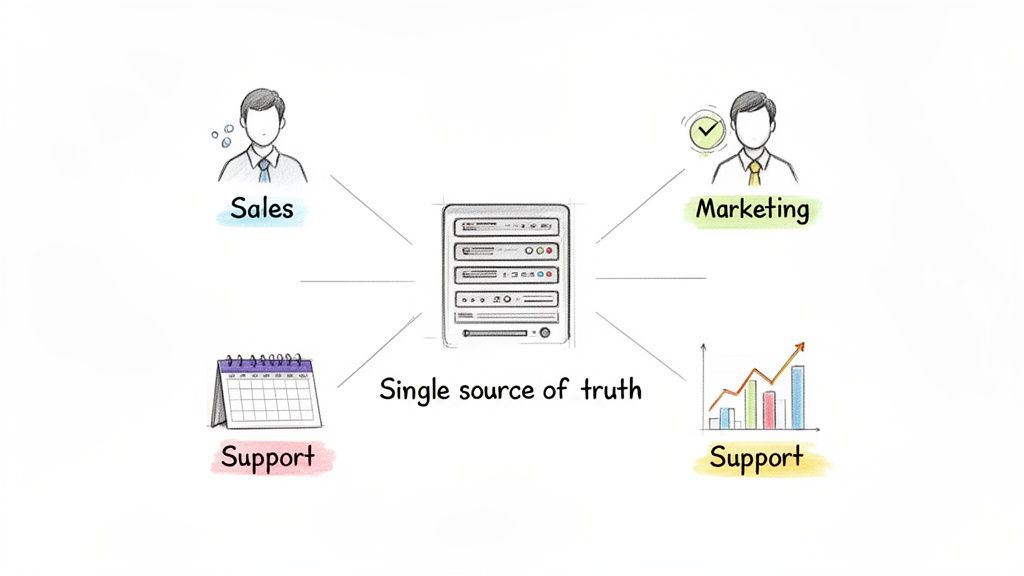
The most fundamental of all CRM best practices is establishing a single source of truth (SSoT). This means consolidating every piece of customer data, from initial marketing touchpoints to sales conversations and support tickets, into one centralized CRM platform. Without an SSoT, teams operate in data silos, leading to inconsistent information, duplicated efforts, and a fragmented customer experience.
A unified platform ensures that your sales, marketing, and service departments are all working from the same playbook. When a sales rep views a contact record, they see the same interaction history that a marketer sees, which allows for perfectly timed and relevant communication. This eliminates the guesswork and inefficiency that comes from managing multiple, disconnected spreadsheets, email clients, and specialized apps.
Why This Practice Matters
A single source of truth is the foundation for almost every other effective CRM strategy. It directly impacts your ability to generate accurate forecasts, segment audiences effectively, and automate processes with confidence. For instance, HubSpot users report a 35% increase in sales productivity after centralizing their customer data, a direct result of having reliable information readily available.
A unified CRM isn't just a database; it's a shared organizational brain. When everyone has access to the same complete, up-to-date information, decision-making becomes faster, smarter, and more customer-centric.
How to Implement a Single Source of Truth
Audit and Plan: Begin by identifying all current data sources across your organization (e.g., spreadsheets, email marketing tools, billing software). Create a clear data migration plan that outlines what data will be moved, how it will be cleaned, and who is responsible.
Establish Governance: Define clear rules for data entry and management. Assign ownership for data quality within each team to ensure accountability.
Integrate Key Tools: Use native integrations or APIs to automatically sync data from other essential business systems (like your accounting or project management software) into your CRM. This prevents manual data entry errors. For example, a platform like Stamina is built to be an all-in-one system, consolidating these functions from the start and removing the need for complex, multi-tool setups.
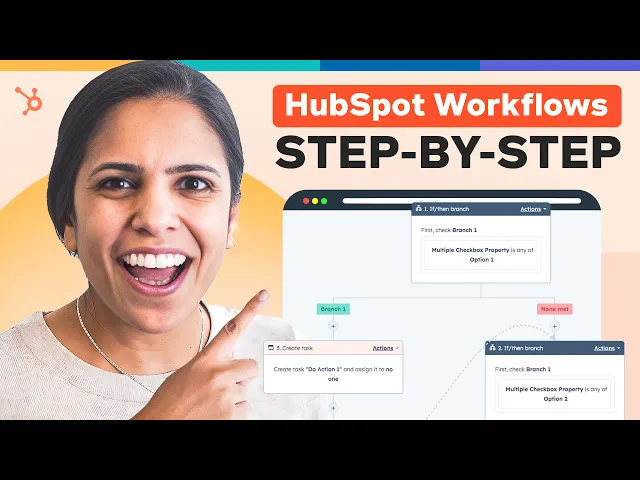
Automate Workflows: Once your data is centralized, you can build powerful automations. For example, you can create a rule that automatically assigns a new lead to a sales rep and adds them to a specific nurture campaign based on their initial form submission. This level of automation is only possible with clean, unified data. To explore how to set these up, you can get started by learning how to create a workflow that connects your teams and data points.
2. Leverage AI-Powered Lead Scoring and Qualification
Moving beyond manual qualification, a key CRM best practice is to adopt AI-driven lead scoring. This approach uses machine learning algorithms to analyze vast amounts of customer data, including firmographic details and behavioral signals like website visits or email opens. The AI then automatically scores and prioritizes prospects based on their likelihood to convert, freeing your sales team from guesswork and manual list-building.
This lets sales reps focus their energy on high-potential opportunities, leading to a shorter time-to-first-contact and significantly improved conversion rates. Instead of treating every lead equally, your team can instantly identify the ones who are ready for a conversation.

Why This Practice Matters
AI-powered scoring directly boosts sales efficiency and pipeline quality. By systematically identifying the best leads, you ensure that valuable sales time is spent on accounts with the highest probability of closing. Research backs this up, with companies using predictive lead scoring seeing up to a 50% increase in their qualified pipeline. Similarly, Marketo users have reported a 26% improvement in conversion rates after implementing AI-based scoring.
AI lead scoring transforms your CRM from a passive data repository into an active, intelligent partner that tells your sales team exactly who to talk to next and why.
How to Implement AI-Powered Lead Scoring
Define Your Ideal Customer Profile (ICP): Start by clearly documenting the firmographic and behavioral traits of your best customers. This profile will serve as the foundation for training your AI model.
Activate AI Scoring: Platforms with built-in AI make this simple. For instance, Stamina’s AI SDR, Zara, can be activated to identify and score ideal customers at scale using real-time signals. This removes the complex setup associated with older tools. To see how this works, you can explore the capabilities of an AI SDR and how it automates this entire process.
Combine AI with Human Insight: Use AI-generated scores as a powerful guide, not an absolute rule. Encourage sales reps to use their expertise to validate or challenge the scores, creating a feedback loop that can help refine the model over time.
Review and Refine: Regularly check the accuracy of your scoring model by comparing its predictions against actual sales outcomes. Track key performance metrics and adjust the weighting of different signals as your market or product evolves to maintain scoring relevance and accuracy.
3. Personalize Outbound Communication at Scale
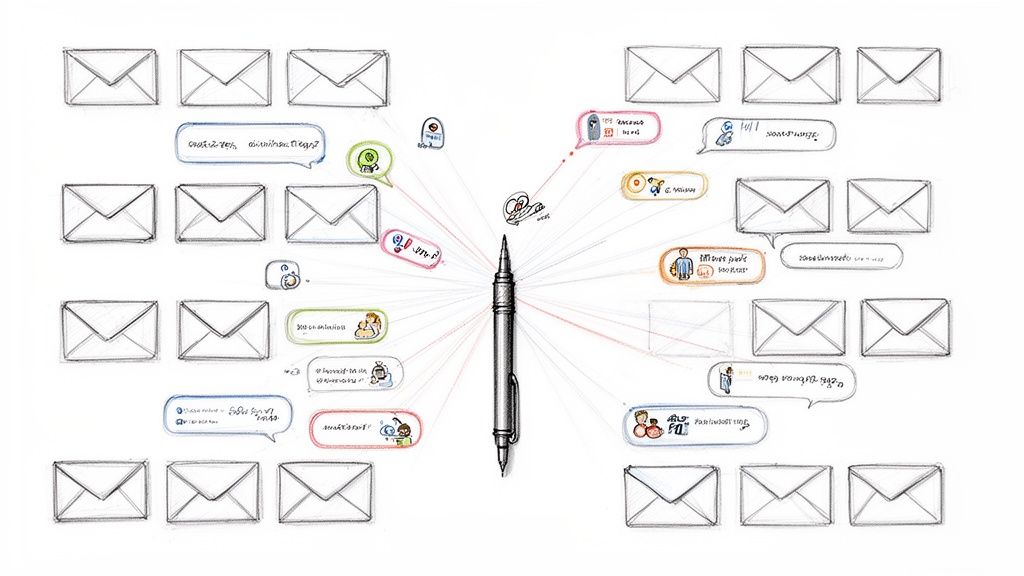
Gone are the days of "spray and pray" mass emailing. A crucial CRM best practice is to send personalized, relevant messages to every prospect instead of generic bulk communications. This approach combines behavioral data, company research, and customer context with automation to craft messages that resonate on an individual level, even when sending them at scale.
This strategy moves beyond simple mail-merge fields like [First Name]. It involves referencing a prospect's recent website activity, their company's latest news, or challenges specific to their industry or role. When a message demonstrates genuine research and understanding, it stands out from the noise and builds immediate credibility.
Why This Practice Matters
Personalization directly impacts your bottom line by dramatically increasing engagement. Companies that adopt personalized outbound strategies report seeing 2-3x higher response rates compared to those using generic messaging. A Forrester case study even noted that outbound personalization increased conversion rates by 45%, proving that relevance is a powerful driver of action.
Mass outreach gets mass-ignored. Personalized outreach starts a conversation. It shows you've done your homework and respect the prospect's time enough to make your message genuinely valuable to them.
How to Implement Personalization at Scale
Gather Rich Data: Use your CRM to collect first-party data signals. Track website visits, content downloads, and social media interactions to understand what your prospects are interested in right now.
Use AI for Efficiency: Manually researching every prospect is not scalable. Platforms like Stamina use AI to auto-generate personalized email drafts and sequences based on website visitor data and social signals. This provides a high-quality, relevant starting point for your sales team.
A/B Test Personalization Elements: Experiment with different personalization tactics. Test referencing a recent blog post they read versus mentioning a competitor they follow on social media. Analyze the results to see what resonates most with your audience.
Go Beyond the Name: Include specific details relevant to the prospect's company or role. For example, mention a recent company funding announcement or a challenge common to their job title. This shows you understand their world.
Monitor and Adjust: Keep a close eye on engagement metrics like open rates, click-through rates, and reply rates. Use these insights to continually refine your personalization strategy and double down on what works.
4. Build and Automate Nurture Campaigns with Workflow Orchestration
Turning a mildly interested prospect into a sales-ready lead rarely happens by chance. This is where automated nurture campaigns, powered by workflow orchestration, become a critical CRM best practice. This approach involves delivering a series of targeted messages that guide prospects through the buyer's journey, with workflows connecting marketing, sales, and CRM actions to automatically advance contacts based on their engagement.
Nurture campaigns move beyond simple, one-off emails. They create a responsive, automated conversation that adapts to a user's behavior, such as downloading an ebook, visiting a pricing page, or opening a specific email. According to the Marketing Automation Institute, nurtured leads are 50% more likely to be sales-ready, demonstrating the power of a well-orchestrated follow-up sequence.
Why This Practice Matters
Effective nurture campaigns directly impact conversion rates and sales cycle length. Instead of leaving leads to go cold, you systematically build trust and provide value, keeping your brand top-of-mind until they are ready to buy. Research shows companies using nurture campaigns see 47% higher conversion rates and 33% shorter sales cycles. It transforms your CRM from a passive contact list into an active revenue engine.
Automated nurturing ensures that no lead is left behind. It systematically qualifies, educates, and warms up your audience, so your sales team can focus its energy on the most engaged, high-intent prospects.
How to Build Automated Nurture Campaigns
Segment Your Audience: Before building any workflow, segment your contacts based on factors like their lead source, industry, job title, or initial engagement. A one-size-fits-all campaign will not resonate; relevance is key.
Map the Buyer Journey: Outline the key stages a prospect moves through, from awareness to decision. Align your workflow triggers and content with each stage. For instance, an awareness-stage contact gets educational content, while a consideration-stage contact might receive a case study.
Coordinate Cross-Team Workflows: Use a platform like Stamina to build workflows that bridge marketing and sales. For example, a marketing workflow can nurture a lead until they reach a certain score, at which point an automated action assigns them to a sales rep and creates a task in the CRM for immediate follow-up.
Use Engagement as a Trigger: Set up rules that advance prospects based on their actions. If a contact clicks a link to a demo page, the workflow can automatically move them from a general nurture track to a high-intent sales sequence. To learn more about setting up these sequences, see how a drip campaign works.
Test and Measure: Continuously test different message sequences, timing, and calls-to-action. Monitor metrics like open rates, click-through rates, and ultimately, conversion to sales opportunities to refine your approach.
5. Implement Sales Engagement and Activity Tracking
Effective CRM usage goes beyond simple data storage; it involves actively managing and measuring every customer interaction. This practice centers on systematically tracking all sales activities, including emails, calls, meetings, and social media touchpoints. By using sales engagement tools, you can enforce discipline through automated activity logging, manage outreach cadences, and gain clear visibility into what strategies are actually working.
This systematic approach transforms your CRM from a passive database into an active coaching and optimization tool. When every interaction is logged, you can analyze patterns, replicate successful behaviors, and ensure no lead falls through the cracks. It provides a data-backed foundation for sales management and helps teams focus on high-impact activities rather than manual data entry.
Why This Practice Matters
Without systematic activity tracking, sales performance becomes a black box. You know deals are won or lost, but you can't pinpoint why. Research shows teams with visibility into all sales activities see 22% higher win rates because they can directly correlate actions with outcomes. For example, by optimizing cadences and tracking engagement, Outreach users report a 35% improvement in conversion rates. This is a critical component of modern CRM best practices.
Sales engagement isn't about micromanagement; it's about providing your team with a clear map of what success looks like. By tracking activities, you give reps the insights they need to win and managers the data they need to coach effectively.
How to Implement Sales Engagement and Activity Tracking
Start with Core Activities: Begin by tracking fundamental interactions like calls, emails sent, and meetings booked. Don't overcomplicate it initially. Establish a baseline for what a "good" activity day or week looks like.
Automate Logging: Manually logging every call and email is a major productivity killer. Use a platform like Stamina, which offers built-in sales engagement tools to automatically log these interactions against the correct contact record, freeing up reps to focus on selling.
Set Clear Targets: Define specific, role-based engagement targets. For instance, an SDR might have a daily goal of 50 calls and 50 personalized emails, while an Account Executive’s target might be 5 new meetings per week.
Analyze and Replicate: Use engagement reports to identify the behaviors of your top performers. Do their sequences have more steps? Do they use more phone calls? Use this data to create a new "best practice" playbook for the entire team to follow.
Review and Coach: Hold weekly pipeline and activity reviews with your team. Use the data from your CRM to have constructive conversations about performance, identify roadblocks, and provide targeted coaching based on real activity metrics, not just feelings.
6. Create Predictive Pipeline Intelligence and Forecasting
Traditional sales forecasting often relies on gut feelings and manual spreadsheet calculations, which can be inconsistent and unreliable. An essential CRM best practice is to move beyond this guesswork by using predictive intelligence. This approach applies AI and machine learning to analyze historical deal data, engagement signals, and stage progression velocity to forecast revenue with much greater accuracy.
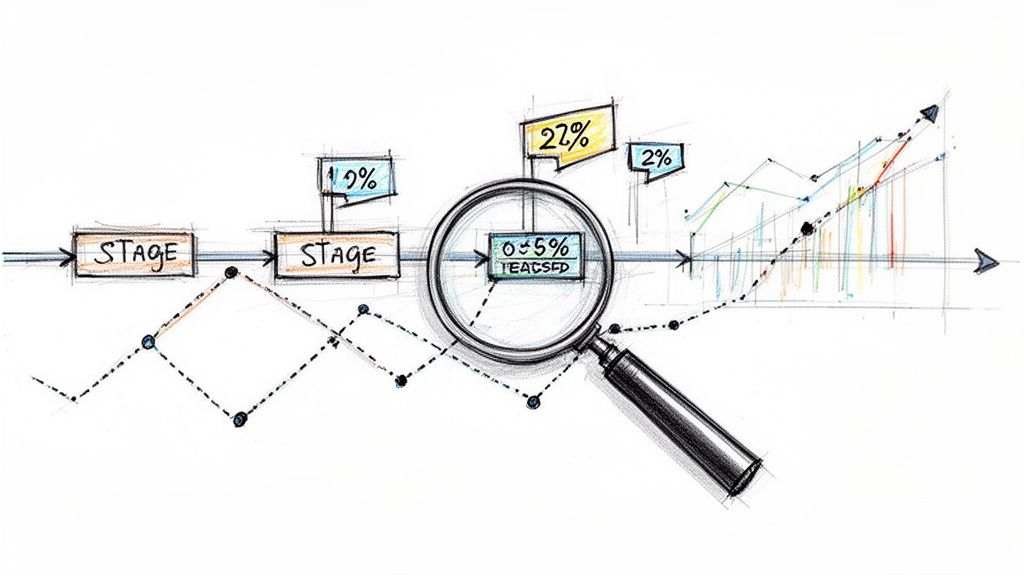
Predictive analytics identifies patterns that humans might miss, such as which deals are progressing slower than average or which accounts lack sufficient engagement to close. This provides sales leaders with an early warning system for pipeline gaps and at-risk deals, allowing them to intervene proactively. It transforms your CRM from a simple record-keeper into a strategic forecasting tool.
Why This Practice Matters
Accurate forecasting is critical for resource planning, setting realistic targets, and maintaining business stability. Companies that adopt predictive forecasting can reduce forecast error by 30-50%, according to industry reports. For instance, users of Salesforce Einstein Analytics have reported a 35% improvement in forecast accuracy, enabling more confident financial planning. This data-driven approach removes subjectivity and provides a clear, evidence-based view of future revenue.
Predictive intelligence doesn't just tell you what your pipeline looks like; it tells you where it's going. It's the difference between looking in the rearview mirror and having a GPS for the road ahead.
How to Implement Predictive Forecasting
Ensure Data Integrity: Predictive models are only as good as the data they are fed. Start by enforcing strict data hygiene rules for deal stages, close dates, and deal values within your CRM.
Monitor Progression Velocity: Track how long deals typically stay in each sales stage. Platforms like Stamina offer built-in pipeline analytics to help establish these benchmarks, making it easy to spot deals that are stalled or deviating from the norm.
Combine AI with Human Insight: Use AI-generated risk scores to flag deals that need attention, but don't rely on them exclusively. Combine this data with regular deal reviews where reps can provide crucial context that the algorithm may not see.
Create Custom Alerts: Set up automated alerts for deals that show warning signs, such as a lack of recent activity or a significant push in the projected close date. This allows managers to provide coaching exactly when it's needed most. When you need deeper, non-standard insights, you can explore what ad-hoc reporting means for your team and how to generate these custom views on demand.
7. Develop Buyer Personas and Ideal Customer Profiles (ICP)
Effective CRM usage isn't just about managing contacts; it's about managing the right contacts. This best practice involves defining your Ideal Customer Profile (ICP) and the buyer personas within those accounts. An ICP outlines the perfect-fit company for your product, while personas detail the individuals within those companies who influence buying decisions. This focused approach ensures sales and marketing resources are aimed at prospects most likely to become valuable, long-term customers.
Without this clarity, teams waste time and budget on low-potential leads, resulting in a bloated pipeline and poor conversion rates. By developing a clear ICP based on attributes like company size, industry, and revenue, you create a strategic filter for all your efforts. Personas add another layer, guiding messaging by focusing on specific roles, challenges, and goals.
Why This Practice Matters
Defining your ICP and personas is a critical step that drives strategic alignment across your entire organization. Research shows that companies with a well-defined ICP see significantly higher conversion rates, and B2B organizations that use ICP-based targeting report substantial pipeline growth. When marketing, sales, and product teams all build for and communicate to the same target profile, efficiency skyrockets.
Your ICP and personas aren't just marketing documents; they are the strategic blueprint for your company's growth. They tell you who to talk to, what to say, and, just as importantly, who to ignore.
How to Implement ICPs and Personas
Analyze Your Best Customers: Interview your top 10-20 customers to find common threads. Look for patterns in firmographics (industry, employee count), technographics (tools they use), and behavioral traits (how they discovered you, their buying process).
Define Your ICP: Use your research to build a detailed description of your ideal company. Include firmographic data, key business challenges you solve, and indicators that they are ready to buy. A platform like Stamina is built with a specific ICP in mind-SMBs that need an all-in-one growth system.
Create Buyer Personas: Within your ICP, identify the key roles involved in the purchase decision (e.g., the economic buyer, the end-user, the champion). Create a persona for each, detailing their job title, responsibilities, pain points, and motivations.
Define Negative Personas: Just as important is defining who you don't sell to. Negative personas help your team quickly disqualify poor-fit leads, saving valuable time and resources.
Integrate and Update: Embed your ICP and persona definitions directly into your CRM. Create custom fields to tag contacts and accounts accordingly. Revisit and update these profiles annually to reflect market changes and insights from recent wins and losses.
8. Implement Account-Based Marketing (ABM) and Account-Based Sales (ABS)
For businesses targeting high-value B2B customers, a broad, lead-centric approach often falls short. This is where Account-Based Marketing (ABM) and Account-Based Sales (ABS) come in, representing a strategic shift from casting a wide net to focusing deeply on specific, high-potential accounts. This practice treats each target company as a "market of one," coordinating personalized sales, marketing, and support efforts to engage key decision-makers within that single account.
Instead of just generating leads, an ABM strategy aligns your entire organization to win and expand business with a select group of companies. This coordinated approach ensures that marketing campaigns warm up the account while sales engages with personalized outreach, creating a seamless and compelling buyer journey. The result is a more efficient use of resources focused on accounts most likely to convert and deliver significant revenue.
Why This Practice Matters
An ABM/ABS approach is a powerful CRM best practice because it dramatically improves the efficiency and effectiveness of B2B sales cycles. Research from ABM leaders like SiriusDecisions shows that companies using this strategy see significantly higher win rates and larger deal sizes. For instance, targeted account campaigns often generate 50% higher response rates, and companies report up to a 50% increase in average contract value.
ABM flips the traditional funnel on its head. Instead of marketing to everyone and hoping the right customers emerge, you identify your best-fit customers first and then dedicate your sales and marketing resources to winning them.
How to Implement ABM and ABS
Identify Target Accounts: Start small. Create a focused list of 10-20 high-value target accounts based on firmographic data, past successes, and strategic goals. These should be companies that perfectly match your ideal customer profile.
Map Stakeholders: For each target account, identify all the key players, including decision-makers, influencers, and potential blockers. Use tools like LinkedIn Sales Navigator to map the organizational structure and understand their roles.
Create Personalized Content: Develop messaging and content that speaks directly to the specific challenges and goals of each target account. This goes beyond simple name personalization and involves referencing their industry, recent company news, or specific pain points.
Coordinate Cross-Functional Outreach: Align your sales, marketing, and even executive teams on the engagement plan. A marketing campaign might target the account with specific ads, while a sales rep sends a personalized email, and a C-level executive connects with their counterpart on LinkedIn.
Measure Account-Level Metrics: Shift your focus from lead-based metrics (like MQLs) to account-based metrics. Track engagement across the entire account, pipeline velocity, and ultimately, the win rate for your target list. This is where platforms like Stamina excel, providing account-level coordination and reporting capabilities ideal for agencies and B2B teams.
9. Implement Continuous Learning and Sales Coaching Programs
A CRM is more than a system of record; it's a powerful tool for developing your sales team. By using the rich activity data captured in your platform, you can move beyond generic performance reviews and implement continuous, data-driven coaching. This practice involves analyzing deal outcomes, call recordings, and email engagement to pinpoint specific behaviors that lead to wins and losses, enabling targeted improvement.
Instead of waiting for quarterly reviews, this approach turns your CRM into a daily coaching asset. Managers can identify which reps are struggling with specific stages of the sales cycle, which email templates are underperforming, or which talk tracks are most effective. This creates a culture of constant improvement where best practices are identified, shared, and reinforced across the entire team.
Why This Practice Matters
Data-driven coaching directly impacts revenue and team performance. Companies with active, formal coaching programs report a 20-30% improvement in quota attainment, and sales organizations that systematically use win/loss analysis can improve their conversion rates by over 25%. This approach turns anecdotal feedback into objective, actionable guidance.
Your CRM data tells the story of every deal. A great sales coach reads that story with their team, identifies the plot twists, and helps them write a better ending next time. It’s about focusing on specific behaviors, not just the final outcome.
How to Implement Continuous Learning and Sales Coaching
Schedule a Consistent Rhythm: Book recurring weekly or bi-weekly one-on-one coaching sessions with each representative. Use this time to review specific activities and deals within the CRM, not just to check on their pipeline numbers.
Use Data to Guide Conversations: Before each session, review the rep’s CRM activity. Look for patterns. Are they getting stuck at a certain deal stage? Are their emails getting low open rates? Bring this data to the meeting to focus the conversation. Platforms like Stamina provide clear activity tracking that makes it easy to surface these coaching moments.
Create a "Best Practices" Library: When a rep closes a significant deal, conduct a win-loss analysis and document what worked. Share key emails, call notes, and strategies in a shared resource. Conversely, analyze losses to identify preventable mistakes and improve future efforts.
Promote Peer-to-Peer Learning: Encourage top performers to share their methods. You can facilitate this by having reps listen to their peers' successful call recordings or by hosting sessions where high-achievers walk through their process for navigating a complex deal. This is one of the most effective CRM best practices for scaling success.
10. Leverage Integrations and APIs to Connect Your Technology Stack
A modern CRM's power is multiplied when it acts as the central hub of your technology stack, not just another isolated tool. One of the most critical CRM best practices is connecting your platform with the other essential systems your business relies on, like email, calendars, and accounting software. This creates a cohesive ecosystem where data flows automatically, eliminating manual data entry and reducing the risk of human error.
Effective integration ensures that your CRM is constantly enriched with real-time information from across your business operations. When your calendar, email, and meeting scheduler are synced, all customer interactions are logged automatically, giving every team member a complete, up-to-the-minute view of the relationship. This network of connected tools turns your CRM from a passive database into an active, intelligent system that supports your teams.
Why This Practice Matters
Connecting your technology stack directly boosts efficiency and provides a more complete picture of the customer journey. Companies that consolidate their tools onto integrated platforms report saving 15-20 hours per week, time that can be reinvested into revenue-generating activities. The value of this connectivity is clear in the market; the Salesforce AppExchange features over 6,000 apps, while the HubSpot App Marketplace provides seamless connections to tools that small businesses use every day.
An unconnected CRM is an incomplete CRM. Integrations transform it from a system of record into a system of intelligence, where automated data flow gives you a 360-degree customer view without the manual effort.
How to Implement Integrations and APIs
Audit and Prioritize: Start by mapping your current technology stack. Identify which tools hold critical customer data and prioritize integrations that will eliminate the most significant manual workloads, such as syncing contacts from your email marketing platform or logging sales calls from your VoIP system.
Use Native and Marketplace Integrations: Before building custom solutions, explore your CRM’s native integrations and app marketplace. Platforms like Zapier can also connect thousands of apps with no code required, offering a powerful way to automate workflows between otherwise disconnected systems.
Explore Unified Platforms: For maximum simplicity, consider a unified platform like Stamina, which is built with core sales, marketing, and support functions in one system. This approach removes the complexity and cost of managing dozens of separate integrations from the start.
Test and Document: Thoroughly test every integration before a full rollout to ensure data syncs correctly and on time. Document all integration dependencies, data mapping rules, and error-handling procedures to make future troubleshooting and maintenance straightforward.
Top 10 CRM Best Practices Comparison
Initiative | Implementation complexity | Resource requirements | Expected outcomes | Ideal use cases | Key advantages |
|---|---|---|---|---|---|
Implement a Unified Data Platform as Your Single Source of Truth | High — data migration and integrations required | Data engineering, governance, training, integration tools | Consistent data, accurate reporting, improved cross-team decisions | Organizations with multiple silos and cross-functional teams | Single source of truth, reduced duplicates, real-time sync |
Leverage AI-Powered Lead Scoring and Qualification | Medium–High — model training and validation needed | Historical data, ML expertise, monitoring and tuning | Prioritized leads, higher conversion rates, faster response | High lead volume sales teams and SDR prioritization | Automated, data-driven prioritization; improves efficiency |
Personalize Outbound Communication at Scale | Medium — template and data setup plus testing | Quality first‑party data, content resources, personalization tools | Higher open/response rates and meeting bookings | Outbound prospecting and high‑volume outreach programs | Scales personalization while maintaining relevance |
Build and Automate Nurture Campaigns with Workflow Orchestration | Medium — workflow design and testing required | Marketing ops, content, automation platform | Sustained engagement, improved conversion over time | Long consideration cycles and lead nurturing programs | Automated journey progression; cross‑channel orchestration |
Implement Sales Engagement and Activity Tracking | Medium — integration and adoption effort | Engagement tools, CRM integration, sales buy‑in | Visibility into activities, better coaching, disciplined cadences | Teams needing activity visibility and performance coaching | Auto‑logging, cadence enforcement, improved forecasting |
Create Predictive Pipeline Intelligence and Forecasting | High — advanced analytics and model maintenance | Historical deal data, analytics/RevOps team, model upkeep | More accurate forecasts, early risk detection, fewer surprises | Revenue forecasting and complex multi‑stage pipelines | Predictive deal scoring and pipeline gap alerts |
Develop Buyer Personas and Ideal Customer Profiles (ICP) | Low–Medium — research and alignment effort | Cross‑functional interviews, market research time | Better targeting, improved lead quality, lower CAC | GTM strategy, segmentation, product‑market fit efforts | Focused targeting and alignment across marketing/sales |
Implement Account-Based Marketing (ABM) and Account-Based Sales (ABS) | High — coordination, personalization, and measurement | Dedicated ABM resources, account data, bespoke content | Larger deal sizes, stronger relationships, faster close | High‑value accounts and enterprise or strategic deals | Account‑level ROI, multi‑stakeholder engagement |
Implement Continuous Learning and Sales Coaching Programs | Medium — process, tooling, and cultural change | Manager time, call recordings, analytics tools | Faster ramp, better win rates, sustained rep improvement | Organizations scaling sales teams or improving performance | Data‑driven coaching, replicates top performer behaviors |
Leverage Integrations and APIs to Connect Your Technology Stack | Medium — technical setup and maintenance | Engineers, integration platforms, monitoring | Reduced manual entry, consistent cross‑system data | Multi‑tool tech stacks needing automation and sync | Seamless data flow, reduced errors, faster workflows |
Unify Your Strategy, Unify Your Growth
Mastering the CRM best practices we've explored is not a one-and-done project; it is an ongoing commitment to operational excellence. Moving from a collection of siloed tools and disconnected processes to a unified, intelligent system is the fundamental shift that separates high-performing organizations from the rest. The journey from good to great in revenue operations hinges on this principle of unification.
Each strategy detailed in this guide, from establishing a single source of truth to deploying AI for personalization and coaching, acts as a foundational block for building a modern revenue engine. These are not isolated tactics but interconnected components of a larger system designed to drive sustainable growth. Implementing these practices systematically transforms your CRM from a simple database into the strategic core of your business.
From Theory to Action: Your Next Steps
The path forward can feel complex, but progress comes from focused, intentional steps. Instead of attempting to overhaul everything at once, prioritize the practices that will deliver the most immediate impact for your specific challenges.
Audit Your Data: Begin with the source. Is your data clean, centralized, and accessible? If not, make establishing a single source of truth your primary objective. This is the bedrock upon which all other CRM best practices are built.
Identify Automation Opportunities: Pinpoint the most repetitive, time-consuming tasks within your sales and marketing workflows. Implementing automated nurture campaigns or AI-powered lead scoring can quickly free up your team's time for more strategic activities.
Empower Your Team: Technology is only as effective as the people using it. Commit to continuous learning and coaching programs. Use your CRM's activity tracking and analytics to identify coaching moments and celebrate wins, fostering a culture of improvement.
The True Impact of Mastering Your CRM
Ultimately, the goal of implementing these CRM best practices extends far beyond operational efficiency. It’s about creating a predictable and scalable growth model that aligns your entire organization around a single, customer-centric mission. When your sales and marketing teams operate from the same playbook, share the same data, and work toward the same goals, the customer experience improves at every stage.
Key Takeaway: A well-managed CRM is more than a tool; it is a strategic asset that provides the intelligence, alignment, and automation needed to compete effectively. It allows you to understand your customers deeply, engage them personally, and guide them seamlessly from prospect to advocate.
By adopting these principles, you can turn your customer relationship management system into the engine that powers predictable revenue, strengthens team collaboration, and delivers an exceptional experience from the first touch to the final sale and beyond. The future of your growth is not in finding another disparate tool but in unifying your strategy around the one you already have.
Ready to see how a truly unified platform brings these CRM best practices to life? Stamina consolidates sales engagement, marketing automation, and AI-powered intelligence into a single, easy-to-use system designed for growth. Explore Stamina to discover how you can stop juggling tools and start building a predictable revenue engine today.

