
How to Build a Sales Pipeline for Predictable Revenue

Learn how to build a sales pipeline to drive predictable revenue. Our SMB playbook covers design, lead sourcing, AI outreach, CRM setup, & KPIs.

0 - Minute Read

Some months look healthy on paper. Reps are busy, demos are happening, and the team feels like momentum is building. Then the month closes and revenue lands far short of expectation. That gap usually isn't a closing problem alone. It's a pipeline design problem.

Most SMB teams don't struggle because they lack effort. They struggle because leads enter the business through scattered channels, qualification happens inconsistently, and follow-up lives across inboxes, spreadsheets, and memory. Deals move forward because a rep feels optimistic, not because a buyer has advanced.

That works for a founder closing the first few customers. It breaks when you try to scale.

A sales pipeline fixes that. Not the decorative kind with vague columns and stale deals. A real pipeline is a working system for deciding who enters, what must happen next, how momentum is maintained, and where revenue risk shows up early. If you're figuring out how to build a sales pipeline, think less about drawing stages and more about building an operating model your team can run every day.

From Unpredictable Revenue to a Scalable Growth Engine

Unpredictable revenue usually starts with invisible work. Leads come in from referrals, website forms, outbound lists, and old conversations. Reps follow up in different ways. Managers ask for forecast updates, and everyone interprets pipeline stages differently.

That's why formalization matters so much. Organizations that establish a formal, defined sales process experience nearly 30% higher revenue growth than companies without one, and nearly half of under-performing organizations lack a formal sales process entirely according to Salesgenie's breakdown of sales pipeline coverage.

Those numbers line up with what sales operators see in the field. Teams don't become predictable because they hire more reps. They become predictable because they agree on how a deal enters the pipeline, what qualifies as progress, and when an opportunity should be removed instead of protected.

Practical rule: If two reps would place the same opportunity in different stages, your pipeline isn't ready for forecasting.

A strong pipeline does three jobs at once:

  • It creates clarity so reps know what to do next with each account.

  • It improves management because leaders can spot stalls, weak qualification, and rep coaching needs.

  • It supports scale because the process can be repeated by new hires, not just the founder or top seller.

This is the shift that matters. You stop managing sales as a string of heroic individual efforts and start running a system that can produce consistent outcomes.

Designing Your Pipeline Blueprint

The fastest way to build a bad pipeline is to copy someone else's stages and rename them. Good pipelines mirror how your buyers move, not how your team prefers to report activity.
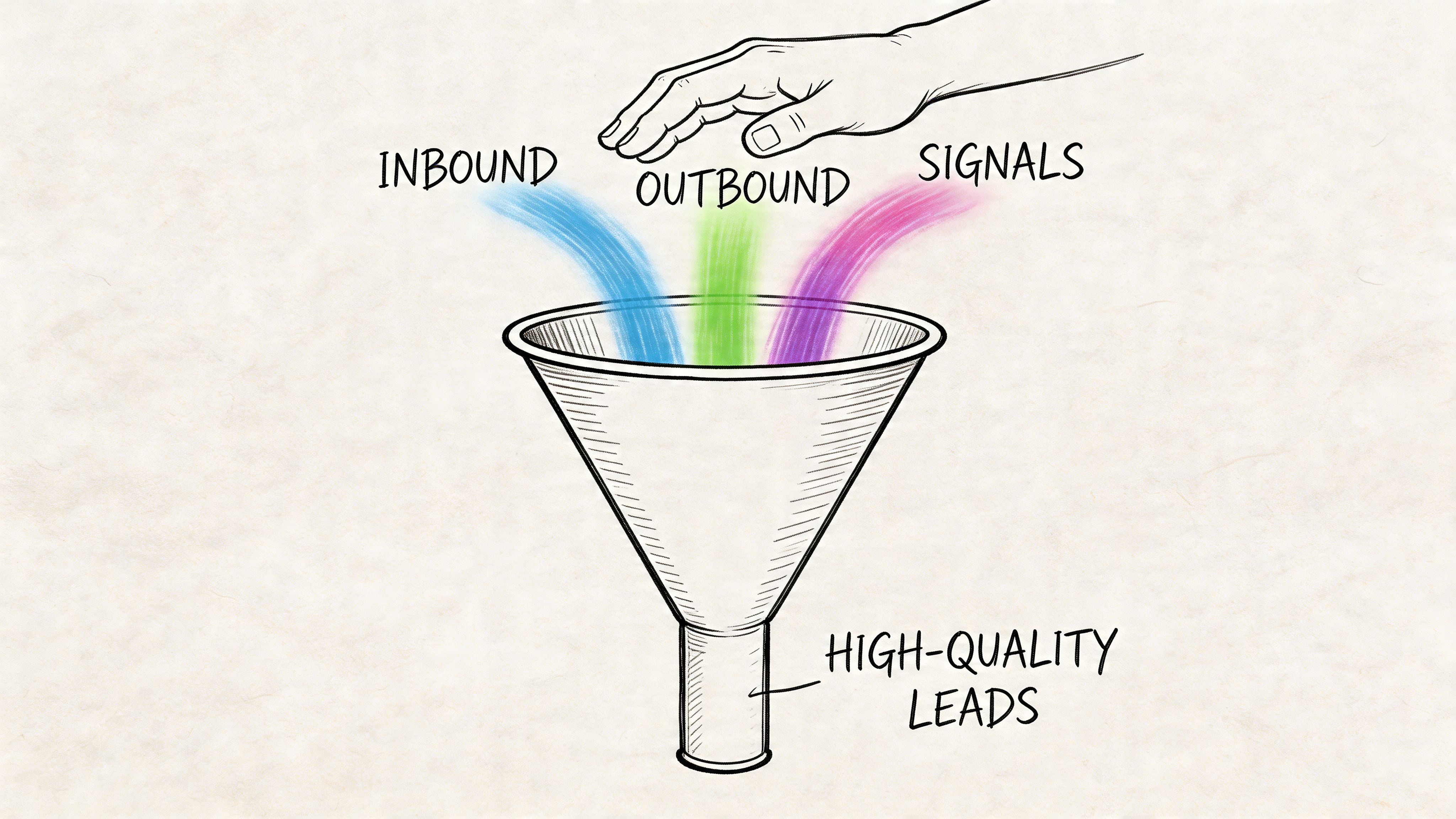
A marketing funnel illustration showing inbound, outbound, and signals flowing into high-quality leads for business growth.

Start with entry rules, not stage names

Before you define a single stage, decide who belongs in the pipeline at all. That's your ideal customer profile, or ICP. If your team can't describe the company type, buyer role, core pain, and buying context that fits your offer, the pipeline fills with noise.

In practice, this means writing down a few essential elements:

  • Company fit means the business matches the segment you can serve well.

  • Problem fit means the account has a pain your product or service addresses directly.

  • Buyer fit means you're talking to someone who can influence or drive a purchase.

  • Timing fit means the issue matters now, not someday.

Without this gate, reps turn curiosity into opportunity creation. That's how pipelines get crowded while forecasts get worse.

Build stages around buyer movement

Healthy B2B pipelines typically have 6 to 8 stages, and stage transitions should be based on observable buyer actions, because relying on seller opinion can inflate pipelines by 30% according to Cognism's guidance on sales pipeline structure.

For most SMB sales motions, a practical structure looks like this:

Stage

What it actually means

Qualified Lead

The account fits your ICP and has shown initial interest

Discovery Complete

You understand the problem, context, and key stakeholders

Solution Fit Confirmed

The buyer agrees your offer maps to the problem

Proposal Delivered

Commercial terms or scope have been shared

Negotiation

Open questions, objections, and terms are being worked through

Closed Won or Closed Lost

The deal ends with a clear outcome

Some teams need a stage for verbal agreement or implementation handoff. That's fine. The point is not to chase a magic number of columns. The point is to make each stage meaningful.

Write exit criteria your reps can prove

Every stage needs a clear definition of done. If "discovery complete" means one rep had a pleasant call and another rep uncovered pain, urgency, stakeholders, and next steps, you've created reporting fiction.

Use buyer evidence. Not rep optimism.

For example, a deal shouldn't move from discovery to solution fit unless the team can point to things like:

  1. The buyer confirmed the core problem in concrete terms.

  2. The impact of that problem is understood.

  3. Relevant stakeholders are identified.

  4. The buyer agreed your solution is worth evaluating further.

  5. A next step is scheduled.

That's what keeps the pipeline honest.

A simple way to pressure-test your design is to ask, "What would I need to show a skeptical CFO to justify this stage?" If the answer is vague, tighten the rule.

Add qualification inside the process

Qualification frameworks like BANT or MEDDIC aren't separate from the pipeline. They help determine whether a deal deserves to stay in it.

BANT is often enough for SMB teams because it forces basic discipline:

  • Budget asks whether there is real buying capacity.

  • Authority checks who can approve or strongly influence the decision.

  • Need verifies the problem is meaningful.

  • Timeline tells you whether this belongs in the active pipeline or nurture.

MEDDIC is more useful when deals involve multiple stakeholders, technical validation, or more complex approvals. The mistake is not choosing the wrong framework. The mistake is treating qualification as a one-time checkbox instead of an ongoing filter.

If you want a simple way to map this into a repeatable process, a sales process flowchart example is a useful reference because it forces you to make stage logic visible.

Here’s a helpful walkthrough before you lock the model in:

Keep the first version simple enough to survive contact with reality

Early pipeline design is usually too complicated or too loose. Teams either create endless micro-stages that nobody updates, or broad buckets that tell management almost nothing.

Use this test:

If a rep can explain why a deal advanced in one sentence, the stage is probably clear enough. If it takes a story, the stage is too fuzzy.

Your first version should be strict enough to improve decision-making and simple enough that reps will use it. You can refine from there. But if the blueprint isn't usable in the daily rhythm of selling, it won't matter how smart it looks in a slide deck.

Fueling Your Pipeline with High-Quality Leads

A pipeline without lead flow is just a dashboard for future disappointment. Once the structure exists, the next job is feeding it with the right kind of opportunities.

Most SMB teams need a mix. Rely only on inbound and volume becomes unpredictable. Rely only on outbound and relevance suffers. Ignore buying signals and your timing gets worse than it needs to be.
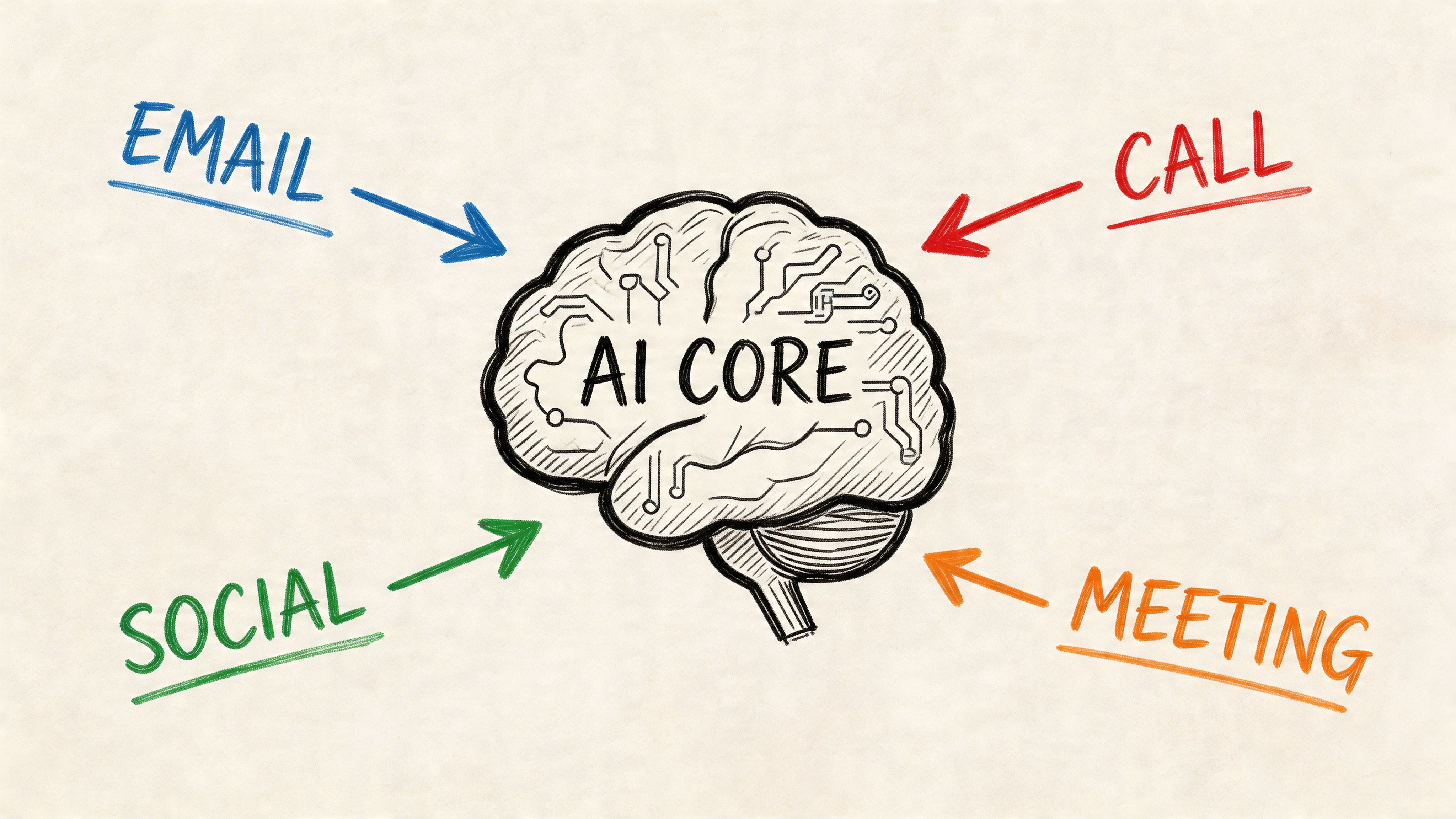
A digital illustration of a brain labeled AI Core connected to email, call, social media, and meeting sources.

Use three lead inputs, not one

The cleanest way to think about pipeline generation is through three sources.

Inbound captures people already raising their hand. These leads come from website forms, demo requests, content downloads, newsletter replies, and direct contact. They often move faster, but they still need qualification. Plenty of inbound leads are curious and not ready.

Outbound creates demand where no conversation exists yet. Disciplined targeting is particularly important for this. Good outbound starts with a clear ICP, a reason for reaching out, and messaging tied to a business problem.

Signals help with timing. Website visits, social activity, job changes, new hiring activity, or renewed engagement from an old lead can tell a rep when to reach out with context instead of cold timing.

A balanced pipeline uses all three. That protects the team from overdependence on any single channel.

Manual prospecting still works when budget is tight

A lot of early-stage teams assume they need a full tech stack before they can build pipeline. They don't. In bootstrapped scenarios, which represent 70% of early-stage SMBs, manual prospecting and problem-based qualification can produce 25% to 30% higher initial conversation rates than automated cold emails, according to Pipedrive's sales pipeline fundamentals article.

That tracks with reality. When budget is close to zero, a founder or new SDR can still build a useful top of funnel by working manually:

  • Use free LinkedIn search to identify companies and likely buyer roles.

  • Review your best existing customers and look for shared patterns.

  • Create a simple sheet with company, contact, problem hypothesis, first touch date, and next action.

  • Lead with the problem instead of a pitch about your product.

This kind of outreach is slower. It's also often better because it forces sharper thinking.

Send fewer messages, but make each one easy for the buyer to recognize as relevant.

If your message could be sent to ten other companies without changing a word, it probably doesn't deserve a reply.

Improve lead quality before you increase volume

Teams usually ask how to get more leads when they should first ask why current leads aren't converting. Lead quality often breaks earlier than people think.

Common causes include:

  • Loose targeting where the team contacts anyone in the broad market.

  • Weak problem definition so messaging sounds generic.

  • Poor handoff between marketing activity and sales follow-up.

  • Premature opportunity creation that turns every reply into pipeline.

One practical fix is to create a short intake standard for every new lead. Ask: Why this company, why this person, why now, and what problem do we believe exists? If a rep can't answer those four questions, the lead isn't ready for active selling.

For teams building their playbook, this guide to B2B SaaS lead generation is useful because it lays out channel choices in a way that helps you match effort to buying motion.

Treat signals as prioritization, not decoration

Signals are only valuable if they change action. Too many teams collect intent clues and do nothing operational with them.

A simple signal-based approach looks like this:

Signal

What to do with it

Repeat website visits

Send context tied to the pages viewed

Job change

Reconnect with a known contact in their new role

Hiring activity

Reach out with a message linked to growth or operational pressure

Content engagement

Offer a relevant follow-up conversation, not a generic demo push

Signals don't replace qualification. They improve timing and relevance. That's enough to materially improve how your reps spend their day.

The best lead generation system isn't the loudest. It's the one that consistently puts the right accounts into the first real stage of your pipeline.

Driving Momentum with AI-Powered Engagement

Most pipeline problems don't begin with sourcing. They begin after a lead enters the system. A rep sends one email, maybe makes one call, gets no response, and moves on. Another lead gets a generic sequence that says the same thing to every buyer. A third receives follow-up so late that the original interest is gone.

Momentum is created by structure. It is sustained by relevance.
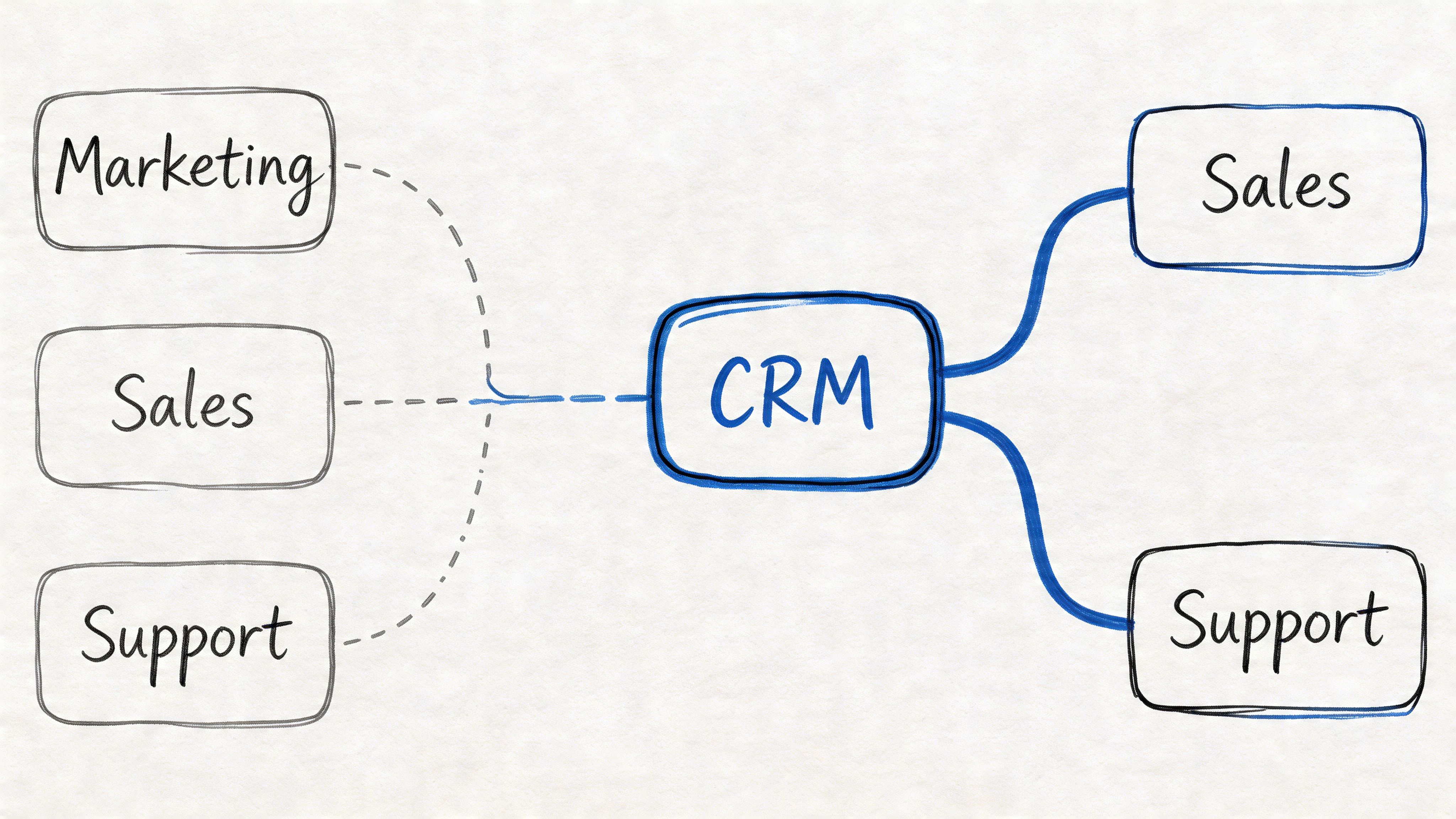
A diagram illustrating how CRM connects marketing, sales, and support departments within a business framework.

Build engagement around sequences, not isolated touches

A single touch rarely carries a deal forward. Buyers get busy, inboxes are crowded, and timing is rarely perfect on the first attempt. Good sales engagement assumes follow-up is part of the work, not a sign the first message failed.

That means every new qualified lead should enter a sequence with a clear point of view. Not a random pile of tasks. A real sequence.

A practical sequence usually combines:

  • Email for context and clarity

  • LinkedIn interaction for visibility and familiarity

  • Calls when direct conversation can reveal context faster

  • Follow-up messages tied to something specific the buyer cares about

The important part isn't channel variety for its own sake. It's that each touch earns the next one. If the first email introduces a problem, the second might share an observation. The third could ask a sharper question. The rep isn't repeating themselves. They're advancing the conversation.

Personalization needs a reason, not a token detail

A lot of sales teams confuse personalization with mentioning a recent post or company milestone. Buyers see through that quickly. Useful personalization connects a known business context to a credible reason to talk.

Compare these two approaches.

Weak personalization

Useful personalization

Mentions a podcast appearance

Ties recent hiring to a likely operational challenge

References a LinkedIn post

Connects that post to a business problem your team solves

Uses the company's name often

Shows understanding of the buyer's situation

AI offers assistance. Not by generating louder spam faster, but by helping reps create relevant first drafts, variants, and follow-ups grounded in account context. The value of AI in sales engagement is speed plus consistency. Reps don't start from a blank page each time, and managers don't have to police every message manually.

For teams exploring that shift, this overview of AI sales assistants is a useful primer on how these tools support rep workflows.

The best AI output in sales doesn't sound robotic. It sounds like a prepared rep who did the homework.

Use engagement data to decide where reps spend time

Not every lead deserves the same level of attention. Some accounts engage repeatedly. Others open messages and do nothing. Some reply with detail. Others go silent after the first call.

A team needs a working view of engagement so reps can prioritize without guessing. That can be lightweight. You don't need a complex scoring model on day one. You need a shared logic for what counts as real interest.

Useful prioritization signals include:

  • Meeting acceptance because it shows willingness to invest time

  • Multi-touch engagement across email, calls, or social

  • Stakeholder expansion when more than one person becomes involved

  • Specific replies that include timing, pain, or evaluation context

By contrast, vanity activity can mislead the team. Opens don't mean much on their own. Vague "circle back later" replies shouldn't keep a deal warm forever. Reps need permission to downgrade or recycle weak activity.

Keep nurture separate from active pursuit

One of the biggest engagement mistakes is forcing every not-now lead to stay in active outbound. That clogs the pipeline and burns rep time.

A healthier model separates two motions:

Active pursuit is for leads with present pain, clear fit, and current engagement.

Nurture is for leads that fit but aren't ready. They should still hear from the company, but through lighter, relevant touchpoints such as product updates, useful content, event invitations, or periodic check-ins.

That separation matters because it protects focus. Reps can spend their best hours where momentum exists, while the broader system keeps future deals alive.

Make every stage change trigger a different engagement motion

Strong operators outperform ad hoc teams. They don't just ask whether a deal moved. They change the play based on movement.

For example:

  1. A newly qualified lead gets a focused outreach sequence.

  2. A completed discovery triggers recap messaging and stakeholder mapping.

  3. A proposal stage triggers objection handling, commercial follow-up, and internal coordination.

  4. A stalled deal shifts into nurture or is closed out cleanly.

That rhythm turns engagement into an operational discipline instead of a rep-by-rep habit. It's how teams maintain deal movement without overworking every opportunity.

Operationalizing Your Pipeline in a Unified Platform

A pipeline stops being useful when the process lives in one place, outreach in another, notes in another, and reporting in a spreadsheet someone updates on Friday afternoon. At that point, you're not managing a system. You're managing reconciliations.

The operational goal is simple. One place should hold account history, pipeline stages, activities, tasks, and automations. If the team has to stitch together reality from separate tools, important context gets lost and follow-up quality drops.
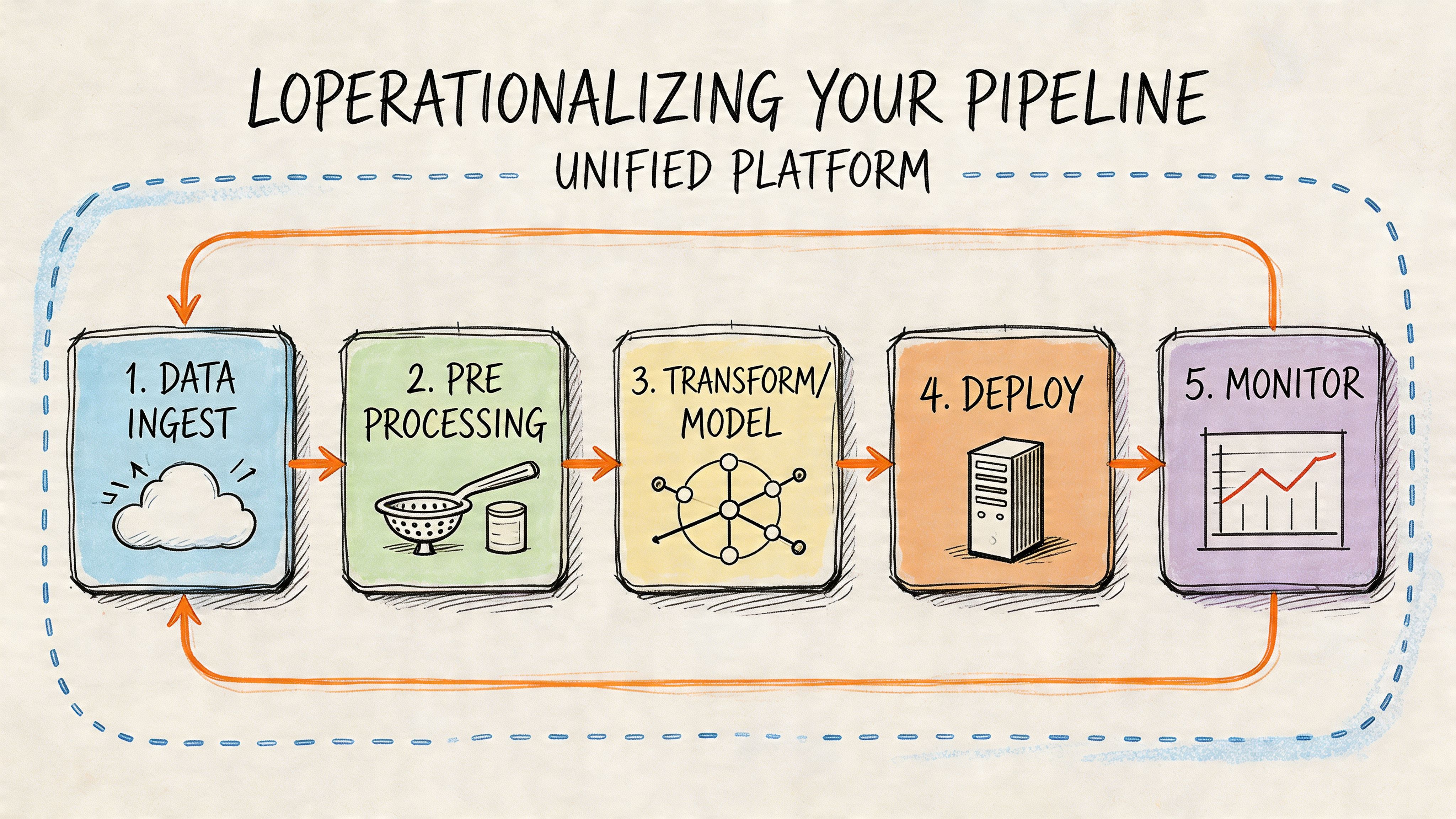
A hand-drawn illustration showing a five-step data pipeline for operationalizing a machine learning platform.

Mirror the real sales motion inside the CRM

Your CRM should reflect the pipeline blueprint exactly. Not approximately.

That means each stage should map to the progression your team defined earlier, and every opportunity should carry the fields needed to manage it properly. At minimum, most SMB teams need:

  • Stage and next step so every deal has current status and direction

  • Owner so accountability is explicit

  • Close date based on actual buying context, not optimism

  • Primary pain point to keep the problem visible

  • Key contacts and roles so stakeholder coverage is clear

The CRM becomes more valuable when it doesn't just store data but enforces decisions. Reps should have to enter the information needed to justify stage movement. If your system lets deals advance without the basics, the process will erode quickly.

Use automation to remove avoidable manual work

Automation is where a pipeline becomes a living operating system. The point isn't to automate everything. It's to automate the repetitive parts that don't require judgment.

Good workflow examples include:

Trigger

Useful action

New qualified lead created

Assign owner and create first-touch tasks

Discovery completed

Generate follow-up reminders and internal review tasks

No activity for a period

Flag the deal for review or move it to nurture

Closed won

Launch onboarding or handoff steps

These automations don't replace reps. They protect the process from being forgotten when the week gets busy.

If you're designing those rules, this guide on how to create a workflow is a practical place to start because it helps translate sales logic into system behavior.

Build for visibility first, then sophistication

Teams often overbuild too early. They add too many fields, too many automations, and too many conditional paths before the team has basic data discipline. That usually makes adoption worse.

A better order looks like this:

  1. Get stage definitions right.

  2. Make next steps mandatory.

  3. Standardize activity logging.

  4. Add a few high-value automations.

  5. Expand reporting once the data is trustworthy.

Clean process beats clever automation every time.

When the foundation is solid, management gets a real-time view of pipeline health. Reps can pick up where they left off without digging through inboxes. Marketing and sales can see the same contact history. Customer handoff becomes cleaner because the context isn't trapped in private notes.

That is a key operational gain of a unified platform. It reduces the friction between functions and makes the pipeline something the business can run, not just review.

Measuring and Optimizing Your Pipeline for Growth

A pipeline doesn't become reliable because it exists in a CRM. It becomes reliable when the team reviews the right signals, notices patterns early, and changes behavior before the quarter is lost.

For SMB teams, three metrics matter more than most. Coverage, conversion, and cycle length tell you whether you have enough opportunity volume, whether deals are progressing well, and whether the timeline supports your revenue target.

For optimal health, an SMB pipeline should maintain a 3 to 4x coverage ratio, teams should aim for 20% to 25% conversion per stage, and healthy SMB SaaS sales cycles average 45 to 60 days, according to Cirrus Insight's sales pipeline benchmarks.

Watch the metrics that change decisions

A metric only matters if it changes how you manage the team. These are the ones worth reviewing consistently.

Coverage ratio

Coverage ratio compares total active pipeline value to quota. If coverage is too thin, the team is relying on an unrealistically high close rate. If it's bloated with weak deals, leadership gets a false sense of security.

Use coverage to answer one question: do we have enough credible opportunity in motion to hit target?

Stage-by-stage conversion

This shows where deals are breaking. If a lot of leads enter the pipeline but few progress from discovery to solution fit, you likely have a qualification or messaging issue. If proposals go out and then stall, your pricing, stakeholder alignment, or commercial process may need work.

Sales cycle length

Cycle length tells you how quickly opportunities move from entry to outcome. Long cycles aren't automatically bad. Unexplained delays are. If deals are aging without clear progress, reps need intervention before those opportunities become forecast fiction.

Run reviews that expose truth, not theater

Many pipeline meetings fail because they reward storytelling. Reps walk through every deal, leaders nod along, and nobody pressure-tests whether the buyer is moving.

A strong pipeline review is narrower and tougher. Focus on a few questions:

  • What changed since the last review

  • What buyer action confirms the current stage

  • What risk could stop this deal

  • What is the next dated step

That format forces evidence over enthusiasm.

One useful management habit is to separate inspection from coaching. In the first part, confirm data quality and deal truth. In the second, help the rep improve strategy. When those get blended, meetings drift into vague conversation and weak pipeline hygiene survives another week.

Use weighted forecasting by rep, not just by stage

Stage probability alone often overstates reality. Two deals in the same stage do not carry the same likelihood of closing if one is owned by a top performer with strong stakeholder access and the other is being run by a new rep with limited control of the account.

That's why weighted forecasting by rep is so valuable. Instead of assuming every proposal-stage deal has equal strength, experienced operators adjust the forecast based on rep effectiveness, deal quality, and current engagement.

A simple model can include:

Factor

Why it matters

Rep history

Some reps consistently advance and close cleaner opportunities

Stage probability

Late-stage deals usually deserve more weight than early-stage deals

Deal quality

Strong qualification and stakeholder coverage improve confidence

Opportunity age

Older stalled deals deserve skepticism

You don't need an advanced data science team to start doing this. Even a lightweight version makes forecast conversations more honest.

If your team also relies on webinars or other educational demand channels, reviewing the right event metrics matters too. This guide to webinar KPIs is helpful because it shows how top-of-funnel engagement can be measured in a way that supports downstream pipeline quality.

For teams refining the full management layer, this resource on sales process optimization is worth reading because it connects process discipline to actual performance improvement.

Optimization starts with subtraction

When leaders talk about pipeline optimization, they often think about adding more. More tools, more dashboards, more sequences. Usually the first improvement comes from removing what shouldn't be there.

Close out dead deals. Tighten stage rules. Stop counting weak interest as pipeline. Reduce handoffs that slow response time. Remove fields nobody uses. Simplify reports that don't drive action.

Better pipeline performance usually starts with cleaner judgment.

Your Predictable Revenue Engine Awaits

A good sales pipeline doesn't make selling easy. It makes selling visible, repeatable, and manageable.

That shift is what changes revenue from a monthly surprise into a system you can improve. You define who belongs in the pipeline. You build stages around buyer movement. You feed the system with qualified leads from inbound, outbound, and signals. You maintain momentum with structured engagement. You operationalize the whole motion in one place. Then you measure what matters and adjust before problems compound.

Teams that do this well don't rely on memory or rep intuition alone. They run sales with clearer rules, faster follow-up, and better visibility into risk.

If you're serious about how to build a sales pipeline, treat it as an operating system from day one. Not a spreadsheet project. Not a management ritual. A system.

That is how SMB teams start acting with the discipline of much larger organizations, without adding the usual complexity that slows them down.

Stamina gives growing teams one place to build that system. It combines marketing, sales engagement, CRM, workflows, and AI-powered prospecting so you can design your pipeline, run outreach, track activity, and automate follow-up without stitching together point tools. If you want a practical way to turn pipeline theory into daily execution, explore Stamina.

Some months look healthy on paper. Reps are busy, demos are happening, and the team feels like momentum is building. Then the month closes and revenue lands far short of expectation. That gap usually isn't a closing problem alone. It's a pipeline design problem.

Most SMB teams don't struggle because they lack effort. They struggle because leads enter the business through scattered channels, qualification happens inconsistently, and follow-up lives across inboxes, spreadsheets, and memory. Deals move forward because a rep feels optimistic, not because a buyer has advanced.

That works for a founder closing the first few customers. It breaks when you try to scale.

A sales pipeline fixes that. Not the decorative kind with vague columns and stale deals. A real pipeline is a working system for deciding who enters, what must happen next, how momentum is maintained, and where revenue risk shows up early. If you're figuring out how to build a sales pipeline, think less about drawing stages and more about building an operating model your team can run every day.

From Unpredictable Revenue to a Scalable Growth Engine

Unpredictable revenue usually starts with invisible work. Leads come in from referrals, website forms, outbound lists, and old conversations. Reps follow up in different ways. Managers ask for forecast updates, and everyone interprets pipeline stages differently.

That's why formalization matters so much. Organizations that establish a formal, defined sales process experience nearly 30% higher revenue growth than companies without one, and nearly half of under-performing organizations lack a formal sales process entirely according to Salesgenie's breakdown of sales pipeline coverage.

Those numbers line up with what sales operators see in the field. Teams don't become predictable because they hire more reps. They become predictable because they agree on how a deal enters the pipeline, what qualifies as progress, and when an opportunity should be removed instead of protected.

Practical rule: If two reps would place the same opportunity in different stages, your pipeline isn't ready for forecasting.

A strong pipeline does three jobs at once:

  • It creates clarity so reps know what to do next with each account.

  • It improves management because leaders can spot stalls, weak qualification, and rep coaching needs.

  • It supports scale because the process can be repeated by new hires, not just the founder or top seller.

This is the shift that matters. You stop managing sales as a string of heroic individual efforts and start running a system that can produce consistent outcomes.

Designing Your Pipeline Blueprint

The fastest way to build a bad pipeline is to copy someone else's stages and rename them. Good pipelines mirror how your buyers move, not how your team prefers to report activity.

A marketing funnel illustration showing inbound, outbound, and signals flowing into high-quality leads for business growth.

Start with entry rules, not stage names

Before you define a single stage, decide who belongs in the pipeline at all. That's your ideal customer profile, or ICP. If your team can't describe the company type, buyer role, core pain, and buying context that fits your offer, the pipeline fills with noise.

In practice, this means writing down a few essential elements:

  • Company fit means the business matches the segment you can serve well.

  • Problem fit means the account has a pain your product or service addresses directly.

  • Buyer fit means you're talking to someone who can influence or drive a purchase.

  • Timing fit means the issue matters now, not someday.

Without this gate, reps turn curiosity into opportunity creation. That's how pipelines get crowded while forecasts get worse.

Build stages around buyer movement

Healthy B2B pipelines typically have 6 to 8 stages, and stage transitions should be based on observable buyer actions, because relying on seller opinion can inflate pipelines by 30% according to Cognism's guidance on sales pipeline structure.

For most SMB sales motions, a practical structure looks like this:

Stage

What it actually means

Qualified Lead

The account fits your ICP and has shown initial interest

Discovery Complete

You understand the problem, context, and key stakeholders

Solution Fit Confirmed

The buyer agrees your offer maps to the problem

Proposal Delivered

Commercial terms or scope have been shared

Negotiation

Open questions, objections, and terms are being worked through

Closed Won or Closed Lost

The deal ends with a clear outcome

Some teams need a stage for verbal agreement or implementation handoff. That's fine. The point is not to chase a magic number of columns. The point is to make each stage meaningful.

Write exit criteria your reps can prove

Every stage needs a clear definition of done. If "discovery complete" means one rep had a pleasant call and another rep uncovered pain, urgency, stakeholders, and next steps, you've created reporting fiction.

Use buyer evidence. Not rep optimism.

For example, a deal shouldn't move from discovery to solution fit unless the team can point to things like:

  1. The buyer confirmed the core problem in concrete terms.

  2. The impact of that problem is understood.

  3. Relevant stakeholders are identified.

  4. The buyer agreed your solution is worth evaluating further.

  5. A next step is scheduled.

That's what keeps the pipeline honest.

A simple way to pressure-test your design is to ask, "What would I need to show a skeptical CFO to justify this stage?" If the answer is vague, tighten the rule.

Add qualification inside the process

Qualification frameworks like BANT or MEDDIC aren't separate from the pipeline. They help determine whether a deal deserves to stay in it.

BANT is often enough for SMB teams because it forces basic discipline:

  • Budget asks whether there is real buying capacity.

  • Authority checks who can approve or strongly influence the decision.

  • Need verifies the problem is meaningful.

  • Timeline tells you whether this belongs in the active pipeline or nurture.

MEDDIC is more useful when deals involve multiple stakeholders, technical validation, or more complex approvals. The mistake is not choosing the wrong framework. The mistake is treating qualification as a one-time checkbox instead of an ongoing filter.

If you want a simple way to map this into a repeatable process, a sales process flowchart example is a useful reference because it forces you to make stage logic visible.

Here’s a helpful walkthrough before you lock the model in:

Keep the first version simple enough to survive contact with reality

Early pipeline design is usually too complicated or too loose. Teams either create endless micro-stages that nobody updates, or broad buckets that tell management almost nothing.

Use this test:

If a rep can explain why a deal advanced in one sentence, the stage is probably clear enough. If it takes a story, the stage is too fuzzy.

Your first version should be strict enough to improve decision-making and simple enough that reps will use it. You can refine from there. But if the blueprint isn't usable in the daily rhythm of selling, it won't matter how smart it looks in a slide deck.

Fueling Your Pipeline with High-Quality Leads

A pipeline without lead flow is just a dashboard for future disappointment. Once the structure exists, the next job is feeding it with the right kind of opportunities.

Most SMB teams need a mix. Rely only on inbound and volume becomes unpredictable. Rely only on outbound and relevance suffers. Ignore buying signals and your timing gets worse than it needs to be.

A digital illustration of a brain labeled AI Core connected to email, call, social media, and meeting sources.

Use three lead inputs, not one

The cleanest way to think about pipeline generation is through three sources.

Inbound captures people already raising their hand. These leads come from website forms, demo requests, content downloads, newsletter replies, and direct contact. They often move faster, but they still need qualification. Plenty of inbound leads are curious and not ready.

Outbound creates demand where no conversation exists yet. Disciplined targeting is particularly important for this. Good outbound starts with a clear ICP, a reason for reaching out, and messaging tied to a business problem.

Signals help with timing. Website visits, social activity, job changes, new hiring activity, or renewed engagement from an old lead can tell a rep when to reach out with context instead of cold timing.

A balanced pipeline uses all three. That protects the team from overdependence on any single channel.

Manual prospecting still works when budget is tight

A lot of early-stage teams assume they need a full tech stack before they can build pipeline. They don't. In bootstrapped scenarios, which represent 70% of early-stage SMBs, manual prospecting and problem-based qualification can produce 25% to 30% higher initial conversation rates than automated cold emails, according to Pipedrive's sales pipeline fundamentals article.

That tracks with reality. When budget is close to zero, a founder or new SDR can still build a useful top of funnel by working manually:

  • Use free LinkedIn search to identify companies and likely buyer roles.

  • Review your best existing customers and look for shared patterns.

  • Create a simple sheet with company, contact, problem hypothesis, first touch date, and next action.

  • Lead with the problem instead of a pitch about your product.

This kind of outreach is slower. It's also often better because it forces sharper thinking.

Send fewer messages, but make each one easy for the buyer to recognize as relevant.

If your message could be sent to ten other companies without changing a word, it probably doesn't deserve a reply.

Improve lead quality before you increase volume

Teams usually ask how to get more leads when they should first ask why current leads aren't converting. Lead quality often breaks earlier than people think.

Common causes include:

  • Loose targeting where the team contacts anyone in the broad market.

  • Weak problem definition so messaging sounds generic.

  • Poor handoff between marketing activity and sales follow-up.

  • Premature opportunity creation that turns every reply into pipeline.

One practical fix is to create a short intake standard for every new lead. Ask: Why this company, why this person, why now, and what problem do we believe exists? If a rep can't answer those four questions, the lead isn't ready for active selling.

For teams building their playbook, this guide to B2B SaaS lead generation is useful because it lays out channel choices in a way that helps you match effort to buying motion.

Treat signals as prioritization, not decoration

Signals are only valuable if they change action. Too many teams collect intent clues and do nothing operational with them.

A simple signal-based approach looks like this:

Signal

What to do with it

Repeat website visits

Send context tied to the pages viewed

Job change

Reconnect with a known contact in their new role

Hiring activity

Reach out with a message linked to growth or operational pressure

Content engagement

Offer a relevant follow-up conversation, not a generic demo push

Signals don't replace qualification. They improve timing and relevance. That's enough to materially improve how your reps spend their day.

The best lead generation system isn't the loudest. It's the one that consistently puts the right accounts into the first real stage of your pipeline.

Driving Momentum with AI-Powered Engagement

Most pipeline problems don't begin with sourcing. They begin after a lead enters the system. A rep sends one email, maybe makes one call, gets no response, and moves on. Another lead gets a generic sequence that says the same thing to every buyer. A third receives follow-up so late that the original interest is gone.

Momentum is created by structure. It is sustained by relevance.

A diagram illustrating how CRM connects marketing, sales, and support departments within a business framework.

Build engagement around sequences, not isolated touches

A single touch rarely carries a deal forward. Buyers get busy, inboxes are crowded, and timing is rarely perfect on the first attempt. Good sales engagement assumes follow-up is part of the work, not a sign the first message failed.

That means every new qualified lead should enter a sequence with a clear point of view. Not a random pile of tasks. A real sequence.

A practical sequence usually combines:

  • Email for context and clarity

  • LinkedIn interaction for visibility and familiarity

  • Calls when direct conversation can reveal context faster

  • Follow-up messages tied to something specific the buyer cares about

The important part isn't channel variety for its own sake. It's that each touch earns the next one. If the first email introduces a problem, the second might share an observation. The third could ask a sharper question. The rep isn't repeating themselves. They're advancing the conversation.

Personalization needs a reason, not a token detail

A lot of sales teams confuse personalization with mentioning a recent post or company milestone. Buyers see through that quickly. Useful personalization connects a known business context to a credible reason to talk.

Compare these two approaches.

Weak personalization

Useful personalization

Mentions a podcast appearance

Ties recent hiring to a likely operational challenge

References a LinkedIn post

Connects that post to a business problem your team solves

Uses the company's name often

Shows understanding of the buyer's situation

AI offers assistance. Not by generating louder spam faster, but by helping reps create relevant first drafts, variants, and follow-ups grounded in account context. The value of AI in sales engagement is speed plus consistency. Reps don't start from a blank page each time, and managers don't have to police every message manually.

For teams exploring that shift, this overview of AI sales assistants is a useful primer on how these tools support rep workflows.

The best AI output in sales doesn't sound robotic. It sounds like a prepared rep who did the homework.

Use engagement data to decide where reps spend time

Not every lead deserves the same level of attention. Some accounts engage repeatedly. Others open messages and do nothing. Some reply with detail. Others go silent after the first call.

A team needs a working view of engagement so reps can prioritize without guessing. That can be lightweight. You don't need a complex scoring model on day one. You need a shared logic for what counts as real interest.

Useful prioritization signals include:

  • Meeting acceptance because it shows willingness to invest time

  • Multi-touch engagement across email, calls, or social

  • Stakeholder expansion when more than one person becomes involved

  • Specific replies that include timing, pain, or evaluation context

By contrast, vanity activity can mislead the team. Opens don't mean much on their own. Vague "circle back later" replies shouldn't keep a deal warm forever. Reps need permission to downgrade or recycle weak activity.

Keep nurture separate from active pursuit

One of the biggest engagement mistakes is forcing every not-now lead to stay in active outbound. That clogs the pipeline and burns rep time.

A healthier model separates two motions:

Active pursuit is for leads with present pain, clear fit, and current engagement.

Nurture is for leads that fit but aren't ready. They should still hear from the company, but through lighter, relevant touchpoints such as product updates, useful content, event invitations, or periodic check-ins.

That separation matters because it protects focus. Reps can spend their best hours where momentum exists, while the broader system keeps future deals alive.

Make every stage change trigger a different engagement motion

Strong operators outperform ad hoc teams. They don't just ask whether a deal moved. They change the play based on movement.

For example:

  1. A newly qualified lead gets a focused outreach sequence.

  2. A completed discovery triggers recap messaging and stakeholder mapping.

  3. A proposal stage triggers objection handling, commercial follow-up, and internal coordination.

  4. A stalled deal shifts into nurture or is closed out cleanly.

That rhythm turns engagement into an operational discipline instead of a rep-by-rep habit. It's how teams maintain deal movement without overworking every opportunity.

Operationalizing Your Pipeline in a Unified Platform

A pipeline stops being useful when the process lives in one place, outreach in another, notes in another, and reporting in a spreadsheet someone updates on Friday afternoon. At that point, you're not managing a system. You're managing reconciliations.

The operational goal is simple. One place should hold account history, pipeline stages, activities, tasks, and automations. If the team has to stitch together reality from separate tools, important context gets lost and follow-up quality drops.

A hand-drawn illustration showing a five-step data pipeline for operationalizing a machine learning platform.

Mirror the real sales motion inside the CRM

Your CRM should reflect the pipeline blueprint exactly. Not approximately.

That means each stage should map to the progression your team defined earlier, and every opportunity should carry the fields needed to manage it properly. At minimum, most SMB teams need:

  • Stage and next step so every deal has current status and direction

  • Owner so accountability is explicit

  • Close date based on actual buying context, not optimism

  • Primary pain point to keep the problem visible

  • Key contacts and roles so stakeholder coverage is clear

The CRM becomes more valuable when it doesn't just store data but enforces decisions. Reps should have to enter the information needed to justify stage movement. If your system lets deals advance without the basics, the process will erode quickly.

Use automation to remove avoidable manual work

Automation is where a pipeline becomes a living operating system. The point isn't to automate everything. It's to automate the repetitive parts that don't require judgment.

Good workflow examples include:

Trigger

Useful action

New qualified lead created

Assign owner and create first-touch tasks

Discovery completed

Generate follow-up reminders and internal review tasks

No activity for a period

Flag the deal for review or move it to nurture

Closed won

Launch onboarding or handoff steps

These automations don't replace reps. They protect the process from being forgotten when the week gets busy.

If you're designing those rules, this guide on how to create a workflow is a practical place to start because it helps translate sales logic into system behavior.

Build for visibility first, then sophistication

Teams often overbuild too early. They add too many fields, too many automations, and too many conditional paths before the team has basic data discipline. That usually makes adoption worse.

A better order looks like this:

  1. Get stage definitions right.

  2. Make next steps mandatory.

  3. Standardize activity logging.

  4. Add a few high-value automations.

  5. Expand reporting once the data is trustworthy.

Clean process beats clever automation every time.

When the foundation is solid, management gets a real-time view of pipeline health. Reps can pick up where they left off without digging through inboxes. Marketing and sales can see the same contact history. Customer handoff becomes cleaner because the context isn't trapped in private notes.

That is a key operational gain of a unified platform. It reduces the friction between functions and makes the pipeline something the business can run, not just review.

Measuring and Optimizing Your Pipeline for Growth

A pipeline doesn't become reliable because it exists in a CRM. It becomes reliable when the team reviews the right signals, notices patterns early, and changes behavior before the quarter is lost.

For SMB teams, three metrics matter more than most. Coverage, conversion, and cycle length tell you whether you have enough opportunity volume, whether deals are progressing well, and whether the timeline supports your revenue target.

For optimal health, an SMB pipeline should maintain a 3 to 4x coverage ratio, teams should aim for 20% to 25% conversion per stage, and healthy SMB SaaS sales cycles average 45 to 60 days, according to Cirrus Insight's sales pipeline benchmarks.

Watch the metrics that change decisions

A metric only matters if it changes how you manage the team. These are the ones worth reviewing consistently.

Coverage ratio

Coverage ratio compares total active pipeline value to quota. If coverage is too thin, the team is relying on an unrealistically high close rate. If it's bloated with weak deals, leadership gets a false sense of security.

Use coverage to answer one question: do we have enough credible opportunity in motion to hit target?

Stage-by-stage conversion

This shows where deals are breaking. If a lot of leads enter the pipeline but few progress from discovery to solution fit, you likely have a qualification or messaging issue. If proposals go out and then stall, your pricing, stakeholder alignment, or commercial process may need work.

Sales cycle length

Cycle length tells you how quickly opportunities move from entry to outcome. Long cycles aren't automatically bad. Unexplained delays are. If deals are aging without clear progress, reps need intervention before those opportunities become forecast fiction.

Run reviews that expose truth, not theater

Many pipeline meetings fail because they reward storytelling. Reps walk through every deal, leaders nod along, and nobody pressure-tests whether the buyer is moving.

A strong pipeline review is narrower and tougher. Focus on a few questions:

  • What changed since the last review

  • What buyer action confirms the current stage

  • What risk could stop this deal

  • What is the next dated step

That format forces evidence over enthusiasm.

One useful management habit is to separate inspection from coaching. In the first part, confirm data quality and deal truth. In the second, help the rep improve strategy. When those get blended, meetings drift into vague conversation and weak pipeline hygiene survives another week.

Use weighted forecasting by rep, not just by stage

Stage probability alone often overstates reality. Two deals in the same stage do not carry the same likelihood of closing if one is owned by a top performer with strong stakeholder access and the other is being run by a new rep with limited control of the account.

That's why weighted forecasting by rep is so valuable. Instead of assuming every proposal-stage deal has equal strength, experienced operators adjust the forecast based on rep effectiveness, deal quality, and current engagement.

A simple model can include:

Factor

Why it matters

Rep history

Some reps consistently advance and close cleaner opportunities

Stage probability

Late-stage deals usually deserve more weight than early-stage deals

Deal quality

Strong qualification and stakeholder coverage improve confidence

Opportunity age

Older stalled deals deserve skepticism

You don't need an advanced data science team to start doing this. Even a lightweight version makes forecast conversations more honest.

If your team also relies on webinars or other educational demand channels, reviewing the right event metrics matters too. This guide to webinar KPIs is helpful because it shows how top-of-funnel engagement can be measured in a way that supports downstream pipeline quality.

For teams refining the full management layer, this resource on sales process optimization is worth reading because it connects process discipline to actual performance improvement.

Optimization starts with subtraction

When leaders talk about pipeline optimization, they often think about adding more. More tools, more dashboards, more sequences. Usually the first improvement comes from removing what shouldn't be there.

Close out dead deals. Tighten stage rules. Stop counting weak interest as pipeline. Reduce handoffs that slow response time. Remove fields nobody uses. Simplify reports that don't drive action.

Better pipeline performance usually starts with cleaner judgment.

Your Predictable Revenue Engine Awaits

A good sales pipeline doesn't make selling easy. It makes selling visible, repeatable, and manageable.

That shift is what changes revenue from a monthly surprise into a system you can improve. You define who belongs in the pipeline. You build stages around buyer movement. You feed the system with qualified leads from inbound, outbound, and signals. You maintain momentum with structured engagement. You operationalize the whole motion in one place. Then you measure what matters and adjust before problems compound.

Teams that do this well don't rely on memory or rep intuition alone. They run sales with clearer rules, faster follow-up, and better visibility into risk.

If you're serious about how to build a sales pipeline, treat it as an operating system from day one. Not a spreadsheet project. Not a management ritual. A system.

That is how SMB teams start acting with the discipline of much larger organizations, without adding the usual complexity that slows them down.

Stamina gives growing teams one place to build that system. It combines marketing, sales engagement, CRM, workflows, and AI-powered prospecting so you can design your pipeline, run outreach, track activity, and automate follow-up without stitching together point tools. If you want a practical way to turn pipeline theory into daily execution, explore Stamina.

Share this article

Share this article

Send a shareable link to your team or anyone who might find it useful.

Send a shareable link to your team or anyone who might find it useful.

Copy link

Copied

Share directly to

Table of contents

Give Your Business the Stamina it needs to Thrive