
You’re probably in one of two situations right now.
You’ve been publishing blog posts, guides, maybe a few landing pages, and traffic is inconsistent or decent but the pipeline isn’t. Or leads are coming in, but sales keeps saying they’re weak, too early, or impossible to prioritize. Both problems usually come from the same root issue. The business is creating content, but not running a real inbound system.
Inbound marketing lead generation isn’t just “write useful content and wait.” It’s a connected process. You attract the right people, convert them with the right offer, qualify them fast, nurture them based on intent, and hand them to sales with context. When those steps live in different tools, small gaps turn into lost deals.
Why Your Content Isn't Generating Leads (And How to Fix It)
A lot of SMB teams mistake activity for momentum.
They publish articles. They share them on LinkedIn. They add a form somewhere on the site. Months later, the numbers still don’t support the effort. The content may be helpful, but it isn’t built to attract the right search intent, convert that attention into contact data, or trigger a follow-up process sales can trust.
That’s why “more content” rarely fixes a lead problem.
The better question is whether your content is attached to an inbound engine. Done right, inbound marketing tactics generate 54% more leads than traditional outbound approaches while costing 62% less per lead, according to these inbound marketing benchmarks. For an SMB, that matters because budget waste usually comes from disconnected execution, not lack of effort.
Practical rule: If a piece of content doesn’t target a specific buyer problem, offer a next step, and route the lead into follow-up, it’s probably acting like a branding asset, not a pipeline asset.
The fix starts with structure.
Content should answer a buyer question your team hears in sales calls. Each page should move the visitor toward a relevant conversion point. Each form should push data into a system that scores, enriches, and routes the lead. If you’re not sure where users are getting stuck on-page, reviewing visitor behavior patterns with tools like website heat map analysis helps expose weak CTAs, dead-scroll sections, and pages that educate without converting.
Three common reasons content underperforms:
Wrong intent targeting. Teams write broad educational posts when buyers are searching for solution-specific help.
Weak conversion paths. The article ends with no relevant offer, vague CTA copy, or a generic contact form.
No operational follow-through. Leads enter a spreadsheet, a neglected inbox, or a CRM with no clear owner.
Content generates leads when it behaves like the front half of a revenue process. That’s the standard SMBs should hold. Not “did we publish,” but “did this asset create a qualified next step?”
Attracting Your Ideal Customers with High-Intent Content
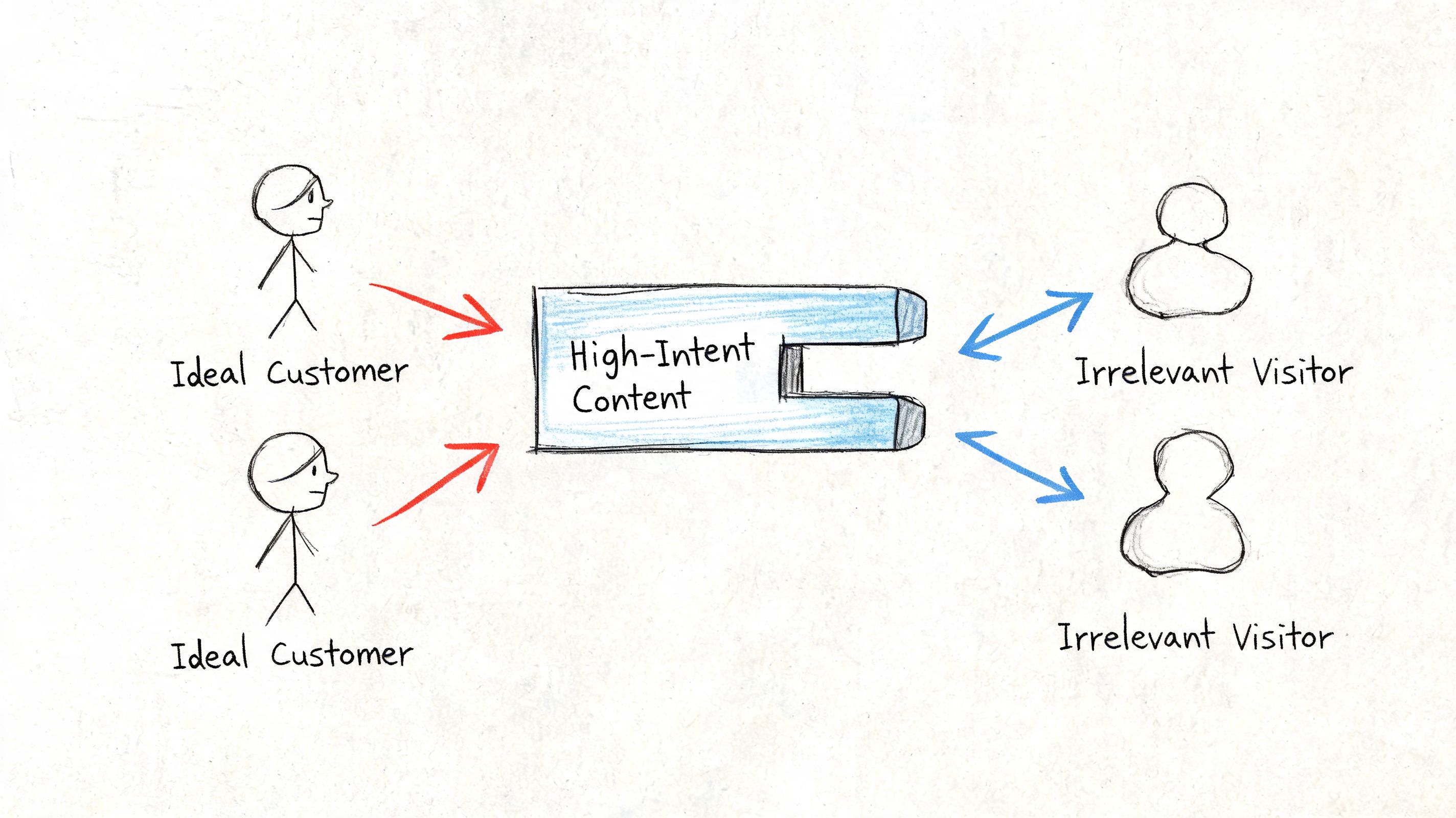
Traffic isn’t the goal. Qualified attention is.
Many SMBs create content for volume and end up attracting students, competitors, early researchers, and bargain hunters. That inflates sessions while starving the pipeline. Inbound marketing lead generation works when your content pulls in people who are close to a buying decision and filters out everyone else.
Start with buyer-intent keywords
The simplest way to improve lead quality is to separate informational intent from commercial intent.
Informational queries sit higher in the funnel. They often include phrases like “what is,” “how to,” or “best practices.” Commercial queries show a buyer narrowing options. They often include words like “software,” “services,” “agency,” “platform,” “compare,” “pricing,” or industry-specific problem language.
A practical keyword stack usually looks like this:
Problem-aware terms. Searches tied to a painful business issue your offer solves.
Solution-aware terms. Queries for a category, method, or service type.
Vendor-aware terms. Searches comparing providers, alternatives, or implementation options.
For example, a managed IT company shouldn’t stop at broad content about cybersecurity awareness. It should also create pages around terms that signal urgency and fit, such as support models, compliance help, response services, or industry-specific risk questions. That content attracts fewer casual readers and more serious buyers.
If your market positioning still feels fuzzy, it helps to tighten ICP, offer, and channel alignment before publishing at scale. This guide to building a go-to-market strategy is useful for that planning step.
Build content pillars that pre-qualify
A strong content library doesn’t look like a random pile of blog posts. It acts like a filter.
Use a few repeatable content pillars that map to different buying moments:
Content pillar | Best use | What it attracts |
|---|---|---|
Deep guides | Explain a high-value problem clearly | Buyers researching a category |
Comparison pages | Clarify options and trade-offs | Buyers evaluating vendors or approaches |
Case study style pages | Show process and outcomes qualitatively | Buyers looking for confidence and proof |
Service pages | Explain scope, fit, and process | Buyers ready to talk |
Checklists and templates | Offer immediate utility | Buyers willing to exchange contact info |
Many teams get lazy. They publish educational content but avoid commercial pages because they don’t want to sound “salesy.” That usually backfires. Buyers who are close to a decision want clarity. If you don’t give it to them, a competitor will.
Content should answer two questions fast: “Is this relevant to my problem?” and “Are these the people I should talk to?”
Publish with enough velocity to matter
Content compounds, but only if you sustain output long enough for the market to notice. Content marketing costs 62% less than outbound marketing and generates more than three times as many leads, and 82% of marketers who blog daily acquire customers through their blog, compared to 57% who blog monthly, according to these content marketing statistics.
That doesn’t mean every SMB needs daily publishing. It does mean sporadic posting won’t build authority or enough entry points into your funnel.
A practical rhythm is to prioritize:
Bottom-funnel pages first. Service, solution, comparison, and use-case pages.
Middle-funnel assets next. Guides, frameworks, and implementation content.
Broad awareness content last. Useful only after the core conversion paths exist.
Write for fit, not applause
Some content wins social engagement and still produces weak leads. That usually happens when the topic is interesting but too broad. A post that attracts your peers is not the same as a page that attracts your buyers.
To keep quality high, pressure-test every topic with these questions:
Would a buyer search this before contacting a vendor?
Can sales use this page in a live deal?
Does this topic connect naturally to a service, product, or offer?
Will this attract the type of company you want, or everyone?
If the answer to most of those is no, don’t force it into the content plan.
Converting Anonymous Website Visitors into Actionable Leads
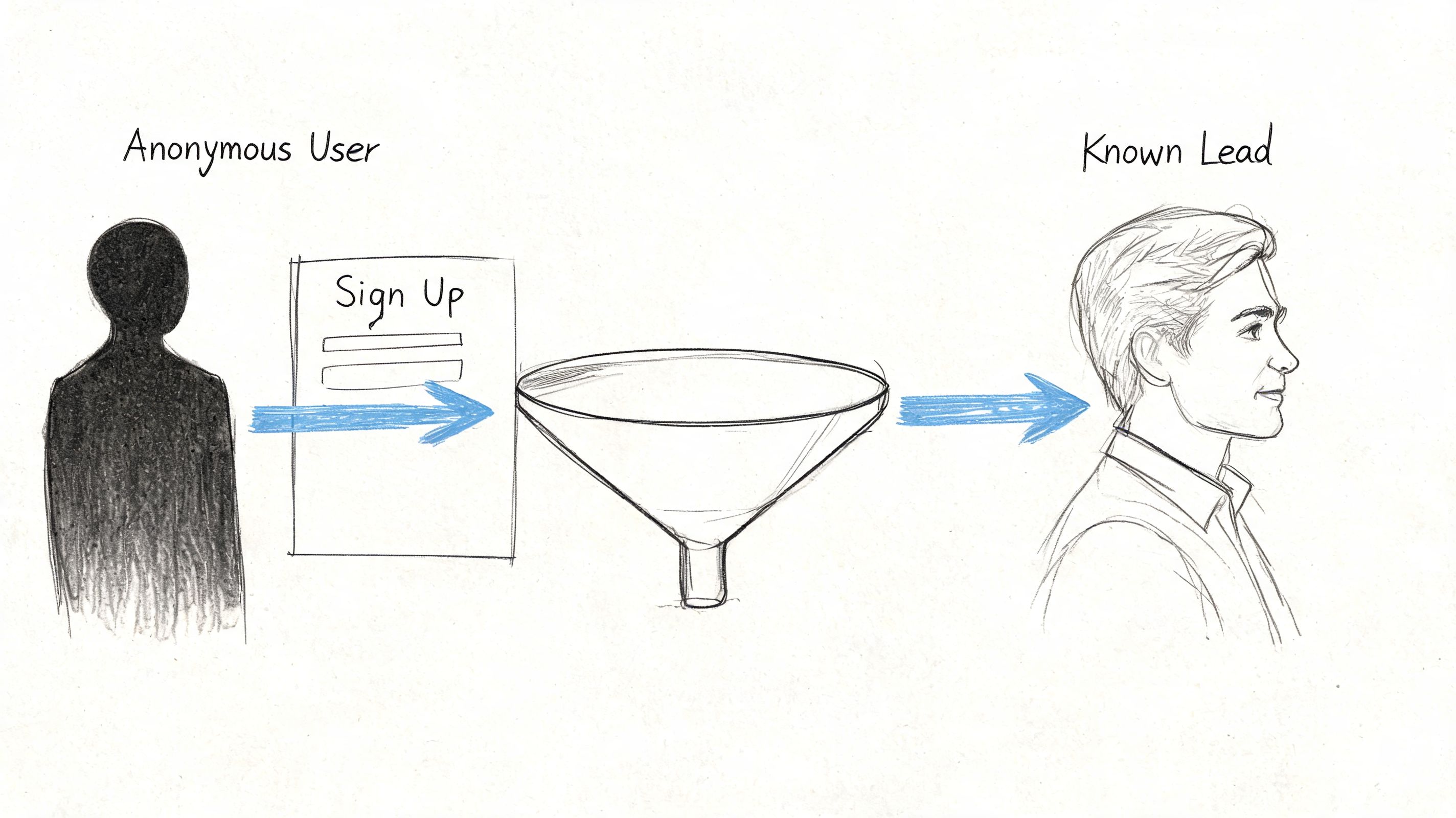
Attraction gets attention. Conversion makes it useful.
A lot of inbound programs stall here. The site gets visitors, but the pages don’t give those visitors a clear reason to identify themselves. Or worse, every page pushes the same generic “Contact us” CTA, which asks too much, too early, from people who are still evaluating.
Match the offer to the page intent
A visitor on a high-intent service page needs a different next step than someone reading an educational article.
That sounds obvious, but many SMB sites still use one CTA across the entire domain. That creates friction. The ask needs to match the visitor’s level of awareness and urgency.
Here’s a practical way to think about it:
Educational blog post. Offer a checklist, template, or practical guide tied to the problem they’re reading about.
Comparison page. Offer a consultation, audit, or decision framework.
Service page. Offer a demo, assessment, or direct conversation.
Resource hub. Offer category-specific subscriptions or content bundles by topic.
The best lead magnets are concrete. Checklists, templates, recorded walkthroughs, calculators, sample plans, and implementation guides usually outperform vague “ultimate guides” because the value is easier to understand at a glance.
Build landing pages that remove doubt
A landing page has one job. It should make the visitor comfortable saying yes to the next step.
That means less navigation, fewer distractions, sharper copy, and a tighter message match between the referring page, CTA, and offer. If someone clicked because they wanted a hiring checklist, the landing page shouldn’t open with broad company messaging. It should confirm they’re getting the checklist and explain why it’s useful.
Strong landing pages usually include:
A headline with clear utility. Say what the asset or offer helps the buyer do.
A short proof section. Explain who it’s for and what problem it solves.
A clean form. Ask only for what the next step requires.
A visual cue. Show the asset, interface, worksheet, or expected output.
A low-risk CTA. Make the action feel easy and immediate.
If you want to sharpen the anonymous-to-known part of the funnel before a form fill, this guide on implementing website visitor tracking is a useful operational resource. It helps teams understand who’s showing buying signals on-site even before they convert.
Forms should qualify without killing conversion
Most SMB forms fail in one of two ways. They ask for too much too early, or they ask for so little that sales learns nothing useful.
The right balance depends on offer intent.
For a newsletter or checklist, keep it light. For a demo request or consultation, ask for enough context to route and prioritize properly. That might include role, company, use case, or team need. The point isn’t to collect everything upfront. The point is to collect what supports the next action.
The form isn’t the finish line. It’s the handoff point between visitor curiosity and operational follow-through.
When in doubt, use forms to capture intent signals, not trivia. “What challenge are you trying to solve?” is often more useful than adding another low-value field.
A simple conversion path often looks like this:
A visitor lands on a page through search or social.
A CTA offers a next step aligned to that page’s intent.
The click opens a focused landing page.
The visitor submits a right-sized form.
The system creates a lead record and triggers routing or nurture.
This walkthrough gives a good visual example of how conversion paths work on-site:
Don’t leave conversion points buried
Most businesses have at least a few hidden opportunities already sitting on the site.
Look for pages with strong relevance but weak next steps:
Popular blog posts with no contextual CTA
Service pages with short, generic forms
Case study pages without a consultation offer
About pages that get traffic but don’t guide people anywhere
Pricing-adjacent pages without an action path
Fixing those often produces better results than publishing another top-of-funnel article.
Anonymous traffic becomes pipeline when the site gives buyers a low-friction way to raise their hand and the business knows what to do next when they do.
Automating Lead Scoring and Data Enrichment
Not every lead deserves the same response.
Once a visitor converts, the next job is deciding who needs fast sales attention, who belongs in nurture, and who probably isn’t a fit. Without a scoring model, sales works from gut feel, inbox order, or whoever shouts the loudest in Slack. That’s how good leads age out while low-value ones eat up time.
Score for fit and intent
Lead scoring doesn’t need to start complex. For most SMBs, a simple model based on fit and intent is enough to create order.
Fit tells you whether the lead resembles your ideal customer. Intent tells you whether they’re acting like someone who may buy soon.
A practical fit model usually looks at:
Role relevance. Are they a decision-maker, evaluator, or someone with little buying influence?
Company type. Does the business match your target segment, industry, or serviceable market?
Use-case alignment. Did they come in through content tied to a core offering or a fringe topic?
Intent usually comes from behavior. You’re looking at what they did, not just who they are. A person who requested a consultation or visited commercial pages repeatedly should rise above someone who downloaded a broad educational resource and disappeared.
Use enrichment to make forms shorter and records stronger
Many teams create friction without realizing it.
They ask for every possible detail on the form because they’re afraid sales won’t have enough context. A better approach is to keep forms focused, then enrich records automatically where possible. That gives sales a fuller picture while protecting conversion rates.
One of the most practical ways to improve form quality over time is using progressive profiling well. Instead of forcing every field on first touch, you collect a little now and a little later based on what the lead already shared and how serious they appear.
A healthy enrichment workflow typically adds context such as company details, role clarity, source, and page history to the record after submission. That gives the rep enough background to respond intelligently instead of opening with questions the buyer already answered.
Keep the model simple enough to maintain
Most scoring systems fail because they become too clever.
A small team doesn’t need a giant matrix with edge cases for every page visit. It needs a model everyone understands. Marketing should know what makes a lead more qualified. Sales should trust the threshold. Leadership should be able to audit why a lead was routed a certain way.
A practical setup looks like this:
Signal type | Example input | Likely action |
|---|---|---|
Strong fit, strong intent | Right company, right role, high-intent conversion | Route to sales fast |
Strong fit, weak intent | Good profile, early-stage content engagement | Put into nurture |
Weak fit, strong intent | Interested but outside ICP | Review manually |
Weak fit, weak intent | Low relevance and low activity | Keep out of sales queue |
Good scoring doesn’t predict the future. It helps your team spend attention where it has the best chance of turning into revenue.
Tie the model to workflow, not just reporting
Scoring only matters if it changes what happens next.
When a lead crosses a threshold, the platform should trigger an action. That could mean assigning an owner, creating a task, sending an alert, dropping the lead into a sequence, or enriching the record before sales sees it. If the score just sits in a field no one uses, it’s decoration.
Operationally, workflow automation matters most. Teams that want to map those triggers clearly should start with a simple routing design and then build from there. This walkthrough on how to create a workflow is a solid reference for turning score changes and form events into concrete sales and marketing actions.
Nurturing Leads with Smart Automated Sequences
Most inbound leads don’t buy on first touch.
That doesn’t mean they’re bad leads. It usually means their timing, internal alignment, or urgency isn’t there yet. If your only follow-up options are “call immediately” or “dump into newsletter,” you’re leaving a lot of value on the table.
The strongest nurture systems do two things well. They respond fast, and they stay relevant over time.
Speed matters more than most teams think
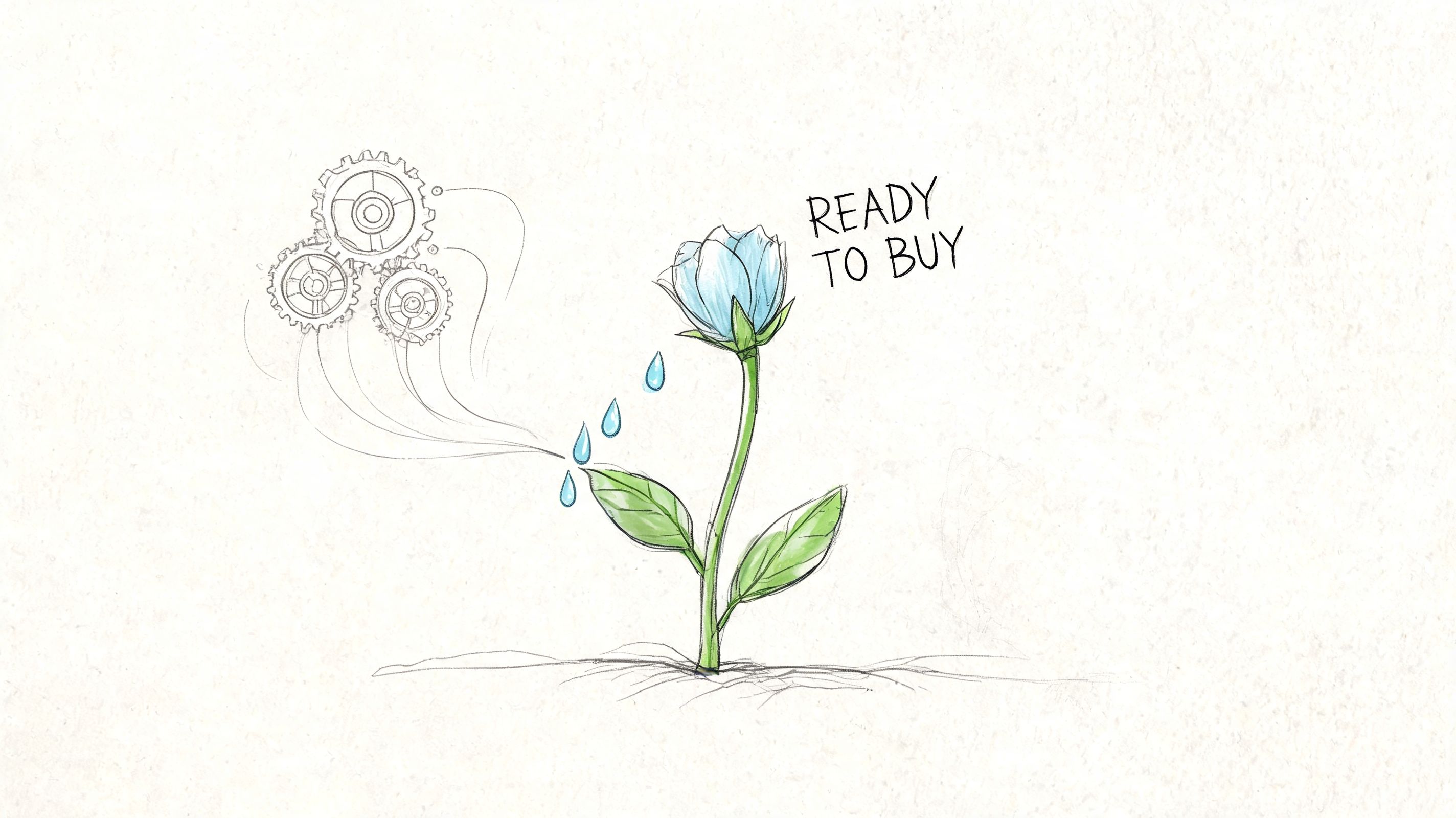
When a lead raises their hand, interest decays quickly. According to these lead follow-up and nurturing benchmarks, contacting a lead within 5 minutes boosts conversion likelihood by 21 times. The same source notes that businesses that excel at lead nurturing generate 50% more sales-ready leads at a 33% lower cost.
For SMBs, that changes the shape of the process. Fast response can’t depend on whether one rep happens to be online. It needs automation.
That doesn’t always mean a sales call in five minutes. It can mean an instant email acknowledgement, a task creation, an owner alert, a routed sequence, or a combination of all three. The point is to meet the lead while intent is still active.
Replace newsletter blasts with intent-based sequences
A generic newsletter keeps the database warm at best. It rarely moves a specific buyer toward a sales conversation.
A nurture sequence should reflect how the lead entered the funnel and what problem they seem to care about. Someone who downloaded a service checklist needs a different follow-up than someone who requested pricing information.
A simple structure works well:
Immediate value email
Deliver the promised asset or next step. Restate the problem the asset helps solve. Keep the ask light.Context email
Share a practical insight, common mistake, or implementation angle related to the original topic.Decision email
Help the lead evaluate options. This is a good place for consultation offers, service fit guidance, or comparison content.
Here’s a practical version for an SMB selling services or software to other businesses.
A simple three-email welcome nurture
Email one should feel transactional and useful. Thank them, give them the asset or booking link, and point them toward one related resource.
Email two should teach, not pitch. Explain a common failure pattern you see in companies like theirs. Give them something they can act on without buying.
Email three should create a clean path forward. Invite them to take a next step only if the timing is right. That might be an assessment, demo, or conversation based on the topic they first engaged with.
If every nurture email sounds like “just checking in,” the sequence is serving your CRM, not the buyer.
For teams new to automated nurture, it helps to review what a real drip campaign means in practice. The mechanics matter less than the logic. Trigger by behavior. Segment by interest. Keep the sequence tied to an actual buying question.
Segment by entry point and buying signal
You don’t need dozens of nurture tracks to start. You do need more than one.
Useful first-pass segments include:
Lead magnet type. Checklist, template, webinar, consultation, or demo
Topic category. Security, operations, hiring, demand generation, onboarding
Intent level. Educational conversion versus commercial conversion
Persona. Founder, operator, marketer, sales leader, agency owner
A lead from a pricing-adjacent page shouldn’t get the same message as someone who downloaded a beginner guide. Treating them the same creates either unnecessary pressure or unnecessary delay.
Use automation to support judgment, not replace it
The best nurture systems leave room for human timing.
If a lead starts revisiting service pages, opens several emails, or replies with context, the sequence should adapt. Some leads need a rep to step in. Others need more education. Automation should make those moments visible and actionable.
Good nurture feels like organized relevance. Bad nurture feels like marketing talking to itself. The difference is whether every email earns its place in the sequence.
Creating Seamless Handoffs from Marketing to Sales
Most SMB lead generation problems don’t happen at the top of the funnel. They happen at the point where a lead should become a conversation.
Marketing says the lead converted. Sales says the lead wasn’t ready. The prospect says no one followed up, or the first reply ignored everything they already shared. That’s not a lead quality issue. It’s a handoff issue.
Define the exact trigger for sales involvement
A clean handoff starts with clear conditions.
Sales shouldn’t have to guess whether a lead is ready. Marketing shouldn’t have to argue for every form fill. The business needs a shared definition of what action, score, or combination of signals triggers direct outreach.
That trigger might include:
A high-intent conversion such as a consultation request or demo ask
A score threshold based on fit and recent behavior
A repeat visit pattern across commercial pages
A direct reply to a nurture email with buying context
The important part is consistency. Once the threshold is met, the lead should move immediately into a defined sales workflow.
Give sales a full interaction timeline
The first sales message gets better when the rep knows what happened before the handoff.
That means the record should show source, pages viewed, assets downloaded, form answers, email engagement, and notes from prior automation. Without that context, reps default to generic outreach. Buyers notice right away.
A good handoff equips sales to say something like, “I saw you were reviewing our implementation checklist and then spent time on the services page. Usually that means you’re comparing approaches. Happy to help if that’s where you are.” That feels informed, not intrusive.
The handoff should transfer context, not just contact details.
Unified systems matter most in trust-based industries
It is fragmented tools that do the most damage.
In industries like home services, senior care, and other trust-heavy SMB categories, fast and contextual response matters because the buyer is often evaluating risk as much as price. According to this analysis of overlooked SMB industries, businesses in these categories often struggle with fragmented tools, while unified platforms that enable the 21x higher conversion rate from 5-minute follow-ups can help them achieve 25-35% better ROI from inbound efforts.
That’s a useful reminder for any SMB, not just those sectors. If forms live in one tool, nurture in another, CRM notes in another, and sales alerts in someone’s inbox, the handoff slows down and the context gets thin.
A smooth handoff usually includes three operational pieces:
Instant ownership so one person is responsible.
Visible context so outreach is relevant.
Closed-loop feedback so marketing learns which leads were workable.
When those pieces are in place, sales doesn’t just move faster. It sounds smarter on the first touch.
Measuring and Optimizing Your Inbound Lead Generation Engine
Inbound marketing lead generation isn’t something you set up once and leave alone.
Small leaks compound. A weak CTA lowers conversion. Poor routing slows follow-up. A nurture sequence misses the buyer’s actual concern. If you don’t measure each stage separately, you’ll keep treating pipeline problems like content problems or content problems like sales problems.
Track the funnel as one operating system
The most useful reporting model is closed-loop. That means you can follow a lead from first touch to deal outcome and see which pages, offers, workflows, and handoffs contributed along the way.
Without that visibility, optimization gets political fast. Everyone defends their channel. No one can show where quality changed, where response lagged, or where buyers went cold.
A simple dashboard is enough if it’s reviewed consistently.
Key inbound marketing KPIs by funnel stage
Funnel Stage | Primary KPI | What It Measures | Secondary Metric |
|---|---|---|---|
Attract | Qualified traffic trend | Whether the right audience is finding core pages | Search queries and top entry pages |
Convert | Visitor-to-lead conversion rate | How well pages and offers turn attention into known leads | CTA clicks and form completion rate |
Nurture | Lead engagement by segment | Whether follow-up content matches buyer interest | Email replies, return visits, and sequence progression |
Close | Lead-to-opportunity quality | Whether marketing-sourced leads are becoming real sales conversations | Sales acceptance and pipeline contribution |
None of those require a huge RevOps team. They require discipline. Review them at the page level, offer level, and source level often enough to catch problems before they become habits.
Diagnose bottlenecks by stage
When optimization work stalls, it’s usually because the team is looking at blended performance instead of stage-specific issues.
Use a simple diagnostic lens:
Traffic is healthy, leads are weak. Revisit CTA relevance, offer quality, and landing page clarity.
Leads are coming in, sales rejects them. Tighten scoring, qualification, and handoff rules.
Leads engage early and disappear later. Improve nurture segmentation and sales timing.
Sales activity is high, close quality is low. Check whether the content is attracting the wrong buyer profile.
This sounds basic, but it prevents wasted effort. Many teams respond to weak pipeline by publishing more content when the actual issue is post-conversion handling.
Run optimization in short cycles
Don’t redesign the whole funnel every quarter. Make small, testable changes.
Good candidates include:
CTA copy on high-traffic pages
Offer alignment between article and landing page
Form field order and field count
Lead routing rules for high-intent submissions
Nurture branching based on page behavior
Sales alert timing for return visits to commercial pages
Measure the handoff points, not just the endpoints. Most lost revenue comes from delay, mismatch, or ambiguity in the middle of the funnel.
Use revenue feedback to improve content decisions
The best content planning process includes sales outcomes.
If certain topics create leads that stall in nurture, they may be too broad. If a niche service page produces fewer leads but stronger conversations, that topic deserves expansion. If one lead magnet attracts a lot of contacts but little pipeline, it may be serving curiosity instead of purchase intent.
That’s where unified reporting gives SMBs an edge. You stop asking which content got attention and start asking which content created movement.
The goal isn’t a prettier dashboard. It’s a tighter operating rhythm. Publish, convert, score, nurture, hand off, review, refine.
Frequently Asked Questions About Inbound Lead Generation
How long does inbound marketing lead generation take to work
It usually starts working in layers. Conversion improvements and faster follow-up can help quickly because they improve traffic you already have. SEO and content authority take longer because they build over time. The mistake is waiting for organic traffic growth while ignoring conversion and process gaps that are already costing you leads.
What’s the best first asset for an SMB to build
Start with a high-intent service page or comparison page tied to a real buying question. Then add a relevant offer such as a checklist, assessment, or consultation CTA. A broad ebook is usually not the best first move unless it connects directly to a revenue-critical problem.
Should every blog post have a form
No. Every post should have a next step, but not every next step needs a gate. Some pages should drive a consultation. Others should send visitors to a related service page. Others can offer a downloadable asset. The right move depends on intent.
How many nurture sequences do we need
Fewer than commonly thought. Start with a small set based on core services, lead source, and buyer intent. If you can’t maintain the sequences you build, complexity will hurt more than it helps.
Can inbound work for local or trust-based businesses
Yes, but trust signals, speed, and follow-up quality matter even more. Buyers in those categories often want reassurance, clarity, and a fast response. That makes operational discipline just as important as content quality.
What breaks most inbound programs
Usually one of three things. The content attracts the wrong people, the site fails to convert interest into clear next steps, or sales gets leads with too little context and too much delay.
Stamina helps SMBs run the full inbound engine in one place. You can capture leads, enrich records, automate workflows, nurture with targeted sequences, and hand qualified opportunities to sales inside a connected CRM. If your current stack splits marketing, sales, and follow-up across too many tools, Stamina gives you a single system to turn inbound interest into pipeline.

