

Sales pipeline management is the process of tracking and managing opportunities from prospect to customer so growth becomes more predictable. When teams manage pipelines well, they can see 28% higher revenue growth rates, which is why pipeline management matters far beyond the sales team.
If you're running an SMB, you probably know the feeling. One month looks strong, reps sound confident, inbound is active, and then revenue lands short because deals slipped, follow-ups stalled, or marketing sent volume that never became real opportunity. The problem usually isn't effort. It's visibility.
That’s why what is pipeline management in sales is the wrong question if you stop at CRM stages alone. In practice, pipeline management is a full-funnel revenue discipline. It connects the early signals marketing creates, the actions sales takes, and the data leadership uses to forecast, hire, and plan cash flow. For a small team, that connection matters even more because the same few people often own lead generation, qualification, outreach, closing, and handoff.
A pipeline should work like a control panel, not a graveyard of wishful deals. You should be able to answer simple questions fast: What’s moving? What’s stuck? What entered this week? What no longer belongs? Which channels are creating qualified conversations, not just names?
A healthy pipeline doesn't remove uncertainty. It reduces surprise.
From Guesswork to Growth The Role of Pipeline Management
Monday morning looks good. The team has plenty of open deals, marketing says lead volume is up, and the quarter feels on track. Two weeks later, half those deals have stalled, a chunk of leads were never a fit, and the forecast is suddenly short.
That gap between what the pipeline appears to say and what the business gets is why pipeline management matters.
At its simplest, pipeline management is the discipline of keeping opportunities in clear stages, requiring proof before they move forward, and using that view to decide where the team should spend time. For SMBs, it reaches beyond sales. It connects marketing signals, sales follow-up, CRM accuracy, and management decisions into one working revenue system.
The practical challenge is honesty. A pipeline only helps if it reflects buyer reality. If old deals stay open, handoffs are loose, or reps advance opportunities based on hope, the CRM becomes a reporting tool for optimism instead of a tool for control.
Smaller companies usually feel this faster than larger ones.
A big sales org can sometimes absorb wasted effort for a quarter or two. An SMB cannot. One bad-fit lead source, one weak qualification habit, or one missed follow-up pattern can throw off revenue, hiring plans, and cash flow in the same month. That is why pipeline management should be treated as a full-funnel discipline, not a sales-only exercise. In a small team, marketing, sales, and leadership are all working inside the same revenue motion whether they label it that way or not.
Organizations that manage pipeline discipline well tend to grow faster, as noted earlier. The reason is straightforward. Teams make better decisions when they can see what is entering the funnel, what is progressing, what is stuck, and what should be removed.
What pipeline management actually controls
Good pipeline management gives you control over three things that directly affect revenue:
Opportunity quality: You can spot whether the pipeline is filling with real potential buyers or just names that make the numbers look bigger.
Execution quality: You can see whether follow-up, qualification, and next steps are happening on time and in the right order.
Forecast quality: You can judge the quarter based on evidence from buyer movement, not rep confidence.
For SMBs, the first point usually has the biggest payoff. Pipeline problems often start before a rep ever gets to a proposal. Marketing may be sending high volume but low intent. Sales may be accepting leads without clear fit. The CRM may show activity without showing progress. If those inputs are weak, closing performance suffers later and the team blames the wrong stage.
A healthy pipeline works like an instrument panel. It shows what entered, what advanced, what stalled, and what no longer deserves attention. When that view is tied to marketing engagement, rep activity, and CRM stage rules in one platform, owners and managers stop managing by anecdote. They can see where revenue is being created, where it is leaking, and what to fix first.
That is the shift from guesswork to growth.
Why Pipeline Management Is Your Revenue Command Center
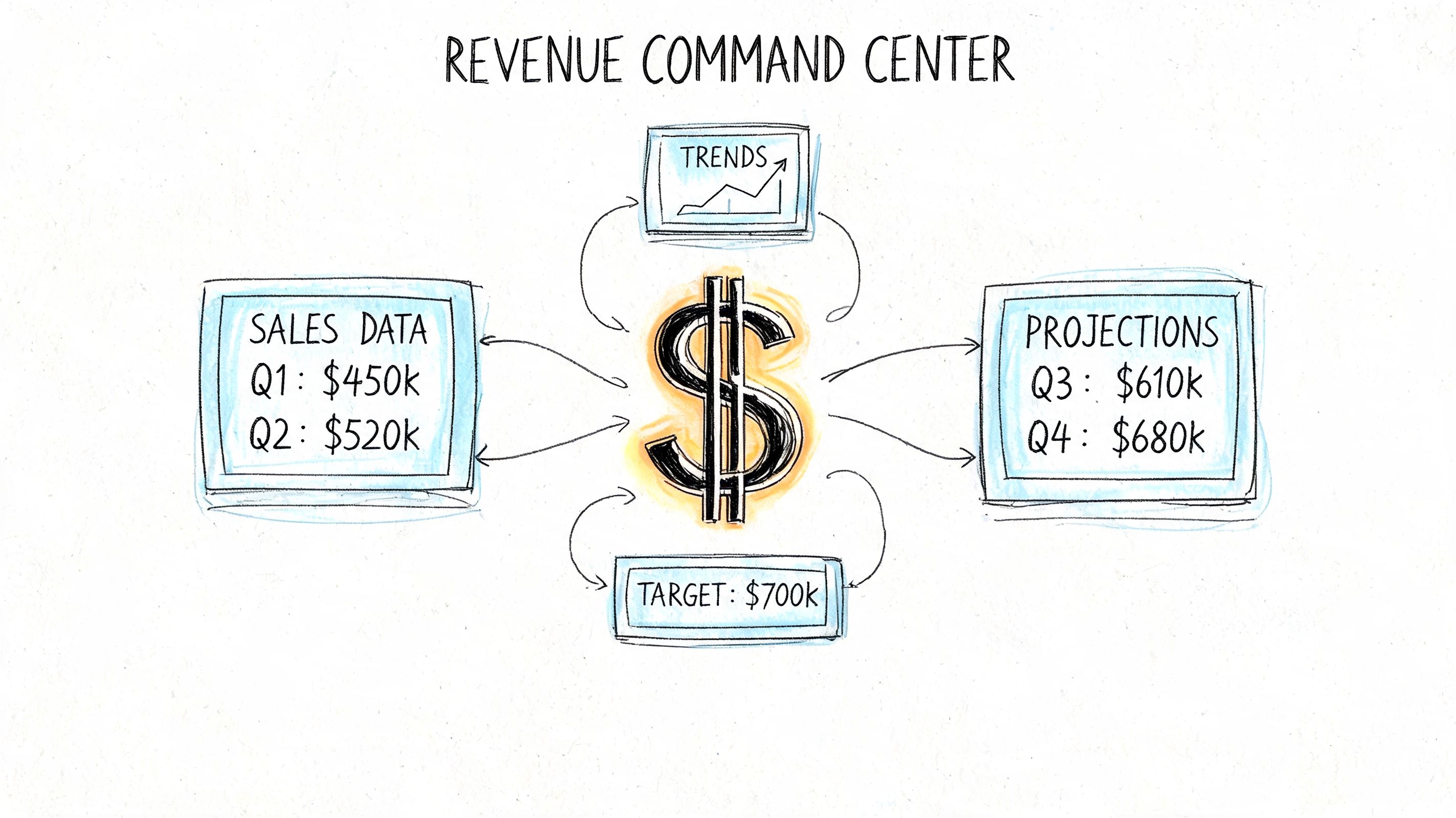
A Monday revenue meeting usually exposes the problem fast. Marketing says lead volume is up. Sales says the quarter still looks soft. The CRM shows plenty of open deals, but nobody agrees on which ones are real.
That is why pipeline management matters. It gives the business one operating view for revenue, not three disconnected stories.
For SMBs, that matters more than it does in larger companies. The same person may be running campaigns, reviewing deals, approving discounts, and watching cash flow. If pipeline management lives only inside sales, leadership misses the early signals that shape close rates later. Good pipeline management connects marketing activity, sales execution, and CRM stage discipline so owners can see the full path from first interest to signed deal.
Process helps because it turns judgment into a repeatable system. A rep should not move an opportunity forward because the conversation felt promising. A stage change should reflect something concrete the buyer did, agreed to, or scheduled. If your team needs a clearer operating model, a simple sales process flowchart for SMB teams can help define what each handoff and stage means.
Forecasting gets tied to evidence
A forecast should answer one question. How much revenue is likely to close, based on buyer behavior you can verify?
Without that standard, forecasts drift into opinion. One rep is optimistic. Another is cautious. A manager rolls everything up and hopes the average is close enough. That approach creates hiring mistakes, spending mistakes, and missed targets.
A well-managed pipeline fixes that by forcing deal reviews around evidence. What changed since the last conversation? Who is involved now? What commitment did the buyer make? Which date is real, and which one is just sitting in the CRM because nobody wanted to leave the field blank?
Bottlenecks become visible early
Revenue problems often begin without much notice. A campaign generates responses that never convert to qualified meetings. Discovery calls happen, but second meetings do not. Proposals go out, then sit untouched for two weeks.
A clean pipeline makes those breaks visible while there is still time to act. Sales managers can see whether the issue is weak qualification, poor follow-up, thin discovery, or a pricing problem. Marketing can see whether top-of-funnel activity is producing buyers with actual intent or just creating noise for reps to sort through.
That is its true value. Teams stop arguing about symptoms and start fixing the constraint.
Small teams get one map instead of separate dashboards
In an SMB, handoffs are rarely formal. Marketing may hand leads to sales in a Slack message. A founder may revive stalled deals personally. Customer success may hear renewal risk before an account executive does. Pipeline management works best when it pulls those signals into one system instead of leaving them scattered across inboxes, ad reports, and rep notes.
When that happens, leaders gain control earlier. They can spot a drop in lead quality before pipeline coverage weakens. They can catch stalled deals before the forecast slips. They can see whether activity is producing progress, or just making the team feel busy.
That is why pipeline management works like a revenue command center. It helps the whole company manage growth with one shared version of what is happening.
The Anatomy of a Healthy Sales Pipeline
A healthy pipeline isn't defined by how many stages you have. It's defined by whether every stage means something. If your team moves deals based on gut feel, your pipeline is just a colorful list.
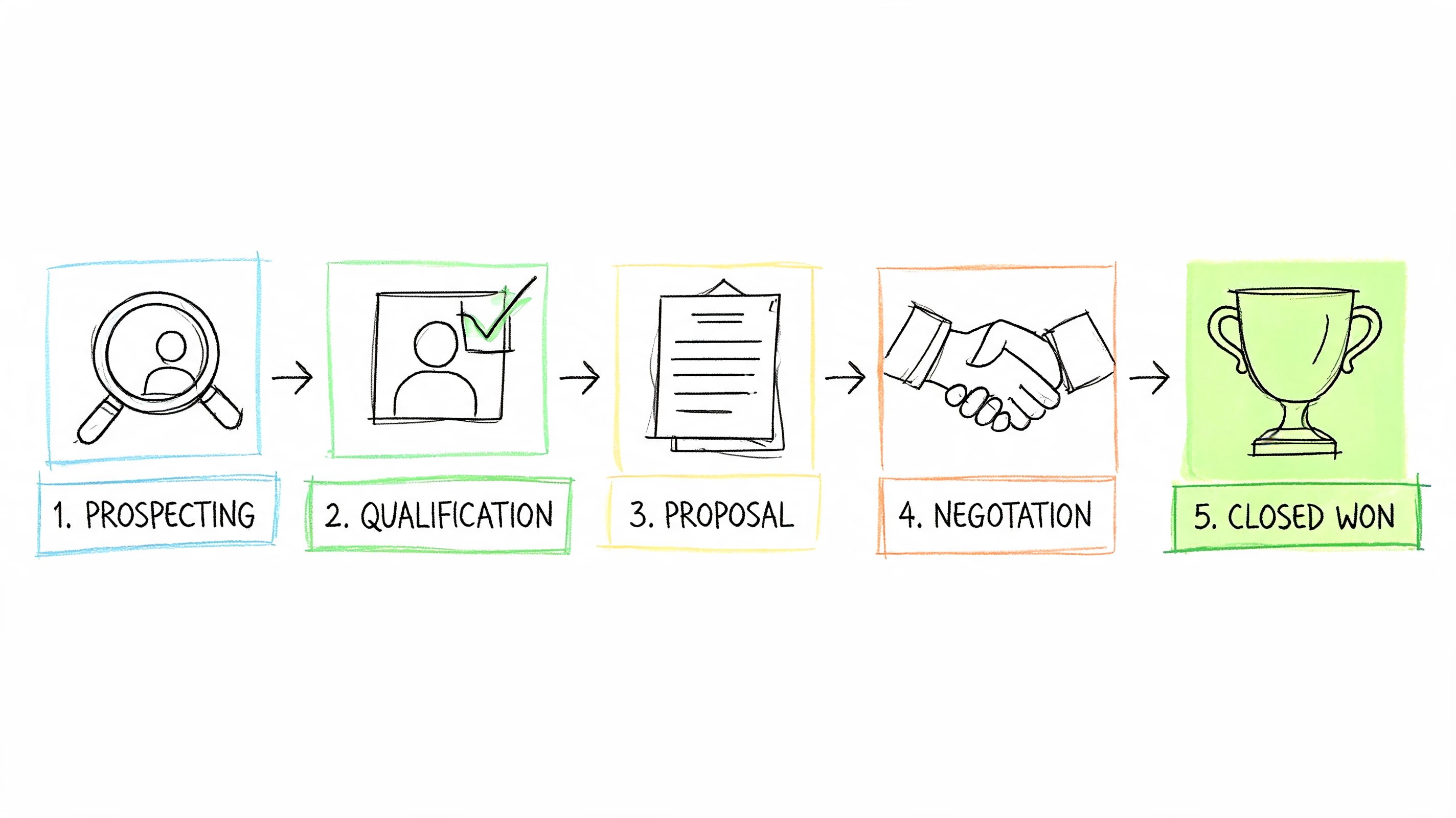
For most SMBs, five stages are enough. You can always add nuance later. Start with a structure the whole team can remember and enforce.
A practical five-stage model
1. Qualification At this stage, you decide whether the opportunity belongs in the pipeline at all. A lead shouldn’t enter just because someone replied to an email or booked time. The rep should confirm basic fit, problem relevance, and whether there’s a legitimate buying path.
2. Discovery
Now you’re learning how the buyer operates, what problem they want solved, what’s blocking change, and who’s involved. Good discovery earns the right to continue. Bad discovery creates fake momentum.
3. Demo or Proposal This stage exists only when the conversation is customized. A generic walkthrough is not pipeline progress. The buyer should understand why your offer matches their need.
4. Negotiation The negotiation stage involves working through details, objections, timing, scope, and internal approvals. Not every business needs a long negotiation stage, but if pricing, legal, or implementation details slow deals, it deserves its own step.
5. Close
Closed won or closed lost. No limbo. No “still thinking” for weeks with no next step.
Exit criteria matter more than stage names
The strongest pipelines use exit criteria, not vague labels. A deal leaves one stage only when the rep has earned that movement.
For example, a software SMB might require all of the following before moving from Discovery to Proposal:
Confirmed pain: The buyer named a problem the product solves.
Relevant stakeholders: The rep knows who influences the purchase.
Use case clarity: The proposed solution maps to the buyer’s workflow.
Documented next step: A proposal review, demo follow-up, or internal evaluation is scheduled.
When teams skip this discipline, stages become opinion. When they enforce it, stages become evidence.
Benchmark conversion points can help you spot friction. ZoomInfo’s pipeline management benchmarks note target ranges like 50 to 60% from qualified lead to discovery and 30 to 40% from discovery to proposal. Use those as directional checks, not rigid law. A healthy pipeline is the one that reflects your market and remains consistent enough to coach against.
If you're mapping stages from scratch, this guide on building a sales process flowchart can help turn a loose process into something your team can follow.
The visual explanation below is useful if you want a simple walkthrough of stage design before you build your own rules.
What healthy looks like in practice
A healthy pipeline has a few traits you can feel quickly:
Deals enter for a reason.
Stages reflect buyer progress, not rep hope.
Old deals get challenged.
Managers can coach from evidence.
Marketing knows what quality means downstream.
That’s the anatomy. Not prettier dashboards. Better decisions.
Key Metrics You Must Track for Pipeline Health
A pipeline can look busy and still miss the number. The fix is not more reports. The fix is tracking a short list of metrics that show whether demand quality, sales execution, and CRM hygiene are working together.
That full-funnel view matters even more for SMBs. Marketing may be generating leads, a founder may still step into late-stage deals, and one sales manager may also own forecasting. If those functions live in separate spreadsheets or disconnected tools, pipeline health gets judged on opinion. A shared system turns activity into usable revenue signals.
The four metrics that matter most
Start with pipeline velocity. It measures how quickly your current pipeline can turn into revenue.
Sales Pipeline Velocity = (Number of Opportunities × Average Deal Size × Win Rate) / Average Sales Cycle Length
I like this metric because it forces a better conversation. If velocity slips, the problem is never "the pipeline" in some abstract sense. It is one of four things. You have fewer real opportunities, smaller deals, weaker win rates, or longer cycles. That gives a manager something to inspect and a team something to improve. If you want a clean way to understand pipeline metrics, that calculator is a practical reference.
Next is average deal size. This is more than an output metric. It shows whether reps are chasing easy small accounts, discounting to save deals, or losing pricing discipline. For an SMB with a modest sales team, average deal size often tells you whether the market focus is tightening or drifting.
Then track stage conversion rate. This metric demonstrates the value of an integrated revenue view. If lead-to-meeting conversion is soft, the issue may sit in targeting, channel mix, or speed to follow-up. If discovery-to-proposal conversion drops, the problem is usually qualification, call quality, or a mismatch between the pain marketing promised and the problem sales found. One conversion number can expose breakdowns across the funnel, not just inside the sales team.
Fourth is sales cycle length. Long cycles are not automatically bad. Enterprise deals take longer. Multi-stakeholder decisions take longer. But cycle length should match your deal type and stay within a coachable range. If it keeps stretching, look for stalled approvals, weak urgency, poor next-step control, or records that remain open long after the buyer has gone quiet.
Essential Sales Pipeline Metrics
Metric | How to Calculate It | What It Tells You |
|---|---|---|
Pipeline Velocity | (Number of Opportunities × Average Deal Size × Win Rate) / Average Sales Cycle Length | How efficiently your pipeline converts active opportunities into revenue |
Average Deal Size | Total value of closed won deals divided by number of closed won deals | Whether pricing, account focus, and deal quality support the target |
Stage Conversion Rate | Opportunities advancing to next stage divided by opportunities entering current stage | Where friction shows up across marketing handoff, qualification, and sales execution |
Sales Cycle Length | Average number of days from opportunity creation to close | Whether deals are progressing with buyer commitment or dragging without momentum |
How to act on what you see
Metrics matter only if they trigger a change in behavior.
Velocity drops: Check pipeline composition first. Then review win rate and cycle length by segment, source, and rep.
Deal size falls: Review discounting, packaging, and whether the team is filling the funnel with low-value opportunities to make coverage look healthy.
Conversion breaks at one stage: Inspect the handoff before that stage, not just the stage itself. Poor lead qualification upstream often creates "sales problems" later.
Cycle length rises: Remove stale deals, tighten next-step rules, and flag opportunities with no recent buyer action.
Watch trends by rep and by lead source. Team averages hide a lot. One rep may be closing founder-led referrals while another is working low-fit inbound leads that should never have entered the pipeline.
Good metrics depend on clean CRM habits. These CRM best practices help keep stage dates, next steps, source data, and close reasons reliable enough to manage against.
Best Practices for Proactive Pipeline Management
Most pipeline problems are preventable. They show up later as missed forecasts, but they start earlier as weak habits. Proactive management is about catching the issue before it becomes a quarter-end surprise.
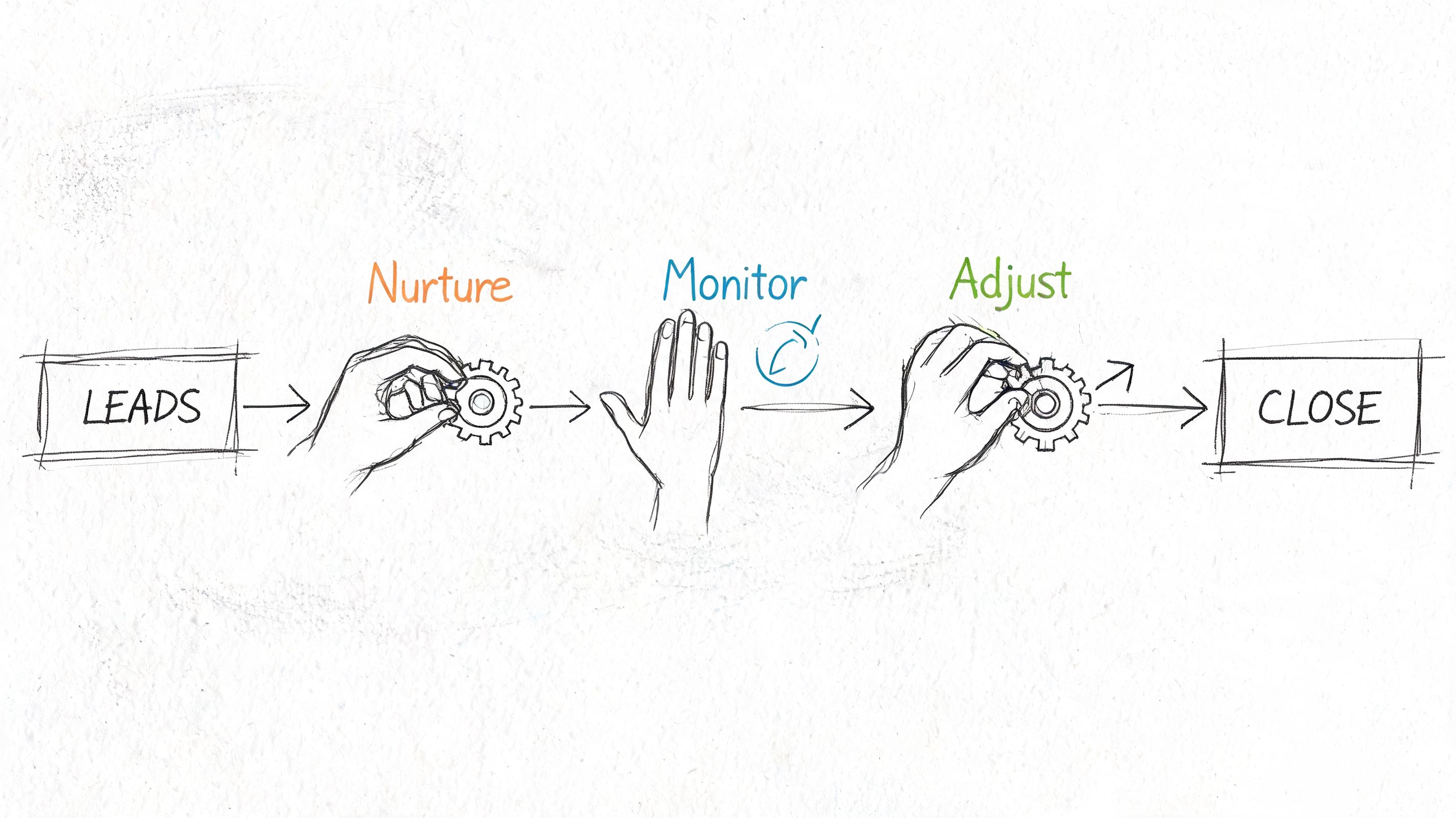
Run a real weekly pipeline review
A pipeline review should be short, specific, and uncomfortable in the right way. Not a status theater session. Not a rep monologue.
A useful review usually centers on:
Movement: What advanced, what stalled, what entered, what exited.
Evidence: Why each key deal is in its current stage.
Risk: Which deals are being counted but lack a credible next step.
Intervention: Where a manager, founder, or marketer can unblock progress.
If you leave a review without removing weak deals or assigning concrete follow-ups, you didn't review the pipeline. You observed it.
Protect the pipe with stricter qualification
The cleanest forecast starts with better entry standards. SMBs often clog the funnel because every inquiry feels valuable. That’s understandable. It’s also expensive.
Define your ideal customer profile in practical terms. Industry, company type, buying trigger, problem fit, and urgency. Then enforce it. A crowded pipeline can still be an empty one if the opportunities don’t belong.
For teams in field-heavy industries, some of the discipline used in pipeline management for home service companies is worth borrowing because the focus on follow-up speed, lead quality, and schedule control translates well beyond that market.
Keep the system clean
Pipeline hygiene is boring. It’s also where trust is won or lost.
Use a few simple rules:
Require core fields: Every opportunity should have owner, stage, next step, and recent activity logged.
Close stale deals: If a buyer has gone quiet and there’s no committed next action, move it out or move it back.
Review aging: Long time in stage usually means the deal needs intervention, not optimism.
Standardize notes: Managers should be able to read a record and understand what happened without chasing the rep.
Clean data isn't administrative overhead. It's what lets a manager coach the truth.
Connect marketing and sales workflows
Full-funnel pipeline management becomes practical with a redefined marketing approach. Marketing shouldn’t just generate names and hand them over. It should help shape pipeline quality through nurture, campaign feedback, and signal-based follow-up.
An integrated platform can support that by tying outreach activity, engagement signals, and CRM stages together in one workflow. Stamina is one example of that model. It combines marketing, sales engagement, CRM data, and workflow automation, which makes it easier for smaller teams to coordinate handoffs and act on shared signals without stitching together separate tools. If your process still lives across spreadsheets, inboxes, and disconnected apps, start by fixing that operational gap. This guide to sales process optimization is a good place to tighten the system before you add more reporting.
Common Pitfalls That Derail Sales Pipelines
Most broken pipelines don't look broken at first glance. They look busy. Full dashboard. Lots of open deals. Reps saying the quarter is alive. Then the close date arrives and too little converts.
The fastest way to fix a weak pipeline is to diagnose it by symptom, cause, and cure.
The bloated pipeline
Symptom: The team has plenty of opportunities on paper, but very little confidence in what will close.
Cause: Weak qualification. Reps are adding low-fit leads, keeping old deals around, or counting activity as progress.
Cure: Tighten entry rules and challenge whether each opportunity belongs. Volume alone is not pipeline health.
Ghost deals
Symptom: Opportunities sit in one stage for too long, yet nobody closes them out.
Cause: Reps don't want to mark deals lost, or the team lacks clear rules for stale opportunities.
Cure: Force a decision. Every deal needs a next step tied to buyer action. If that disappears, the opportunity should change status. Ghost deals do more than clutter reports. They distort hiring plans, spending decisions, and rep coaching.
Happy ears forecasting
Symptom: The forecast depends heavily on what reps say they feel, rather than what the buyer has done.
Cause: Leadership relies on average assumptions instead of context. One large opportunity from a struggling rep gets treated the same as one from a strong closer.
Cure: Build a weighted view of the pipeline that accounts for rep effectiveness instead of using a flat average win rate. The Sales Blog argues against using an average sales win rate for forecasting and recommends weighting the pipeline by individual rep effectiveness. That’s especially important for SMBs, where a few reps can have very different conversion patterns.
The leaky bucket
Symptom: Deals enter the pipeline, but too many disappear between stages.
Cause: Weak follow-up, unclear stage ownership, or poor handoffs between marketing and sales.
Cure: Audit transition points. If a lead qualifies but never reaches a meaningful discovery, something is off in scheduling, messaging, or accountability. If proposals go dark, the issue may be deal strategy rather than pipeline volume.
A pipeline falls apart when teams treat all deals as equal and all movement as good. The cure is usually simpler than people expect. Fewer assumptions. Better stage discipline. More honest updates.
Your First Steps to Building a Growth Engine
Don’t try to fix everything this week. Build control first.
Start with three moves
Map your current stages Grab a whiteboard or open your CRM and write down the stages your deals truly go through. Not the ideal version. Document the existing stages. If a stage exists only because “that’s how CRMs are set up,” delete or rename it.
Choose three metrics to track now
For most SMBs, start with pipeline velocity, stage conversion rate, and sales cycle length. That combination gives you a clear view of movement, friction, and speed without drowning the team in reports.
Book a 30-minute weekly review
Keep it on the calendar. Review only active opportunities, buyer evidence, next steps, and stale deals. The discipline matters more than the format at first.
If you also need a cleaner operating backbone, building a simple revenue workflow helps a lot. This guide on how to create a workflow is a practical starting point.
The takeaway is simple. Pipeline management is not just a sales admin task. It’s the operating discipline that connects lead generation, qualification, deal execution, and forecast trust. When an SMB gets that right, revenue becomes easier to understand and easier to improve.
If you're ready to run pipeline management as a full-funnel system instead of a sales-only report, take a look at Stamina. It brings marketing, sales engagement, CRM, and workflow automation into one platform so your team can track signals earlier, manage deals more cleanly, and operate from a single source of truth.

