Artificial Intelligence Sales Assistant: Artificial

Automate prospecting, personalize outreach & grow your pipeline with an artificial intelligence sales assistant. Your 2026 guide for SMBs.

0 - Minute Read

Your reps aren't losing deals because they can't talk to buyers. They're losing time to list building, CRM cleanup, follow-up drafting, calendar wrangling, and the endless question of who to contact next.

That's the primary bottleneck for most SMB revenue teams. Not talent. Not effort. Workflow drag.

An artificial intelligence sales assistant is valuable when it removes that drag across the whole revenue motion, not when it just writes a few emails faster. The teams getting the most out of these systems use them as an operating layer that connects prospecting, outreach, CRM activity, and nurture workflows into one loop. That matters more for SMBs than for large enterprises, because smaller teams can't afford tool sprawl or handoff gaps between marketing, SDRs, and account executives.

The End of Sales Busywork

A typical SMB sales team looks productive from the outside. Reps are active. The CRM has movement. Campaigns are going out. But underneath that activity, a lot of effort goes into work that doesn't directly create revenue.

People copy details from one system to another. They research accounts manually. They rewrite follow-ups that are mostly the same. They forget to re-engage leads that showed interest weeks ago. Founders often respond by hiring another rep, when the bigger problem is that the existing team is buried under operational overhead.

That's why the category matters. The AI sales assistant software market was worth USD 2.447 billion in 2024 and is projected to reach USD 24.21 billion by 2035, with a CAGR of 23.16%, according to Market Research Future's AI sales assistant software market report. That isn't what a niche add-on market looks like. It looks like infrastructure.

What changes in practice

For SMBs, the shift is less about novelty and more about control.

Instead of asking reps to stitch together prospecting tools, enrichment databases, sequencing software, CRM notes, and nurture campaigns, leaders can centralize the work into one operational system. If you've already started mapping repeatable handoffs, this kind of workflow design approach becomes much easier to execute because the assistant can act inside the process instead of sitting beside it.

Practical rule: If your reps spend more time preparing to sell than actually selling, the problem usually isn't rep discipline. It's system design.

The strongest use of an AI sales assistant isn't replacing salespeople. It's removing the low-value work that keeps good salespeople from behaving like closers.

What Is an AI Sales Assistant Really

Think of an AI sales assistant as a digital twin of your best SDR. Not because it replaces judgment at a human level, but because it can handle the repeatable cognitive work your top rep already does well. It notices patterns, pulls context together, drafts relevant outreach, and keeps the next step moving.

Simple automation follows rules. If a field changes, send an email. If a meeting is booked, update a record. An artificial intelligence sales assistant goes further. It interprets signals, prioritizes work, and adjusts based on what's happening in the pipeline.

A digital illustration of an AI sales assistant having a professional discussion with a human client.

More than a chatbot

A chatbot reacts when someone asks a question. A sales assistant should be proactive.

It should help identify target accounts, enrich contacts, generate outreach, organize follow-up, and keep CRM context current. If you're newer to the category, this primer on understanding sales automation is useful because it clarifies where classic automation ends and where AI-assisted selling starts.

The distinction matters. Founders often buy a narrow tool that automates one action, then wonder why the team still feels overloaded. That happens because disconnected automations reduce clicks, but they don't reduce coordination.

The better mental model

The best way to frame it is this:

  • It observes signals from your leads, pipeline, and engagement activity.

  • It recommends or executes actions such as enrichment, sequencing, and follow-up.

  • It learns from outcomes so timing and prioritization improve over time.

  • It keeps context attached to the record instead of leaving activity spread across inboxes and spreadsheets.

That makes it closer to a working sales operator than a messaging widget. If your team still thinks in terms of old role boundaries, it helps to revisit what an SDR does in a modern sales org. The AI version is handling the repetitive top-of-funnel and coordination work that usually consumes the human SDR's day.

A useful test is simple. If the tool only helps you write copy, it's an assistant feature. If it helps run a revenue workflow, it's an assistant system.

How AI Assistants Transform the Sales Process

AI is often first encountered at the message-writing layer. That's the least interesting part.

True change happens when the assistant works across the full sequence from target selection to pipeline hygiene. According to Apollo's explanation of AI sales assistants, these systems combine NLP, machine learning, and workflow automation, with the technical advantage that they learn from historical outcomes and buyer behavior to optimize outreach timing and prioritization.

Identify and enrich

The first job is deciding who deserves attention.

A capable assistant pulls together lead sources, account traits, engagement signals, and record data. It helps surface which accounts look relevant, which contacts are missing context, and which records need enrichment before outreach starts, preventing the generic messaging and wasted touches that result from weak inputs.

Personalize and engage

Once the right contacts are in view, the assistant can generate messaging grounded in role, company context, prior activity, and campaign intent.

Many teams make a mistake in their strategy. They focus on volume instead of relevance. Good systems don't just produce more emails. They support better sequencing decisions, better timing, and more consistency in how outreach reflects what the buyer likely cares about.

Manage and nurture

After the first outbound touch, the assistant's job shifts from creation to orchestration.

It can route responses, suggest next steps, support meeting scheduling, log activity, and maintain continuity when a prospect goes quiet. For SMBs, this is often where hidden value shows up. A lot of pipeline leakage happens after initial engagement because nobody owns the in-between work.

If your funnel has decent top-of-funnel activity but weak meeting progression, look at follow-up execution before you blame lead quality.

Analyze and optimize

At this juncture, AI moves beyond static automation.

Because the system can use prior outcomes and current behavior to refine timing and prioritization, it becomes better at directing rep attention. The learning loop is what separates an assistant from a simple rules engine. It's not just automating tasks. It's informing the next best task.

A practical revenue stack should support all four layers in one operational flow. If those functions live in separate tools, your team spends too much energy handing context from one system to another.

The Tangible Business Benefits for SMBs

The business case for an artificial intelligence sales assistant is straightforward. It helps a small team behave like a larger, more disciplined revenue organization without immediately adding headcount.

That's why adoption has moved quickly. A HubSpot survey cited by Artisan found that 74% of sales professionals are already using some form of AI, with manual task automation and AI-assisted prospecting as the most common use cases, according to Artisan's overview of AI sales assistants. For an SMB founder, the message is clear. This isn't an experimental edge anymore. It's becoming normal operating practice.

Where the payoff shows up

The first benefit is time reallocation. Reps spend less time on list prep, data cleanup, repetitive note handling, and routine follow-up drafting. That gives managers more advantage because they can coach live opportunities instead of policing admin gaps.

The second benefit is consistency. Human reps vary. One follows up well. Another forgets. One writes thoughtful outreach. Another sends generic copy. An AI assistant creates a stable floor for execution, which is critical when you're trying to grow with a lean team.

Why SMBs benefit more than they think

SMBs often assume they need enterprise scale before they need AI. It's usually the reverse.

Smaller teams feel process friction more sharply because every missed follow-up, stale CRM record, or weak handoff has a bigger effect on pipeline coverage. When one system can support prospecting, outreach, and CRM updates in one motion, the operational gain compounds across the week.

Here's what tends to improve first:

  • Rep focus: More time goes to active opportunities instead of inactive admin work.

  • Lead coverage: More qualified accounts receive timely outreach.

  • Data quality: Records stay more current because updates happen closer to the work.

  • Handoff discipline: Marketing activity and sales action stop drifting apart.

Operator's view: The value isn't that AI does something a human can't do. The value is that it does routine sales work every time, without fatigue or inconsistency.

The caution is just as important. If you buy an assistant as a writing tool, you'll get a writing tool's return. If you deploy it as part of revenue operations, you'll get an operational advantage.

Real-World AI Sales Workflows and Use Cases

The most useful AI sales workflows aren't flashy. They remove friction at the exact points where pipeline usually stalls.
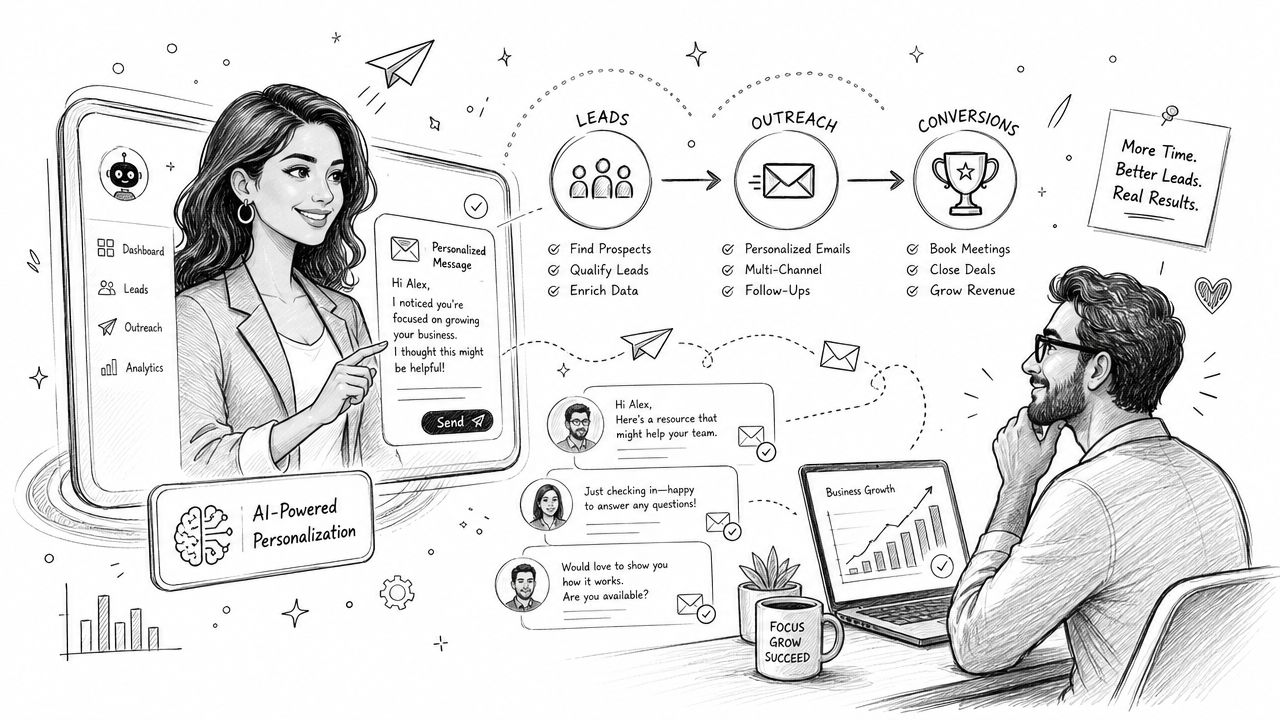
A digital illustration showing an AI sales assistant helping a professional business person with lead generation and outreach.

According to Nooks' analysis of AI sales assistants, the highest-impact use case for SMBs is data-driven lead prioritization plus personalized sequencing at scale. That's the difference between a rep staring at a big list and a rep knowing which accounts deserve the next hour of effort.

New signal to sequence

A common workflow starts with a buying signal.

A target account shows intent through a site visit, social engagement, form fill, or a change inside the company. The assistant enriches the contact, checks account context, drafts an outreach sequence, and queues the record for review or send. Instead of waiting for a rep to notice the signal later, the system turns it into action while it's still relevant.

This is one reason AI adoption is spreading across adjacent industries too. If you want a cross-sector example of how virtual assistants are being framed operationally, this insurance AI virtual assistant guide is useful reading. The pattern is similar. The highest value comes from workflow coordination, not from a standalone chat interface.

Cold lead reactivation

Most SMBs have a neglected segment of older leads that were never fully disqualified. They just fell out of attention.

An AI assistant can sort those records by fit and engagement history, then trigger specific reactivation plays. Some contacts should get a light check-in. Others should re-enter nurture. Others should be suppressed because there's no meaningful signal. That triage work is tedious for humans and ideal for a system.

A strong outbound motion still depends on structured appointment flow, which is why many teams pair this with a tighter B2B appointment setting process so interest doesn't disappear between reply and calendar booking.

Post-demo follow-up that actually happens

One of the most expensive leaks in SMB sales is weak follow-up after a demo.

The rep finishes the call, jumps into the next one, and intends to send recap notes later. Later doesn't happen. The assistant can summarize key points, generate a relevant follow-up, assign next tasks, and keep the opportunity active in the CRM. That doesn't close the deal by itself, but it prevents avoidable slippage.

This walkthrough shows the broader category in action:

The practical win is simple. Reps stop treating every lead like it needs equal effort, and the system helps protect time for the accounts most likely to move.

Choosing and Implementing Your AI Sales Assistant

Most buyers ask the wrong first question. They ask which feature set looks most impressive.

A better question is which deployment model pays back fastest for your team. Buyers often lack hard decision support here, and the key choice is frequently between an AI SDR, a meeting assistant, or an all-in-one revenue platform. For SMBs, unified data and cross-functional workflows often produce better ROI than point tools, as noted in this MarketsandMarkets discussion on choosing the right AI sales assistant.

Evaluation criteria that actually matter

Feature demos can be misleading. Use this checklist instead.

Evaluation Criteria

What to Look For

Why It Matters for SMBs

Integration depth

Native sync with CRM, marketing activity, and outreach workflows

Prevents manual handoffs and duplicate records

Workflow coverage

Support for prospecting, follow-up, nurturing, and record updates

Reduces tool sprawl and fragmented execution

Customization

Control over messaging style, routing logic, and play design

Helps the system match your actual sales motion

Prioritization quality

Clear logic for ranking accounts and contacts

Keeps reps focused on live opportunities

Analytics visibility

Reporting tied to workflow performance and rep action

Makes it easier to judge whether the system is helping

Admin usability

A setup model your team can maintain without constant vendor help

SMB teams need self-serve control, not dependence

A sane rollout plan

Implementation doesn't need to be complicated, but it does need discipline.

  1. Define one narrow outcome first
    Start with a bottleneck you can observe clearly. Lead prioritization, reactivation, or post-demo follow-up are good candidates because the workflow boundary is obvious.

  2. Connect the underlying data
    If records are split across outreach tools, CRM notes, and marketing platforms, clean that up first. This is where marketing automation and CRM integration becomes foundational. The assistant can only act on the context it can see.

  3. Configure plays, not just prompts
    Teams often overfocus on message generation and underfocus on process rules. Decide who gets contacted, when they enter nurture, what counts as engagement, and when a human should take over.

  4. Train managers as operators
    The manager's role changes. They're no longer only coaching reps. They're also reviewing workflow health, prioritization logic, and the quality of assistant-generated actions.

Buy the system your team can govern. A powerful tool that nobody can tune becomes shelfware with better branding.

Common Pitfalls When Adopting Sales AI

Most failed AI rollouts don't fail because the underlying technology is weak. They fail because the team expects software to compensate for bad process and messy data.
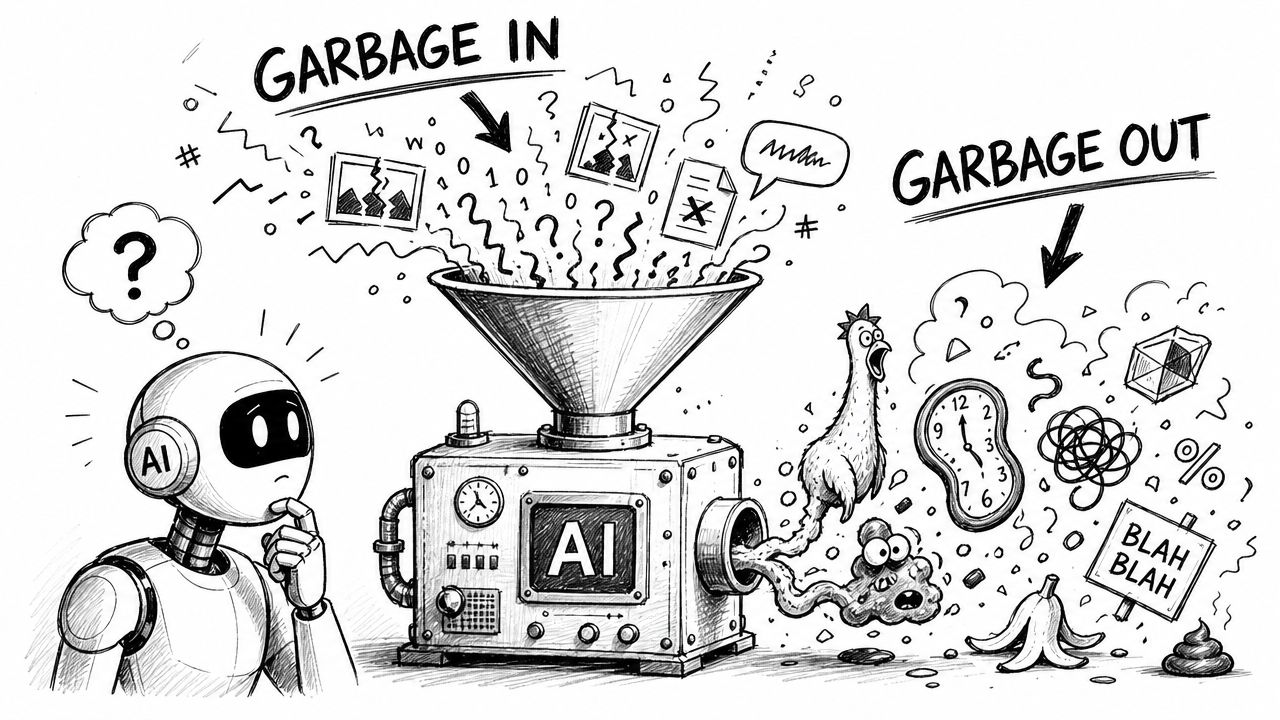
A pencil sketch of a robot watching an AI machine process chaotic input into nonsensical garbage output.

Bad inputs create bad outputs

If your CRM is full of outdated contacts, vague stages, and duplicate accounts, the assistant will amplify the mess. It might produce fluent outreach, but it will still be aimed at the wrong people or attached to the wrong records.

The fix is unglamorous. Clean the data model, define ownership, and decide which fields are operationally meaningful before rollout.

Magic-wand expectations break adoption

Some founders expect the assistant to behave like a fully trained rep on day one. That's not how deployment works.

The system needs context, rules, feedback, and boundaries. It can accelerate a functioning motion. It usually won't rescue a broken one without human redesign.

Set-and-forget is a management mistake

Sales AI isn't crockpot software. You can't turn it on and come back next quarter.

Managers need to review sequence quality, routing decisions, response patterns, and workflow gaps. The assistant improves when the team treats it like an evolving part of operations instead of a one-time install.

The healthiest AI rollouts are boring in the best way. Clear process. Clean data. Regular review.

Frequently Asked Questions

Will an AI sales assistant replace my SDRs

Usually no. It shifts their work.

The assistant handles research, prioritization, drafting, logging, and repetitive follow-up. Human SDRs still add judgment, handle nuance, qualify edge cases, and create momentum in live conversations. In good teams, AI raises the floor on execution and lets humans spend more time where persuasion matters.

How does it handle different languages and market nuances

Modern systems can support multilingual outreach and localization, but they still need guidance.

Teams should review tone, compliance needs, regional phrasing, and market-specific objections before letting automation run broadly. Language quality is only part of the issue. Relevance depends on context, which still comes from your process and segmentation.

What about privacy and security

This is a vendor selection issue as much as a product issue.

Ask where customer data is stored, how access is controlled, what gets logged, and how the platform handles permissions across marketing, sales, and CRM users. Also check whether the system lets you limit what the assistant can act on automatically.

What should I evaluate before buying

Look at workflow fit before you look at flashy output.

If you want another set of buying questions to compare against your own checklist, these Ekipa AI frequently asked questions offer a useful secondary reference point. Then pressure-test each vendor on integration depth, governance, and how much of your revenue process they can support without creating another silo.

What's the best starting use case

Start where reps lose the most time or where pipeline goes stale most often.

For many SMBs, that means lead prioritization, outbound sequencing, reactivation, or post-meeting follow-up. Pick one workflow, make it reliable, then expand.

If you want an AI-powered system that brings sales, marketing, and CRM into one place instead of adding another point tool, take a look at Stamina. It's built for SMB teams that need one source of truth, connected workflows, and an AI SDR that helps move prospects from first signal to qualified pipeline.

Your reps aren't losing deals because they can't talk to buyers. They're losing time to list building, CRM cleanup, follow-up drafting, calendar wrangling, and the endless question of who to contact next.

That's the primary bottleneck for most SMB revenue teams. Not talent. Not effort. Workflow drag.

An artificial intelligence sales assistant is valuable when it removes that drag across the whole revenue motion, not when it just writes a few emails faster. The teams getting the most out of these systems use them as an operating layer that connects prospecting, outreach, CRM activity, and nurture workflows into one loop. That matters more for SMBs than for large enterprises, because smaller teams can't afford tool sprawl or handoff gaps between marketing, SDRs, and account executives.

The End of Sales Busywork

A typical SMB sales team looks productive from the outside. Reps are active. The CRM has movement. Campaigns are going out. But underneath that activity, a lot of effort goes into work that doesn't directly create revenue.

People copy details from one system to another. They research accounts manually. They rewrite follow-ups that are mostly the same. They forget to re-engage leads that showed interest weeks ago. Founders often respond by hiring another rep, when the bigger problem is that the existing team is buried under operational overhead.

That's why the category matters. The AI sales assistant software market was worth USD 2.447 billion in 2024 and is projected to reach USD 24.21 billion by 2035, with a CAGR of 23.16%, according to Market Research Future's AI sales assistant software market report. That isn't what a niche add-on market looks like. It looks like infrastructure.

What changes in practice

For SMBs, the shift is less about novelty and more about control.

Instead of asking reps to stitch together prospecting tools, enrichment databases, sequencing software, CRM notes, and nurture campaigns, leaders can centralize the work into one operational system. If you've already started mapping repeatable handoffs, this kind of workflow design approach becomes much easier to execute because the assistant can act inside the process instead of sitting beside it.

Practical rule: If your reps spend more time preparing to sell than actually selling, the problem usually isn't rep discipline. It's system design.

The strongest use of an AI sales assistant isn't replacing salespeople. It's removing the low-value work that keeps good salespeople from behaving like closers.

What Is an AI Sales Assistant Really

Think of an AI sales assistant as a digital twin of your best SDR. Not because it replaces judgment at a human level, but because it can handle the repeatable cognitive work your top rep already does well. It notices patterns, pulls context together, drafts relevant outreach, and keeps the next step moving.

Simple automation follows rules. If a field changes, send an email. If a meeting is booked, update a record. An artificial intelligence sales assistant goes further. It interprets signals, prioritizes work, and adjusts based on what's happening in the pipeline.

A digital illustration of an AI sales assistant having a professional discussion with a human client.

More than a chatbot

A chatbot reacts when someone asks a question. A sales assistant should be proactive.

It should help identify target accounts, enrich contacts, generate outreach, organize follow-up, and keep CRM context current. If you're newer to the category, this primer on understanding sales automation is useful because it clarifies where classic automation ends and where AI-assisted selling starts.

The distinction matters. Founders often buy a narrow tool that automates one action, then wonder why the team still feels overloaded. That happens because disconnected automations reduce clicks, but they don't reduce coordination.

The better mental model

The best way to frame it is this:

  • It observes signals from your leads, pipeline, and engagement activity.

  • It recommends or executes actions such as enrichment, sequencing, and follow-up.

  • It learns from outcomes so timing and prioritization improve over time.

  • It keeps context attached to the record instead of leaving activity spread across inboxes and spreadsheets.

That makes it closer to a working sales operator than a messaging widget. If your team still thinks in terms of old role boundaries, it helps to revisit what an SDR does in a modern sales org. The AI version is handling the repetitive top-of-funnel and coordination work that usually consumes the human SDR's day.

A useful test is simple. If the tool only helps you write copy, it's an assistant feature. If it helps run a revenue workflow, it's an assistant system.

How AI Assistants Transform the Sales Process

AI is often first encountered at the message-writing layer. That's the least interesting part.

True change happens when the assistant works across the full sequence from target selection to pipeline hygiene. According to Apollo's explanation of AI sales assistants, these systems combine NLP, machine learning, and workflow automation, with the technical advantage that they learn from historical outcomes and buyer behavior to optimize outreach timing and prioritization.

Identify and enrich

The first job is deciding who deserves attention.

A capable assistant pulls together lead sources, account traits, engagement signals, and record data. It helps surface which accounts look relevant, which contacts are missing context, and which records need enrichment before outreach starts, preventing the generic messaging and wasted touches that result from weak inputs.

Personalize and engage

Once the right contacts are in view, the assistant can generate messaging grounded in role, company context, prior activity, and campaign intent.

Many teams make a mistake in their strategy. They focus on volume instead of relevance. Good systems don't just produce more emails. They support better sequencing decisions, better timing, and more consistency in how outreach reflects what the buyer likely cares about.

Manage and nurture

After the first outbound touch, the assistant's job shifts from creation to orchestration.

It can route responses, suggest next steps, support meeting scheduling, log activity, and maintain continuity when a prospect goes quiet. For SMBs, this is often where hidden value shows up. A lot of pipeline leakage happens after initial engagement because nobody owns the in-between work.

If your funnel has decent top-of-funnel activity but weak meeting progression, look at follow-up execution before you blame lead quality.

Analyze and optimize

At this juncture, AI moves beyond static automation.

Because the system can use prior outcomes and current behavior to refine timing and prioritization, it becomes better at directing rep attention. The learning loop is what separates an assistant from a simple rules engine. It's not just automating tasks. It's informing the next best task.

A practical revenue stack should support all four layers in one operational flow. If those functions live in separate tools, your team spends too much energy handing context from one system to another.

The Tangible Business Benefits for SMBs

The business case for an artificial intelligence sales assistant is straightforward. It helps a small team behave like a larger, more disciplined revenue organization without immediately adding headcount.

That's why adoption has moved quickly. A HubSpot survey cited by Artisan found that 74% of sales professionals are already using some form of AI, with manual task automation and AI-assisted prospecting as the most common use cases, according to Artisan's overview of AI sales assistants. For an SMB founder, the message is clear. This isn't an experimental edge anymore. It's becoming normal operating practice.

Where the payoff shows up

The first benefit is time reallocation. Reps spend less time on list prep, data cleanup, repetitive note handling, and routine follow-up drafting. That gives managers more advantage because they can coach live opportunities instead of policing admin gaps.

The second benefit is consistency. Human reps vary. One follows up well. Another forgets. One writes thoughtful outreach. Another sends generic copy. An AI assistant creates a stable floor for execution, which is critical when you're trying to grow with a lean team.

Why SMBs benefit more than they think

SMBs often assume they need enterprise scale before they need AI. It's usually the reverse.

Smaller teams feel process friction more sharply because every missed follow-up, stale CRM record, or weak handoff has a bigger effect on pipeline coverage. When one system can support prospecting, outreach, and CRM updates in one motion, the operational gain compounds across the week.

Here's what tends to improve first:

  • Rep focus: More time goes to active opportunities instead of inactive admin work.

  • Lead coverage: More qualified accounts receive timely outreach.

  • Data quality: Records stay more current because updates happen closer to the work.

  • Handoff discipline: Marketing activity and sales action stop drifting apart.

Operator's view: The value isn't that AI does something a human can't do. The value is that it does routine sales work every time, without fatigue or inconsistency.

The caution is just as important. If you buy an assistant as a writing tool, you'll get a writing tool's return. If you deploy it as part of revenue operations, you'll get an operational advantage.

Real-World AI Sales Workflows and Use Cases

The most useful AI sales workflows aren't flashy. They remove friction at the exact points where pipeline usually stalls.

A digital illustration showing an AI sales assistant helping a professional business person with lead generation and outreach.

According to Nooks' analysis of AI sales assistants, the highest-impact use case for SMBs is data-driven lead prioritization plus personalized sequencing at scale. That's the difference between a rep staring at a big list and a rep knowing which accounts deserve the next hour of effort.

New signal to sequence

A common workflow starts with a buying signal.

A target account shows intent through a site visit, social engagement, form fill, or a change inside the company. The assistant enriches the contact, checks account context, drafts an outreach sequence, and queues the record for review or send. Instead of waiting for a rep to notice the signal later, the system turns it into action while it's still relevant.

This is one reason AI adoption is spreading across adjacent industries too. If you want a cross-sector example of how virtual assistants are being framed operationally, this insurance AI virtual assistant guide is useful reading. The pattern is similar. The highest value comes from workflow coordination, not from a standalone chat interface.

Cold lead reactivation

Most SMBs have a neglected segment of older leads that were never fully disqualified. They just fell out of attention.

An AI assistant can sort those records by fit and engagement history, then trigger specific reactivation plays. Some contacts should get a light check-in. Others should re-enter nurture. Others should be suppressed because there's no meaningful signal. That triage work is tedious for humans and ideal for a system.

A strong outbound motion still depends on structured appointment flow, which is why many teams pair this with a tighter B2B appointment setting process so interest doesn't disappear between reply and calendar booking.

Post-demo follow-up that actually happens

One of the most expensive leaks in SMB sales is weak follow-up after a demo.

The rep finishes the call, jumps into the next one, and intends to send recap notes later. Later doesn't happen. The assistant can summarize key points, generate a relevant follow-up, assign next tasks, and keep the opportunity active in the CRM. That doesn't close the deal by itself, but it prevents avoidable slippage.

This walkthrough shows the broader category in action:

The practical win is simple. Reps stop treating every lead like it needs equal effort, and the system helps protect time for the accounts most likely to move.

Choosing and Implementing Your AI Sales Assistant

Most buyers ask the wrong first question. They ask which feature set looks most impressive.

A better question is which deployment model pays back fastest for your team. Buyers often lack hard decision support here, and the key choice is frequently between an AI SDR, a meeting assistant, or an all-in-one revenue platform. For SMBs, unified data and cross-functional workflows often produce better ROI than point tools, as noted in this MarketsandMarkets discussion on choosing the right AI sales assistant.

Evaluation criteria that actually matter

Feature demos can be misleading. Use this checklist instead.

Evaluation Criteria

What to Look For

Why It Matters for SMBs

Integration depth

Native sync with CRM, marketing activity, and outreach workflows

Prevents manual handoffs and duplicate records

Workflow coverage

Support for prospecting, follow-up, nurturing, and record updates

Reduces tool sprawl and fragmented execution

Customization

Control over messaging style, routing logic, and play design

Helps the system match your actual sales motion

Prioritization quality

Clear logic for ranking accounts and contacts

Keeps reps focused on live opportunities

Analytics visibility

Reporting tied to workflow performance and rep action

Makes it easier to judge whether the system is helping

Admin usability

A setup model your team can maintain without constant vendor help

SMB teams need self-serve control, not dependence

A sane rollout plan

Implementation doesn't need to be complicated, but it does need discipline.

  1. Define one narrow outcome first
    Start with a bottleneck you can observe clearly. Lead prioritization, reactivation, or post-demo follow-up are good candidates because the workflow boundary is obvious.

  2. Connect the underlying data
    If records are split across outreach tools, CRM notes, and marketing platforms, clean that up first. This is where marketing automation and CRM integration becomes foundational. The assistant can only act on the context it can see.

  3. Configure plays, not just prompts
    Teams often overfocus on message generation and underfocus on process rules. Decide who gets contacted, when they enter nurture, what counts as engagement, and when a human should take over.

  4. Train managers as operators
    The manager's role changes. They're no longer only coaching reps. They're also reviewing workflow health, prioritization logic, and the quality of assistant-generated actions.

Buy the system your team can govern. A powerful tool that nobody can tune becomes shelfware with better branding.

Common Pitfalls When Adopting Sales AI

Most failed AI rollouts don't fail because the underlying technology is weak. They fail because the team expects software to compensate for bad process and messy data.

A pencil sketch of a robot watching an AI machine process chaotic input into nonsensical garbage output.

Bad inputs create bad outputs

If your CRM is full of outdated contacts, vague stages, and duplicate accounts, the assistant will amplify the mess. It might produce fluent outreach, but it will still be aimed at the wrong people or attached to the wrong records.

The fix is unglamorous. Clean the data model, define ownership, and decide which fields are operationally meaningful before rollout.

Magic-wand expectations break adoption

Some founders expect the assistant to behave like a fully trained rep on day one. That's not how deployment works.

The system needs context, rules, feedback, and boundaries. It can accelerate a functioning motion. It usually won't rescue a broken one without human redesign.

Set-and-forget is a management mistake

Sales AI isn't crockpot software. You can't turn it on and come back next quarter.

Managers need to review sequence quality, routing decisions, response patterns, and workflow gaps. The assistant improves when the team treats it like an evolving part of operations instead of a one-time install.

The healthiest AI rollouts are boring in the best way. Clear process. Clean data. Regular review.

Frequently Asked Questions

Will an AI sales assistant replace my SDRs

Usually no. It shifts their work.

The assistant handles research, prioritization, drafting, logging, and repetitive follow-up. Human SDRs still add judgment, handle nuance, qualify edge cases, and create momentum in live conversations. In good teams, AI raises the floor on execution and lets humans spend more time where persuasion matters.

How does it handle different languages and market nuances

Modern systems can support multilingual outreach and localization, but they still need guidance.

Teams should review tone, compliance needs, regional phrasing, and market-specific objections before letting automation run broadly. Language quality is only part of the issue. Relevance depends on context, which still comes from your process and segmentation.

What about privacy and security

This is a vendor selection issue as much as a product issue.

Ask where customer data is stored, how access is controlled, what gets logged, and how the platform handles permissions across marketing, sales, and CRM users. Also check whether the system lets you limit what the assistant can act on automatically.

What should I evaluate before buying

Look at workflow fit before you look at flashy output.

If you want another set of buying questions to compare against your own checklist, these Ekipa AI frequently asked questions offer a useful secondary reference point. Then pressure-test each vendor on integration depth, governance, and how much of your revenue process they can support without creating another silo.

What's the best starting use case

Start where reps lose the most time or where pipeline goes stale most often.

For many SMBs, that means lead prioritization, outbound sequencing, reactivation, or post-meeting follow-up. Pick one workflow, make it reliable, then expand.

If you want an AI-powered system that brings sales, marketing, and CRM into one place instead of adding another point tool, take a look at Stamina. It's built for SMB teams that need one source of truth, connected workflows, and an AI SDR that helps move prospects from first signal to qualified pipeline.

Share this article

Share this article

Send a shareable link to your team or anyone who might find it useful.

Send a shareable link to your team or anyone who might find it useful.

Copy link

Copied

Share directly to

Table of contents

Give Your Business the Stamina it needs to Thrive