If your new business pipeline depends on whoever happens to walk in, call at the right moment, or remember to refer you, revenue gets hard to predict fast. Most local businesses don't have a lead problem as much as they have a systems problem. Leads show up in different places, nobody responds the same way twice, and months later it's still unclear which effort brought in the customer.
That gap is where local lead generation usually breaks down. Not at discovery, but after discovery. A prospect finds you through search, a map listing, a review, a social post, or a referral. Then the trail goes cold because the inquiry sits in an inbox, the follow-up happens too late, or the source never gets logged.
The fix isn't another random campaign. It's a repeatable machine that captures local demand, routes it, follows up, and ties it back to revenue.
Why Your Business Needs a Local Lead System
Local demand already exists. The key question is whether your business can catch it consistently.
Multiple 2025 sources cited by Lobstr's local lead generation overview report that 98% of consumers go online for local business information, and roughly 50% of local searches lead to a store visit within 24 hours. The same source states that 80% of local searches result in sales or inquiries. That tells you something important. Local lead generation isn't speculative marketing. It's demand capture close to the point of decision.
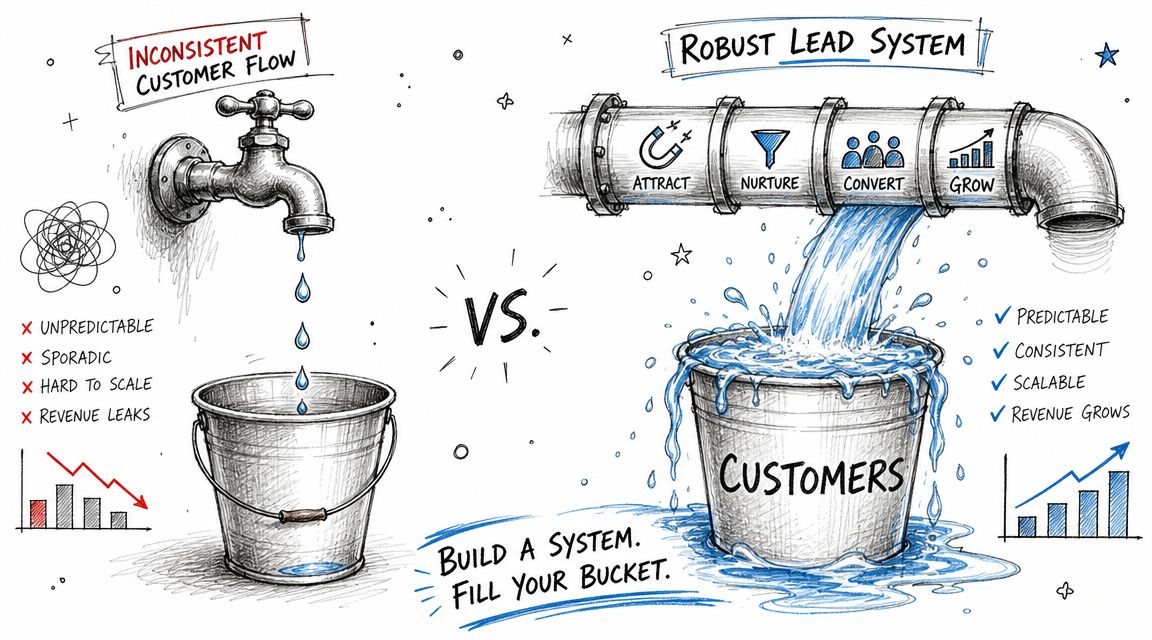
Random lead flow is expensive
An inconsistent flow of leads creates bad decisions. Owners start jumping between tactics. They boost a post one week, try ads the next, then blame the website, the market, or the sales team when results stay uneven.
A local lead system fixes that by answering four operational questions:
Where did the lead come from: search, ads, referral, outreach, social, or direct
What did they ask for: service, location, urgency, and intent
What happened next: call, text, email, quote, appointment, or no response
Did it become revenue: not just a form fill, but an actual customer
Without those answers, marketing feels busy but stays unaccountable.
A system beats a campaign
A campaign has a start and end date. A system runs every day. It captures inbound interest, supports outbound prospecting, and keeps every touchpoint tied to one record.
That's why local businesses should think less about "doing some marketing" and more about building infrastructure. If you're still sorting leads between call logs, inboxes, spreadsheets, and a separate CRM, it helps to understand what a customer engagement platform is supposed to centralize.
Practical rule: If a lead can contact you in more than one place, you need one place to manage all of it.
For owners in competitive regional markets, tactical advice also matters. A useful example is this guide for Omaha local businesses, which shows how local firms have to align search visibility, website experience, and follow-up instead of treating them as separate jobs.
What a working local lead system looks like
A working system is simple on the surface:
Get found locally
Capture every inquiry
Respond quickly
Track source and outcome
Improve based on revenue, not guesswork
Most businesses already do part of this. Very few do all of it in one connected flow. That's the difference between hoping for leads and operating a repeatable growth channel.
Choosing Your High-Impact Local Channels
Small businesses usually waste time by spreading effort too thin. They open every profile, test every ad format, and try to publish content everywhere. Local lead generation works better when channel choice matches your sales cycle, service area, and buying behavior.
The strongest local setups usually combine short-term demand capture with long-term visibility. According to Databox's lead generation statistics roundup, content marketing generates 51.5% of lead acquisition methods overall, while SEO produces 35% of the highest-scoring leads. The lesson isn't "pick one." It's that channel mix matters, and quality often comes from channels that compound over time.
The four channels that matter most
Some channels produce intent already in motion. Others create trust before the buyer reaches out.
Google Business Profile is often the fastest local win. It helps buyers who are already searching in-market and comparing nearby options. If you rely on calls, visits, or appointment requests, this usually deserves immediate attention.
Local SEO is slower, but it builds durable visibility around your services and locations. It matters more for businesses with ongoing demand, multiple service pages, or several target neighborhoods.
Local paid ads give you control. They work well when you need lead volume quickly, when seasonality matters, or when you want to test offers in specific areas without waiting for organic rankings.
Community partnerships are underrated. Referral networks, neighborhood organizations, property managers, adjacent service providers, and local groups often generate better-fit opportunities than broad awareness campaigns. If you're evaluating tools that support neighborhood-based customer reach, this local customer growth platform is one example of how businesses can connect with nearby audiences through local network effects.
Local Lead Generation Channel Comparison
Channel | Typical Cost | Effort Level | Time to Results | Best For |
|---|---|---|---|---|
Google Business Profile | Low | Medium | Fast | Service businesses, retail, clinics, restaurants |
Local SEO | Medium | High | Slower | Businesses that want durable search visibility |
Local Paid Ads | Medium to high | Medium | Fast | Urgent demand capture, testing offers, seasonal pushes |
Community Partnerships | Low to medium | Medium | Moderate | Trust-led businesses, niche local services, B2B local relationships |
How to choose without overcomplicating it
Use your business model as the filter.
If people need you now: prioritize Google Business Profile and paid search. Think plumbers, urgent care, locksmiths, auto repair.
If buyers compare before deciding: invest in SEO and review collection. Think dentists, law firms, remodelers, home services.
If your market is neighborhood-driven: build referral and partnership channels early. Think fitness studios, childcare, real estate-adjacent services.
If you sell to local businesses: mix outbound prospecting with local credibility assets. Search alone usually won't create enough pipeline.
A lot of teams also need a cleaner view of how inbound channels fit together. This overview of inbound marketing lead generation is useful when you're deciding which channels should attract interest versus which channels should convert it.
Buyers don't care which internal team owns a channel. They care that the business shows up, looks credible, and responds clearly.
What doesn't work
The most common mistake is treating every channel like a checkbox. A neglected Google Business Profile, a half-built website, a tiny ad budget spread across too many audiences, and no review process won't combine into a system. They just create scattered activity.
The better move is narrower. Pick two channels that fit how your customers buy. Build them properly. Then add the next layer only after lead capture and follow-up are in place.
Executing Your Foundational Local Plays
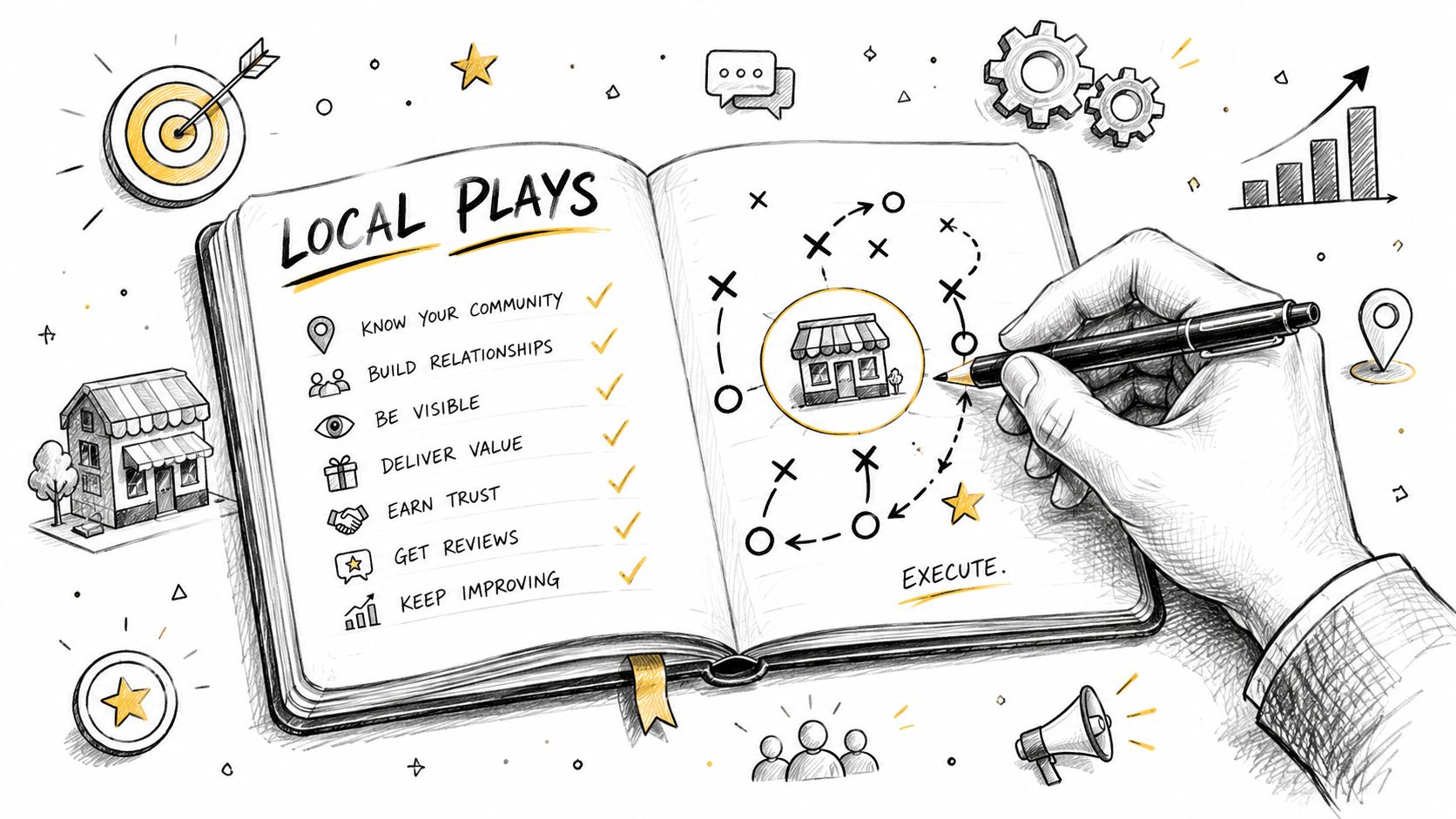
Once you've chosen your channels, execution decides whether local lead generation becomes steady or stays patchy. The foundational plays are not glamorous. They are the details that help buyers trust you and help search platforms understand you.
Clean up your Google Business Profile
Most businesses fill out the basics and stop there. That's usually not enough. Your profile should describe your services clearly, reflect your current service area, and give prospects obvious next steps.
Focus on these actions this week:
Complete service details: List real services, not vague categories. A buyer searching for a water heater install or family law consultation should see that service named directly.
Use posts deliberately: Publish updates tied to seasonal needs, promotions, or common questions. Keep them practical.
Add Q&A prompts: Seed the profile with real buyer questions your staff hears on calls.
Refresh visuals: Use current photos of the team, work, storefront, vehicles, or location.
Field note: If your Google Business Profile promises one thing and your website says another, prospects notice it before Google does.
Fix local SEO signals first
Before writing more pages, clean the basics. Search engines and directories look for consistency. Buyers do too.
Start with a citation audit. Check that your Name, Address, and Phone are identical across your website, Google Business Profile, major directories, social profiles, and any industry listings. Even small inconsistencies create friction.
Then review your location pages and service pages:
Match page intent to a real local need
Write copy for humans first
Include location-specific trust signals
Make contact options obvious
Send each lead to a tracked form or call path
Review generation needs a process
Reviews aren't a vanity asset. They affect response and trust at the moment of decision. LanderLab's local lead generation article cites ReviewTrackers data showing that businesses with 50+ reviews receive 1.4x more phone calls.
The mistake is asking inconsistently. Staff remembers when service goes well, then forgets for a week.
Use a simple script after a successful job or visit:
"Thanks again for choosing us. If the experience was solid, would you mind leaving a quick review? It helps other local customers know what to expect."
Keep the ask short. Send it while the interaction is fresh. Don't bury the review link in a long email.
Tighten paid local targeting
Paid ads can leak budget fast when targeting is loose. Most wasted spend comes from broad geography, weak intent filtering, or sending traffic to generic landing pages.
Check three things:
Geo-targeting: Limit ads to the areas you serve well.
Negative keywords: Exclude searches that sound related but don't fit your offer.
Offer-message match: If the ad speaks to one service or area, the landing page should continue that exact promise.
Paid ads don't fail because the platform is broken. They fail because the business pays for curiosity instead of intent.
That foundation is enough to support consistent local lead generation. You don't need every advanced tactic at once. You need accurate listings, clear service presentation, a steady review engine, and tighter targeting than your competitors.
Automating Your Lead Capture and Follow-Up
Most local businesses lose leads after they earn them. The prospect submits a form after hours, leaves a voicemail during lunch, or clicks an ad from a nearby neighborhood and hears nothing until the next day. By then, the buyer has often moved on.
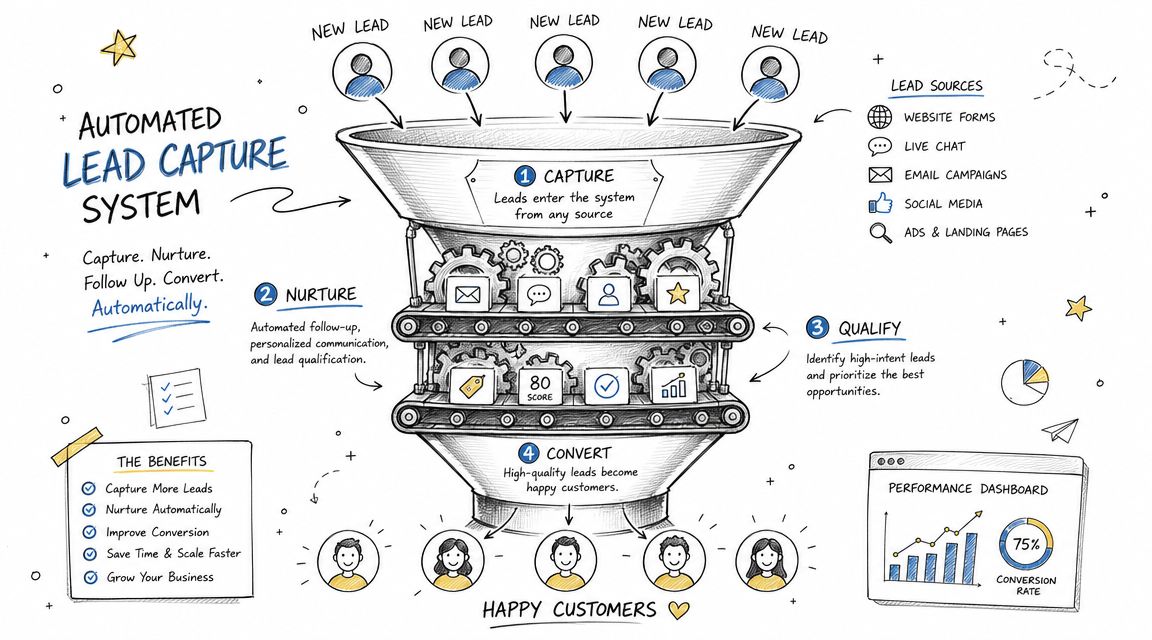
A working automation layer closes that gap by capturing the lead, tagging the source, routing the inquiry, and triggering follow-up immediately.
Start with geography, not just contact info
Local lead generation gets stronger when your workflow reflects how territory works. Artisan's local lead generation framework recommends starting with geographic segmentation before outreach: build a decision-maker list, split it by city or neighborhood, and personalize copy with local context to improve relevance and response rates.
That same logic applies to inbound lead handling. Don't just collect a name and phone number. Capture enough context to route and personalize:
Location details: city, neighborhood, ZIP, or service area
Service interest: what they need, not just "contact us"
Urgency: now, this week, researching, or comparing options
Source: form, ad, call, directory, referral, social, or outbound reply
If a roofing lead from one neighborhood needs storm repair and another is planning a future replacement, they shouldn't enter the same generic sequence.
Build one response flow per lead type
A simple automation stack can do more than most owners expect. One practical setup is to connect website forms, ad lead forms, and messaging channels to a CRM so each lead creates a record automatically. Then trigger responses based on service area and requested service.
One option for that kind of setup is marketing automation for small business, especially when you want forms, messaging, CRM records, and task creation tied together instead of spread across separate tools. A platform like Stamina can centralize those actions so a local inquiry doesn't disappear between marketing and sales.
A straightforward workflow looks like this:
Lead submits a form
System tags source, location, and service
Instant email sends with next step
SMS sends if mobile number is provided
Owner or rep gets assigned a follow-up task
Lead moves into the right pipeline stage
If no reply, the system sends a timed reminder
Use messages that sound local and human
Most automated follow-up fails because it reads like software wrote it. Keep messages short, direct, and tied to the buyer's request.
Example email template
Subject: Thanks for reaching out about [service] in [area]
Hi [First Name],
Got your request for [service] in [area]. We've received it and a team member will review the details shortly.
If you'd like to speed things up, reply with:
your preferred timing
the exact location
any photos or extra details
We'll follow up with the next step.
Thanks, [Business Name]
Example SMS template
Hi [First Name], thanks for contacting [Business Name] about [service] in [area]. We got your request and will follow up shortly. If it's urgent, reply here with the best time to reach you.
These aren't flashy. That's the point. Clarity beats cleverness in local follow-up.
A short demo can help if you're mapping this process into your own workflows:
Automate nurture without overdoing it
Not every local lead is ready today. Some are comparing options, waiting for budget, or solving timing issues. That's where light nurture helps.
Use a short sequence:
Day one: confirmation and next step
Later follow-up: practical FAQ or service explainer
Later reminder: invitation to book, call, or reply
Automation should reduce delay, not replace judgment. The closer the lead is to buying, the more a real person should step in.
For outbound local prospecting, the same system can support list building and personalized first-touch messaging. If you're targeting property managers in one district or small offices in a defined radius, automated research and draft creation save time. What matters is that every outreach attempt, response, and meeting booked lands in the same operating system as your inbound leads.
Measuring What Matters for Local Growth
A lot of local reporting looks active without being useful. Clicks go up. Traffic moves around. A post gets engagement. None of that answers the only question that matters. Which efforts are producing customers you want?
That attribution problem is more common in local businesses because the customer journey is fragmented. Someone might discover you in search, read reviews later, call from a listing, and close after a text exchange with your team. If those touchpoints live in separate tools, nobody can see the full path.
Vanity metrics hide operational problems
The usual local dashboard is split across analytics, ad accounts, inboxes, and spreadsheets. That setup makes every decision slower.
Leadpages' analysis of local lead generation points out that most content focuses heavily on discovery but under-explains how to convert and attribute leads across fragmented local journeys. That's the exact issue many SMBs run into. They can generate activity, but they can't tell which channel or location produced a revenue-ready lead.
What to track instead:
Lead source quality: not just lead count, but which source creates serious conversations
Location performance: which city, neighborhood, or radius produces stronger opportunities
Speed to first response: whether your process is fast enough to protect intent
Pipeline progression: whether leads move from inquiry to quote, appointment, and closed business
One record per lead changes decision-making
The simplest fix is operational, not analytical. Every lead needs one record that carries source, location, timeline, owner, and outcome from first touch to close.
That's where pipeline discipline matters. If your team doesn't have a defined way to move local opportunities from new inquiry to qualified, proposal, scheduled, won, or lost, attribution gets muddy fast. This guide on pipeline management in sales is a useful reference point for structuring that handoff cleanly.
Measure by revenue path, not channel pride
Teams often become attached to channels. The owner likes referrals. The marketer likes SEO. The sales rep trusts calls. None of that matters if the business can't connect effort to revenue.
A local channel deserves budget when it produces trackable pipeline and closed business, not when it looks busy.
Once your data sits in one place, better decisions get easier. You can compare neighborhoods, campaigns, service lines, and follow-up performance without arguing over partial data. Then budget starts moving toward what closes, not what merely attracts attention.
Frequently Asked Questions on Local Leads
Should I invest in local SEO or do outbound prospecting first
It depends on how competitive your market is and how narrow your service area is.
If buyers already search actively for your service and you can compete on visibility, local SEO compounds well over time. If your area is small, crowded, or highly competitive, direct outreach into a defined neighborhood or business segment can be the faster path. Hyperlocal outbound often works well when you know exactly who the buyer is and can personalize the message around location, property type, or nearby context.
A useful rule is simple. If demand is obvious and discoverable, strengthen inbound. If the market is saturated or you're targeting a tight radius, test outbound sooner.
What should my first local lead generation budget cover
Start with foundations before volume. That usually means your website forms, call handling, Google Business Profile completeness, review process, landing pages, and CRM workflow.
After that, add one demand channel you can manage. For some businesses that's paid search in a service area. For others it's local SEO content and citations. Don't spread budget across too many experiments at once. A smaller, focused system beats a wide, messy one.
How do I know my follow-up process is too weak
The warning signs show up quickly:
Leads sit unassigned
Different staff members send different messages
No one logs source consistently
You can't see which inquiries turned into revenue
Prospects ask the same basic questions because your first reply is vague
If any of those are happening, your issue isn't top-of-funnel visibility alone. It's capture and conversion discipline.
When should I hire an agency or specialist
Bring in outside help when one of two things is true. Either you don't have time to run the system consistently, or your team lacks the technical skill to fix the blockers.
That might mean local SEO cleanup, ad account restructuring, CRM workflow setup, or reporting design. But even if you hire support, keep ownership of the core operating model. You should still know where leads come from, how they are followed up, and what counts as a qualified opportunity.
What's the biggest mistake in local lead generation
Treating discovery as the whole job.
Getting found matters. But local lead generation becomes profitable when every inquiry is captured, responded to, tracked, and tied back to closed business. That's the difference between marketing activity and a working revenue system.
If you're trying to connect local search, ads, outbound, CRM, and follow-up into one operating system, Stamina is built for that job. It unifies marketing, sales, and CRM data in one platform so SMBs can capture leads, automate follow-up, manage pipeline, and measure which local channels are producing revenue.

