10 Best CRM for Marketing Agencies in 2026

Find the best CRM for marketing agencies in 2026. We compare 10 top platforms on features, pricing, and agency-specific needs like white-labeling.

0 - Minute Read

Your CRM becomes a problem the moment your agency outgrows spreadsheets, scattered inboxes, and a sales process that lives in one founder's head. One account manager is chasing approvals in email, another is updating a pipeline no one trusts, and delivery teams are asking the same client questions sales already answered. That's when a CRM stops being a nice-to-have and becomes operating infrastructure.

The best CRM for marketing agencies isn't just a place to store contacts. It's the system that connects lead capture, proposals, handoff, reporting, retention, and expansion. That matters because CRM as a software category was built around consolidating fragmented customer data into a unified record, and agency teams still feel that original problem every day. NetSuite's guidance for agencies also frames CRM around unifying lead generation, engagement, and renewals on one platform, which is exactly why agencies should treat it as more than a database (NetSuite's agency CRM overview).

If you're comparing tools right now, you're probably not looking for abstract feature grids. You're trying to answer practical questions. Can this platform handle multiple clients cleanly? Will my team use it? Can it support both new business and client delivery without creating more admin? If you need a broader stack around retention and handoff, it also helps to look at dedicated agency client management software alongside CRM options.

1. Stamina
Stamina

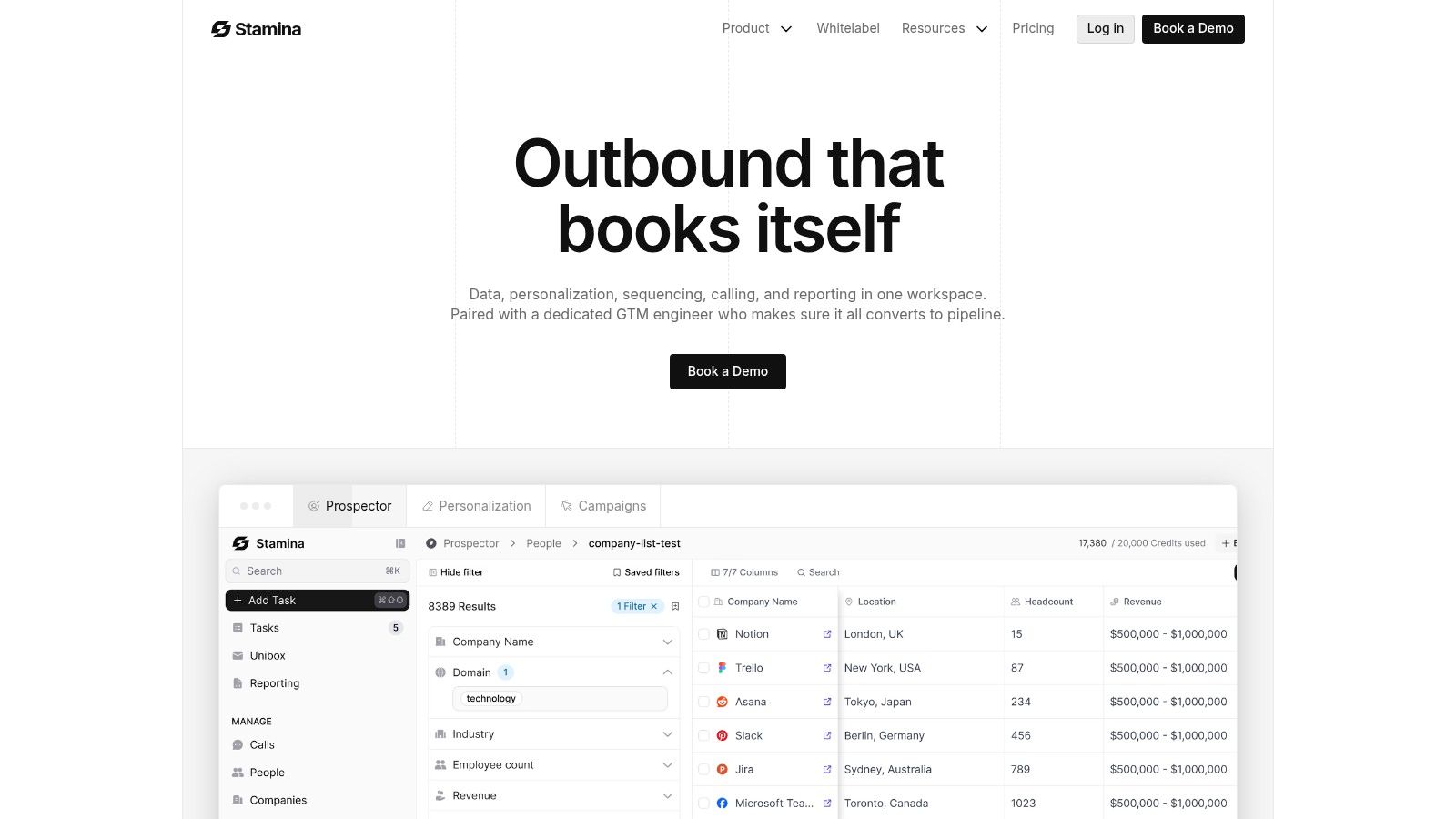
An agency owner usually feels the need for a platform like Stamina when the outbound stack starts eating margin. Reps prospect in one tool, run sequences in another, call from a third, and report results in slides no one trusts. Stamina is built for that operating model. It combines CRM, prospecting, sequencing, calling, deliverability support, and reporting in one system.

That matters more for agencies than it does for an internal sales team. If you manage multiple clients, every extra integration creates another setup, another place for data to drift, and another support issue your team has to own. Stamina's appeal is operational control. You can keep lead sourcing, outreach, and pipeline tracking in one client environment instead of stitching together a stack account by account.

Where it fits best

Stamina makes the most sense for agencies that sell outbound execution, pipeline generation, appointment setting, or sales development as a service. Multi-tenant and white-label options are a real advantage here because they affect how you package the service, how cleanly you separate client workspaces, and whether clients see your process as a product or a collection of tools.

Its AI SDR, Zara, is positioned around research and message drafting. That can help teams move faster, but the bigger business benefit is consistency. Junior reps can work from a tighter process, and account leads spend less time rewriting first-touch copy from scratch.

The support model also changes the buying decision. A dedicated GTM engineer is closer to implementation help than standard SaaS onboarding. Agencies that want a broader all-in-one business platform for outbound and revenue operations will see the value. Agencies that prefer to self-serve and test independently before a rollout may see that same model as added buying friction.

What works in agency operations

The strongest part of the product is consolidation. Teams can prospect, launch outreach, handle calling activity, and report from the same environment. For agencies, that usually reduces handoff errors and admin time more than another polished pipeline view ever will.

It also supports more structured process design than a basic SMB CRM. If your sales team, client strategists, and fulfillment team all need visibility into what was promised, how outreach is performing, and where accounts are stuck, Stamina gives you more room to build around that. Teams that want to standardize process can also review Stamina's take on CRM workflow design.

One trade-off is focus. Stamina is stronger for outbound-led agencies than for creative, branding, or content shops that mainly need contact management and a simple deal pipeline. If your revenue depends on list building, messaging volume, call activity, and deliverability health, the feature set lines up well. If not, it can feel heavier than necessary.

Agencies evaluating Stamina against HighLevel often compare business model fit more than raw feature count. HighLevel usually gets the nod for agencies centered on SMB automation packages, while Stamina is more compelling for outbound-first teams. That comparison gets sharper if your offer includes tools like white-labeled WhatsApp for GHL agencies, where packaging and client-facing infrastructure affect margins.

Trade-offs to understand

Pricing is not public, so you have to go through a demo process. That is a real drawback for smaller agencies that want a quick trial before involving the team.

The platform also asks for operational maturity. Agencies with a clear outbound offer, repeatable client onboarding, and defined KPIs will get more from it than agencies still experimenting with services. Stamina can tighten delivery and improve reporting discipline, but it will not fix a messy offer or inconsistent fulfillment model on its own.

Best for: outbound-heavy agencies, lead gen firms, and agencies that want multi-tenant or white-label infrastructure
Watch out for: non-public pricing, a heavier setup, and more platform depth than a small inbound-only team may need
Website: Stamina

2. HighLevel
HighLevel (GoHighLevel)

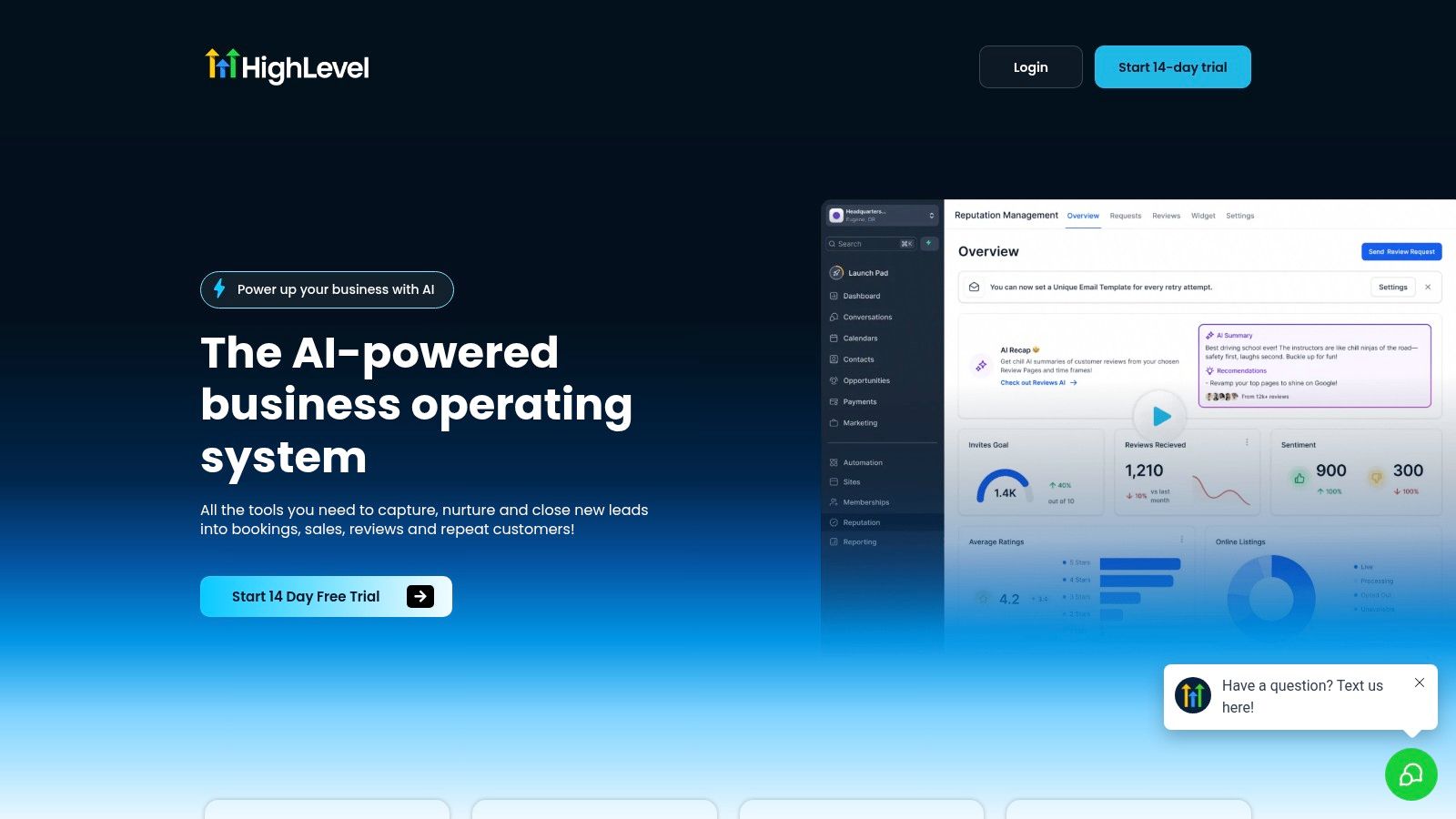
If your agency wants to productize services and resell software, HighLevel is usually one of the first platforms on the shortlist. It was built with agencies in mind, and that shows in the account structure. Client sub-accounts, white-label options, funnel tools, pipeline automation, messaging, calendars, and reviews management all point toward one use case: run a repeatable client ops machine.

HighLevel is less elegant than some mainstream CRMs, but it often wins on business model fit. Agencies that sell local marketing, lead nurture, appointment booking, or SMB automation packages can build templated delivery around snapshots and roll the same system out across many accounts.

Where it fits best

The big attraction is operational standardization. You can create a service framework once, then duplicate it across clients instead of rebuilding from scratch. That lowers implementation friction for agencies that don't want every client setup to become a custom project.

Its SaaS Mode also matters if you want to package software under your own brand. That's a very different buying decision from choosing a CRM for internal sales only.

A lot of agencies comparing stacks also look at adjacent tools like white-labeled WhatsApp for GHL agencies because HighLevel tends to sit at the center of a broader fulfillment and communication system.

The catch

HighLevel's flat pricing model looks attractive on the surface, but usage costs can creep up once you layer in telephony, email volume, and AI features. You need to model the economics per client, not just per platform.

It also has a real learning curve. Agencies that thrive on clean UI and lightweight team adoption sometimes bounce off it. If your staff won't tolerate a builder-style platform, implementation can stall. For teams weighing broader platform consolidation, Stamina's perspective on the all-in-one business platform model is worth comparing.

HighLevel is a strong agency business platform. It isn't automatically the best CRM for marketing agencies if your main need is elegant internal sales management rather than resale, white-labeling, and templated client ops.

Best for: agencies selling repeatable SMB services and software-like packages
Watch out for: usage-based extras and a builder-heavy learning curve
Website: HighLevel

3. HubSpot CRM + Marketing Hub
HubSpot CRM + Marketing Hub

HubSpot is the tool many agencies buy when they want the safest mainstream option. The interface is familiar, clients usually recognize the brand, and the ecosystem is mature. FunctionFox's roundup describes HubSpot as used by more than 205,000 companies worldwide, which is a useful signal for agencies that care about integration depth and talent availability (FunctionFox agency CRM roundup).

That maturity has real value. It's easier to hire people who already know HubSpot. It's easier to find implementation partners. It's easier to put a client in front of the dashboard without walking them through a weird internal tool.

Why agencies keep choosing it

HubSpot works well when your agency mixes inbound lead capture, lifecycle automation, landing pages, and sales visibility. The CRM and Marketing Hub pairing covers forms, email, automation, ads, reporting, and contact management in a way that feels cohesive rather than bolted together.

For client-facing work, the polish matters. Many agency owners underestimate how much adoption depends on whether account managers and clients can understand the interface quickly. HubSpot usually scores well there in practice. If you're evaluating how tightly your CRM should connect to automation, this overview of marketing automation and CRM integration is a useful comparison lens.

Where costs and complexity show up

HubSpot gets expensive in the exact places growing agencies care about. More contacts, more seats, more advanced automation, and higher-tier onboarding requirements can change the economics fast. The platform is capable, but it can also punish sloppy governance.

That's the part many comparisons gloss over. If you don't have clear rules around lifecycle stages, marketing contacts, permissions, and reporting ownership, HubSpot becomes a polished source of confusion.

  • Strong fit: agencies that want a client-friendly system, broad integrations, and a well-known platform

  • Weak fit: agencies with tight margins that expect unrestricted scaling without contact and seat discipline

Best for: agencies prioritizing client experience, education resources, and ecosystem support
Watch out for: rising costs and governance complexity as usage expands
Website: HubSpot

4. SharpSpring (Constant Contact Lead Gen & CRM)
SharpSpring (Constant Contact Lead Gen & CRM)

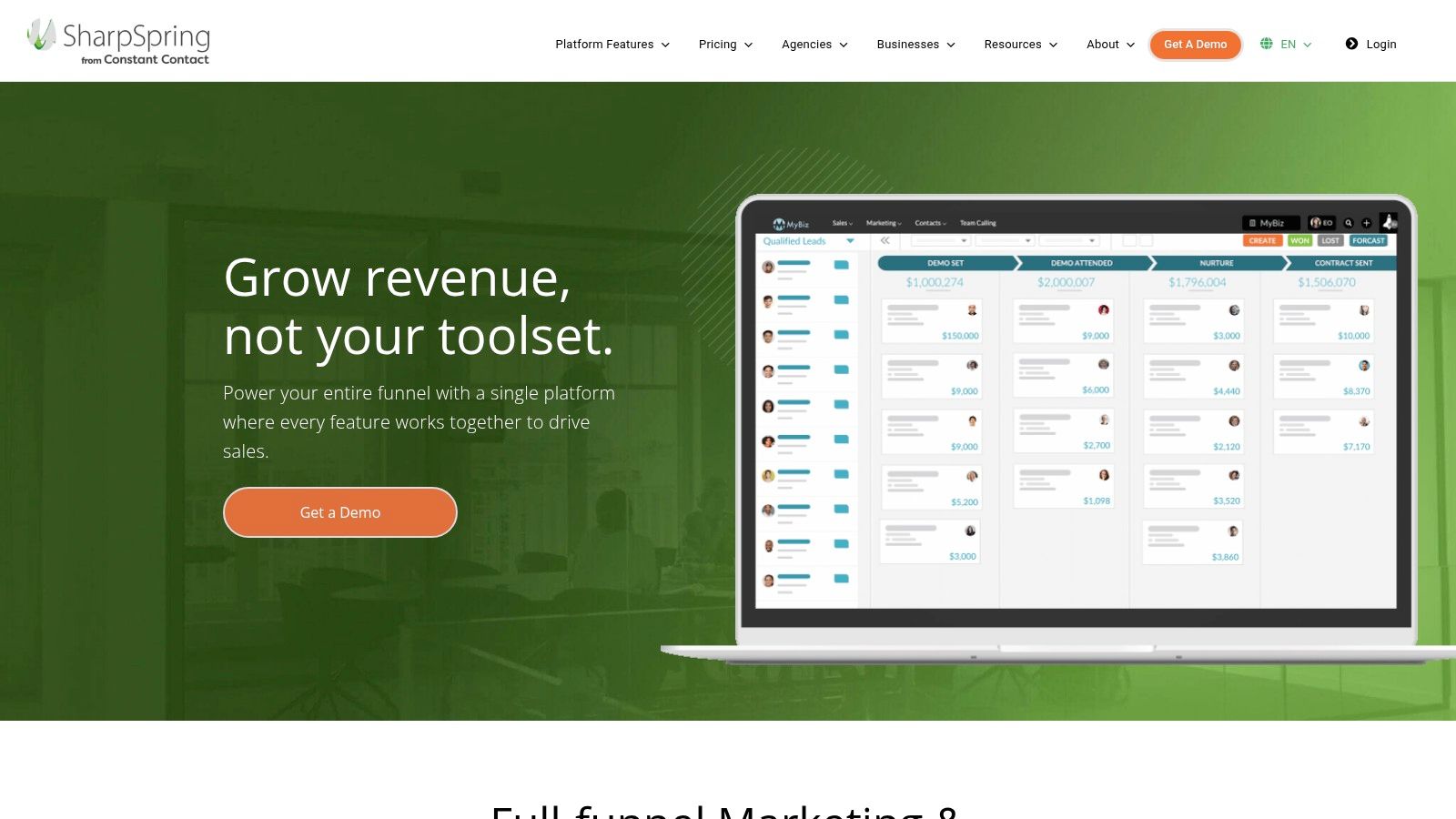
SharpSpring has long appealed to agencies that want full-funnel marketing automation tied to CRM without assembling a patchwork stack. Now positioned through Constant Contact's Lead Gen & CRM offering, it still carries that agency-first DNA. Email, forms, landing pages, social tools, automation, and attribution all sit close to the CRM layer.

This type of platform fits agencies that care less about aggressive outbound sales motions and more about campaign orchestration plus revenue visibility. If your service model centers on inbound, nurture, and reporting, SharpSpring deserves a look.

What it does well

SharpSpring's strength is alignment across marketing and pipeline stages. Agencies can show clients how a contact moved from form fill to nurture to opportunity without relying on too many external pieces. That makes reporting cleaner and handoff easier.

It's also useful for agencies that prefer partner-led implementation. Some teams don't want a pure self-serve CRM. They want guided setup tied to delivery workflows and reporting logic.

The best CRM for marketing agencies often depends on whether your agency sells outbound pipeline or managed inbound growth. SharpSpring is usually more compelling for the second group.

What gives buyers pause

The biggest drawback is pricing transparency. Like several agency-focused platforms, plan details are often gated behind demos. That slows comparison if you're trying to shortlist options quickly.

There's also a practical positioning issue. SharpSpring is strong in marketing automation conversations, but some agencies outgrow it if they need deeper sales process control, aggressive outbound, or broader white-label operating structure.

Best for: inbound-focused agencies that want CRM, automation, and attribution in one managed environment
Watch out for: limited public pricing clarity and less emphasis on sales-led outbound workflows
Website: SharpSpring

5. ActiveCampaign
ActiveCampaign

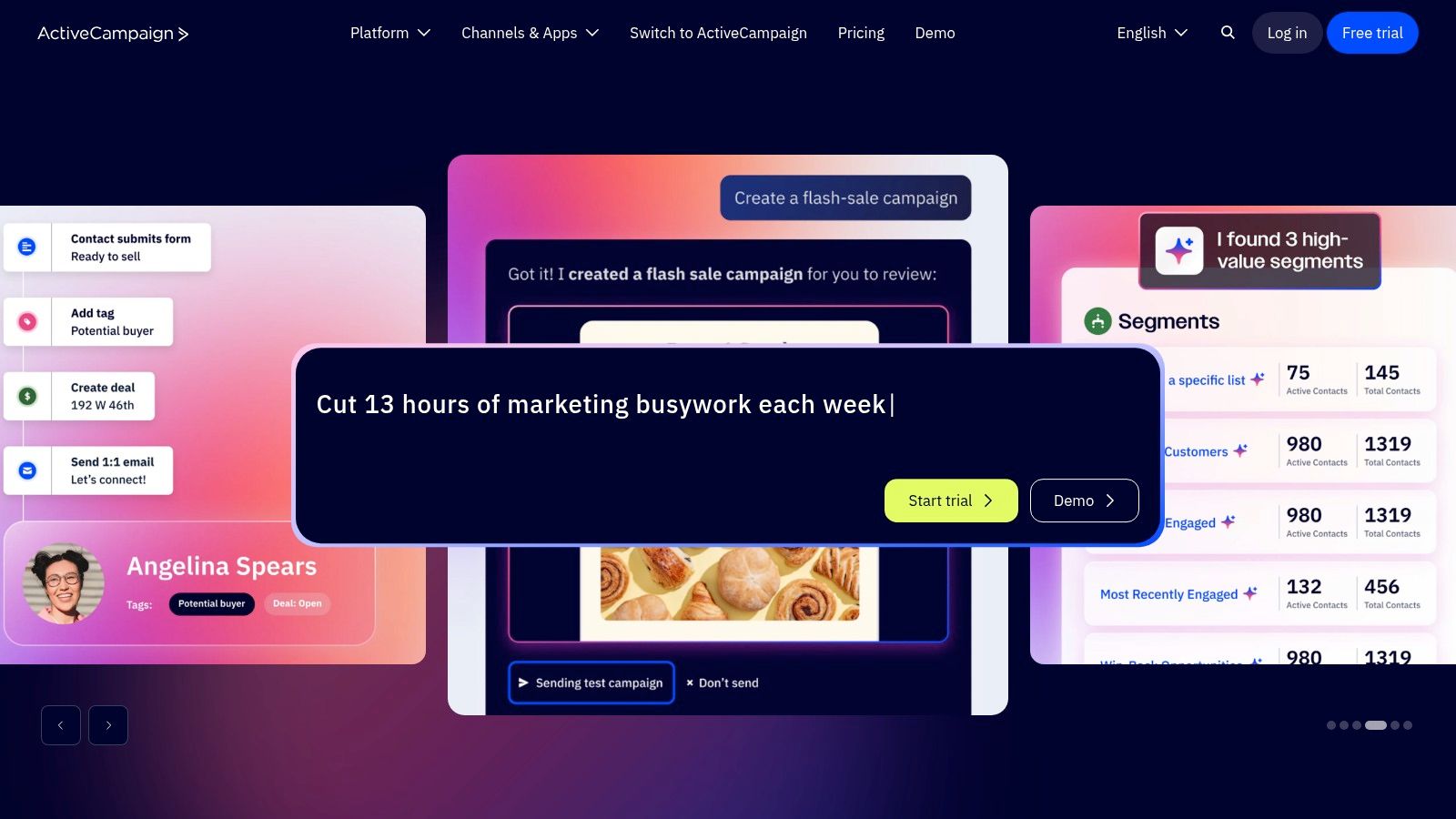
ActiveCampaign is often chosen by agencies that care more about automation logic than about classic CRM depth. Its automation builder is the main attraction. If your team likes building branching journeys, event-based triggers, segmentation rules, and lifecycle campaigns, this platform can do a lot of work.

That said, it's not the most natural fit for every agency owner. The CRM exists, but many buyers come to ActiveCampaign because they want automation first and deal management second.

Best use case

It works well for agencies managing multiple client nurture systems, especially in ecommerce, SaaS, and retention-heavy service models. The Agency Partner Program and multi-account management capabilities make it easier to support several client environments under one operating approach.

Its omnichannel posture also helps. Email is still the center, but SMS, site messaging, and add-on channels give agencies room to build more complete journeys when clients need them.

Where friction starts

ActiveCampaign can get expensive as audiences grow because pricing is tied to contact volume. That's a reasonable model for some agencies, but it can squeeze margins when clients have large databases and uneven campaign value.

There's another issue: agencies sometimes overbuy it. If your team doesn't have strong automation discipline, you can end up with complex journeys that nobody wants to maintain six months later.

  • Choose it if: automation sophistication is part of your agency's value proposition

  • Avoid it if: you need the CRM itself to act as the operational center of sales, delivery, and client visibility

Best for: lifecycle marketing agencies and teams that build complex nurture systems
Watch out for: contact-based pricing pressure and automation sprawl
Website: ActiveCampaign

6. Zoho CRM

Zoho CRM usually enters the conversation when budget matters and customization matters just as much. It gives agencies a flexible core CRM, workflow tools, lead scoring, and access to a wider app suite through bundles like CRM Plus or Zoho One. For some teams, that combination is enough to avoid paying for a premium all-in-one platform.

The upside is control. Zoho gives agencies room to shape the system around their own process rather than forcing one rigid model.

Why some agencies swear by it

Zoho can be a practical choice for agencies with an operations-minded lead or admin who enjoys configuration. If your process is unusual, or you want to connect CRM to analytics, campaigns, support, and internal operations through one vendor family, Zoho has range.

It's also one of the better options for agencies that want to grow into a broader business stack without jumping straight to enterprise software.

Why others give up on it

The downside is that customization takes work. Zoho often rewards patience more than speed. Agencies hoping for a slick out-of-the-box experience can end up with a system that's technically capable but harder to adopt.

Marketing automation is another area where expectations matter. You can build a lot with the wider Zoho ecosystem, but it doesn't always feel as turnkey as platforms designed first around campaign orchestration.

Zoho is often a good management decision and a mediocre impulse buy. It pays off when someone on your team owns the setup properly.

Best for: budget-conscious agencies that want flexibility and a broad native app family
Watch out for: setup complexity and less polished out-of-the-box automation
Website: Zoho CRM

7. Pipedrive
Pipedrive

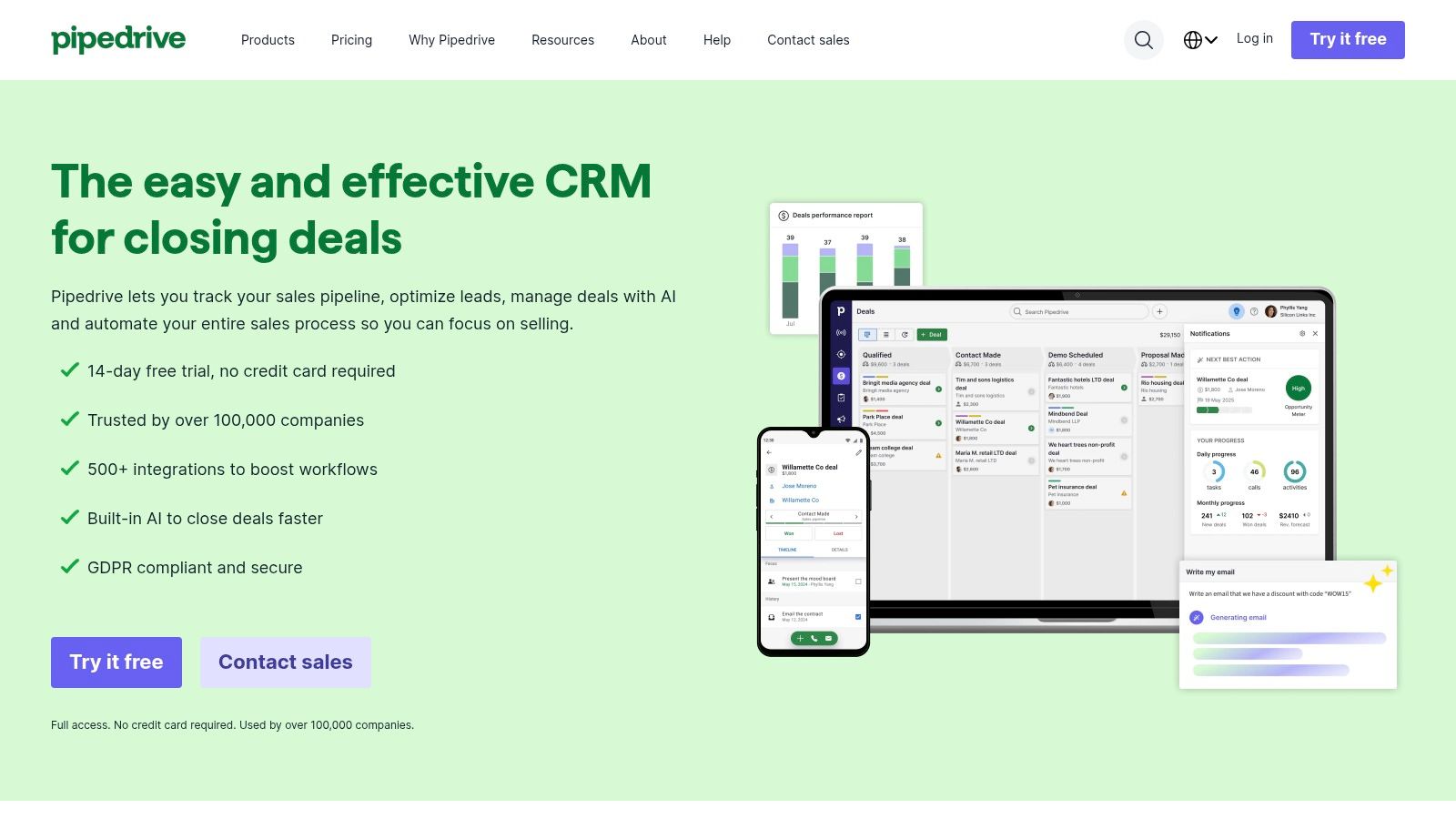
A common agency scenario looks like this: the founder is still closing deals, one account executive is following up inconsistently, and nobody wants a CRM rollout that turns into a two-month project. Pipedrive fits that situation well. It gets a sales pipeline in place fast, gives the team a clear next-step view, and usually needs less training than heavier systems.

That matters for agencies that win work through outbound, referrals, partnerships, or a straightforward consultative sales process. Reps can move deals cleanly, managers can see stalled opportunities, and forecasting is easier than trying to manage everything in spreadsheets.

The trade-off shows up after the sale.

Pipedrive is built first for pipeline management, not for running an agency across sales, onboarding, delivery, renewals, and client communication from one account structure. If you need white-label portals, sub-accounts for clients, or a multi-tenant setup where each client operates in its own environment, Pipedrive will feel thin. Agencies that resell marketing services or manage many client accounts under one roof usually outgrow it faster than they expect.

Where it works for agencies

Pipedrive is a good fit for agencies that want discipline in new business without buying a full operating system. The visual pipeline is still one of its strongest advantages. Sales managers can spot weak stages quickly, and founder-led teams usually adopt it without much resistance.

It also works well if your agency keeps delivery elsewhere. In that model, Pipedrive handles lead capture, deal flow, reminders, and basic automations, while project management, campaign execution, and reporting live in other tools. Some agencies are perfectly happy with that split.

There is also a practical packaging angle here. Agencies selling retainers, audits, or productized services sometimes pair Pipedrive with billing tools rather than asking the CRM to do revenue operations on its own. If that is your setup, Automated SaaS billing solutions can make the stack more workable.

Where agency owners hit the ceiling

The limitations are predictable. Native marketing automation is lighter than what many growth-focused agencies want. Post-sale client management is also limited compared with platforms designed around account expansion, service workflows, or client lifecycle visibility.

The other issue is stack creep. Pipedrive starts simple, but agencies often add forms, scheduling, quoting, automation, billing, and reporting tools around it. That can still be the right decision. It just changes the cost equation. What looked inexpensive at the start can become a connected stack that needs active maintenance.

For a sales-led agency, that may be acceptable. For an owner trying to standardize sales and fulfillment in one system, it usually is not.

Best for: agencies that want fast sales adoption and a clean pipeline for new business
Watch out for: limited support for multi-client operations, white-label needs, and deeper marketing automation
Website: Pipedrive

8. Salesforce Sales Cloud + Marketing Cloud Account Engagement
Salesforce Sales Cloud + Marketing Cloud Account Engagement (Pardot)

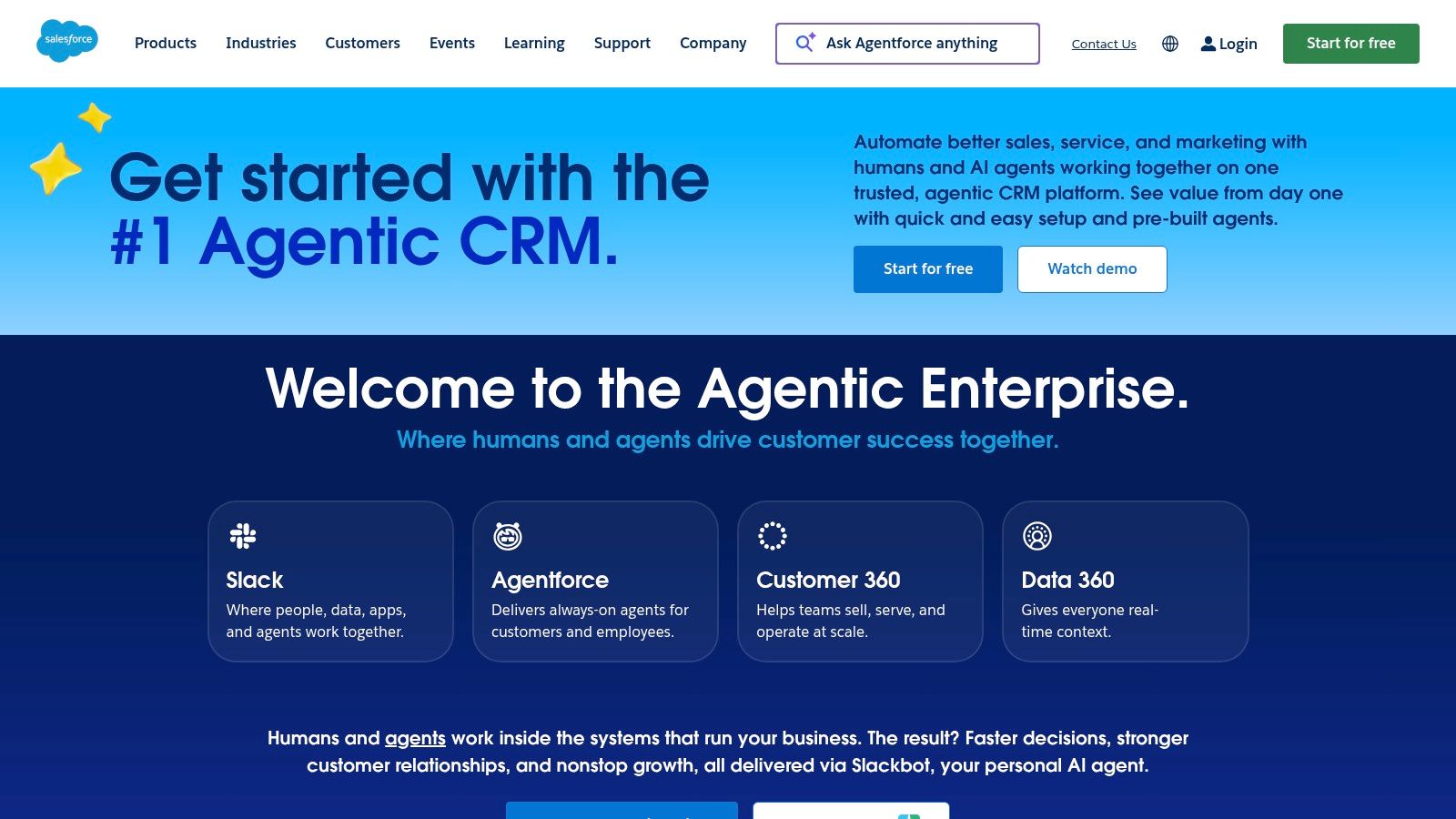
Salesforce is rarely the cheapest or easiest answer, but sometimes it's the right one anyway. Agencies serving complex B2B clients, large sales teams, or heavy compliance environments often need the customization, permissions, and ecosystem depth that lighter CRMs can't match.

This is not a casual buy. Salesforce works when your agency already knows that process complexity is a core requirement, not an edge case.

Why enterprises and enterprise-facing agencies choose it

Sales Cloud paired with Account Engagement gives agencies a serious B2B setup for lead scoring, nurture, reporting, and multi-team coordination. If you support clients with layered stakeholder groups, long sales cycles, strict governance, or deep integrations, Salesforce can handle it.

It's also useful when the CRM is part of a larger technology estate. Agencies working inside enterprise client environments often benefit from choosing the platform those clients already understand.

Why smaller agencies struggle with it

Most smaller agencies don't fail with Salesforce because it lacks features. They fail because it asks too much in implementation discipline, admin capacity, and budget. Without an owner who understands architecture, fields, permissions, reporting logic, and process enforcement, the system can become expensive clutter.

That's why it's usually wrong for agencies that want speed and simplicity. But for agencies with complex client demands, it can be the only option that won't break later.

Best for: agencies serving enterprise clients or managing complex B2B process requirements
Watch out for: implementation overhead, admin burden, and high total cost
Website: Salesforce

9. Keap
Keap (Pro / Max)

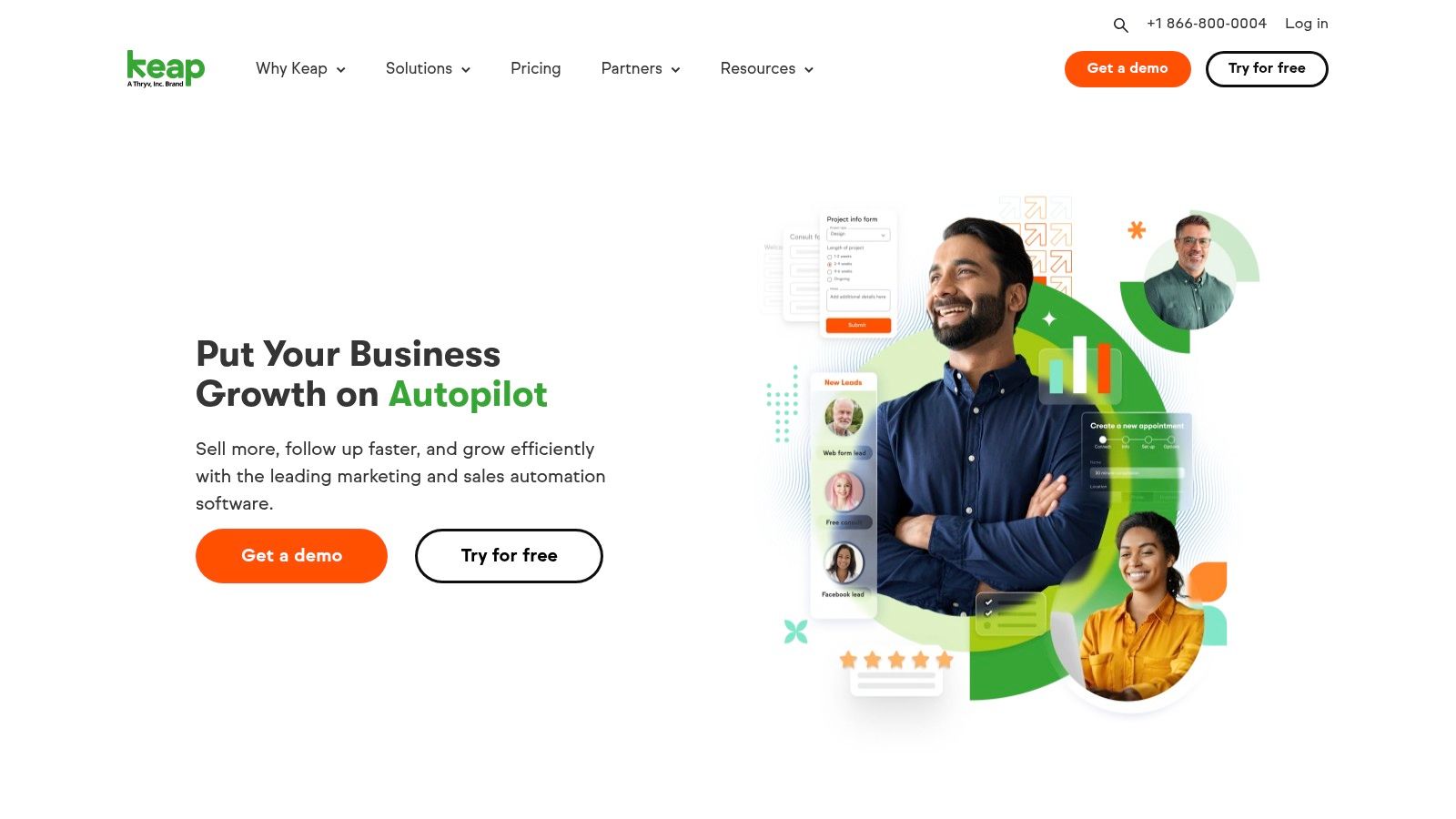
Keap makes the most sense when your agency serves SMBs and wants to package practical automation that reaches all the way to payment. CRM, email automation, text marketing, forms, landing pages, appointment flows, and payment tools make it feel closer to a small-business growth system than a pure CRM.

That focus is useful. A lot of agency clients don't need enterprise CRM sophistication. They need follow-up, reminders, invoices, and a sales process that doesn't leak opportunities.

Where Keap is strong

Keap is good for agencies selling straightforward service funnels. Think lead capture, nurture, booking, follow-up, invoice. If that's the client journey you implement repeatedly, Keap can support it without requiring a giant stack.

Its templates and prebuilt plays are also helpful for agencies that want faster rollout. You can get to a usable system quickly, which matters when your margins depend on efficient onboarding.

Where it falls short

Keap isn't built for complex, multi-team enterprise process management. Agencies handling large client orgs, layered reporting structures, or advanced rev ops usually outgrow it. Public pricing is also less straightforward than many buyers want, especially once editions, contacts, and add-ons enter the picture.

This is one of those tools that's very good for the right client segment and not very flexible outside it.

Keap is strongest when your agency packages repeatable SMB growth workflows. It's weaker when every client wants a deeply customized operating environment.

Best for: agencies serving SMB clients with packaged automation and payment flows
Watch out for: limited enterprise depth and variable final pricing
Website: Keap

10. Vendasta
Vendasta

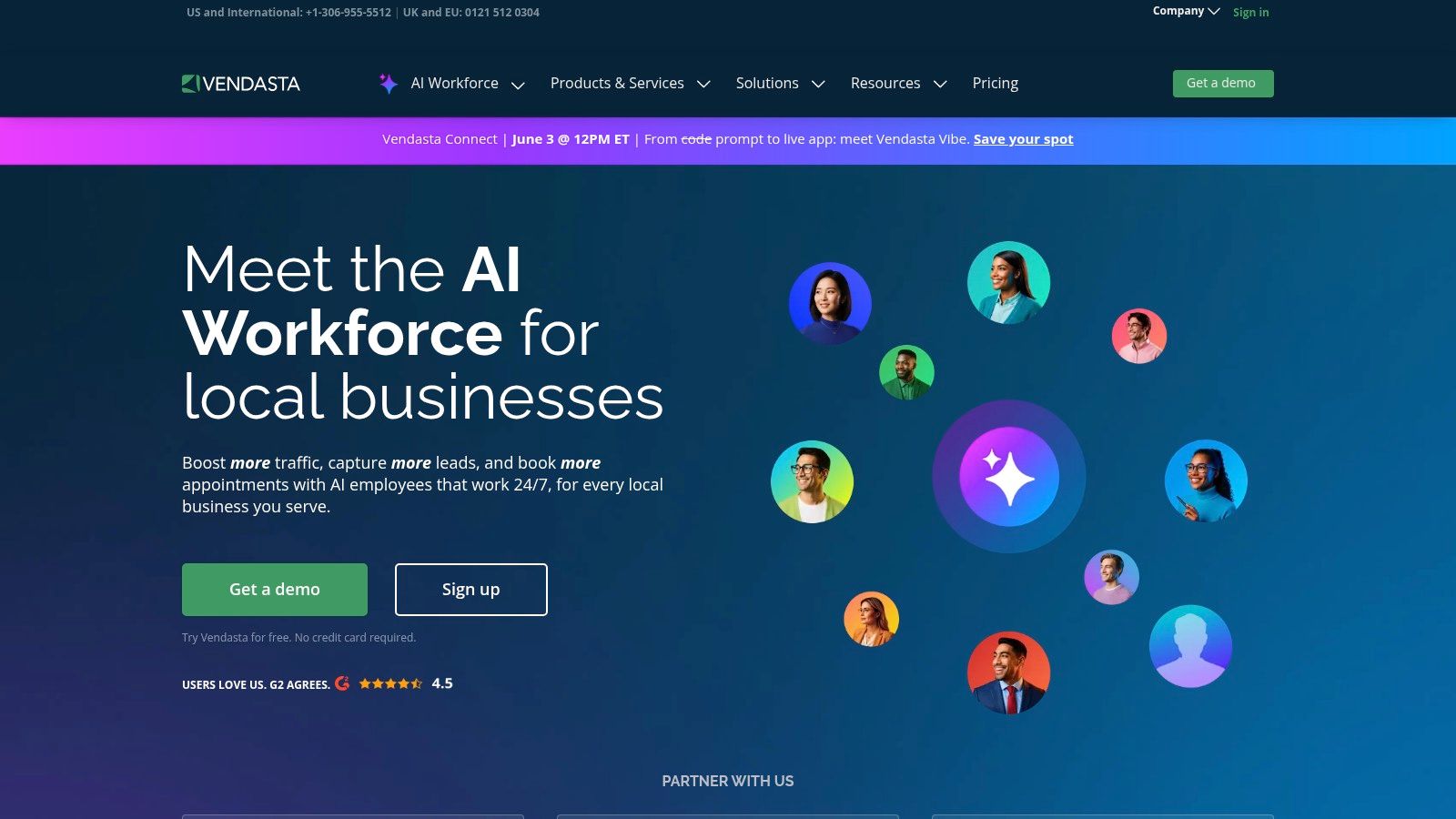
Vendasta is less a classic CRM choice and more an agency commerce platform with CRM built in. If your business depends on reselling digital products and services to many SMB or local business clients, it's one of the more purpose-built options on the market. White-label CRM, client portal, marketplace, multi-location support, and workflow tools all point toward recurring revenue operations.

That distinction matters. Vendasta isn't mainly trying to help one sales team manage one pipeline. It's trying to help agencies package, sell, fulfill, and report across lots of accounts.

When it makes sense

Vendasta fits agencies with a resale mindset. If you want a catalog of products, a client-facing portal, centralized billing logic, and a system you can brand as your own, it offers a coherent path. This is especially relevant for agencies serving local businesses at scale.

Its white-label orientation is central to the value proposition, not an afterthought. Agencies comparing branded client environments may also want to look at broader thinking around white-label CRM models.

When it doesn't

Vendasta can be too much platform if you only need a CRM for internal deal tracking and account management. It expects a business model built around recurring resale volume. If that's not how your agency makes money, the complexity can outweigh the benefit.

Pricing structure is another filter. Because value is tied to product spend and resale activity, agencies need consistent volume to justify the system.

Best for: agencies selling white-label services and software across many SMB accounts
Watch out for: resale-volume dependency and unnecessary complexity for simpler internal CRM use
Website: Vendasta

Top 10 CRMs for Marketing Agencies, Feature Comparison

Platform

Core features

Best for

Unique strengths

Pricing model

Key downside

Stamina (Recommended)

Unified revenue stack: AI SDR (Zara), 500M+ prospector, native dialer, inbox warmup, workflows, reporting

SMBs & agencies scaling outbound and multi‑client outreach

AI‑generated personalized outreach at scale; dedicated GTM engineer; multi‑tenant/white‑label

Custom / demo & quote (not public)

Pricing opaque; onboarding/strategy needed to realize full value

HighLevel (GoHighLevel)

Agency CRM, funnels, email/SMS, calling, SaaS Mode, white‑label apps

Agencies reselling SaaS & managing many sub‑accounts

Flat agency pricing model; SaaS Mode for branded resale; strong templates

Flat monthly + usage (telephony/email/AI)

Usage charges add cost; steeper learning curve

HubSpot CRM + Marketing Hub

CRM + Marketing Hub: forms, email, automation, landing pages, reporting

Agencies & client teams needing polished UX and partner ecosystem

Easy onboarding; large marketplace & partners; client‑friendly UI

Free CRM + tiered Marketing Hub (seat/contacts-based)

Costs rise with contacts/seats; marketing billing rules complex

SharpSpring (Constant Contact Lead Gen & CRM)

Marketing automation + CRM, landing pages, attribution, agency programs

Agencies wanting integrated full‑funnel tools

Agency‑focused deployment and revenue attribution

Demo‑based pricing (gated)

Public pricing limited; less transparent plans

ActiveCampaign

Omnichannel automation, CRM, segmentation, agency program

Agencies needing advanced automations and multi‑account management

Granular automations; agency discounts; strong integrations

Contact‑tier pricing + add‑ons

Costs scale with contacts; some channels require add‑ons

Zoho CRM (CRM Plus / Zoho One)

CRM with Zia AI, workflows, bundles for campaigns & analytics

Cost‑conscious agencies needing deep customization

Broad native app suite; strong value per user; free tier options

Competitive per‑user pricing; bundle options

UI/customization can lengthen setup time

Pipedrive

Sales‑first CRM, visual pipelines, LeadBooster add‑on, automations

SDR teams and agencies wanting quick sales adoption

Intuitive UI; fast deployment; modular add‑ons

Tiered per‑user plans + add‑ons

Lighter native marketing; lead gen needs add‑ons

Salesforce Sales Cloud + Pardot

Enterprise CRM + Pardot B2B marketing automation, APIs, ecosystem

Large/complex B2B organizations and agencies servicing them

Highly scalable; deep customization & partner ecosystem

Enterprise pricing (high TCO)

High cost and implementation complexity

Keap (Pro / Max)

SMB CRM with email/text automation, payments, templates/plays

SMBs and agencies packaging lead→nurture→invoice workflows

Built‑in payments; prebuilt automation plays for SMBs

Edition‑based pricing; add‑ons affect final cost

Not ideal for complex multi‑team enterprise needs

Vendasta

White‑label CRM, client portal, marketplace, multi‑location support

Agencies/MSSPs reselling services to many local SMBs

Resell marketplace + unified billing; white‑label client portals

Monthly minimum product spend + platform fees

Requires resale volume to unlock value; learning curve

Making the Right Choice: Which CRM Empowers Your Agency?

An agency owner usually feels the CRM decision when growth starts creating friction. New leads come in through forms, outbound, referrals, and paid campaigns. The sales team tracks deals in one place, account managers track delivery somewhere else, and reporting lives in spreadsheets. At that point, the question is not which platform has the longest feature list. The question is which one fits the way the agency sells, delivers, and keeps margins healthy.

For agencies, business model fit matters more than raw capability. A lead gen shop needs fast prospecting, outreach, and pipeline control. A white-label agency needs client separation, repeatable sub-account setup, and branding options. A retainer-based performance agency usually needs tighter handoffs between sales, onboarding, and service delivery. A CRM that looks strong in a demo can still create extra admin if it does not match those operating realities.

Digital Agency Network makes a useful point in its review of CRM tools for agencies. The systems that matter most are the ones that connect lead capture with follow-up and visibility across the pipeline, not tools that only store contacts (Digital Agency Network's CRM guide). That distinction matters because agencies rarely lose money from missing a contact record. They lose money from slow follow-up, broken attribution, and messy handoffs after the sale.

Operations matter after the deal closes, too. DaxRM highlights a problem agency owners know well. Sales and delivery often live in separate tools, which creates delays, missed context, and extra coordination work (DaxRM agency CRM comparison). If your team sells strategy, media, SEO, content, or local marketing on monthly retainers, a CRM should support the way work moves from close to onboarding to execution. Otherwise, account managers spend their time patching gaps the software should have handled.

That is where the products in this list start to separate.

HighLevel and Vendasta make the most sense for agencies selling packaged services across many client accounts, especially if white-labeling and multi-tenant structure affect profitability. HubSpot works well for agencies that want a polished interface, broad adoption across teams, and a mature ecosystem, but cost can rise fast as contacts and hubs expand. Zoho fits agencies willing to spend more time on setup in exchange for lower seat costs and deeper customization. Pipedrive is still a practical choice for agencies that mainly need a clean sales pipeline and do not need advanced native marketing operations inside the same system.

Stamina fits a narrower but very real agency use case. It makes sense when growth depends on outbound, prospecting, AI-assisted personalization, and managing campaign activity across multiple clients from one platform. The value is not just the CRM record. It is the combination of prospecting data, sequencing, calling, deliverability support, and account structure that can reduce tool sprawl for outbound-focused teams.

AI deserves a more practical test than most CRM roundups give it. Pipedrive's agency content raises the right issue. AI features sound useful, but agency owners should ask whether they reduce meaningful work and whether the output is safe to use across outreach, nurturing, and reporting (Pipedrive on CRM for agencies). That is the standard that matters. Drafting emails faster is helpful. Cleaning up bad automation or fixing low-quality AI output across client accounts is not.

One more pattern is worth noting. Agency buyers are increasingly judging CRM systems by automation depth, integration quality, and day-to-day operating impact, not by whether they can hold contact and deal records. That shift is sensible. Agencies buy software to improve margins, shorten response times, standardize delivery, and make revenue easier to forecast. If a platform cannot support those outcomes, it becomes another system the team has to maintain.

Choose based on how your agency makes money.

If revenue depends on outbound and appointment setting, prioritize prospecting, sequencing, deliverability, and multi-client campaign control. If revenue depends on recurring service delivery, prioritize handoff quality, client visibility, and workflow structure between sales and account teams. If your model includes reselling or white-label fulfillment, prioritize account separation, branding control, and repeatable setup across clients.

The right CRM should make the agency easier to run and easier to scale. If it adds work, hides margin, or forces your team into disconnected tools, it is the wrong fit no matter how many features it has.

If your agency needs more than a basic CRM, Stamina is worth a close look. It's built for teams that want CRM, prospecting, outreach, AI-assisted personalization, and agency-ready account structure in one platform, with hands-on GTM support to help turn the system into actual pipeline.

Your CRM becomes a problem the moment your agency outgrows spreadsheets, scattered inboxes, and a sales process that lives in one founder's head. One account manager is chasing approvals in email, another is updating a pipeline no one trusts, and delivery teams are asking the same client questions sales already answered. That's when a CRM stops being a nice-to-have and becomes operating infrastructure.

The best CRM for marketing agencies isn't just a place to store contacts. It's the system that connects lead capture, proposals, handoff, reporting, retention, and expansion. That matters because CRM as a software category was built around consolidating fragmented customer data into a unified record, and agency teams still feel that original problem every day. NetSuite's guidance for agencies also frames CRM around unifying lead generation, engagement, and renewals on one platform, which is exactly why agencies should treat it as more than a database (NetSuite's agency CRM overview).

If you're comparing tools right now, you're probably not looking for abstract feature grids. You're trying to answer practical questions. Can this platform handle multiple clients cleanly? Will my team use it? Can it support both new business and client delivery without creating more admin? If you need a broader stack around retention and handoff, it also helps to look at dedicated agency client management software alongside CRM options.

1. Stamina

Stamina

An agency owner usually feels the need for a platform like Stamina when the outbound stack starts eating margin. Reps prospect in one tool, run sequences in another, call from a third, and report results in slides no one trusts. Stamina is built for that operating model. It combines CRM, prospecting, sequencing, calling, deliverability support, and reporting in one system.

That matters more for agencies than it does for an internal sales team. If you manage multiple clients, every extra integration creates another setup, another place for data to drift, and another support issue your team has to own. Stamina's appeal is operational control. You can keep lead sourcing, outreach, and pipeline tracking in one client environment instead of stitching together a stack account by account.

Where it fits best

Stamina makes the most sense for agencies that sell outbound execution, pipeline generation, appointment setting, or sales development as a service. Multi-tenant and white-label options are a real advantage here because they affect how you package the service, how cleanly you separate client workspaces, and whether clients see your process as a product or a collection of tools.

Its AI SDR, Zara, is positioned around research and message drafting. That can help teams move faster, but the bigger business benefit is consistency. Junior reps can work from a tighter process, and account leads spend less time rewriting first-touch copy from scratch.

The support model also changes the buying decision. A dedicated GTM engineer is closer to implementation help than standard SaaS onboarding. Agencies that want a broader all-in-one business platform for outbound and revenue operations will see the value. Agencies that prefer to self-serve and test independently before a rollout may see that same model as added buying friction.

What works in agency operations

The strongest part of the product is consolidation. Teams can prospect, launch outreach, handle calling activity, and report from the same environment. For agencies, that usually reduces handoff errors and admin time more than another polished pipeline view ever will.

It also supports more structured process design than a basic SMB CRM. If your sales team, client strategists, and fulfillment team all need visibility into what was promised, how outreach is performing, and where accounts are stuck, Stamina gives you more room to build around that. Teams that want to standardize process can also review Stamina's take on CRM workflow design.

One trade-off is focus. Stamina is stronger for outbound-led agencies than for creative, branding, or content shops that mainly need contact management and a simple deal pipeline. If your revenue depends on list building, messaging volume, call activity, and deliverability health, the feature set lines up well. If not, it can feel heavier than necessary.

Agencies evaluating Stamina against HighLevel often compare business model fit more than raw feature count. HighLevel usually gets the nod for agencies centered on SMB automation packages, while Stamina is more compelling for outbound-first teams. That comparison gets sharper if your offer includes tools like white-labeled WhatsApp for GHL agencies, where packaging and client-facing infrastructure affect margins.

Trade-offs to understand

Pricing is not public, so you have to go through a demo process. That is a real drawback for smaller agencies that want a quick trial before involving the team.

The platform also asks for operational maturity. Agencies with a clear outbound offer, repeatable client onboarding, and defined KPIs will get more from it than agencies still experimenting with services. Stamina can tighten delivery and improve reporting discipline, but it will not fix a messy offer or inconsistent fulfillment model on its own.

Best for: outbound-heavy agencies, lead gen firms, and agencies that want multi-tenant or white-label infrastructure
Watch out for: non-public pricing, a heavier setup, and more platform depth than a small inbound-only team may need
Website: Stamina

2. HighLevel

HighLevel (GoHighLevel)

If your agency wants to productize services and resell software, HighLevel is usually one of the first platforms on the shortlist. It was built with agencies in mind, and that shows in the account structure. Client sub-accounts, white-label options, funnel tools, pipeline automation, messaging, calendars, and reviews management all point toward one use case: run a repeatable client ops machine.

HighLevel is less elegant than some mainstream CRMs, but it often wins on business model fit. Agencies that sell local marketing, lead nurture, appointment booking, or SMB automation packages can build templated delivery around snapshots and roll the same system out across many accounts.

Where it fits best

The big attraction is operational standardization. You can create a service framework once, then duplicate it across clients instead of rebuilding from scratch. That lowers implementation friction for agencies that don't want every client setup to become a custom project.

Its SaaS Mode also matters if you want to package software under your own brand. That's a very different buying decision from choosing a CRM for internal sales only.

A lot of agencies comparing stacks also look at adjacent tools like white-labeled WhatsApp for GHL agencies because HighLevel tends to sit at the center of a broader fulfillment and communication system.

The catch

HighLevel's flat pricing model looks attractive on the surface, but usage costs can creep up once you layer in telephony, email volume, and AI features. You need to model the economics per client, not just per platform.

It also has a real learning curve. Agencies that thrive on clean UI and lightweight team adoption sometimes bounce off it. If your staff won't tolerate a builder-style platform, implementation can stall. For teams weighing broader platform consolidation, Stamina's perspective on the all-in-one business platform model is worth comparing.

HighLevel is a strong agency business platform. It isn't automatically the best CRM for marketing agencies if your main need is elegant internal sales management rather than resale, white-labeling, and templated client ops.

Best for: agencies selling repeatable SMB services and software-like packages
Watch out for: usage-based extras and a builder-heavy learning curve
Website: HighLevel

3. HubSpot CRM + Marketing Hub

HubSpot CRM + Marketing Hub

HubSpot is the tool many agencies buy when they want the safest mainstream option. The interface is familiar, clients usually recognize the brand, and the ecosystem is mature. FunctionFox's roundup describes HubSpot as used by more than 205,000 companies worldwide, which is a useful signal for agencies that care about integration depth and talent availability (FunctionFox agency CRM roundup).

That maturity has real value. It's easier to hire people who already know HubSpot. It's easier to find implementation partners. It's easier to put a client in front of the dashboard without walking them through a weird internal tool.

Why agencies keep choosing it

HubSpot works well when your agency mixes inbound lead capture, lifecycle automation, landing pages, and sales visibility. The CRM and Marketing Hub pairing covers forms, email, automation, ads, reporting, and contact management in a way that feels cohesive rather than bolted together.

For client-facing work, the polish matters. Many agency owners underestimate how much adoption depends on whether account managers and clients can understand the interface quickly. HubSpot usually scores well there in practice. If you're evaluating how tightly your CRM should connect to automation, this overview of marketing automation and CRM integration is a useful comparison lens.

Where costs and complexity show up

HubSpot gets expensive in the exact places growing agencies care about. More contacts, more seats, more advanced automation, and higher-tier onboarding requirements can change the economics fast. The platform is capable, but it can also punish sloppy governance.

That's the part many comparisons gloss over. If you don't have clear rules around lifecycle stages, marketing contacts, permissions, and reporting ownership, HubSpot becomes a polished source of confusion.

  • Strong fit: agencies that want a client-friendly system, broad integrations, and a well-known platform

  • Weak fit: agencies with tight margins that expect unrestricted scaling without contact and seat discipline

Best for: agencies prioritizing client experience, education resources, and ecosystem support
Watch out for: rising costs and governance complexity as usage expands
Website: HubSpot

4. SharpSpring (Constant Contact Lead Gen & CRM)

SharpSpring (Constant Contact Lead Gen & CRM)

SharpSpring has long appealed to agencies that want full-funnel marketing automation tied to CRM without assembling a patchwork stack. Now positioned through Constant Contact's Lead Gen & CRM offering, it still carries that agency-first DNA. Email, forms, landing pages, social tools, automation, and attribution all sit close to the CRM layer.

This type of platform fits agencies that care less about aggressive outbound sales motions and more about campaign orchestration plus revenue visibility. If your service model centers on inbound, nurture, and reporting, SharpSpring deserves a look.

What it does well

SharpSpring's strength is alignment across marketing and pipeline stages. Agencies can show clients how a contact moved from form fill to nurture to opportunity without relying on too many external pieces. That makes reporting cleaner and handoff easier.

It's also useful for agencies that prefer partner-led implementation. Some teams don't want a pure self-serve CRM. They want guided setup tied to delivery workflows and reporting logic.

The best CRM for marketing agencies often depends on whether your agency sells outbound pipeline or managed inbound growth. SharpSpring is usually more compelling for the second group.

What gives buyers pause

The biggest drawback is pricing transparency. Like several agency-focused platforms, plan details are often gated behind demos. That slows comparison if you're trying to shortlist options quickly.

There's also a practical positioning issue. SharpSpring is strong in marketing automation conversations, but some agencies outgrow it if they need deeper sales process control, aggressive outbound, or broader white-label operating structure.

Best for: inbound-focused agencies that want CRM, automation, and attribution in one managed environment
Watch out for: limited public pricing clarity and less emphasis on sales-led outbound workflows
Website: SharpSpring

5. ActiveCampaign

ActiveCampaign

ActiveCampaign is often chosen by agencies that care more about automation logic than about classic CRM depth. Its automation builder is the main attraction. If your team likes building branching journeys, event-based triggers, segmentation rules, and lifecycle campaigns, this platform can do a lot of work.

That said, it's not the most natural fit for every agency owner. The CRM exists, but many buyers come to ActiveCampaign because they want automation first and deal management second.

Best use case

It works well for agencies managing multiple client nurture systems, especially in ecommerce, SaaS, and retention-heavy service models. The Agency Partner Program and multi-account management capabilities make it easier to support several client environments under one operating approach.

Its omnichannel posture also helps. Email is still the center, but SMS, site messaging, and add-on channels give agencies room to build more complete journeys when clients need them.

Where friction starts

ActiveCampaign can get expensive as audiences grow because pricing is tied to contact volume. That's a reasonable model for some agencies, but it can squeeze margins when clients have large databases and uneven campaign value.

There's another issue: agencies sometimes overbuy it. If your team doesn't have strong automation discipline, you can end up with complex journeys that nobody wants to maintain six months later.

  • Choose it if: automation sophistication is part of your agency's value proposition

  • Avoid it if: you need the CRM itself to act as the operational center of sales, delivery, and client visibility

Best for: lifecycle marketing agencies and teams that build complex nurture systems
Watch out for: contact-based pricing pressure and automation sprawl
Website: ActiveCampaign

6. Zoho CRM

Zoho CRM usually enters the conversation when budget matters and customization matters just as much. It gives agencies a flexible core CRM, workflow tools, lead scoring, and access to a wider app suite through bundles like CRM Plus or Zoho One. For some teams, that combination is enough to avoid paying for a premium all-in-one platform.

The upside is control. Zoho gives agencies room to shape the system around their own process rather than forcing one rigid model.

Why some agencies swear by it

Zoho can be a practical choice for agencies with an operations-minded lead or admin who enjoys configuration. If your process is unusual, or you want to connect CRM to analytics, campaigns, support, and internal operations through one vendor family, Zoho has range.

It's also one of the better options for agencies that want to grow into a broader business stack without jumping straight to enterprise software.

Why others give up on it

The downside is that customization takes work. Zoho often rewards patience more than speed. Agencies hoping for a slick out-of-the-box experience can end up with a system that's technically capable but harder to adopt.

Marketing automation is another area where expectations matter. You can build a lot with the wider Zoho ecosystem, but it doesn't always feel as turnkey as platforms designed first around campaign orchestration.

Zoho is often a good management decision and a mediocre impulse buy. It pays off when someone on your team owns the setup properly.

Best for: budget-conscious agencies that want flexibility and a broad native app family
Watch out for: setup complexity and less polished out-of-the-box automation
Website: Zoho CRM

7. Pipedrive

Pipedrive

A common agency scenario looks like this: the founder is still closing deals, one account executive is following up inconsistently, and nobody wants a CRM rollout that turns into a two-month project. Pipedrive fits that situation well. It gets a sales pipeline in place fast, gives the team a clear next-step view, and usually needs less training than heavier systems.

That matters for agencies that win work through outbound, referrals, partnerships, or a straightforward consultative sales process. Reps can move deals cleanly, managers can see stalled opportunities, and forecasting is easier than trying to manage everything in spreadsheets.

The trade-off shows up after the sale.

Pipedrive is built first for pipeline management, not for running an agency across sales, onboarding, delivery, renewals, and client communication from one account structure. If you need white-label portals, sub-accounts for clients, or a multi-tenant setup where each client operates in its own environment, Pipedrive will feel thin. Agencies that resell marketing services or manage many client accounts under one roof usually outgrow it faster than they expect.

Where it works for agencies

Pipedrive is a good fit for agencies that want discipline in new business without buying a full operating system. The visual pipeline is still one of its strongest advantages. Sales managers can spot weak stages quickly, and founder-led teams usually adopt it without much resistance.

It also works well if your agency keeps delivery elsewhere. In that model, Pipedrive handles lead capture, deal flow, reminders, and basic automations, while project management, campaign execution, and reporting live in other tools. Some agencies are perfectly happy with that split.

There is also a practical packaging angle here. Agencies selling retainers, audits, or productized services sometimes pair Pipedrive with billing tools rather than asking the CRM to do revenue operations on its own. If that is your setup, Automated SaaS billing solutions can make the stack more workable.

Where agency owners hit the ceiling

The limitations are predictable. Native marketing automation is lighter than what many growth-focused agencies want. Post-sale client management is also limited compared with platforms designed around account expansion, service workflows, or client lifecycle visibility.

The other issue is stack creep. Pipedrive starts simple, but agencies often add forms, scheduling, quoting, automation, billing, and reporting tools around it. That can still be the right decision. It just changes the cost equation. What looked inexpensive at the start can become a connected stack that needs active maintenance.

For a sales-led agency, that may be acceptable. For an owner trying to standardize sales and fulfillment in one system, it usually is not.

Best for: agencies that want fast sales adoption and a clean pipeline for new business
Watch out for: limited support for multi-client operations, white-label needs, and deeper marketing automation
Website: Pipedrive

8. Salesforce Sales Cloud + Marketing Cloud Account Engagement

Salesforce Sales Cloud + Marketing Cloud Account Engagement (Pardot)

Salesforce is rarely the cheapest or easiest answer, but sometimes it's the right one anyway. Agencies serving complex B2B clients, large sales teams, or heavy compliance environments often need the customization, permissions, and ecosystem depth that lighter CRMs can't match.

This is not a casual buy. Salesforce works when your agency already knows that process complexity is a core requirement, not an edge case.

Why enterprises and enterprise-facing agencies choose it

Sales Cloud paired with Account Engagement gives agencies a serious B2B setup for lead scoring, nurture, reporting, and multi-team coordination. If you support clients with layered stakeholder groups, long sales cycles, strict governance, or deep integrations, Salesforce can handle it.

It's also useful when the CRM is part of a larger technology estate. Agencies working inside enterprise client environments often benefit from choosing the platform those clients already understand.

Why smaller agencies struggle with it

Most smaller agencies don't fail with Salesforce because it lacks features. They fail because it asks too much in implementation discipline, admin capacity, and budget. Without an owner who understands architecture, fields, permissions, reporting logic, and process enforcement, the system can become expensive clutter.

That's why it's usually wrong for agencies that want speed and simplicity. But for agencies with complex client demands, it can be the only option that won't break later.

Best for: agencies serving enterprise clients or managing complex B2B process requirements
Watch out for: implementation overhead, admin burden, and high total cost
Website: Salesforce

9. Keap

Keap (Pro / Max)

Keap makes the most sense when your agency serves SMBs and wants to package practical automation that reaches all the way to payment. CRM, email automation, text marketing, forms, landing pages, appointment flows, and payment tools make it feel closer to a small-business growth system than a pure CRM.

That focus is useful. A lot of agency clients don't need enterprise CRM sophistication. They need follow-up, reminders, invoices, and a sales process that doesn't leak opportunities.

Where Keap is strong

Keap is good for agencies selling straightforward service funnels. Think lead capture, nurture, booking, follow-up, invoice. If that's the client journey you implement repeatedly, Keap can support it without requiring a giant stack.

Its templates and prebuilt plays are also helpful for agencies that want faster rollout. You can get to a usable system quickly, which matters when your margins depend on efficient onboarding.

Where it falls short

Keap isn't built for complex, multi-team enterprise process management. Agencies handling large client orgs, layered reporting structures, or advanced rev ops usually outgrow it. Public pricing is also less straightforward than many buyers want, especially once editions, contacts, and add-ons enter the picture.

This is one of those tools that's very good for the right client segment and not very flexible outside it.

Keap is strongest when your agency packages repeatable SMB growth workflows. It's weaker when every client wants a deeply customized operating environment.

Best for: agencies serving SMB clients with packaged automation and payment flows
Watch out for: limited enterprise depth and variable final pricing
Website: Keap

10. Vendasta

Vendasta

Vendasta is less a classic CRM choice and more an agency commerce platform with CRM built in. If your business depends on reselling digital products and services to many SMB or local business clients, it's one of the more purpose-built options on the market. White-label CRM, client portal, marketplace, multi-location support, and workflow tools all point toward recurring revenue operations.

That distinction matters. Vendasta isn't mainly trying to help one sales team manage one pipeline. It's trying to help agencies package, sell, fulfill, and report across lots of accounts.

When it makes sense

Vendasta fits agencies with a resale mindset. If you want a catalog of products, a client-facing portal, centralized billing logic, and a system you can brand as your own, it offers a coherent path. This is especially relevant for agencies serving local businesses at scale.

Its white-label orientation is central to the value proposition, not an afterthought. Agencies comparing branded client environments may also want to look at broader thinking around white-label CRM models.

When it doesn't

Vendasta can be too much platform if you only need a CRM for internal deal tracking and account management. It expects a business model built around recurring resale volume. If that's not how your agency makes money, the complexity can outweigh the benefit.

Pricing structure is another filter. Because value is tied to product spend and resale activity, agencies need consistent volume to justify the system.

Best for: agencies selling white-label services and software across many SMB accounts
Watch out for: resale-volume dependency and unnecessary complexity for simpler internal CRM use
Website: Vendasta

Top 10 CRMs for Marketing Agencies, Feature Comparison

Platform

Core features

Best for

Unique strengths

Pricing model

Key downside

Stamina (Recommended)

Unified revenue stack: AI SDR (Zara), 500M+ prospector, native dialer, inbox warmup, workflows, reporting

SMBs & agencies scaling outbound and multi‑client outreach

AI‑generated personalized outreach at scale; dedicated GTM engineer; multi‑tenant/white‑label

Custom / demo & quote (not public)

Pricing opaque; onboarding/strategy needed to realize full value

HighLevel (GoHighLevel)

Agency CRM, funnels, email/SMS, calling, SaaS Mode, white‑label apps

Agencies reselling SaaS & managing many sub‑accounts

Flat agency pricing model; SaaS Mode for branded resale; strong templates

Flat monthly + usage (telephony/email/AI)

Usage charges add cost; steeper learning curve

HubSpot CRM + Marketing Hub

CRM + Marketing Hub: forms, email, automation, landing pages, reporting

Agencies & client teams needing polished UX and partner ecosystem

Easy onboarding; large marketplace & partners; client‑friendly UI

Free CRM + tiered Marketing Hub (seat/contacts-based)

Costs rise with contacts/seats; marketing billing rules complex

SharpSpring (Constant Contact Lead Gen & CRM)

Marketing automation + CRM, landing pages, attribution, agency programs

Agencies wanting integrated full‑funnel tools

Agency‑focused deployment and revenue attribution

Demo‑based pricing (gated)

Public pricing limited; less transparent plans

ActiveCampaign

Omnichannel automation, CRM, segmentation, agency program

Agencies needing advanced automations and multi‑account management

Granular automations; agency discounts; strong integrations

Contact‑tier pricing + add‑ons

Costs scale with contacts; some channels require add‑ons

Zoho CRM (CRM Plus / Zoho One)

CRM with Zia AI, workflows, bundles for campaigns & analytics

Cost‑conscious agencies needing deep customization

Broad native app suite; strong value per user; free tier options

Competitive per‑user pricing; bundle options

UI/customization can lengthen setup time

Pipedrive

Sales‑first CRM, visual pipelines, LeadBooster add‑on, automations

SDR teams and agencies wanting quick sales adoption

Intuitive UI; fast deployment; modular add‑ons

Tiered per‑user plans + add‑ons

Lighter native marketing; lead gen needs add‑ons

Salesforce Sales Cloud + Pardot

Enterprise CRM + Pardot B2B marketing automation, APIs, ecosystem

Large/complex B2B organizations and agencies servicing them

Highly scalable; deep customization & partner ecosystem

Enterprise pricing (high TCO)

High cost and implementation complexity

Keap (Pro / Max)

SMB CRM with email/text automation, payments, templates/plays

SMBs and agencies packaging lead→nurture→invoice workflows

Built‑in payments; prebuilt automation plays for SMBs

Edition‑based pricing; add‑ons affect final cost

Not ideal for complex multi‑team enterprise needs

Vendasta

White‑label CRM, client portal, marketplace, multi‑location support

Agencies/MSSPs reselling services to many local SMBs

Resell marketplace + unified billing; white‑label client portals

Monthly minimum product spend + platform fees

Requires resale volume to unlock value; learning curve

Making the Right Choice: Which CRM Empowers Your Agency?

An agency owner usually feels the CRM decision when growth starts creating friction. New leads come in through forms, outbound, referrals, and paid campaigns. The sales team tracks deals in one place, account managers track delivery somewhere else, and reporting lives in spreadsheets. At that point, the question is not which platform has the longest feature list. The question is which one fits the way the agency sells, delivers, and keeps margins healthy.

For agencies, business model fit matters more than raw capability. A lead gen shop needs fast prospecting, outreach, and pipeline control. A white-label agency needs client separation, repeatable sub-account setup, and branding options. A retainer-based performance agency usually needs tighter handoffs between sales, onboarding, and service delivery. A CRM that looks strong in a demo can still create extra admin if it does not match those operating realities.

Digital Agency Network makes a useful point in its review of CRM tools for agencies. The systems that matter most are the ones that connect lead capture with follow-up and visibility across the pipeline, not tools that only store contacts (Digital Agency Network's CRM guide). That distinction matters because agencies rarely lose money from missing a contact record. They lose money from slow follow-up, broken attribution, and messy handoffs after the sale.

Operations matter after the deal closes, too. DaxRM highlights a problem agency owners know well. Sales and delivery often live in separate tools, which creates delays, missed context, and extra coordination work (DaxRM agency CRM comparison). If your team sells strategy, media, SEO, content, or local marketing on monthly retainers, a CRM should support the way work moves from close to onboarding to execution. Otherwise, account managers spend their time patching gaps the software should have handled.

That is where the products in this list start to separate.

HighLevel and Vendasta make the most sense for agencies selling packaged services across many client accounts, especially if white-labeling and multi-tenant structure affect profitability. HubSpot works well for agencies that want a polished interface, broad adoption across teams, and a mature ecosystem, but cost can rise fast as contacts and hubs expand. Zoho fits agencies willing to spend more time on setup in exchange for lower seat costs and deeper customization. Pipedrive is still a practical choice for agencies that mainly need a clean sales pipeline and do not need advanced native marketing operations inside the same system.

Stamina fits a narrower but very real agency use case. It makes sense when growth depends on outbound, prospecting, AI-assisted personalization, and managing campaign activity across multiple clients from one platform. The value is not just the CRM record. It is the combination of prospecting data, sequencing, calling, deliverability support, and account structure that can reduce tool sprawl for outbound-focused teams.

AI deserves a more practical test than most CRM roundups give it. Pipedrive's agency content raises the right issue. AI features sound useful, but agency owners should ask whether they reduce meaningful work and whether the output is safe to use across outreach, nurturing, and reporting (Pipedrive on CRM for agencies). That is the standard that matters. Drafting emails faster is helpful. Cleaning up bad automation or fixing low-quality AI output across client accounts is not.

One more pattern is worth noting. Agency buyers are increasingly judging CRM systems by automation depth, integration quality, and day-to-day operating impact, not by whether they can hold contact and deal records. That shift is sensible. Agencies buy software to improve margins, shorten response times, standardize delivery, and make revenue easier to forecast. If a platform cannot support those outcomes, it becomes another system the team has to maintain.

Choose based on how your agency makes money.

If revenue depends on outbound and appointment setting, prioritize prospecting, sequencing, deliverability, and multi-client campaign control. If revenue depends on recurring service delivery, prioritize handoff quality, client visibility, and workflow structure between sales and account teams. If your model includes reselling or white-label fulfillment, prioritize account separation, branding control, and repeatable setup across clients.

The right CRM should make the agency easier to run and easier to scale. If it adds work, hides margin, or forces your team into disconnected tools, it is the wrong fit no matter how many features it has.

If your agency needs more than a basic CRM, Stamina is worth a close look. It's built for teams that want CRM, prospecting, outreach, AI-assisted personalization, and agency-ready account structure in one platform, with hands-on GTM support to help turn the system into actual pipeline.

Share this article

Share this article

Send a shareable link to your team or anyone who might find it useful.

Send a shareable link to your team or anyone who might find it useful.

Copy link

Copied

Share directly to

Table of contents

Give Your Business the Stamina it needs to Thrive