10 Demand Generation Strategies for SMBs in 2026

Discover 10 actionable demand generation strategies for SMBs. Learn to implement ABM, AI outreach, and more to grow your pipeline in 2026.

0 - Minute Read

Monday starts with the same question every revenue team asks in a different way: where will next quarter's pipeline come from? Marketing is running campaigns across email, webinars, paid social, and CRM nurture. Sales wants to know which accounts are showing real buying intent. Finance wants proof that budget is turning into revenue, not just form fills.

That pressure is what makes demand generation hard for SMBs. The challenge usually is not a lack of tactics. It is too many disconnected tactics, weak follow-up, and reporting that stops at lead volume instead of showing contribution to pipeline, meetings, and closed revenue.

Strong demand generation programs are built as systems. Each channel has a job. Each handoff has a rule. Each campaign has a defined audience, success metric, and follow-up motion from sales.

This guide covers 10 demand generation strategies that B2B teams can run without building an enterprise-sized marketing department. For each one, the framework stays consistent: what the strategy is, why it works, how to execute it step by step, which KPIs to track, where teams usually lose performance, and how Stamina's AI platform helps automate the work or connect the motion across marketing, sales, and CRM.

Some of these strategies drive demand early. Some convert existing interest faster. The trade-off matters. A webinar can create new conversations, but it takes production time and promotion. ABM can improve win rates, but only if sales and marketing agree on target accounts and follow-up discipline. Paid acquisition can create volume quickly, but weak offer strategy and poor lead routing can burn budget fast.

The goal is not to run all 10 at once. The goal is to choose the mix that fits your sales cycle, deal size, team capacity, and data maturity, then execute it with enough discipline to produce measurable pipeline.

1. Account-Based Marketing
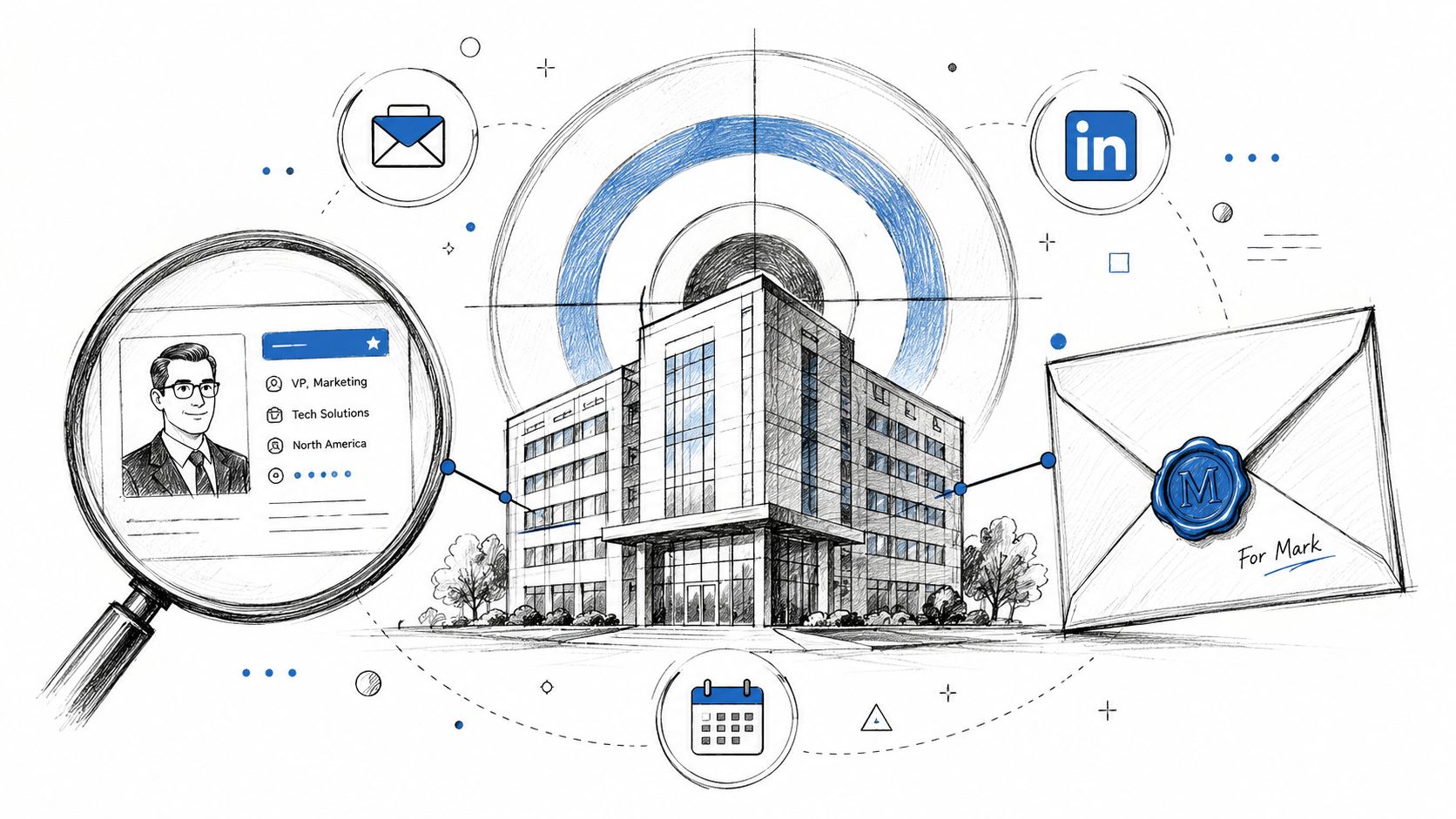
A professional illustration of a business building connected to LinkedIn, email, and a personalized letter for marketing.

ABM works best when your average deal needs multiple conversations, multiple stakeholders, and tighter qualification than a broad inbound funnel can provide. Instead of asking marketing to produce more leads, you pick a set of accounts worth winning and coordinate around them.

For SMBs, the mistake isn't trying ABM. It's overbuilding it. Teams create giant target-account lists, write vague persona messaging, and call it strategy. Real ABM starts with a small list, clear account tiers, and agreed rules with sales on who owns what.

How to execute it

Start with your best-fit accounts, not your dream logos. Pull closed-won customers, identify common traits, and build a target list your sales team wants to pursue.

Then build account coverage deliberately:

  • Map the buying group: Identify the likely decision-maker, economic buyer, operational owner, and daily user.

  • Tailor the angle: Create messaging by role. A VP wants business impact. An ops lead wants workflow fit.

  • Run coordinated touches: Use email, LinkedIn, retargeting, and direct outreach in the same window.

  • Set account SLAs: Decide when marketing hands off, when sales follows up, and what counts as meaningful engagement.

Practical rule: If sales wouldn't personally follow up on the account list, your ABM program isn't ready.

KPIs, pitfalls, and Stamina's role

Measure account engagement, meetings from target accounts, opportunity creation, pipeline progression, and close quality. Account-level reporting matters more than raw lead counts.

Common pitfalls include treating ABM like a paid ads audience, personalizing only the first line of an email, and failing to coordinate follow-up. ABM breaks down fast when marketing and sales run separate plays.

Stamina supports this model by keeping account activity, outreach, and CRM context in one place. Zara SDR can help research contacts and draft personalized sequences, while shared workflows make it easier for marketing and sales to act on the same account signals.

2. AI-Powered Personalization and Email Sequencing
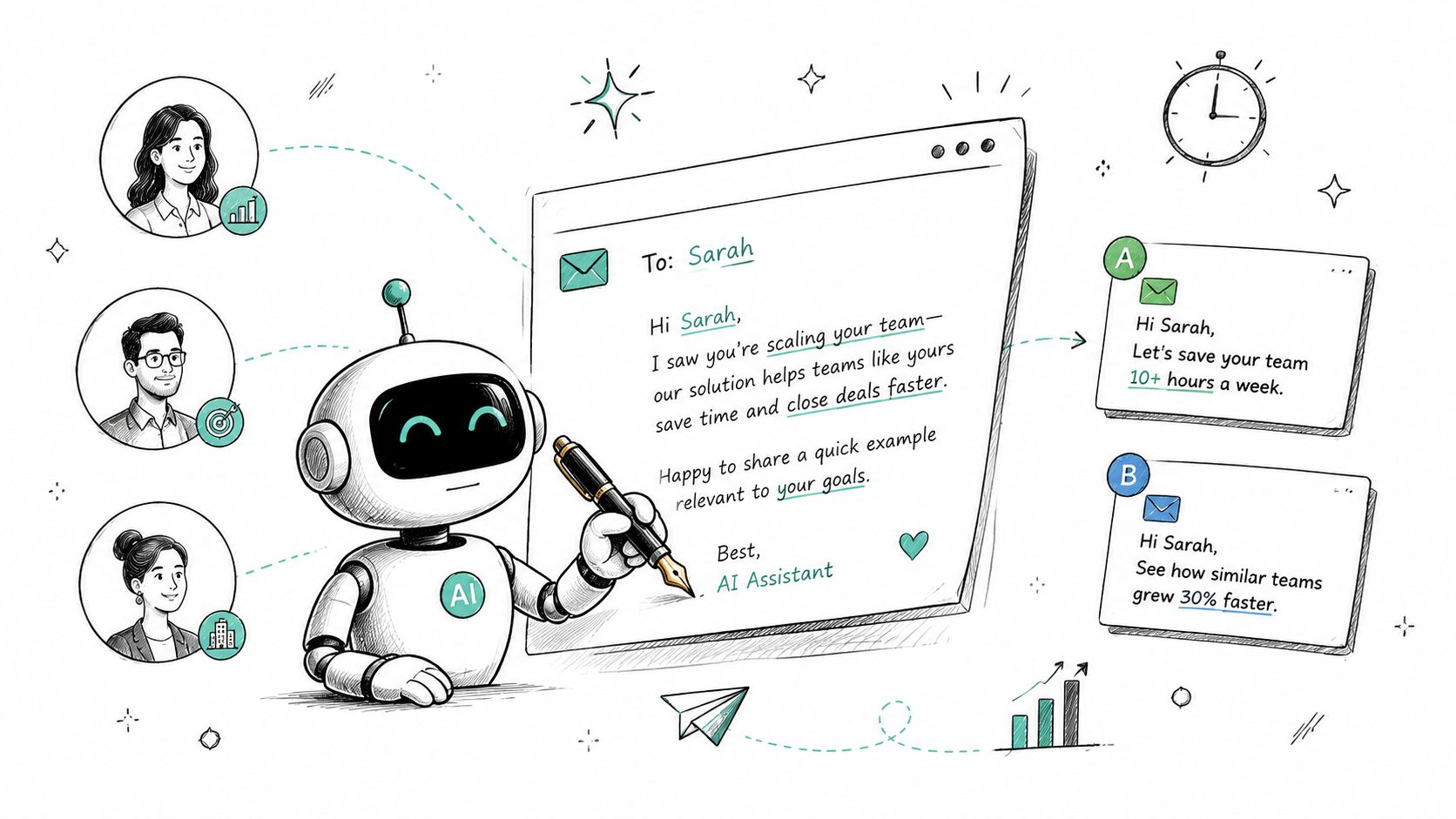
A friendly AI robot writing personalized sales emails for a professional team to improve business outreach efforts.

The core issue isn't a sequencing problem. Instead, it's a relevance problem. Teams often send the same message to too many people, then wonder why replies stay weak.

AI helps when it speeds up research, drafts variants, and adapts follow-up based on what the prospect did. It hurts when teams use it to flood inboxes with generic copy at scale. Buyers can tell the difference quickly.

A practical setup

Build personalization from layers. Firmographic context comes first. Then role. Then recent behavior or company context. The more expensive the offer, the more that context matters.

A solid workflow looks like this:

  • Start with structured inputs: Industry, company size, role, website behavior, and previous engagement.

  • Create message variants: Test different angles such as pain point, trigger event, or use case.

  • Increase personalization over time: Early emails can stay concise. Follow-ups should reference specific activity.

  • Review before launch: AI-generated copy still needs human checks for tone, accuracy, and awkward assumptions.

If your team needs ideas for stronger copy angles, these sales email templates are a useful starting point. If video fits your outreach mix, you can also discover AI video tools for personalized follow-up assets.

What to measure and where teams fail

Track reply quality, meeting rate, unsubscribe trends, positive response themes, and progression by sequence step. Open rates alone won't tell you much.

The common failure modes are easy to spot:

  • Over-automation: Too many sends, not enough judgment.

  • Fake personalization: Mentioning a company name without real relevance.

  • No suppression logic: Prospects keep receiving nurture emails after engaging with sales.

  • Weak sequencing: Every email asks for a meeting instead of building context.

Stamina's Zara SDR fits here by generating personalized emails, sequences, and variants from unified account data. That matters because the best AI sequencing depends on shared context, not disconnected spreadsheets and copy docs.

3. Content Marketing and Thought Leadership

A common pipeline problem looks like this. Traffic is steady, the blog is active, LinkedIn posts get some engagement, and sales still says the content is not helping them close deals. The issue is rarely volume. The issue is relevance to real buying decisions.

Content marketing works when it gives buyers useful clarity at each stage of evaluation. Thought leadership works when your team has a point of view backed by operating experience, not recycled commentary. In demand generation, both should support revenue. They should help prospects frame the problem, compare options, reduce risk, and move faster.

What it is and why it works

Content marketing creates assets that attract, educate, and convert demand across the buyer journey. Thought leadership adds a sharper layer. It explains how the market is changing, what buyers should do about it, and why your team sees the problem differently.

This combination works because B2B buyers do research before they talk to sales, and they continue researching after that first call. Good content lowers the cost of education for your team. It also gives sales something useful to send when a prospect asks a hard question or stalls during evaluation.

For teams investing in reputation and category education, this guide to building authority with thought leadership is a useful complement.

How to execute it without wasting cycles

Start with deal reality, not a blank editorial calendar. The best content programs pull topics from pipeline reviews, call recordings, lost deal notes, customer onboarding friction, and the questions executives keep hearing.

Use a simple operating model:

  • Map content to buying stages: Create problem-awareness pieces, comparison content, implementation guides, ROI explainers, and customer proof for later-stage validation.

  • Mine sales and success conversations: Pull recurring objections, security concerns, pricing pushback, and adoption questions. Those topics usually outperform generic trend pieces.

  • Publish in clusters: One core topic should produce a primary article, supporting posts, short social cuts, email follow-up copy, and sales collateral.

  • Distribute on purpose: Promotion matters as much as production. Push strong assets through email, paid retargeting, SDR follow-up, social, and partner channels.

  • Refresh what already works: Updating a high-intent article often produces better return than publishing three new low-conviction posts.

A practical test helps. If a rep would not send the asset to a live opportunity, it probably does not belong near the top of your content roadmap.

Teams that want tighter coordination between content engagement and outbound can also review how an AI SDR supports follow-up based on buyer activity.

What to measure

Do not stop at pageviews.

Track content-influenced opportunities, assisted conversions, engaged sessions from target accounts, return visits to high-intent pages, demo requests from content paths, and sales usage in active deals. Pipeline influence matters more than raw traffic, especially for SMB and mid-market teams with limited production capacity.

It also helps to measure time-to-first-action after content consumption. If prospects read a comparison page and request a demo within days, that asset is doing real demand generation work.

Common pitfalls

The first mistake is treating content as a publishing function instead of a revenue function. That creates top-of-funnel assets that look polished but never address objections, evaluation criteria, or internal buying friction.

The second is confusing opinion with thought leadership. Strong thought leadership has a clear stance, a practical framework, and evidence from the field. Vague hot takes do not help buyers decide.

The third is gating too early. Early-stage education usually performs better without a form. Save gates for high-intent assets where the value exchange is obvious.

How Stamina helps

Stamina connects content engagement data to CRM records and outreach workflows, so marketing and sales can see which accounts consumed what, which topics are gaining traction, and when follow-up should happen. That makes content more actionable. Instead of publishing and hoping someone notices, teams can route signals into campaigns, SDR tasks, and account-level prioritization without manual handoffs.

4. Sales Engagement and Warm Prospecting

Cold outreach still exists, but the highest-conviction outreach usually isn't fully cold. It's warm because something happened first. A prospect visited your site, engaged with a post, viewed a profile, or showed up after a company announcement changed their priorities.

Warm prospecting is one of the fastest ways to improve outbound quality because it gives reps a reason to contact someone now, not eventually. Timing changes the conversation.

How to run it well

The best teams don't treat every signal equally. A homepage visit isn't the same as repeated visits to pricing, integrations, or case studies. A social like isn't the same as a pattern of engagement from multiple people at one account.

Use a simple model:

  • Sort by signal strength: High-intent page views, repeat visits, content downloads, and social engagement should rank higher than passive traffic.

  • Match outreach to the signal: If someone viewed a product page, follow up with relevance. Don't send a broad intro.

  • Respond quickly: Signal value drops when follow-up lags.

  • Create playbooks by trigger: Website revisit, webinar attendance, executive hire, and social engagement each need a different message.

If you're evaluating this motion in more depth, this breakdown of what an AI SDR does gives useful context.

KPIs, pitfalls, and Stamina's role

Measure speed to first touch, conversion by signal type, meeting rate from warm accounts, and pipeline created from signal-driven outreach.

A common mistake is calling every identified visitor a qualified prospect. Another is routing signals into a dashboard nobody checks. Signal-based prospecting only works when reps can act on it without switching across five tools.

Stamina supports warm prospecting by surfacing website visitor and social signals inside the same platform reps use for outreach and CRM work. That shortens the path from signal to action.

5. Lead Scoring and Predictive Analytics

A lead scoring model should help sales focus. If it creates arguments instead, it's failing.

Scoring matters because most SMB teams have more contacts than they can handle properly. Without a ranking system, reps cherry-pick based on title, recency, or gut feel. Some of that instinct is useful, but it doesn't scale.

Build a scoring model sales will trust

Start with fit and behavior. Fit tells you whether the account belongs in your market. Behavior tells you whether timing might be real. You need both.

Use criteria like role, company type, segment, meaningful website activity, content engagement, and sales interaction history. Add negative scoring for poor fit, student emails, competitors, or non-buying behavior.

A practical process:

  • Define qualified clearly: Sales and marketing need one definition, not two.

  • Weight meaningful actions more heavily: Product, pricing, and implementation interest should outrank casual blog activity.

  • Review outcomes regularly: Compare scored leads against actual meetings, opportunities, and closed business.

  • Automate routing: Once a score crosses your threshold, assign it fast and with context.

For teams building this foundation, lead scoring automation is worth reviewing.

What to measure and where it breaks

Measure score-to-meeting rate, score-to-opportunity rate, acceptance by sales, and how often high-scoring leads stall. Good scoring models create confidence. Bad ones create busywork.

The quickest way to kill lead scoring is to hide the logic from sales.

Stamina helps by connecting behavioral signals, CRM fields, and workflow automation in one system. That makes it easier to score, route, and update leads based on real activity instead of static lists.

6. Marketing Automation and Nurture Campaigns

A lead downloads a guide, attends a webinar two weeks later, visits your pricing page, and then hears nothing useful for a month. That is how demand gets wasted.

Marketing automation fixes the follow-up problem when the strategy is sound. It gives your team a repeatable way to respond to behavior, route intent at the right moment, and keep accounts warm without relying on manual reminders or one-off campaigns.

What it is and why it works

Marketing automation and nurture campaigns are the operating system behind consistent follow-up. They connect forms, CRM records, email sequences, lifecycle stages, and handoff rules so leads do not stall between touchpoints.

It works because B2B buyers rarely convert after one interaction. They research in bursts, go quiet, return with new questions, and often involve more stakeholders over time. Nurture keeps your company relevant during that gap. Good automation also protects sales time by sending buying signals to reps only when timing or engagement justifies outreach.

The trade-off is straightforward. More automation increases scale and consistency, but poorly designed workflows create noise fast. If the message, timing, or segmentation is off, automation just sends the wrong thing more efficiently.

How to build nurture that actually moves deals

Start with segments that reflect how buying decisions happen in your business. Separate by persona, funnel stage, use case, product line, or source when those differences change the message. If every lead enters the same stream, the campaign is doing list management, not nurture.

Then build around behavior. A repeat visit to pricing, implementation, or comparison pages should trigger a different path than a single top-of-funnel content download. Webinar attendance, demo requests, inactive periods, and multi-contact engagement from one account should all shape cadence and content.

A practical execution framework:

  • Define the entry criteria: Set clear rules for who enters each workflow and what data is required first.

  • Map content to stage: Early-stage leads need problem framing and proof. Mid-stage leads need evaluation help, objections, and product context. Late-stage leads need urgency, ROI, and handoff support.

  • Set sales coordination rules: Pause or adjust nurture when an AE opens an opportunity or starts active outreach.

  • Use exit conditions: Remove contacts when they convert, disqualify, go inactive for too long, or show clear purchase intent that belongs with sales.

  • Review workflow performance quarterly: Sequences decay. Offers age. Buyer questions change.

For teams refining the mechanics, this guide to lead nurturing with marketing automation is a useful reference.

What to measure

Do not judge nurture on clicks alone. Measure movement.

Track nurture-to-meeting rate, time from first conversion to qualified meeting, reactivation rate on dormant leads, influenced pipeline by segment, and sales acceptance after handoff. If a sequence gets opens but does not create better conversations or faster progression, it is busywork.

Common pitfalls

The first mistake is over-automation. Teams add too many branches, too many triggers, and too many emails, then lose control of the experience.

The second is poor timing. Product-heavy emails sent too early often suppress response instead of increasing it. The third is weak sales alignment. If reps are calling someone while automation is still sending introductory education, the buyer sees a disconnected company.

Content decay is another common problem. A nurture stream built six months ago may still run, but outdated proof points, old screenshots, and stale offers lower response over time.

How Stamina helps

Stamina helps teams run nurture inside the same system used for campaigns, CRM data, broadcasts, and automated flows. That matters because segmentation, trigger logic, handoff rules, and reporting stay connected instead of being spread across separate tools.

In practice, that means you can trigger campaigns from actual account behavior, suppress automation when sales steps in, and measure which workflows produce meetings and pipeline, not just email engagement.

7. Intent Data and Buying Signal Analysis
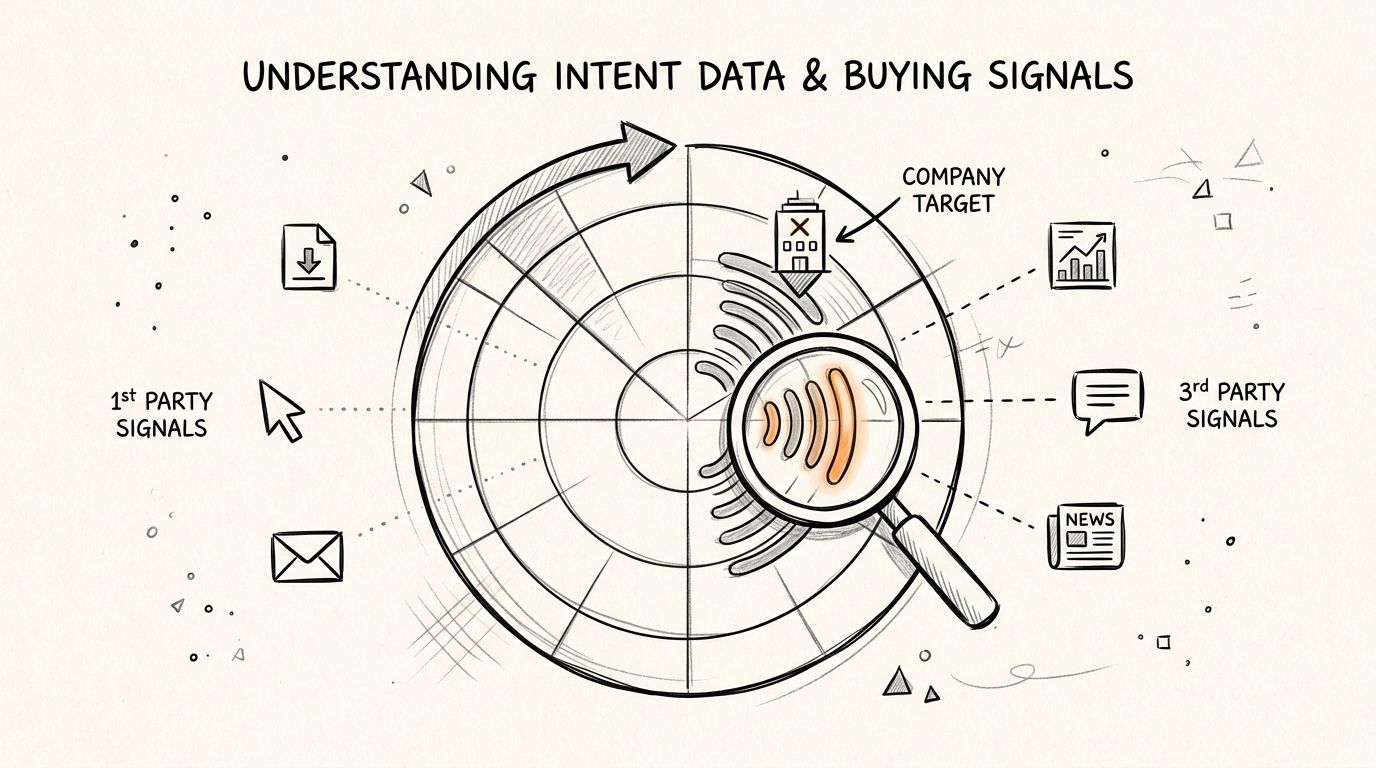
A hand-drawn illustration depicting the concept of intent data and buying signals in B2B marketing strategies.

Intent data tells you who's leaning in before they fill out a form. For SMBs, the highest-value version usually starts with first-party signals because those are closest to your actual buying journey. Website behavior, repeat visits, email engagement, and product-page depth usually matter more than broad external noise.

Third-party intent can still help, especially when you're working named accounts. But it needs validation. Teams often buy intent feeds, then chase every spike as if it means active demand.

How to use signals without fooling yourself

Signal stacking is the discipline here. One weak signal rarely deserves immediate outreach. Multiple aligned signals often do.

Look for combinations such as:

  • Research depth: Visits to comparison, pricing, integration, or implementation pages

  • Role concentration: Several contacts from the same account engaging within a short window

  • Contextual triggers: Funding, hiring, leadership changes, or launches that relate to your offer

  • Cross-channel behavior: Email engagement plus site activity plus social interest

Act on patterns, not single events.

KPIs, pitfalls, and Stamina's role

Measure conversion by signal combination, account progression after trigger-based outreach, and how often signals lead to sales-accepted opportunities.

The biggest pitfalls are moving too slowly, trusting noisy signals, and failing to record which signal types correlate with real pipeline. Stamina helps teams capture website visitor and social intent signals, then route those into automated outreach and CRM workflows so the signal doesn't die in a report.

8. Referral and Partnership Programs

Referral and partner channels are often underused by SMBs because they don't feel as scalable as paid or outbound. In practice, they can produce some of the cleanest conversations you'll get because trust is already present.

Referrals work when the ask is easy and timed well. Partnerships work when both sides serve the same customer in complementary ways. Neither works when the program lives in a slide deck and nobody owns it.

How to make it operational

Start with customers who already get value. Don't ask every account for referrals. Ask the ones that are succeeding, renewing, or publicly supportive.

Then formalize the mechanics:

  • Make the referral path simple: One clear form, one clear owner, fast response.

  • Equip advocates: Give them a short description of who you're a fit for and how to introduce you.

  • Choose partners carefully: Pick firms, agencies, or software vendors with overlapping customers but different offers.

  • Build shared motions: Co-host webinars, exchange introductions, and create co-branded material that sales teams can use.

KPIs, pitfalls, and Stamina's role

Measure referral-sourced opportunities, partner-influenced pipeline, partner activation, and conversion quality compared with other channels.

What fails most often is weak follow-up. A referred lead ignored for days can damage both the opportunity and the relationship with the referrer. Another common issue is muddy attribution. If you can't track who sourced the introduction, the channel loses internal support.

Stamina can help track referral sources and partner activity inside the CRM, then trigger the right follow-up motion once an introduction lands.

9. Paid Advertising

Launch a paid campaign before the message is sharp, and the market answers fast. Clicks come in, spend climbs, and sales still says the leads are weak. Paid media does not fix positioning. It exposes whether the offer, audience, and landing experience are aligned.

That is why paid advertising works best as a distribution channel, not a substitute for strategy. Search captures buyers already looking for a solution. Paid social helps you reach defined accounts and personas with a specific point of view. Retargeting keeps your brand in front of people who showed interest but were not ready to act on the first visit. The trade-off is straightforward. Paid can create speed and control, but it gets expensive quickly when targeting is loose or the conversion path is vague.

What paid advertising is and why it works

Paid advertising is the practice of buying visibility across search, social, display, and event-related media to reach buyers at different stages of the funnel. It works because you can control who sees the message, when they see it, and what action they take next.

For B2B teams, the highest ROI usually comes from channels with clearer intent signals. Search often performs well for commercial queries. Retargeting is efficient because the audience already knows you. LinkedIn can justify the cost when the audience is narrow, deal sizes are meaningful, and the creative speaks to a specific problem. If you are supporting in-person campaigns, event promotion and booth traffic can also benefit from paid support, especially when paired with partners such as exhibition stand contractors.

How to execute it without wasting budget

Start with one question. Are you trying to capture existing demand or create awareness in a defined market? The answer should determine channel mix, offer, and budget.

A workable setup usually looks like this:

  • Split campaigns by funnel stage: Keep cold prospecting, retargeting, branded search, and high-intent non-brand search in separate campaigns with separate goals.

  • Match the offer to the traffic source: Cold audiences respond better to useful assets, webinars, and comparison pages than immediate demo requests.

  • Build landing pages around one promise: Send ad traffic to pages that continue the exact message in the ad. Generic homepage clicks usually waste money.

  • Review traffic quality every week: Check search terms, audience segments, form quality, bounce behavior, and sales feedback before increasing spend.

  • Set retargeting windows intentionally: A 7-day visitor may need a different message than a 90-day visitor who downloaded a guide and never booked a call.

Creative fatigue matters too. So does conversion friction. Teams often blame the channel when the underlying problem is a weak offer, a slow page, or a form asking for too much too early.

KPIs, pitfalls, and Stamina's role

Measure paid advertising by business outcomes, not just lead volume. The core KPIs are qualified conversion rate, cost per opportunity, pipeline influenced, opportunity-to-close rate, and post-click engagement from the right accounts.

Common failure points are easy to spot once you know where to look. Teams scale before they have message-market fit. They optimize to cheap leads instead of sales-accepted opportunities. They run broad campaigns without excluding existing customers, irrelevant geographies, or poor-fit company sizes. They also forget that paid needs follow-up speed. A good click loses value fast when the handoff stalls.

Stamina helps operationalize the channel after the click. It routes paid responses into CRM and nurture flows, flags account activity, and helps sales act on high-intent engagement instead of treating every form fill the same. That matters because paid ROI is rarely decided by the ad alone. It is decided by the full path from impression to pipeline.

10. Events and Webinars

A hand-drawn illustration depicting a virtual event, webinar, and online presentation with attendees and digital marketing icons.

Events and webinars still work because they create attention with intent. Someone gave you time, not just a click. That's a stronger signal than most top-of-funnel activity.

Webinars are usually the better SMB starting point because they're lower cost, easier to repeat, and easier to repurpose. In-person events make sense when your buyers cluster around specific conferences or local markets. If you need booth support for physical events, firms that provide exhibition stand contractors can help with execution, but the follow-up process matters more than the stand itself.

Execution details that matter

The event itself is only half the work. Most ROI is determined by registration quality, speaker relevance, and what happens in the first day or two after the session.

A reliable event playbook looks like this:

  • Lead with a problem buyers care about: Educational sessions outperform disguised product pitches.

  • Capture intent cleanly: Registration source, attendance, questions asked, and follow-up interest should flow into CRM.

  • Segment post-event follow-up: Attendees, no-shows, and highly engaged participants should not receive the same sequence.

  • Repurpose the session: Turn recordings into clips, emails, blog posts, and sales assets.

KPIs, pitfalls, and Stamina's role

Measure attendance quality, meetings booked from event follow-up, opportunity creation, and influence on active deals. Event ROI improves when the event sits inside a larger campaign, not as a one-off tactic.

The most common problems are slow follow-up, weak speakers, and no clear next step for attendees. Stamina can support webinar and event flows by capturing engagement, triggering segmented nurture, and giving sales context for timely outreach.

10-Point Demand Generation Strategy Comparison

Strategy

Implementation complexity

Resource requirements

Expected outcomes

Ideal use cases

Key advantages

Account-Based Marketing (ABM)

High, intensive research and cross-team coordination

High, ABM platforms, account research, personalized content, sales involvement

Fewer but higher-value deals, higher conversion per account, measurable account ROI

B2B enterprise or mid-market targeting specific high-value accounts

Higher deal sizes, tighter sales-marketing alignment, efficient budget on priority accounts

AI-Powered Personalization & Email Sequencing

Medium, model setup and ongoing oversight

Medium, quality data, AI tools, templates, monitoring

Increased open/CTR and response rates, scalable personalized outreach

High-volume outbound, SDR enablement, personalized email programs

Scales personalization, saves copywriting time, optimizes messaging and send times

Content Marketing & Thought Leadership

Medium–High, strategy, SEO, consistent production

Medium, writers, designers, distribution, time investment

Long-term organic traffic, brand authority, inbound leads (ROI in months)

Brand building, inbound demand, education-driven purchase cycles

Compounding content value, credibility, SEO benefits

Sales Engagement & Warm Prospecting

Medium, multi-channel setup and signal integration

Medium, engagement tools, SDRs, tracking, signal feeds

Higher response rates from warm prospects, faster qualification

Outreach to engaged visitors, SDR teams focusing on intent signals

Timely contact, efficient SDR effort, measurable channel performance

Lead Scoring & Predictive Analytics

High, model building, calibration, governance

High, historical data, analytics, data science, CRM integration

Better prioritization, higher conversion efficiency, improved routing

Large lead volumes, complex pipelines, sales prioritization

Data-driven focus on best opportunities, transparency into lead quality

Marketing Automation & Nurture Campaigns

Medium, workflow and segmentation design

Medium, automation platform, content assets, CRM sync

Consistent nurture at scale, improved engagement over time

Lead nurturing, onboarding, early-stage demand programs

Time savings, scalable consistent messaging, clear campaign metrics

Intent Data & Buying Signal Analysis

High, ingesting and interpreting real-time signals

High, first/third-party data sources, tracking infra, analytics

Quicker outreach to in-market buyers, reduced time-to-close

ABM, in-market account identification, sales prioritization

Precise timing, better prioritization, contextualized outreach

Referral & Partnership Programs

Medium, program design and partner management

Low–Medium, incentives, tracking, partner resources

High-quality, lower-CAC leads, shorter sales cycles, strong retention

SaaS growth, channel expansion, leveraging existing customers/partners

Trusted referrals, lower acquisition cost, strong lifetime value

Paid Advertising (PPC, Social, Display, Retargeting)

Medium, campaign setup and continuous optimization

High, ad spend, creative production, analytics expertise

Fast traffic and lead volume, measurable ROI when optimized

Demand capture, product launches, scalable awareness campaigns

Quick results, precise targeting, scalable budget control

Events & Webinars

High, logistics, production, and promotion effort

High, venue/platform, speakers, marketing, time

Qualified engaged leads, deeper relationships, thought leadership content

Product launches, enterprise selling, community building

Deep engagement, networking opportunities, reusable content and demos

Unify and Conquer Your Next Step in Demand Generation

A familiar scenario plays out in growing B2B teams. Marketing runs paid campaigns, webinars, and nurture. Sales works outbound from a separate system. The CRM holds partial history. Everyone stays busy, but follow-up slows down, reporting conflicts, and good signals get missed between tools.

The best demand generation strategies work as a system.

Content gives outbound and paid teams something useful to put in front of buyers. Intent data helps sales reach accounts when timing is right. Lead scoring sharpens prioritization. Automation keeps follow-up consistent. Events create engagement that nurture can extend. ABM pulls these pieces together for accounts that justify higher-touch work.

For SMB teams, the usual constraint is coordination. One platform tracks email engagement, another runs webinars, another stores pipeline data, and each team sees a different version of the buyer journey. That creates practical problems. Reps reach out without full context. Marketing keeps optimizing for response volume while sales cares about deal movement. Leadership gets dashboards that do not line up.

A stronger operating model measures the demand engine by pipeline quality and conversion efficiency, not lead counts alone. Track whether the right accounts enter pipeline, how quickly deals progress, whether average deal size improves, and where handoffs stall. That shifts attention to targeting, timing, and sales-marketing execution, which is often where demand programs break down.

If I were building from scratch, I would sequence the work based on time-to-impact and operational maturity. Start with programs that can create near-term conversations, such as warm prospecting and AI-assisted outbound. Add content, SEO, and nurture to build demand that compounds over time. Then add lead scoring, automation, and intent signals to improve prioritization. ABM, partnerships, and events usually perform best once the core system is already producing reliable data and follow-up.

Execution matters more than channel count. Choose a small set of strategies that fit your sales motion, define the signals that should trigger action, and make sure those signals move across systems. If a target account visits pricing pages, downloads a guide, attends a webinar, and matches your ICP, that context should update the record, adjust priority, and change the next outreach step.

That is the through line across all 10 strategies in this guide. Each one works better when managed with the same framework: what the tactic is, why it works, how to execute it, which KPIs to watch, where teams usually fail, and how your platform reduces manual work.

Stamina is built around that model. It combines marketing workflows, sales engagement, CRM, and AI SDR capabilities in one platform, which helps SMB teams run connected programs with shared context instead of passing data between separate tools.

If you're ready to connect outreach, nurture, CRM, and buyer signals in one place, Stamina is worth a look. It gives growing SMB teams a single platform for running demand generation with AI-assisted personalization, warm prospecting, automated flows, and shared revenue data.

Monday starts with the same question every revenue team asks in a different way: where will next quarter's pipeline come from? Marketing is running campaigns across email, webinars, paid social, and CRM nurture. Sales wants to know which accounts are showing real buying intent. Finance wants proof that budget is turning into revenue, not just form fills.

That pressure is what makes demand generation hard for SMBs. The challenge usually is not a lack of tactics. It is too many disconnected tactics, weak follow-up, and reporting that stops at lead volume instead of showing contribution to pipeline, meetings, and closed revenue.

Strong demand generation programs are built as systems. Each channel has a job. Each handoff has a rule. Each campaign has a defined audience, success metric, and follow-up motion from sales.

This guide covers 10 demand generation strategies that B2B teams can run without building an enterprise-sized marketing department. For each one, the framework stays consistent: what the strategy is, why it works, how to execute it step by step, which KPIs to track, where teams usually lose performance, and how Stamina's AI platform helps automate the work or connect the motion across marketing, sales, and CRM.

Some of these strategies drive demand early. Some convert existing interest faster. The trade-off matters. A webinar can create new conversations, but it takes production time and promotion. ABM can improve win rates, but only if sales and marketing agree on target accounts and follow-up discipline. Paid acquisition can create volume quickly, but weak offer strategy and poor lead routing can burn budget fast.

The goal is not to run all 10 at once. The goal is to choose the mix that fits your sales cycle, deal size, team capacity, and data maturity, then execute it with enough discipline to produce measurable pipeline.

1. Account-Based Marketing

A professional illustration of a business building connected to LinkedIn, email, and a personalized letter for marketing.

ABM works best when your average deal needs multiple conversations, multiple stakeholders, and tighter qualification than a broad inbound funnel can provide. Instead of asking marketing to produce more leads, you pick a set of accounts worth winning and coordinate around them.

For SMBs, the mistake isn't trying ABM. It's overbuilding it. Teams create giant target-account lists, write vague persona messaging, and call it strategy. Real ABM starts with a small list, clear account tiers, and agreed rules with sales on who owns what.

How to execute it

Start with your best-fit accounts, not your dream logos. Pull closed-won customers, identify common traits, and build a target list your sales team wants to pursue.

Then build account coverage deliberately:

  • Map the buying group: Identify the likely decision-maker, economic buyer, operational owner, and daily user.

  • Tailor the angle: Create messaging by role. A VP wants business impact. An ops lead wants workflow fit.

  • Run coordinated touches: Use email, LinkedIn, retargeting, and direct outreach in the same window.

  • Set account SLAs: Decide when marketing hands off, when sales follows up, and what counts as meaningful engagement.

Practical rule: If sales wouldn't personally follow up on the account list, your ABM program isn't ready.

KPIs, pitfalls, and Stamina's role

Measure account engagement, meetings from target accounts, opportunity creation, pipeline progression, and close quality. Account-level reporting matters more than raw lead counts.

Common pitfalls include treating ABM like a paid ads audience, personalizing only the first line of an email, and failing to coordinate follow-up. ABM breaks down fast when marketing and sales run separate plays.

Stamina supports this model by keeping account activity, outreach, and CRM context in one place. Zara SDR can help research contacts and draft personalized sequences, while shared workflows make it easier for marketing and sales to act on the same account signals.

2. AI-Powered Personalization and Email Sequencing

A friendly AI robot writing personalized sales emails for a professional team to improve business outreach efforts.

The core issue isn't a sequencing problem. Instead, it's a relevance problem. Teams often send the same message to too many people, then wonder why replies stay weak.

AI helps when it speeds up research, drafts variants, and adapts follow-up based on what the prospect did. It hurts when teams use it to flood inboxes with generic copy at scale. Buyers can tell the difference quickly.

A practical setup

Build personalization from layers. Firmographic context comes first. Then role. Then recent behavior or company context. The more expensive the offer, the more that context matters.

A solid workflow looks like this:

  • Start with structured inputs: Industry, company size, role, website behavior, and previous engagement.

  • Create message variants: Test different angles such as pain point, trigger event, or use case.

  • Increase personalization over time: Early emails can stay concise. Follow-ups should reference specific activity.

  • Review before launch: AI-generated copy still needs human checks for tone, accuracy, and awkward assumptions.

If your team needs ideas for stronger copy angles, these sales email templates are a useful starting point. If video fits your outreach mix, you can also discover AI video tools for personalized follow-up assets.

What to measure and where teams fail

Track reply quality, meeting rate, unsubscribe trends, positive response themes, and progression by sequence step. Open rates alone won't tell you much.

The common failure modes are easy to spot:

  • Over-automation: Too many sends, not enough judgment.

  • Fake personalization: Mentioning a company name without real relevance.

  • No suppression logic: Prospects keep receiving nurture emails after engaging with sales.

  • Weak sequencing: Every email asks for a meeting instead of building context.

Stamina's Zara SDR fits here by generating personalized emails, sequences, and variants from unified account data. That matters because the best AI sequencing depends on shared context, not disconnected spreadsheets and copy docs.

3. Content Marketing and Thought Leadership

A common pipeline problem looks like this. Traffic is steady, the blog is active, LinkedIn posts get some engagement, and sales still says the content is not helping them close deals. The issue is rarely volume. The issue is relevance to real buying decisions.

Content marketing works when it gives buyers useful clarity at each stage of evaluation. Thought leadership works when your team has a point of view backed by operating experience, not recycled commentary. In demand generation, both should support revenue. They should help prospects frame the problem, compare options, reduce risk, and move faster.

What it is and why it works

Content marketing creates assets that attract, educate, and convert demand across the buyer journey. Thought leadership adds a sharper layer. It explains how the market is changing, what buyers should do about it, and why your team sees the problem differently.

This combination works because B2B buyers do research before they talk to sales, and they continue researching after that first call. Good content lowers the cost of education for your team. It also gives sales something useful to send when a prospect asks a hard question or stalls during evaluation.

For teams investing in reputation and category education, this guide to building authority with thought leadership is a useful complement.

How to execute it without wasting cycles

Start with deal reality, not a blank editorial calendar. The best content programs pull topics from pipeline reviews, call recordings, lost deal notes, customer onboarding friction, and the questions executives keep hearing.

Use a simple operating model:

  • Map content to buying stages: Create problem-awareness pieces, comparison content, implementation guides, ROI explainers, and customer proof for later-stage validation.

  • Mine sales and success conversations: Pull recurring objections, security concerns, pricing pushback, and adoption questions. Those topics usually outperform generic trend pieces.

  • Publish in clusters: One core topic should produce a primary article, supporting posts, short social cuts, email follow-up copy, and sales collateral.

  • Distribute on purpose: Promotion matters as much as production. Push strong assets through email, paid retargeting, SDR follow-up, social, and partner channels.

  • Refresh what already works: Updating a high-intent article often produces better return than publishing three new low-conviction posts.

A practical test helps. If a rep would not send the asset to a live opportunity, it probably does not belong near the top of your content roadmap.

Teams that want tighter coordination between content engagement and outbound can also review how an AI SDR supports follow-up based on buyer activity.

What to measure

Do not stop at pageviews.

Track content-influenced opportunities, assisted conversions, engaged sessions from target accounts, return visits to high-intent pages, demo requests from content paths, and sales usage in active deals. Pipeline influence matters more than raw traffic, especially for SMB and mid-market teams with limited production capacity.

It also helps to measure time-to-first-action after content consumption. If prospects read a comparison page and request a demo within days, that asset is doing real demand generation work.

Common pitfalls

The first mistake is treating content as a publishing function instead of a revenue function. That creates top-of-funnel assets that look polished but never address objections, evaluation criteria, or internal buying friction.

The second is confusing opinion with thought leadership. Strong thought leadership has a clear stance, a practical framework, and evidence from the field. Vague hot takes do not help buyers decide.

The third is gating too early. Early-stage education usually performs better without a form. Save gates for high-intent assets where the value exchange is obvious.

How Stamina helps

Stamina connects content engagement data to CRM records and outreach workflows, so marketing and sales can see which accounts consumed what, which topics are gaining traction, and when follow-up should happen. That makes content more actionable. Instead of publishing and hoping someone notices, teams can route signals into campaigns, SDR tasks, and account-level prioritization without manual handoffs.

4. Sales Engagement and Warm Prospecting

Cold outreach still exists, but the highest-conviction outreach usually isn't fully cold. It's warm because something happened first. A prospect visited your site, engaged with a post, viewed a profile, or showed up after a company announcement changed their priorities.

Warm prospecting is one of the fastest ways to improve outbound quality because it gives reps a reason to contact someone now, not eventually. Timing changes the conversation.

How to run it well

The best teams don't treat every signal equally. A homepage visit isn't the same as repeated visits to pricing, integrations, or case studies. A social like isn't the same as a pattern of engagement from multiple people at one account.

Use a simple model:

  • Sort by signal strength: High-intent page views, repeat visits, content downloads, and social engagement should rank higher than passive traffic.

  • Match outreach to the signal: If someone viewed a product page, follow up with relevance. Don't send a broad intro.

  • Respond quickly: Signal value drops when follow-up lags.

  • Create playbooks by trigger: Website revisit, webinar attendance, executive hire, and social engagement each need a different message.

If you're evaluating this motion in more depth, this breakdown of what an AI SDR does gives useful context.

KPIs, pitfalls, and Stamina's role

Measure speed to first touch, conversion by signal type, meeting rate from warm accounts, and pipeline created from signal-driven outreach.

A common mistake is calling every identified visitor a qualified prospect. Another is routing signals into a dashboard nobody checks. Signal-based prospecting only works when reps can act on it without switching across five tools.

Stamina supports warm prospecting by surfacing website visitor and social signals inside the same platform reps use for outreach and CRM work. That shortens the path from signal to action.

5. Lead Scoring and Predictive Analytics

A lead scoring model should help sales focus. If it creates arguments instead, it's failing.

Scoring matters because most SMB teams have more contacts than they can handle properly. Without a ranking system, reps cherry-pick based on title, recency, or gut feel. Some of that instinct is useful, but it doesn't scale.

Build a scoring model sales will trust

Start with fit and behavior. Fit tells you whether the account belongs in your market. Behavior tells you whether timing might be real. You need both.

Use criteria like role, company type, segment, meaningful website activity, content engagement, and sales interaction history. Add negative scoring for poor fit, student emails, competitors, or non-buying behavior.

A practical process:

  • Define qualified clearly: Sales and marketing need one definition, not two.

  • Weight meaningful actions more heavily: Product, pricing, and implementation interest should outrank casual blog activity.

  • Review outcomes regularly: Compare scored leads against actual meetings, opportunities, and closed business.

  • Automate routing: Once a score crosses your threshold, assign it fast and with context.

For teams building this foundation, lead scoring automation is worth reviewing.

What to measure and where it breaks

Measure score-to-meeting rate, score-to-opportunity rate, acceptance by sales, and how often high-scoring leads stall. Good scoring models create confidence. Bad ones create busywork.

The quickest way to kill lead scoring is to hide the logic from sales.

Stamina helps by connecting behavioral signals, CRM fields, and workflow automation in one system. That makes it easier to score, route, and update leads based on real activity instead of static lists.

6. Marketing Automation and Nurture Campaigns

A lead downloads a guide, attends a webinar two weeks later, visits your pricing page, and then hears nothing useful for a month. That is how demand gets wasted.

Marketing automation fixes the follow-up problem when the strategy is sound. It gives your team a repeatable way to respond to behavior, route intent at the right moment, and keep accounts warm without relying on manual reminders or one-off campaigns.

What it is and why it works

Marketing automation and nurture campaigns are the operating system behind consistent follow-up. They connect forms, CRM records, email sequences, lifecycle stages, and handoff rules so leads do not stall between touchpoints.

It works because B2B buyers rarely convert after one interaction. They research in bursts, go quiet, return with new questions, and often involve more stakeholders over time. Nurture keeps your company relevant during that gap. Good automation also protects sales time by sending buying signals to reps only when timing or engagement justifies outreach.

The trade-off is straightforward. More automation increases scale and consistency, but poorly designed workflows create noise fast. If the message, timing, or segmentation is off, automation just sends the wrong thing more efficiently.

How to build nurture that actually moves deals

Start with segments that reflect how buying decisions happen in your business. Separate by persona, funnel stage, use case, product line, or source when those differences change the message. If every lead enters the same stream, the campaign is doing list management, not nurture.

Then build around behavior. A repeat visit to pricing, implementation, or comparison pages should trigger a different path than a single top-of-funnel content download. Webinar attendance, demo requests, inactive periods, and multi-contact engagement from one account should all shape cadence and content.

A practical execution framework:

  • Define the entry criteria: Set clear rules for who enters each workflow and what data is required first.

  • Map content to stage: Early-stage leads need problem framing and proof. Mid-stage leads need evaluation help, objections, and product context. Late-stage leads need urgency, ROI, and handoff support.

  • Set sales coordination rules: Pause or adjust nurture when an AE opens an opportunity or starts active outreach.

  • Use exit conditions: Remove contacts when they convert, disqualify, go inactive for too long, or show clear purchase intent that belongs with sales.

  • Review workflow performance quarterly: Sequences decay. Offers age. Buyer questions change.

For teams refining the mechanics, this guide to lead nurturing with marketing automation is a useful reference.

What to measure

Do not judge nurture on clicks alone. Measure movement.

Track nurture-to-meeting rate, time from first conversion to qualified meeting, reactivation rate on dormant leads, influenced pipeline by segment, and sales acceptance after handoff. If a sequence gets opens but does not create better conversations or faster progression, it is busywork.

Common pitfalls

The first mistake is over-automation. Teams add too many branches, too many triggers, and too many emails, then lose control of the experience.

The second is poor timing. Product-heavy emails sent too early often suppress response instead of increasing it. The third is weak sales alignment. If reps are calling someone while automation is still sending introductory education, the buyer sees a disconnected company.

Content decay is another common problem. A nurture stream built six months ago may still run, but outdated proof points, old screenshots, and stale offers lower response over time.

How Stamina helps

Stamina helps teams run nurture inside the same system used for campaigns, CRM data, broadcasts, and automated flows. That matters because segmentation, trigger logic, handoff rules, and reporting stay connected instead of being spread across separate tools.

In practice, that means you can trigger campaigns from actual account behavior, suppress automation when sales steps in, and measure which workflows produce meetings and pipeline, not just email engagement.

7. Intent Data and Buying Signal Analysis

A hand-drawn illustration depicting the concept of intent data and buying signals in B2B marketing strategies.

Intent data tells you who's leaning in before they fill out a form. For SMBs, the highest-value version usually starts with first-party signals because those are closest to your actual buying journey. Website behavior, repeat visits, email engagement, and product-page depth usually matter more than broad external noise.

Third-party intent can still help, especially when you're working named accounts. But it needs validation. Teams often buy intent feeds, then chase every spike as if it means active demand.

How to use signals without fooling yourself

Signal stacking is the discipline here. One weak signal rarely deserves immediate outreach. Multiple aligned signals often do.

Look for combinations such as:

  • Research depth: Visits to comparison, pricing, integration, or implementation pages

  • Role concentration: Several contacts from the same account engaging within a short window

  • Contextual triggers: Funding, hiring, leadership changes, or launches that relate to your offer

  • Cross-channel behavior: Email engagement plus site activity plus social interest

Act on patterns, not single events.

KPIs, pitfalls, and Stamina's role

Measure conversion by signal combination, account progression after trigger-based outreach, and how often signals lead to sales-accepted opportunities.

The biggest pitfalls are moving too slowly, trusting noisy signals, and failing to record which signal types correlate with real pipeline. Stamina helps teams capture website visitor and social intent signals, then route those into automated outreach and CRM workflows so the signal doesn't die in a report.

8. Referral and Partnership Programs

Referral and partner channels are often underused by SMBs because they don't feel as scalable as paid or outbound. In practice, they can produce some of the cleanest conversations you'll get because trust is already present.

Referrals work when the ask is easy and timed well. Partnerships work when both sides serve the same customer in complementary ways. Neither works when the program lives in a slide deck and nobody owns it.

How to make it operational

Start with customers who already get value. Don't ask every account for referrals. Ask the ones that are succeeding, renewing, or publicly supportive.

Then formalize the mechanics:

  • Make the referral path simple: One clear form, one clear owner, fast response.

  • Equip advocates: Give them a short description of who you're a fit for and how to introduce you.

  • Choose partners carefully: Pick firms, agencies, or software vendors with overlapping customers but different offers.

  • Build shared motions: Co-host webinars, exchange introductions, and create co-branded material that sales teams can use.

KPIs, pitfalls, and Stamina's role

Measure referral-sourced opportunities, partner-influenced pipeline, partner activation, and conversion quality compared with other channels.

What fails most often is weak follow-up. A referred lead ignored for days can damage both the opportunity and the relationship with the referrer. Another common issue is muddy attribution. If you can't track who sourced the introduction, the channel loses internal support.

Stamina can help track referral sources and partner activity inside the CRM, then trigger the right follow-up motion once an introduction lands.

9. Paid Advertising

Launch a paid campaign before the message is sharp, and the market answers fast. Clicks come in, spend climbs, and sales still says the leads are weak. Paid media does not fix positioning. It exposes whether the offer, audience, and landing experience are aligned.

That is why paid advertising works best as a distribution channel, not a substitute for strategy. Search captures buyers already looking for a solution. Paid social helps you reach defined accounts and personas with a specific point of view. Retargeting keeps your brand in front of people who showed interest but were not ready to act on the first visit. The trade-off is straightforward. Paid can create speed and control, but it gets expensive quickly when targeting is loose or the conversion path is vague.

What paid advertising is and why it works

Paid advertising is the practice of buying visibility across search, social, display, and event-related media to reach buyers at different stages of the funnel. It works because you can control who sees the message, when they see it, and what action they take next.

For B2B teams, the highest ROI usually comes from channels with clearer intent signals. Search often performs well for commercial queries. Retargeting is efficient because the audience already knows you. LinkedIn can justify the cost when the audience is narrow, deal sizes are meaningful, and the creative speaks to a specific problem. If you are supporting in-person campaigns, event promotion and booth traffic can also benefit from paid support, especially when paired with partners such as exhibition stand contractors.

How to execute it without wasting budget

Start with one question. Are you trying to capture existing demand or create awareness in a defined market? The answer should determine channel mix, offer, and budget.

A workable setup usually looks like this:

  • Split campaigns by funnel stage: Keep cold prospecting, retargeting, branded search, and high-intent non-brand search in separate campaigns with separate goals.

  • Match the offer to the traffic source: Cold audiences respond better to useful assets, webinars, and comparison pages than immediate demo requests.

  • Build landing pages around one promise: Send ad traffic to pages that continue the exact message in the ad. Generic homepage clicks usually waste money.

  • Review traffic quality every week: Check search terms, audience segments, form quality, bounce behavior, and sales feedback before increasing spend.

  • Set retargeting windows intentionally: A 7-day visitor may need a different message than a 90-day visitor who downloaded a guide and never booked a call.

Creative fatigue matters too. So does conversion friction. Teams often blame the channel when the underlying problem is a weak offer, a slow page, or a form asking for too much too early.

KPIs, pitfalls, and Stamina's role

Measure paid advertising by business outcomes, not just lead volume. The core KPIs are qualified conversion rate, cost per opportunity, pipeline influenced, opportunity-to-close rate, and post-click engagement from the right accounts.

Common failure points are easy to spot once you know where to look. Teams scale before they have message-market fit. They optimize to cheap leads instead of sales-accepted opportunities. They run broad campaigns without excluding existing customers, irrelevant geographies, or poor-fit company sizes. They also forget that paid needs follow-up speed. A good click loses value fast when the handoff stalls.

Stamina helps operationalize the channel after the click. It routes paid responses into CRM and nurture flows, flags account activity, and helps sales act on high-intent engagement instead of treating every form fill the same. That matters because paid ROI is rarely decided by the ad alone. It is decided by the full path from impression to pipeline.

10. Events and Webinars

A hand-drawn illustration depicting a virtual event, webinar, and online presentation with attendees and digital marketing icons.

Events and webinars still work because they create attention with intent. Someone gave you time, not just a click. That's a stronger signal than most top-of-funnel activity.

Webinars are usually the better SMB starting point because they're lower cost, easier to repeat, and easier to repurpose. In-person events make sense when your buyers cluster around specific conferences or local markets. If you need booth support for physical events, firms that provide exhibition stand contractors can help with execution, but the follow-up process matters more than the stand itself.

Execution details that matter

The event itself is only half the work. Most ROI is determined by registration quality, speaker relevance, and what happens in the first day or two after the session.

A reliable event playbook looks like this:

  • Lead with a problem buyers care about: Educational sessions outperform disguised product pitches.

  • Capture intent cleanly: Registration source, attendance, questions asked, and follow-up interest should flow into CRM.

  • Segment post-event follow-up: Attendees, no-shows, and highly engaged participants should not receive the same sequence.

  • Repurpose the session: Turn recordings into clips, emails, blog posts, and sales assets.

KPIs, pitfalls, and Stamina's role

Measure attendance quality, meetings booked from event follow-up, opportunity creation, and influence on active deals. Event ROI improves when the event sits inside a larger campaign, not as a one-off tactic.

The most common problems are slow follow-up, weak speakers, and no clear next step for attendees. Stamina can support webinar and event flows by capturing engagement, triggering segmented nurture, and giving sales context for timely outreach.

10-Point Demand Generation Strategy Comparison

Strategy

Implementation complexity

Resource requirements

Expected outcomes

Ideal use cases

Key advantages

Account-Based Marketing (ABM)

High, intensive research and cross-team coordination

High, ABM platforms, account research, personalized content, sales involvement

Fewer but higher-value deals, higher conversion per account, measurable account ROI

B2B enterprise or mid-market targeting specific high-value accounts

Higher deal sizes, tighter sales-marketing alignment, efficient budget on priority accounts

AI-Powered Personalization & Email Sequencing

Medium, model setup and ongoing oversight

Medium, quality data, AI tools, templates, monitoring

Increased open/CTR and response rates, scalable personalized outreach

High-volume outbound, SDR enablement, personalized email programs

Scales personalization, saves copywriting time, optimizes messaging and send times

Content Marketing & Thought Leadership

Medium–High, strategy, SEO, consistent production

Medium, writers, designers, distribution, time investment

Long-term organic traffic, brand authority, inbound leads (ROI in months)

Brand building, inbound demand, education-driven purchase cycles

Compounding content value, credibility, SEO benefits

Sales Engagement & Warm Prospecting

Medium, multi-channel setup and signal integration

Medium, engagement tools, SDRs, tracking, signal feeds

Higher response rates from warm prospects, faster qualification

Outreach to engaged visitors, SDR teams focusing on intent signals

Timely contact, efficient SDR effort, measurable channel performance

Lead Scoring & Predictive Analytics

High, model building, calibration, governance

High, historical data, analytics, data science, CRM integration

Better prioritization, higher conversion efficiency, improved routing

Large lead volumes, complex pipelines, sales prioritization

Data-driven focus on best opportunities, transparency into lead quality

Marketing Automation & Nurture Campaigns

Medium, workflow and segmentation design

Medium, automation platform, content assets, CRM sync

Consistent nurture at scale, improved engagement over time

Lead nurturing, onboarding, early-stage demand programs

Time savings, scalable consistent messaging, clear campaign metrics

Intent Data & Buying Signal Analysis

High, ingesting and interpreting real-time signals

High, first/third-party data sources, tracking infra, analytics

Quicker outreach to in-market buyers, reduced time-to-close

ABM, in-market account identification, sales prioritization

Precise timing, better prioritization, contextualized outreach

Referral & Partnership Programs

Medium, program design and partner management

Low–Medium, incentives, tracking, partner resources

High-quality, lower-CAC leads, shorter sales cycles, strong retention

SaaS growth, channel expansion, leveraging existing customers/partners

Trusted referrals, lower acquisition cost, strong lifetime value

Paid Advertising (PPC, Social, Display, Retargeting)

Medium, campaign setup and continuous optimization

High, ad spend, creative production, analytics expertise

Fast traffic and lead volume, measurable ROI when optimized

Demand capture, product launches, scalable awareness campaigns

Quick results, precise targeting, scalable budget control

Events & Webinars

High, logistics, production, and promotion effort

High, venue/platform, speakers, marketing, time

Qualified engaged leads, deeper relationships, thought leadership content

Product launches, enterprise selling, community building

Deep engagement, networking opportunities, reusable content and demos

Unify and Conquer Your Next Step in Demand Generation

A familiar scenario plays out in growing B2B teams. Marketing runs paid campaigns, webinars, and nurture. Sales works outbound from a separate system. The CRM holds partial history. Everyone stays busy, but follow-up slows down, reporting conflicts, and good signals get missed between tools.

The best demand generation strategies work as a system.

Content gives outbound and paid teams something useful to put in front of buyers. Intent data helps sales reach accounts when timing is right. Lead scoring sharpens prioritization. Automation keeps follow-up consistent. Events create engagement that nurture can extend. ABM pulls these pieces together for accounts that justify higher-touch work.

For SMB teams, the usual constraint is coordination. One platform tracks email engagement, another runs webinars, another stores pipeline data, and each team sees a different version of the buyer journey. That creates practical problems. Reps reach out without full context. Marketing keeps optimizing for response volume while sales cares about deal movement. Leadership gets dashboards that do not line up.

A stronger operating model measures the demand engine by pipeline quality and conversion efficiency, not lead counts alone. Track whether the right accounts enter pipeline, how quickly deals progress, whether average deal size improves, and where handoffs stall. That shifts attention to targeting, timing, and sales-marketing execution, which is often where demand programs break down.

If I were building from scratch, I would sequence the work based on time-to-impact and operational maturity. Start with programs that can create near-term conversations, such as warm prospecting and AI-assisted outbound. Add content, SEO, and nurture to build demand that compounds over time. Then add lead scoring, automation, and intent signals to improve prioritization. ABM, partnerships, and events usually perform best once the core system is already producing reliable data and follow-up.

Execution matters more than channel count. Choose a small set of strategies that fit your sales motion, define the signals that should trigger action, and make sure those signals move across systems. If a target account visits pricing pages, downloads a guide, attends a webinar, and matches your ICP, that context should update the record, adjust priority, and change the next outreach step.

That is the through line across all 10 strategies in this guide. Each one works better when managed with the same framework: what the tactic is, why it works, how to execute it, which KPIs to watch, where teams usually fail, and how your platform reduces manual work.

Stamina is built around that model. It combines marketing workflows, sales engagement, CRM, and AI SDR capabilities in one platform, which helps SMB teams run connected programs with shared context instead of passing data between separate tools.

If you're ready to connect outreach, nurture, CRM, and buyer signals in one place, Stamina is worth a look. It gives growing SMB teams a single platform for running demand generation with AI-assisted personalization, warm prospecting, automated flows, and shared revenue data.

Share this article

Share this article

Send a shareable link to your team or anyone who might find it useful.

Send a shareable link to your team or anyone who might find it useful.

Copy link

Copied

Share directly to

Table of contents

Give Your Business the Stamina it needs to Thrive

PRODUCT

COMPANY

RESOURCES

© 2026 Stamina Software Technologies Inc. All rights reserved.

PRODUCT

COMPANY

RESOURCES

© 2026 Stamina Software Technologies Inc. All rights reserved.

PRODUCT

COMPANY

RESOURCES

© 2026 Stamina Software Technologies Inc. All rights reserved.