An AI SDR is an autonomous AI agent that handles top-of-funnel sales tasks like prospecting, personalized outreach, and lead qualification, acting like a digital team member. It can work 24/7 and, in enterprise use, AI SDRs are already running 41% of outbound, with ramp time dropping from 4.7 months to 24 days and cost per qualified opportunity falling 54% in hybrid pods.
If you're running an SMB, this probably feels familiar. Your team spends hours building lists, cleaning CRM records, tweaking sequences, and chasing replies, yet the pipeline still feels thin or noisy. You don't need more activity for its own sake. You need better conversations, cleaner handoffs, and meetings that have a real chance to turn into revenue.
That's where the question of what is an AI SDR gets more interesting than most blog posts make it sound. Its true value isn't just sending more emails faster. It's improving who gets contacted, when they get contacted, how prepared your reps are when they step in, and whether the work at the top of the funnel produces qualified pipeline instead of calendar clutter.
Beyond Autoreplies Your Sales Team Needs an AI Partner
Most SMB teams hit the same wall. A founder, sales manager, or first SDR ends up doing too much manual work at once. Prospecting in one tab. CRM cleanup in another. Email writing in a third. By the time outreach goes live, the context is stale and the follow-up is inconsistent.
That's why an AI SDR matters. It's not another autoresponder. It's a new operating model for sales development, one that can handle lead qualification, outreach, follow-up, and meeting scheduling continuously instead of only when a human has time.
Why this category got big so fast
The urgency is real. The AI SDR market is estimated at $2.9 billion to $4.4 billion in 2024 to 2025, with growth rates of roughly 21% to 30% through the early 2030s. In 2026, AI SDRs are already running 41% of enterprise outbound, with ramp time dropping from 4.7 months to 24 days and cost per qualified opportunity falling 54% according to industry AI SDR market and adoption benchmarks.
For an SMB owner, those numbers don't mean you should copy enterprise playbooks. They mean this category is no longer experimental.
Practical rule: If your reps are spending more time preparing to sell than actually talking to qualified buyers, you have a sales development problem that software alone hasn't solved.
What skeptical teams usually get wrong
A lot of teams hear “AI SDR” and assume it means bulk email with a smarter subject line. That's too narrow. The better way to think about it is as an always-on sales teammate that handles repetitive top-of-funnel work while your human reps focus on judgment, discovery, and closing.
If you're still mapping the basics of a repeatable outbound engine, a clear breakdown of the sales automation process helps separate useful automation from noise. And if you want a broader view of adjacent tools, this overview of AI sales assistants is a useful companion.
The SMB lens that matters
For smaller teams, the question isn't whether AI can produce more touches. It can. The better question is whether it helps produce meetings your account executive wants to take.
That's the benchmark to keep in mind through the rest of this discussion. Activity is easy to inflate. Pipeline quality is harder. That's why the best AI SDR setups are designed around qualification, context capture, and clean handoff, not just volume.
What an AI SDR Actually Is and What It Is Not
An AI SDR is an AI-powered agent that automates top-of-funnel work such as lead qualification, outreach, follow-up, and meeting scheduling. It operates 24/7 using machine learning and natural language processing to personalize messages, keep CRM records updated, react to inbound leads immediately, and hand off qualified prospects with context already captured, as described in Salesforce's explanation of an AI SDR.
That sounds technical, but the practical meaning is simple. It doesn't just send a sequence. It helps decide what should happen next.
The easiest analogy
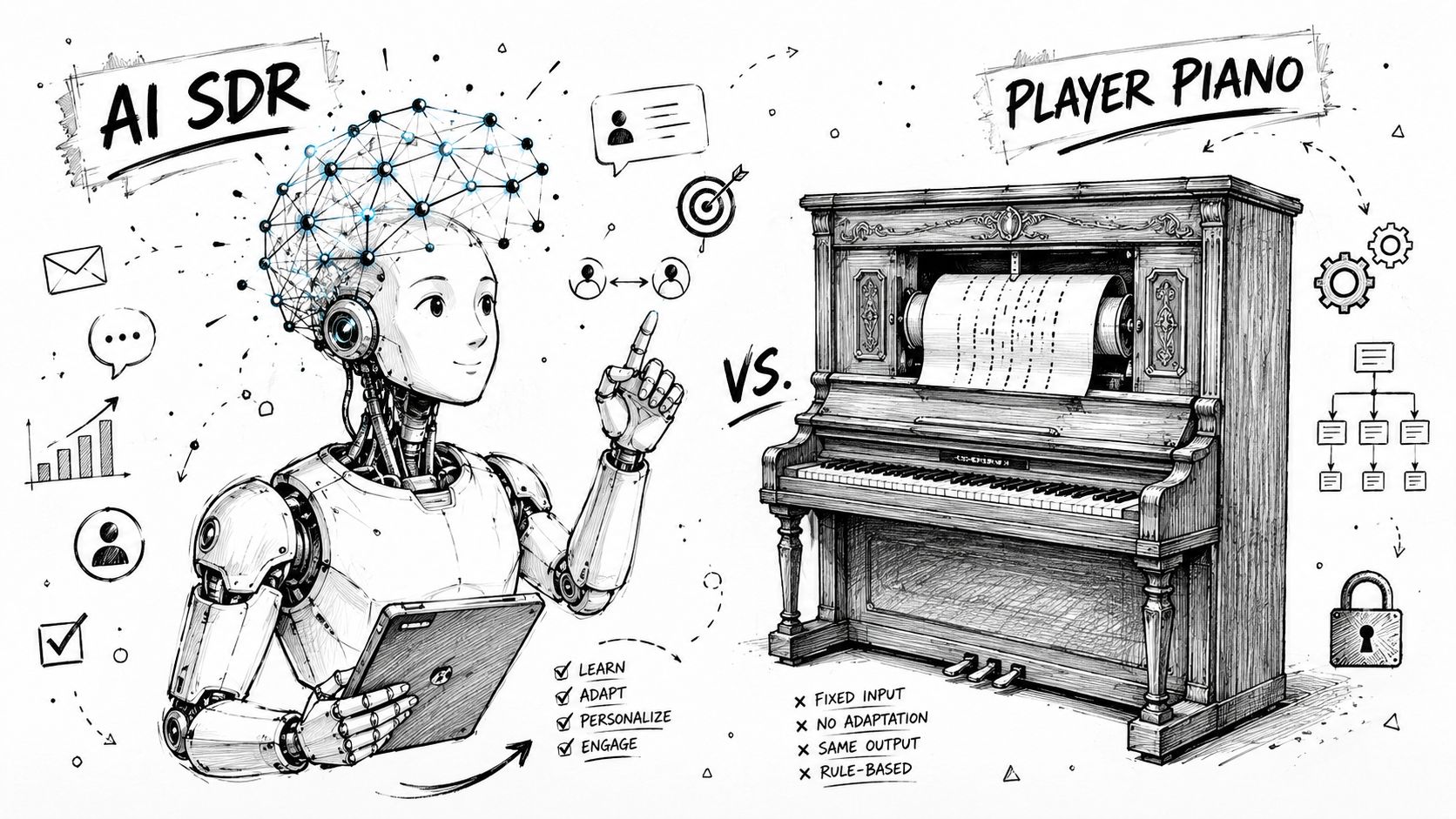
Rule-based automation is a player piano. You punch in the notes, and it plays the same song every time.
An AI SDR is closer to a jazz musician. It still works within structure, but it adapts to the room. It uses signals, context, and prior interaction data to decide how to respond inside guardrails.
That distinction matters because many organizations have already tried the player piano version. They've used sequence tools, templates, and branching logic. Those systems are useful, but they can't really interpret nuance. They only execute what you pre-wrote.
What's happening under the hood
You don't need a machine learning degree to understand the mechanics. In plain terms:
Natural language processing helps the system read and write in a way that resembles human communication.
Machine learning helps it identify patterns in lead data, responses, and outcomes.
CRM integration lets it work from actual account history instead of guessing from a cold list.
Signal use lets it react to things like website behavior, social activity, or inbound actions when that data is available in the stack.
The result is a system that can do more than schedule email delays. It can react, classify, route, and update records while the conversation is happening.
An AI SDR should reduce manual decision load for your team. If it only adds more settings, prompts, and cleanup work, it's acting like a complicated sequence tool, not a sales agent.
What it is not
It is not just a chatbot on your website.
It is not just a template spinner for outbound copy.
It is not just a drip campaign with “{{first_name}}” personalization.
A true AI SDR behaves more like an operator inside your funnel. It can manage repetitive interaction loops while preserving context for the human seller who takes over later.
If you're evaluating categories, this guide on how to choose an AI sales assistant can help you spot where AI assistance ends and autonomous sales work begins. And if you want the baseline role definition it builds on, this explanation of what an SDR does in sales is worth reviewing.
AI SDR vs Human SDR vs Automation A Clear Comparison
The cleanest way to understand an AI SDR is to compare it with the two things SMBs already know well. A human SDR and rule-based automation.
Autobound defines an AI SDR as an autonomous sales agent that combines prospect discovery, enrichment, personalized outreach, and reply handling, using signals and models to decide who to contact and what to say, which makes it materially different from rule-based drip campaigns in its glossary on the AI SDR category.
AI SDR vs Human SDR vs Rule-Based Automation
Capability | Human SDR | Rule-Based Automation | AI SDR |
|---|---|---|---|
Prospect research | Strong when focused, but time-limited | Minimal unless preloaded | Automated and adaptive within defined inputs |
Personalization | High quality, but hard to scale | Token-based and rigid | Context-aware, scalable, and variable |
Reply handling | Best for nuance and objections | Usually weak or manual | Can categorize, respond, and route within guardrails |
Availability | Business hours only | Always on | Always on |
Adaptability | High | Low | Medium to high, depending on setup |
CRM hygiene | Inconsistent when reps are busy | Limited | Can update records continuously |
Meeting readiness | Strong if prep time exists | Weak | Strong when handoff context is captured well |
Best use case | Complex conversations and relationship building | Simple repetitive tasks | High-volume top-of-funnel execution with context |
Where each model wins
A human SDR is still your best option for delicate conversations. If a buyer is hesitant, skeptical, political, or confused, a person handles that better.
Rule-based automation wins on simplicity. It's fine for reminders, basic nurture, and straightforward follow-up. The problem starts when teams expect it to make decisions it can't make.
An AI SDR sits in the middle. It's better than static automation at deciding next actions, and better than a human at nonstop execution. It's not better than a strong rep at trust-building.
The smart operating model for SMBs
For most SMBs, the answer isn't choosing one and discarding the others. It's assigning each one the right job.
Let humans handle strategic outreach, discovery calls, and objection-heavy conversations.
Let automation handle fixed workflows like reminders, task triggers, and low-risk nurtures.
Let the AI SDR handle repetitive top-of-funnel work that benefits from scale plus contextual decision-making.
That's also why the old SDR vs BDR comparison becomes more useful when you add AI into the mix. AI doesn't erase the role split. It changes how much manual work each role needs to do before a real sales conversation begins.
If your reps are spending prime selling hours doing list work and inbox triage, you don't need more discipline. You need a better division of labor.
Real-World Use Cases for SMBs That Drive Revenue
The hardest question around AI SDRs isn't “Can it automate outreach?” It's whether the system creates net-new pipeline or just moves busywork around. Lindy's framing is useful here. The key question is whether AI SDRs create net-new pipeline or just shift work, and the best systems improve meeting quality and conversion efficiency by handling repetitive top-of-funnel tasks so humans can focus on judgment and relationship-building in their discussion of the AI SDR model.
Inbound leads that would otherwise cool off
A common SMB problem is delayed response. A lead fills out a form, someone sees it later, and by then the urgency is gone.
With an AI SDR, the first interaction can happen immediately. The system can ask qualifying questions, pull context from your CRM, and route the lead with notes already attached. The measurable outcome isn't “faster email sent.” It's more meetings where the rep enters the call already knowing what the buyer asked for, what company they're from, and whether they fit.
Before, your AE starts cold on a warm lead. After, the rep joins a conversation already in motion.
Outbound that sounds relevant instead of mass-produced
Most small teams don't struggle to send outbound. They struggle to make it feel specific without burning half the week on prep.
An AI SDR can use available signals and account context to shape outreach and follow-up at scale. Used well, this doesn't just increase touches. It raises the odds that the right prospect gets a message that reflects their situation closely enough to earn a response.
That changes meeting readiness. The rep taking the call sees which message landed, what the prospect engaged with, and what qualification happened before the booking.
If you're building this motion from scratch, this practical guide on using AI for lead generation is a good place to line up targeting, signal use, and handoff logic.
Reviving cold leads without treating them like strangers
Most SMB CRMs are full of old opportunities nobody wants to sort through. Some aren't bad leads. They were just mistimed.
An AI SDR is useful here because it can watch for triggers, revisit dormant records, and restart a conversation with context from previous interactions. That's very different from blasting the same “just bumping this up” message to everyone in a stale list.
What actually changes in revenue terms
Three things improve when these use cases are set up well:
Meeting quality gets better because qualification happens before the booking.
Rep efficiency improves because humans stop doing repetitive admin and prep work.
Pipeline cleanliness improves because the CRM captures context during the interaction, not days later from memory.
The important test is simple. Ask your AEs whether booked meetings are becoming easier to run and easier to convert. If the answer is yes, the AI SDR is doing real work. If the answer is no, you may be automating motion without improving sales effectiveness.
How to Integrate an AI SDR Into Your Sales Stack
Most AI SDR rollouts fail for a boring reason. Teams try to automate before they define what “good” looks like. Then the tool starts sending messages, and nobody is sure whether it's helping, hurting, or just creating more cleanup.
IBM highlights a critical but underserved issue here. Teams need governance when an AI is sending messages continuously using CRM and social data, because the practical question isn't only what it does, but how to prevent damage to sender reputation or violations around consent in its overview of AI SDR governance.
Start with one business outcome
Don't begin with “we want AI in sales.” Start with a narrow goal.
Maybe you want faster inbound qualification. Maybe you want outbound follow-up to stop falling through the cracks. Maybe you want dormant leads reactivated without assigning a rep to manual CRM archaeology.
Pick one.
That gives you a clean way to judge performance and avoids the common mistake of turning the system loose across every motion at once.
Connect the minimum viable data
An AI SDR is only as useful as the context it can access. For most SMBs, the minimum stack is:
CRM data for account history, ownership, stage, and notes
Calendar access for scheduling and handoff
Email engagement data for reply patterns and follow-up logic
Lead source signals so inbound and outbound don't get treated the same way
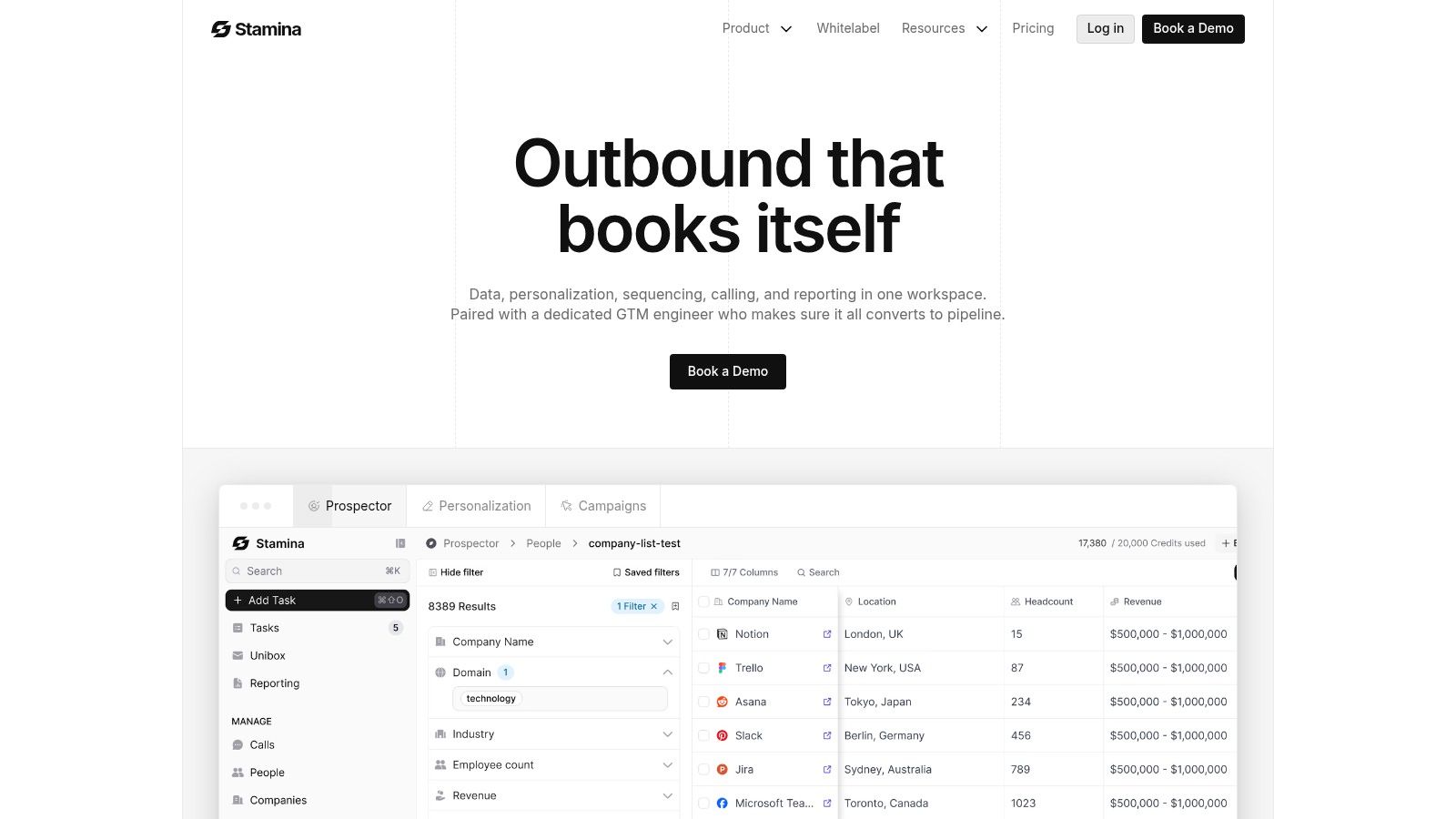
Integrated systems offer assistance. For example, Stamina includes a CRM, sales engagement, and its built-in AI SDR, Zara, so the agent can work from the same source of truth instead of bouncing across disconnected tools.
Write the rules before the AI writes the messages
You need explicit guardrails. Not vague brand guidance. Actual rules.
Define who should never be contacted. Existing customers in support escalation, bad-fit segments, blocked regions, or restricted lists.
Set qualification thresholds. What counts as sales-ready, and what should stay in nurture.
Map reply handling. Which replies can the AI handle, and which should always route to a human.
Limit tone drift. Give the system examples of acceptable voice and unacceptable phrasing.
Field note: Governance isn't legal fine print. It's operational design. If your team can't explain the handoff rules in one minute, the setup is too loose.
Protect deliverability before volume increases
A lot of AI SDR damage happens through overproduction. Teams get excited about speed, then send at a level their data quality and targeting can't support.
That's why list quality still matters. If you're tightening the front end of outbound, this guide on choosing a quality email verifier is a practical companion to any AI SDR rollout.
Pilot first, then widen the lane
Run the AI SDR on one use case, one segment, and one handoff path. Review actual conversations. Look for three things:
Are the messages contextually sound?
Are qualified meetings actually qualified?
Are reps receiving enough context to advance the conversation?
If those answers are weak, don't scale yet. Tune the system. AI SDRs reward disciplined operators. They punish “set it and forget it” teams.
Measuring the ROI of Your AI SDR
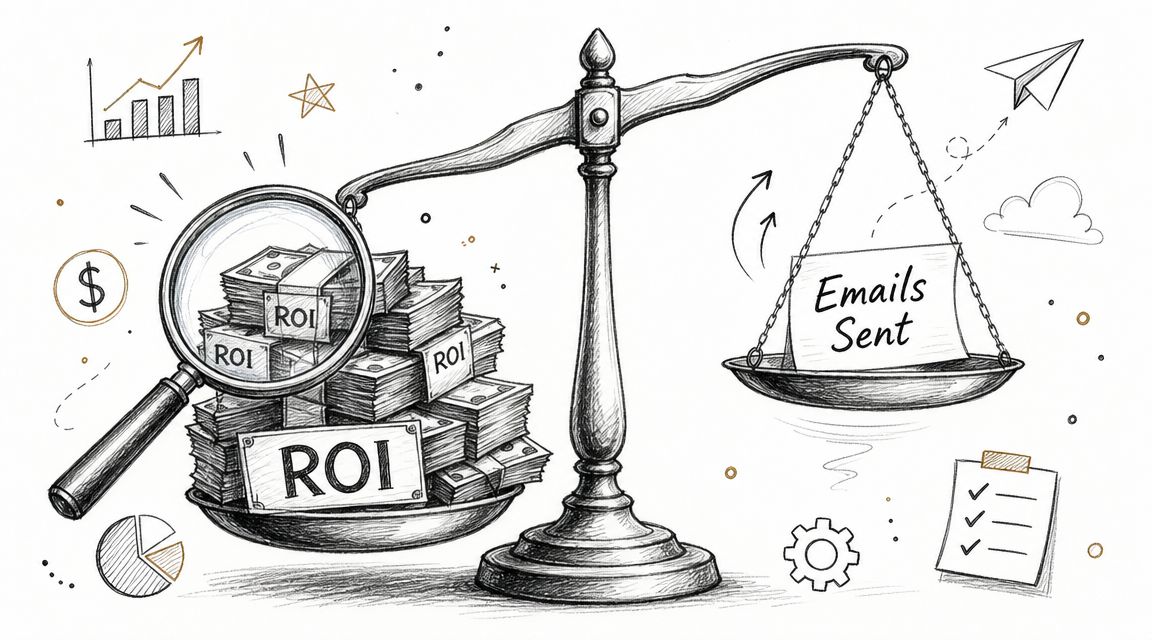
If you measure an AI SDR by emails sent, you'll get a lot of emails sent. That's the wrong scoreboard.
What matters is whether the system improves revenue efficiency. Think like an operator, not a tool buyer.
The four metrics that matter most
Cost per qualified meeting
This is the first metric I'd watch. Not cost per lead. Not cost per reply. A qualified meeting is where revenue work starts.
If your AI SDR lowers the effort and software cost required to create a meeting your AE accepts as legitimate, that's real value.
Meeting readiness
This one is often ignored because it's less tidy, but it matters. Ask your reps whether booked calls arrive with enough context to run a strong first conversation. Better notes, clearer qualification, and visible prior interactions all improve downstream conversion.
Sales cycle velocity
When lead response, qualification, routing, and scheduling happen with less delay, opportunities move sooner. You don't need a complicated model to see this. Compare how long it takes to go from first signal to first meaningful conversation before and after deployment.
Human SDR productivity
A good AI SDR doesn't just produce its own output. It gives time back to your team. If your reps spend less time researching, writing first drafts, updating the CRM, or chasing scheduling threads, they can spend more time in live selling work.
Better ROI usually shows up first as cleaner rep time and better handoffs. Revenue follows after that.
A simple back-of-the-napkin ROI formula
Use this:
ROI view = qualified meetings gained + rep hours recovered + pipeline advanced faster, minus software cost and oversight time
That's not finance-department math. It's decision math.
For an SMB owner, the question is straightforward. Are you getting more sales-ready conversations without adding the same amount of headcount and admin burden? If yes, the AI SDR is earning its place.
A short walkthrough like this can help you think about the trade-off in practical terms:
What not to overvalue
Don't overweight open rates, raw send volume, or generic reply counts. Those can all rise while pipeline quality gets worse.
A healthy AI SDR program should make your funnel feel sharper, not louder. Your reps should trust the meetings more. Your CRM should hold better context. And your spend at the top of funnel should support actual conversion, not just visible activity.
AI SDR Frequently Asked Questions
Will an AI SDR replace my human sales team?
No. The useful model is hybrid. AI handles repetitive top-of-funnel work such as research, outreach flow, qualification, and scheduling. Humans still win where judgment, trust, and negotiation matter. If you remove humans entirely, the quality usually drops where deals are ultimately won.
How does an AI SDR handle complex or negative replies?
The better systems don't try to bluff through every message. They categorize replies, respond within defined limits, and escalate when context gets sensitive, complex, or commercially important. That's one reason setup matters so much. You need clear rules for when the AI continues and when a rep steps in.
Is implementation too technical for a small team?
It doesn't have to be, but it does require process discipline. SMB teams usually struggle less with the software than with unclear lead stages, inconsistent CRM hygiene, and weak handoff rules. If those basics are in place, modern platforms are much easier to launch than older point tools stitched together manually.
If you want one system that combines CRM, sales engagement, and an embedded AI SDR for SMB workflows, take a look at Stamina. It's built for teams that want AI prospecting and follow-up connected to the rest of their revenue operations, instead of bolting another standalone tool onto an already messy stack.

