Growth Hacking for Small Business: 2026 Playbook

Growth hacking for small business - Unlock rapid growth with our 2026 growth hacking playbook for small business. Discover low-cost tactics, experiment loops

0 - Minute Read

You're probably doing what most small business owners do when growth stalls. You post on social media when there's time. You run a few ads, stop them, restart them. You send occasional emails. Sales follows up inconsistently because everyone's juggling ten jobs. Nothing is completely broken, but nothing compounds either.

That's where most advice on growth falls apart. It throws a pile of tactics at you without helping you build a system that keeps working after the first burst of energy. Small businesses don't need more random tricks. They need a tighter way to test, learn, and connect marketing activity to revenue.

Beyond Marketing Budgets What Is Growth Hacking

Growth hacking for small business isn't a synonym for aggressive marketing. It's a way of operating when time, budget, and headcount are limited.

The term became recognizable in the 2010s as teams combined low-cost experimentation, data analysis, and rapid iteration. Modern definitions focus on resource-light tactics for customer acquisition and retention, especially for startups and small businesses. GrowthHackers describes it as a cross-functional discipline spanning marketing, product, engineering, and sales, and notes its practical use for organizations that need fast results without large budgets in its overview of what growth hacking is.

That cross-functional part matters more than most guides admit. If marketing brings in leads that sales can't qualify, you don't have growth. If sales learns the actual objections but that information never makes it back into your landing pages or emails, you don't have growth. You have disconnected effort.

Practical rule: If a tactic can't be measured and repeated, it's not a growth system. It's a one-off campaign.

For small businesses, this changes the question from “Which channel should I try next?” to “Where is the biggest bottleneck in my customer journey, and what's the cheapest valid test I can run this week?”

That might be website conversion. It might be follow-up speed. It might be poor lead capture from social traffic. If social is part of your acquisition mix, a grounded resource like this social media guide for small businesses is useful because it helps you think in terms of channel fit and repeatability, not content volume for its own sake.

A lot of teams also confuse automation with spam. It isn't. Automation is the process of making repeated actions happen reliably, which is why understanding marketing automation is foundational before you add more channels or campaigns.

Build Your Playbook Foundation Define Goals and ICP

Most failed growth efforts don't fail because the team picked the wrong tactic. They fail because the goal was fuzzy and the audience definition was lazy.
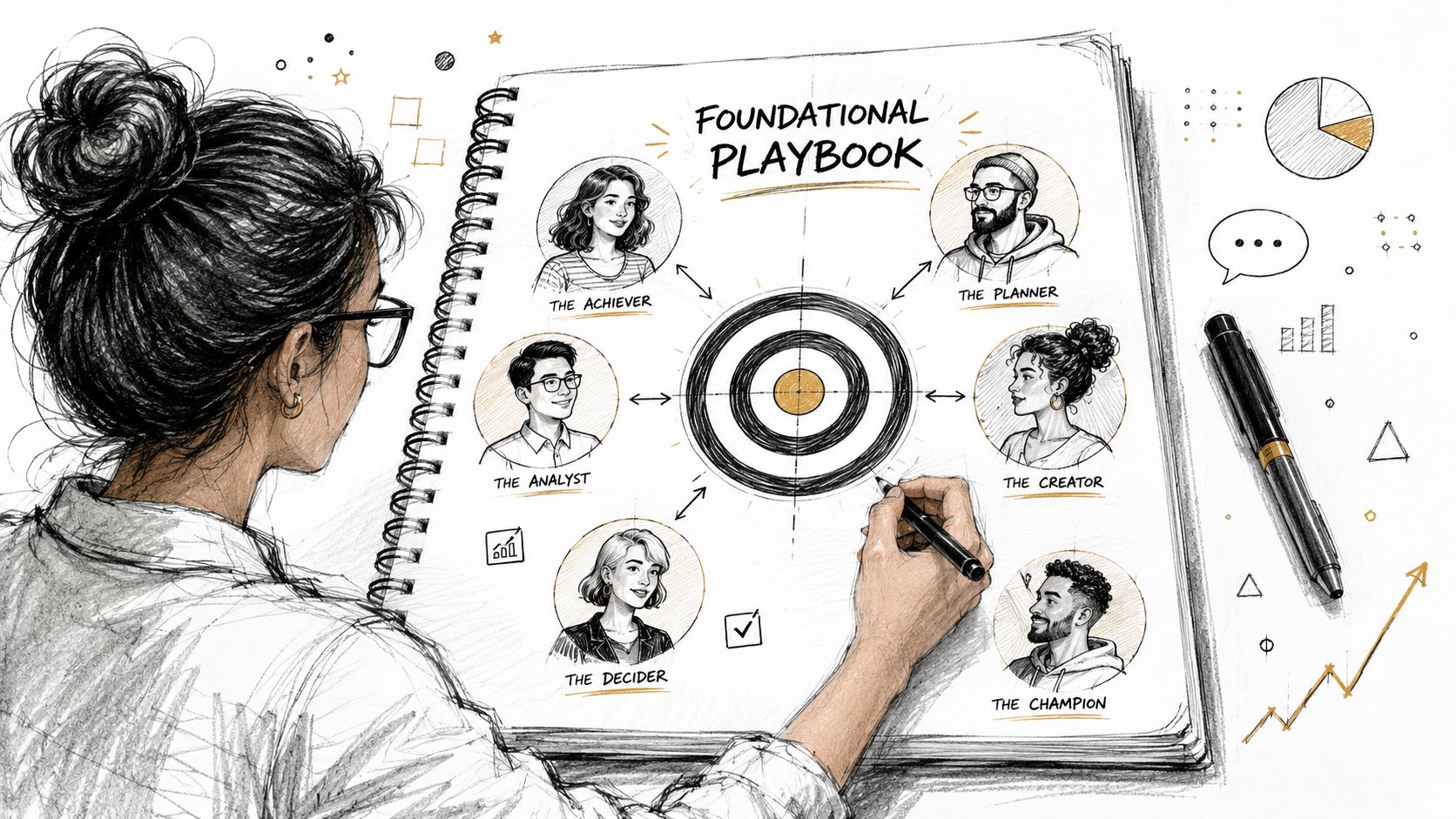
A woman sketching a Foundational Playbook diagram in a notebook showing six different professional archetypes.

“Get more customers” sounds clear until you try to act on it. Which customers? From which source? Buying what? At what margin? Growth hacking works when you force clarity before you launch experiments.

Start with one business goal

Pick a single objective that matters commercially. Not five. One.

Good examples are specific enough to guide action:

  • Qualified demo requests: Better for businesses with a sales process.

  • Booked consultations: Better for service firms.

  • Repeat purchases: Better for product businesses with an existing customer base.

  • Local inquiries from search: Better for location-based operators.

Weak goals create weak tests. If your team is trying to improve traffic, leads, email engagement, referrals, and retention at the same time, nobody will know which result matters.

A practical filter helps:

  1. Is it tied to revenue? If not directly, can you clearly connect it to revenue later?

  2. Can the team influence it in the next few weeks? Broad market outcomes are hard to test.

  3. Can you measure it cleanly? If every lead source is mixed together, fix tracking first.

Build an ICP that sales can actually use

A real ideal customer profile isn't a demographic sketch. It's an operating document. It tells marketing what to say, sales what to ask, and customer success what to reinforce.

If you need a tighter definition, this guide on ideal customer profiles covers the core structure well. The key is to go beyond age, company size, or industry labels.

Use these layers:

  • Current trigger: What just happened that makes this buyer care now?

  • Pain in workflow: Where do they lose time, miss follow-up, or leak opportunities?

  • Decision logic: Do they buy based on speed, trust, ease, compliance, visibility, or team capacity?

  • Buying friction: What usually delays the purchase?

  • Preferred channel: Where do they already look for solutions or ask peers for advice?

Here's the test. If your salesperson and marketer read your ICP and come away with different pictures of the customer, it's too vague.

Your ICP should help someone write a landing page headline, qualify a lead, and decide which objections to handle first.

Use one page, not a slide deck

Small businesses don't need a strategy workshop that ends in a forgotten presentation. Keep your foundation on one page.

Include:

  • Primary goal

  • Main audience segment

  • Top three pains

  • Core offer

  • Primary acquisition channels

  • Sales qualification criteria

  • Key metric for success

That one page becomes the reference point for every test. Without it, growth hacking for small business turns into random activity dressed up as experimentation.

Run Your Low-Cost Experiment Engine

Growth becomes manageable when you stop treating every campaign like a major initiative. The most effective small teams run a loop. They find one constraint, test one idea, review the result, and keep moving.

A practical workflow for small businesses is a six-stage experiment loop: identify a single bottleneck, set a measurable goal, form a hypothesis, design a rapid test, collect data, then iterate and scale the winning variant. That approach is recommended in this guide to growth hacking for UK business success, which also points teams toward tools such as Google Analytics, Mixpanel, and cohort analysis instead of vanity metrics.

Find the bottleneck before you touch the tactic

If traffic is decent but leads don't convert, don't start by buying more traffic. If leads come in but nobody follows up fast enough, don't rewrite your homepage first.

The bottleneck usually sits in one of these places:

  • Acquisition: Not enough relevant visitors or prospects

  • Activation: Visitors don't take the first meaningful action

  • Conversion: Leads don't become opportunities or customers

  • Retention: Buyers don't return, renew, or refer

Small businesses waste a lot of energy fixing the wrong stage because it feels easier than diagnosing the actual problem.

Write hypotheses like an operator

A strong hypothesis has three parts:

If we do X, we expect Y, because of Z.

Examples:

  • If we shorten our contact form, we expect more qualified inquiries because fewer fields reduce friction.

  • If we send a follow-up email within one day of a quote request, we expect more replies because intent is still fresh.

  • If we add service-specific landing pages, we expect better conversion from search traffic because the page matches the buyer's need more closely.

That “because” clause matters. It forces the team to state the reason, not just the hope.

Good experiments don't try to prove the team is smart. They try to expose whether the assumption was wrong.

Keep tests small and fast

Most tests should be narrow enough to launch without a project manager. One page. One sequence. One offer variation. One call-to-action change. One audience segment.

Avoid these common mistakes:

  • Changing too much at once: Then you can't tell what caused the result.

  • Running tests with no owner: Then nobody closes the loop.

  • Declaring success too early: Early signals can be noisy.

  • Picking vanity metrics: More clicks don't matter if downstream conversion gets worse.

A rapid test is supposed to reduce uncertainty, not create more of it.

Low-Cost Growth Hacking Experiment Ideas

Area of Focus

Experiment Idea

Primary Metric

Website conversion

Replace a generic homepage CTA with a service-specific CTA

Form submissions

Lead capture

Test a shorter form against a longer qualification form

Lead-to-opportunity rate

Email onboarding

Send a plain-text welcome email instead of a designed template

Reply rate

Local search

Add stronger photos and clearer service details to your business profile

Direction requests or inquiries

Referral

Ask satisfied customers for introductions at a specific milestone

Referral leads

Sales follow-up

Create a same-day follow-up task for every inbound lead

Contact rate

Content SEO

Build pages around long-tail service queries with clear intent

Qualified organic visits

Social engagement

Repurpose customer questions into short educational posts

Click-through to site

Reactivation

Send a check-in email to stale leads with one clear next step

Re-engaged conversations

Pricing page

Test clearer packaging or a stronger FAQ block

Quote requests

Review, then scale only what survives contact with reality

The point of the loop isn't to run more experiments. It's to develop judgment. Some tests reveal that your message is off. Others show that the problem was operational all along.

Winning variants deserve process support. If a certain lead magnet attracts qualified buyers, connect it to better follow-up. If a referral prompt works, turn it into a standard customer success step. If a service page converts, build the next page using the same structure.

That's how growth hacking for small business stops being a side project and starts becoming a machine.

Deploy Channel-Specific Growth Tactics

Channels matter, but they only work when they fit the bottleneck you found earlier. A small business shouldn't ask, “What's trending?” It should ask, “Which channel gives us the fastest feedback from the right buyers?”
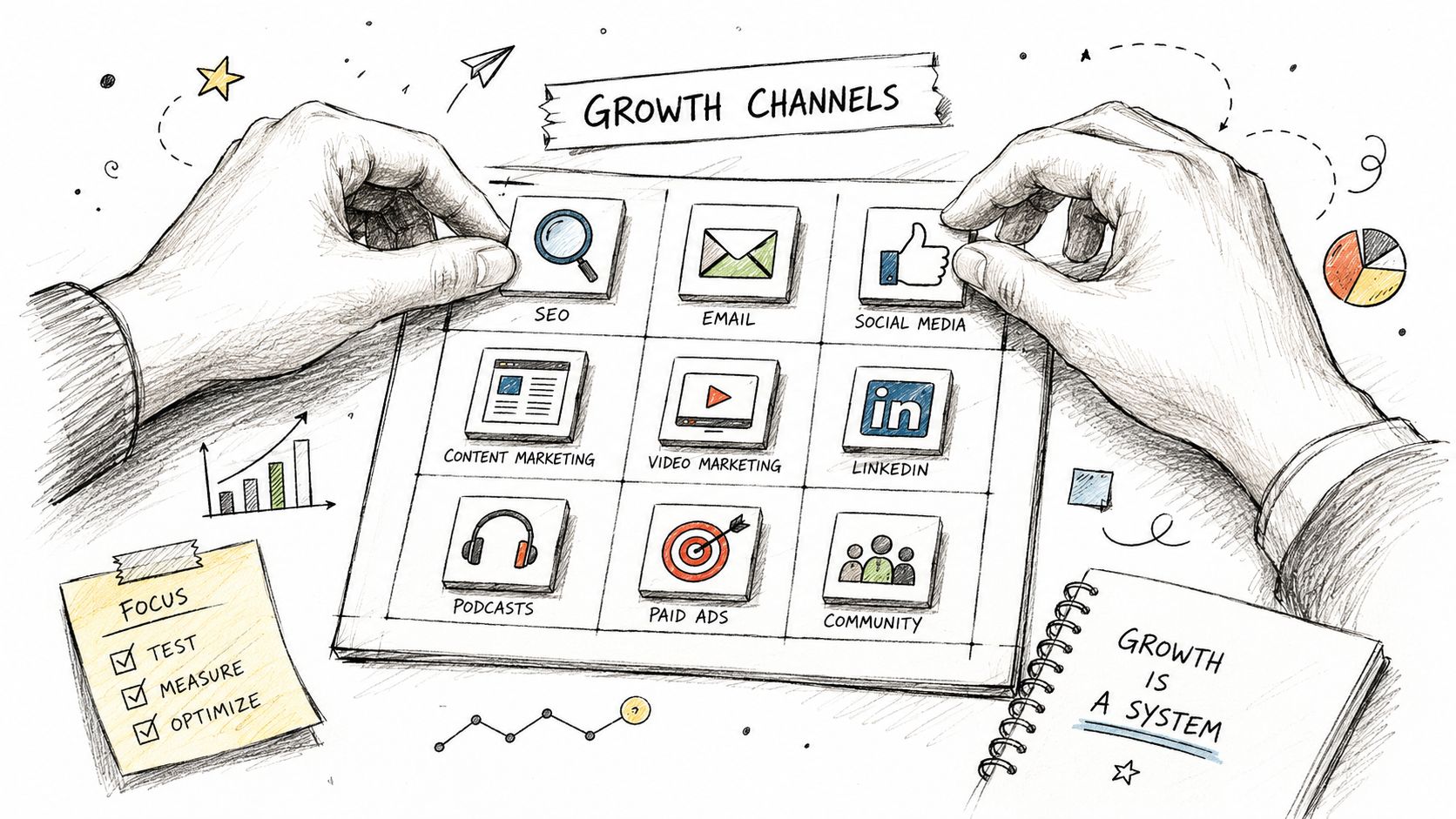
A hand-drawn illustration showing hands arranging various marketing growth channels on a square grid surface.

SEO for buyers with specific intent

A local bakery trying to rank for “bakery” is fighting a broad, fuzzy battle. A smarter play is building pages around narrower, high-intent searches tied to actual buying scenarios. Think custom cake orders, corporate catering, gluten-free birthday cakes, or next-day dessert delivery if those services exist.

The same logic applies to B2B. A consultant rarely wins by targeting “business consulting.” They get more traction by publishing pages that align with specific problems buyers already feel.

What works:

  • Service-specific pages: One page per service, audience, or use case

  • FAQ sections from real sales calls: Turn repeated objections into searchable content

  • Local proof and operational detail: Delivery areas, timelines, process, and fit

What usually doesn't work:

  • Broad thought leadership with no commercial angle

  • Thin blog posts built around keywords nobody buys from

  • Publishing volume without internal links or conversion paths

Email as a compounding channel

Email gets underrated because many teams use it poorly. They blast the whole list with the same message, then conclude the channel is weak.

A better approach is segmentation by intent. Someone who downloaded a guide isn't the same as a customer who requested pricing, and neither behaves like an old lead who went cold. This is why practical guides to email marketing for lead generation are useful. The mechanics matter.

For a service firm, a strong starter sequence might look like this:

  • Email one: Acknowledge the problem and explain the next step

  • Email two: Answer the objection that blocks most buyers

  • Email three: Share a short proof point or workflow example

  • Email four: Ask for the meeting or reply directly

Plain language often beats polished design in early-stage nurture. Buyers respond to relevance, not decoration.

The fastest email win for most small businesses is simple segmentation, not fancier copy.

Here's a useful walkthrough on the topic:

Referral systems that don't feel awkward

Referral marketing breaks when businesses make it too formal or too vague. “Let us know if you know anyone” is polite, but it doesn't create action.

A better referral moment happens right after visible value is delivered. For example:

  • A bookkeeper sends month-end reports that saved the client time.

  • A web designer finishes a launch and the client is happy with the result.

  • A home service company completes a job and receives direct praise.

At that moment, ask specifically. Name the type of customer you help. Suggest the best way to introduce you. Keep the ask lightweight.

Good referral prompts have three ingredients:

  1. Timing tied to value

  2. A clear description of the ideal referral

  3. Minimal friction for the customer

Small paid campaigns for warm audiences

Paid channels can work for small businesses, but they punish sloppy strategy. Broad awareness campaigns often burn money fast. Retargeting and warm audience follow-up are usually more disciplined starting points.

If someone visited your pricing page, viewed a service page, or started a form and didn't finish, they already showed intent. A tiny retargeting campaign with one clear message can be enough to bring them back. The message should match the page they saw, not a generic brand slogan.

This is where channel discipline matters. Growth hacking for small business isn't about being everywhere. It's about using each channel for a defined job and connecting it to the next step in the funnel.

Measure What Matters and Iterate Your Plays

Teams often say they're data-driven when they really mean they have dashboards. That isn't the same thing.

The useful distinction is between vanity metrics and decision metrics. Vanity metrics look active. Decision metrics tell you what to do next. Likes, impressions, and raw opens can be interesting signals, but they rarely help a small business choose where to invest time unless they connect to a business outcome.

Track the handoff points

The metrics that matter most usually sit at transitions:

  • Visitor to lead

  • Lead to qualified opportunity

  • Opportunity to customer

  • Customer to repeat buyer or referral source

If social traffic lands on your site but never fills out a form, the problem may be message match. If email clicks happen but meetings don't, the offer may be weak. If meetings happen but deals stall, sales qualification or follow-up may be off.

Google Analytics is still a practical place to watch behavior on key pages, especially when paired with cleaner UTM naming and conversion tracking. Mixpanel can help if you need more event-level insight into product or user journeys. Cohort analysis becomes useful when you want to compare what different lead groups do over time rather than looking at one blended average.

Set a review rhythm

A simple weekly or bi-weekly growth review beats a sprawling quarterly postmortem. The meeting doesn't need theater. It needs decisions.

Use a short agenda:

  • What did we test?

  • What happened?

  • What did we learn?

  • What are we changing next?

  • What are we stopping?

Kill weak experiments quickly, but don't kill the learning. Record why the test failed so the team doesn't repeat the same assumption in a new format.

Build a scorecard people can act on

A useful scorecard for a small business is boring in the best way. It focuses attention.

Include:

  • Current bottleneck

  • Live experiments

  • Primary conversion metric

  • Lead source quality notes

  • Sales feedback on objections

  • Next iteration decision

Compound learning is a product of iterative testing. Not every test wins, but every clean test reduces guesswork. Over time, that discipline does more for growth than constantly searching for the next channel hack.

Operationalize Your Growth Engine with Integrated Workflows

One-off wins feel good. Operational systems survive busy weeks, staff turnover, and inconsistent attention.

The biggest break point I see in small businesses isn't a lack of ideas. It's fragmentation. Marketing collects leads in one tool. Sales works from a separate inbox or spreadsheet. Customer data sits in a CRM that only one person updates. Nobody can reliably see which experiment produced the lead, what happened next, or where revenue came from.

That's why growth hacking matures when workflows are connected.
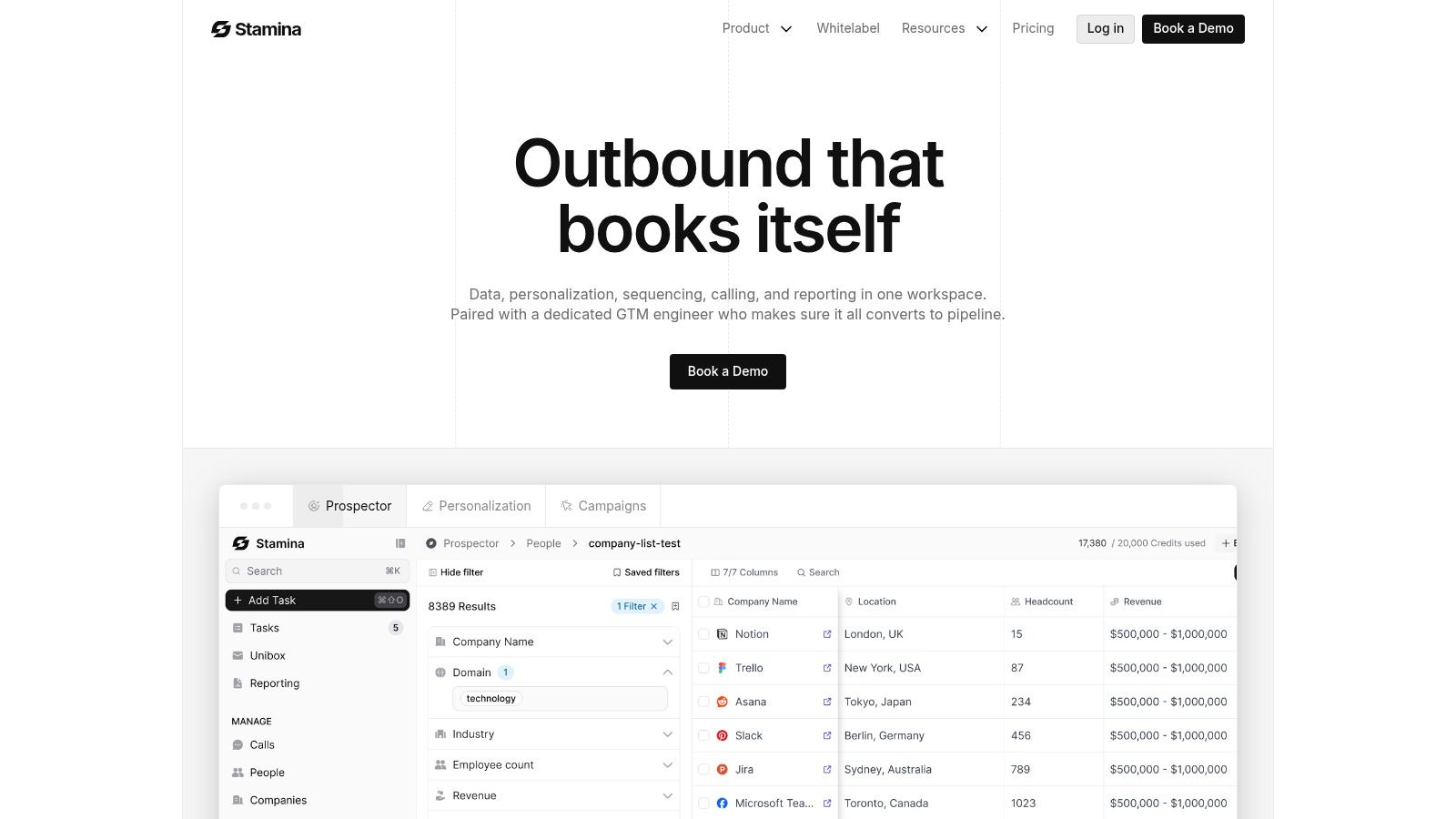
Screenshot from https://stamina.io

Automation turns tactics into process

For small businesses, automation is one of the clearest operational levers. A small-business growth article summarizing industry studies reports that marketing automation can increase sales productivity by up to 14.5% and reduce marketing overhead by 12.2%, and also notes that businesses with photos receive 42% more direction requests on Google profiles in its roundup of small-business growth hacks and proven strategies to scale.

Those examples point to the same principle. The payoff often comes from measurable, practical improvements, not expensive campaigns. Add better photos to a profile. Trigger a follow-up after a form fill. Route hot leads to sales immediately. Standardize nurture for cold leads. Small changes become durable when the workflow carries them.

Connect marketing, sales, and CRM activity

A growth engine needs a clear chain:

  1. A prospect takes an action

  2. The system records the source and context

  3. Sales gets the right follow-up task

  4. The CRM reflects the current status

  5. Marketing adjusts future messaging based on outcome

When that chain breaks, experiments become hard to trust. You may generate leads and still lose revenue because nobody followed up at the right time, or because the CRM never captured the signal that should have triggered the next touch.

This is why operators increasingly focus on workflow design, not just campaign design. If you want a broader perspective on that shift, this piece on streamlining marketing operations for growth is worth reading.

Use one system when possible

An integrated platform reduces the lag between learning and action. For example, a business can use Stamina to unify marketing, sales, and CRM workflows so a form submission can trigger segmentation, outreach, pipeline creation, and follow-up tasks in one place rather than across disconnected tools. That's especially useful once a winning experiment needs to scale and the team can't afford manual handoffs.

You don't need a giant tech stack to do growth hacking for small business well. You need a system that preserves context and enforces the next action. That's what turns a clever campaign into a repeatable revenue motion.

The primary goal isn't to hack growth in the chaotic sense. It's to build a lean operating model where testing, outreach, follow-up, and retention work together. A practical starting point is to map your first automated marketing automation workflow around one high-intent event and make sure every handoff after that is owned.

If you want to turn scattered campaigns into a connected revenue system, Stamina gives SMBs one place to run marketing, sales engagement, and CRM workflows together so experiments can move from idea to follow-up to pipeline without getting lost between tools.

You're probably doing what most small business owners do when growth stalls. You post on social media when there's time. You run a few ads, stop them, restart them. You send occasional emails. Sales follows up inconsistently because everyone's juggling ten jobs. Nothing is completely broken, but nothing compounds either.

That's where most advice on growth falls apart. It throws a pile of tactics at you without helping you build a system that keeps working after the first burst of energy. Small businesses don't need more random tricks. They need a tighter way to test, learn, and connect marketing activity to revenue.

Beyond Marketing Budgets What Is Growth Hacking

Growth hacking for small business isn't a synonym for aggressive marketing. It's a way of operating when time, budget, and headcount are limited.

The term became recognizable in the 2010s as teams combined low-cost experimentation, data analysis, and rapid iteration. Modern definitions focus on resource-light tactics for customer acquisition and retention, especially for startups and small businesses. GrowthHackers describes it as a cross-functional discipline spanning marketing, product, engineering, and sales, and notes its practical use for organizations that need fast results without large budgets in its overview of what growth hacking is.

That cross-functional part matters more than most guides admit. If marketing brings in leads that sales can't qualify, you don't have growth. If sales learns the actual objections but that information never makes it back into your landing pages or emails, you don't have growth. You have disconnected effort.

Practical rule: If a tactic can't be measured and repeated, it's not a growth system. It's a one-off campaign.

For small businesses, this changes the question from “Which channel should I try next?” to “Where is the biggest bottleneck in my customer journey, and what's the cheapest valid test I can run this week?”

That might be website conversion. It might be follow-up speed. It might be poor lead capture from social traffic. If social is part of your acquisition mix, a grounded resource like this social media guide for small businesses is useful because it helps you think in terms of channel fit and repeatability, not content volume for its own sake.

A lot of teams also confuse automation with spam. It isn't. Automation is the process of making repeated actions happen reliably, which is why understanding marketing automation is foundational before you add more channels or campaigns.

Build Your Playbook Foundation Define Goals and ICP

Most failed growth efforts don't fail because the team picked the wrong tactic. They fail because the goal was fuzzy and the audience definition was lazy.

A woman sketching a Foundational Playbook diagram in a notebook showing six different professional archetypes.

“Get more customers” sounds clear until you try to act on it. Which customers? From which source? Buying what? At what margin? Growth hacking works when you force clarity before you launch experiments.

Start with one business goal

Pick a single objective that matters commercially. Not five. One.

Good examples are specific enough to guide action:

  • Qualified demo requests: Better for businesses with a sales process.

  • Booked consultations: Better for service firms.

  • Repeat purchases: Better for product businesses with an existing customer base.

  • Local inquiries from search: Better for location-based operators.

Weak goals create weak tests. If your team is trying to improve traffic, leads, email engagement, referrals, and retention at the same time, nobody will know which result matters.

A practical filter helps:

  1. Is it tied to revenue? If not directly, can you clearly connect it to revenue later?

  2. Can the team influence it in the next few weeks? Broad market outcomes are hard to test.

  3. Can you measure it cleanly? If every lead source is mixed together, fix tracking first.

Build an ICP that sales can actually use

A real ideal customer profile isn't a demographic sketch. It's an operating document. It tells marketing what to say, sales what to ask, and customer success what to reinforce.

If you need a tighter definition, this guide on ideal customer profiles covers the core structure well. The key is to go beyond age, company size, or industry labels.

Use these layers:

  • Current trigger: What just happened that makes this buyer care now?

  • Pain in workflow: Where do they lose time, miss follow-up, or leak opportunities?

  • Decision logic: Do they buy based on speed, trust, ease, compliance, visibility, or team capacity?

  • Buying friction: What usually delays the purchase?

  • Preferred channel: Where do they already look for solutions or ask peers for advice?

Here's the test. If your salesperson and marketer read your ICP and come away with different pictures of the customer, it's too vague.

Your ICP should help someone write a landing page headline, qualify a lead, and decide which objections to handle first.

Use one page, not a slide deck

Small businesses don't need a strategy workshop that ends in a forgotten presentation. Keep your foundation on one page.

Include:

  • Primary goal

  • Main audience segment

  • Top three pains

  • Core offer

  • Primary acquisition channels

  • Sales qualification criteria

  • Key metric for success

That one page becomes the reference point for every test. Without it, growth hacking for small business turns into random activity dressed up as experimentation.

Run Your Low-Cost Experiment Engine

Growth becomes manageable when you stop treating every campaign like a major initiative. The most effective small teams run a loop. They find one constraint, test one idea, review the result, and keep moving.

A practical workflow for small businesses is a six-stage experiment loop: identify a single bottleneck, set a measurable goal, form a hypothesis, design a rapid test, collect data, then iterate and scale the winning variant. That approach is recommended in this guide to growth hacking for UK business success, which also points teams toward tools such as Google Analytics, Mixpanel, and cohort analysis instead of vanity metrics.

Find the bottleneck before you touch the tactic

If traffic is decent but leads don't convert, don't start by buying more traffic. If leads come in but nobody follows up fast enough, don't rewrite your homepage first.

The bottleneck usually sits in one of these places:

  • Acquisition: Not enough relevant visitors or prospects

  • Activation: Visitors don't take the first meaningful action

  • Conversion: Leads don't become opportunities or customers

  • Retention: Buyers don't return, renew, or refer

Small businesses waste a lot of energy fixing the wrong stage because it feels easier than diagnosing the actual problem.

Write hypotheses like an operator

A strong hypothesis has three parts:

If we do X, we expect Y, because of Z.

Examples:

  • If we shorten our contact form, we expect more qualified inquiries because fewer fields reduce friction.

  • If we send a follow-up email within one day of a quote request, we expect more replies because intent is still fresh.

  • If we add service-specific landing pages, we expect better conversion from search traffic because the page matches the buyer's need more closely.

That “because” clause matters. It forces the team to state the reason, not just the hope.

Good experiments don't try to prove the team is smart. They try to expose whether the assumption was wrong.

Keep tests small and fast

Most tests should be narrow enough to launch without a project manager. One page. One sequence. One offer variation. One call-to-action change. One audience segment.

Avoid these common mistakes:

  • Changing too much at once: Then you can't tell what caused the result.

  • Running tests with no owner: Then nobody closes the loop.

  • Declaring success too early: Early signals can be noisy.

  • Picking vanity metrics: More clicks don't matter if downstream conversion gets worse.

A rapid test is supposed to reduce uncertainty, not create more of it.

Low-Cost Growth Hacking Experiment Ideas

Area of Focus

Experiment Idea

Primary Metric

Website conversion

Replace a generic homepage CTA with a service-specific CTA

Form submissions

Lead capture

Test a shorter form against a longer qualification form

Lead-to-opportunity rate

Email onboarding

Send a plain-text welcome email instead of a designed template

Reply rate

Local search

Add stronger photos and clearer service details to your business profile

Direction requests or inquiries

Referral

Ask satisfied customers for introductions at a specific milestone

Referral leads

Sales follow-up

Create a same-day follow-up task for every inbound lead

Contact rate

Content SEO

Build pages around long-tail service queries with clear intent

Qualified organic visits

Social engagement

Repurpose customer questions into short educational posts

Click-through to site

Reactivation

Send a check-in email to stale leads with one clear next step

Re-engaged conversations

Pricing page

Test clearer packaging or a stronger FAQ block

Quote requests

Review, then scale only what survives contact with reality

The point of the loop isn't to run more experiments. It's to develop judgment. Some tests reveal that your message is off. Others show that the problem was operational all along.

Winning variants deserve process support. If a certain lead magnet attracts qualified buyers, connect it to better follow-up. If a referral prompt works, turn it into a standard customer success step. If a service page converts, build the next page using the same structure.

That's how growth hacking for small business stops being a side project and starts becoming a machine.

Deploy Channel-Specific Growth Tactics

Channels matter, but they only work when they fit the bottleneck you found earlier. A small business shouldn't ask, “What's trending?” It should ask, “Which channel gives us the fastest feedback from the right buyers?”

A hand-drawn illustration showing hands arranging various marketing growth channels on a square grid surface.

SEO for buyers with specific intent

A local bakery trying to rank for “bakery” is fighting a broad, fuzzy battle. A smarter play is building pages around narrower, high-intent searches tied to actual buying scenarios. Think custom cake orders, corporate catering, gluten-free birthday cakes, or next-day dessert delivery if those services exist.

The same logic applies to B2B. A consultant rarely wins by targeting “business consulting.” They get more traction by publishing pages that align with specific problems buyers already feel.

What works:

  • Service-specific pages: One page per service, audience, or use case

  • FAQ sections from real sales calls: Turn repeated objections into searchable content

  • Local proof and operational detail: Delivery areas, timelines, process, and fit

What usually doesn't work:

  • Broad thought leadership with no commercial angle

  • Thin blog posts built around keywords nobody buys from

  • Publishing volume without internal links or conversion paths

Email as a compounding channel

Email gets underrated because many teams use it poorly. They blast the whole list with the same message, then conclude the channel is weak.

A better approach is segmentation by intent. Someone who downloaded a guide isn't the same as a customer who requested pricing, and neither behaves like an old lead who went cold. This is why practical guides to email marketing for lead generation are useful. The mechanics matter.

For a service firm, a strong starter sequence might look like this:

  • Email one: Acknowledge the problem and explain the next step

  • Email two: Answer the objection that blocks most buyers

  • Email three: Share a short proof point or workflow example

  • Email four: Ask for the meeting or reply directly

Plain language often beats polished design in early-stage nurture. Buyers respond to relevance, not decoration.

The fastest email win for most small businesses is simple segmentation, not fancier copy.

Here's a useful walkthrough on the topic:

Referral systems that don't feel awkward

Referral marketing breaks when businesses make it too formal or too vague. “Let us know if you know anyone” is polite, but it doesn't create action.

A better referral moment happens right after visible value is delivered. For example:

  • A bookkeeper sends month-end reports that saved the client time.

  • A web designer finishes a launch and the client is happy with the result.

  • A home service company completes a job and receives direct praise.

At that moment, ask specifically. Name the type of customer you help. Suggest the best way to introduce you. Keep the ask lightweight.

Good referral prompts have three ingredients:

  1. Timing tied to value

  2. A clear description of the ideal referral

  3. Minimal friction for the customer

Small paid campaigns for warm audiences

Paid channels can work for small businesses, but they punish sloppy strategy. Broad awareness campaigns often burn money fast. Retargeting and warm audience follow-up are usually more disciplined starting points.

If someone visited your pricing page, viewed a service page, or started a form and didn't finish, they already showed intent. A tiny retargeting campaign with one clear message can be enough to bring them back. The message should match the page they saw, not a generic brand slogan.

This is where channel discipline matters. Growth hacking for small business isn't about being everywhere. It's about using each channel for a defined job and connecting it to the next step in the funnel.

Measure What Matters and Iterate Your Plays

Teams often say they're data-driven when they really mean they have dashboards. That isn't the same thing.

The useful distinction is between vanity metrics and decision metrics. Vanity metrics look active. Decision metrics tell you what to do next. Likes, impressions, and raw opens can be interesting signals, but they rarely help a small business choose where to invest time unless they connect to a business outcome.

Track the handoff points

The metrics that matter most usually sit at transitions:

  • Visitor to lead

  • Lead to qualified opportunity

  • Opportunity to customer

  • Customer to repeat buyer or referral source

If social traffic lands on your site but never fills out a form, the problem may be message match. If email clicks happen but meetings don't, the offer may be weak. If meetings happen but deals stall, sales qualification or follow-up may be off.

Google Analytics is still a practical place to watch behavior on key pages, especially when paired with cleaner UTM naming and conversion tracking. Mixpanel can help if you need more event-level insight into product or user journeys. Cohort analysis becomes useful when you want to compare what different lead groups do over time rather than looking at one blended average.

Set a review rhythm

A simple weekly or bi-weekly growth review beats a sprawling quarterly postmortem. The meeting doesn't need theater. It needs decisions.

Use a short agenda:

  • What did we test?

  • What happened?

  • What did we learn?

  • What are we changing next?

  • What are we stopping?

Kill weak experiments quickly, but don't kill the learning. Record why the test failed so the team doesn't repeat the same assumption in a new format.

Build a scorecard people can act on

A useful scorecard for a small business is boring in the best way. It focuses attention.

Include:

  • Current bottleneck

  • Live experiments

  • Primary conversion metric

  • Lead source quality notes

  • Sales feedback on objections

  • Next iteration decision

Compound learning is a product of iterative testing. Not every test wins, but every clean test reduces guesswork. Over time, that discipline does more for growth than constantly searching for the next channel hack.

Operationalize Your Growth Engine with Integrated Workflows

One-off wins feel good. Operational systems survive busy weeks, staff turnover, and inconsistent attention.

The biggest break point I see in small businesses isn't a lack of ideas. It's fragmentation. Marketing collects leads in one tool. Sales works from a separate inbox or spreadsheet. Customer data sits in a CRM that only one person updates. Nobody can reliably see which experiment produced the lead, what happened next, or where revenue came from.

That's why growth hacking matures when workflows are connected.

Screenshot from https://stamina.io

Automation turns tactics into process

For small businesses, automation is one of the clearest operational levers. A small-business growth article summarizing industry studies reports that marketing automation can increase sales productivity by up to 14.5% and reduce marketing overhead by 12.2%, and also notes that businesses with photos receive 42% more direction requests on Google profiles in its roundup of small-business growth hacks and proven strategies to scale.

Those examples point to the same principle. The payoff often comes from measurable, practical improvements, not expensive campaigns. Add better photos to a profile. Trigger a follow-up after a form fill. Route hot leads to sales immediately. Standardize nurture for cold leads. Small changes become durable when the workflow carries them.

Connect marketing, sales, and CRM activity

A growth engine needs a clear chain:

  1. A prospect takes an action

  2. The system records the source and context

  3. Sales gets the right follow-up task

  4. The CRM reflects the current status

  5. Marketing adjusts future messaging based on outcome

When that chain breaks, experiments become hard to trust. You may generate leads and still lose revenue because nobody followed up at the right time, or because the CRM never captured the signal that should have triggered the next touch.

This is why operators increasingly focus on workflow design, not just campaign design. If you want a broader perspective on that shift, this piece on streamlining marketing operations for growth is worth reading.

Use one system when possible

An integrated platform reduces the lag between learning and action. For example, a business can use Stamina to unify marketing, sales, and CRM workflows so a form submission can trigger segmentation, outreach, pipeline creation, and follow-up tasks in one place rather than across disconnected tools. That's especially useful once a winning experiment needs to scale and the team can't afford manual handoffs.

You don't need a giant tech stack to do growth hacking for small business well. You need a system that preserves context and enforces the next action. That's what turns a clever campaign into a repeatable revenue motion.

The primary goal isn't to hack growth in the chaotic sense. It's to build a lean operating model where testing, outreach, follow-up, and retention work together. A practical starting point is to map your first automated marketing automation workflow around one high-intent event and make sure every handoff after that is owned.

If you want to turn scattered campaigns into a connected revenue system, Stamina gives SMBs one place to run marketing, sales engagement, and CRM workflows together so experiments can move from idea to follow-up to pipeline without getting lost between tools.

Share this article

Share this article

Send a shareable link to your team or anyone who might find it useful.

Send a shareable link to your team or anyone who might find it useful.

Copy link

Copied

Share directly to

Table of contents

Give Your Business the Stamina it needs to Thrive

PRODUCT

COMPANY

RESOURCES

© 2026 Stamina Software Technologies Inc. All rights reserved.

PRODUCT

COMPANY

RESOURCES

© 2026 Stamina Software Technologies Inc. All rights reserved.

PRODUCT

COMPANY

RESOURCES

© 2026 Stamina Software Technologies Inc. All rights reserved.