
From Leaky Bucket to High-Velocity Pipeline
Is your sales pipeline more of a sales guess-pipe? Most SMB leaders know the feeling. The CRM is full of deals that look active, reps say the quarter is still alive, and then the month closes with slippage, stale follow-ups, and a forecast nobody fully trusted.
That problem usually isn't effort. It's structure, discipline, and tool sprawl. Marketing runs one system, sales runs another, and the CRM becomes a late-stage recordkeeping tool instead of the operating system for revenue. If you're trying to scale with that setup, you don't have a pipeline. You have a collection of opinions.
The fix isn't glamorous. It's a set of repeatable sales pipeline management best practices that make deal movement visible, enforce quality at each stage, and give your team one place to work from. When you do that well, the pipeline stops being a report and starts building a predictable revenue engine.
Organizations that implement a well-defined sales pipeline management process report 28% higher revenue growth compared to companies without a structured approach. Successful sales teams also maintain pipeline coverage of 3x to 4x quota, and Forbes reports that companies with accurate, up-to-date pipelines are 10% more likely to grow revenue year over year. Those figures make the case for rigor, not hope.
1. Define Clear Pipeline Stages and Qualification Criteria
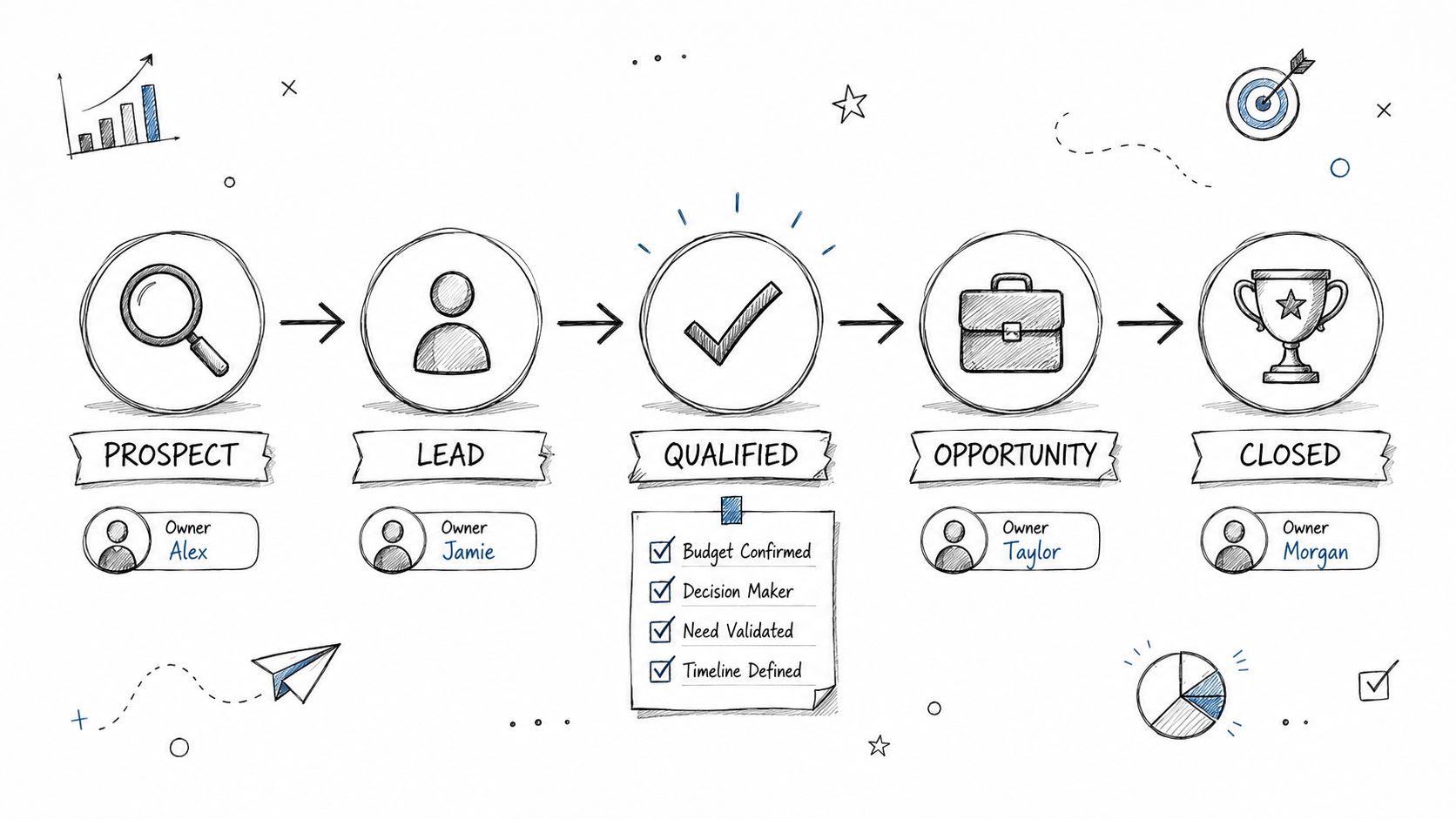
If your reps can move a deal from one stage to another based on gut feel, your forecast is already compromised. Stages need to reflect buyer progress, not seller optimism. “Interested” is not a stage. “Discovery completed with the right stakeholder and next meeting booked” is.
For SMBs, simpler usually wins. A compact pipeline with clear stage definitions beats a bloated one with overlap. A SaaS team might use stages such as MQL, SQL, Demo Scheduled, Proposal Sent, Negotiation, and Closed Won or Lost. The exact labels matter less than the rules behind them.
Make stage movement objective
The fastest way to tighten your pipeline is to define entry and exit criteria for every stage, then enforce them in CRM. Best practices in sales pipeline management call for a standardized sales process with clear stage criteria, because that creates consistency in qualification and movement.
A practical setup looks like this:
Require proof, not intent: A rep shouldn't advance a deal without the required fields, notes, and next step completed.
Tie stages to buyer actions: Demo booked, security review started, pricing reviewed, or legal involved are stronger signals than “good conversation.”
Review definitions quarterly: Win and loss patterns change. Your stage criteria should change with them.
Practical rule: If two reps would classify the same deal differently, the stage definition is too vague.
Modern platforms can help here. Stamina, for example, can enforce fields and automate movement when criteria are met. If you're tightening top-of-funnel quality, this guide on how to qualify leads in sales is a useful reference.
What doesn't work is building stages around your internal admin steps. Prospects don't care that you “sent materials.” They care whether a buying process is making progress.
2. Implement Regular Pipeline Reviews and Forecasting
A pipeline review should not be a meeting where everyone narrates the CRM. It should be a decision session. Which deals are progressing, which are stuck, and what needs to happen before the next review.
At minimum, review the pipeline weekly. Best practices in sales pipeline management call for updates at least once per week, with many high-performing teams reviewing daily during high-volume periods or near quarter end. If you're an SMB founder still close to deals, that cadence matters even more because a few stalled opportunities can distort the whole quarter.
Review trends, not stories
Don't let reviews drift into “I think this one feels good.” Use the meeting to pressure-test data and next steps.
Focus on:
Stage aging: Which deals have sat too long without movement
Next-step quality: Whether every active deal has a dated next action
Conversion trends: Where movement is slowing from stage to stage
B2B pipeline benchmarks show a clear funnel hierarchy. Lead-to-meeting conversion averages 1 to 3%, opportunity-to-proposal conversion averages 10 to 15%, and proposal-to-closed conversion averages 20 to 30%, according to Landbase pipeline benchmarks. You don't need to match those numbers exactly, but you do need to know where your own process breaks against a reasonable benchmark.
A good weekly review usually answers three questions fast:
What slipped
Why it slipped
Who owns the recovery step
If a deal has no clear next meeting, no recent engagement, and no defined blocker, it's not “still alive.” It's unqualified or stalled.
What doesn't work is mixing pipeline review and executive forecast review into one vague conversation. Pipeline review is for movement. Forecast review is for confidence.
3. Leverage AI-Driven Lead Scoring and Prioritization
Most SMB teams don't have a lead problem. They have a prioritization problem. Too many names enter the system, too few are truly worth a rep's time, and sales ends up working whichever lead shouted loudest or landed most recently.
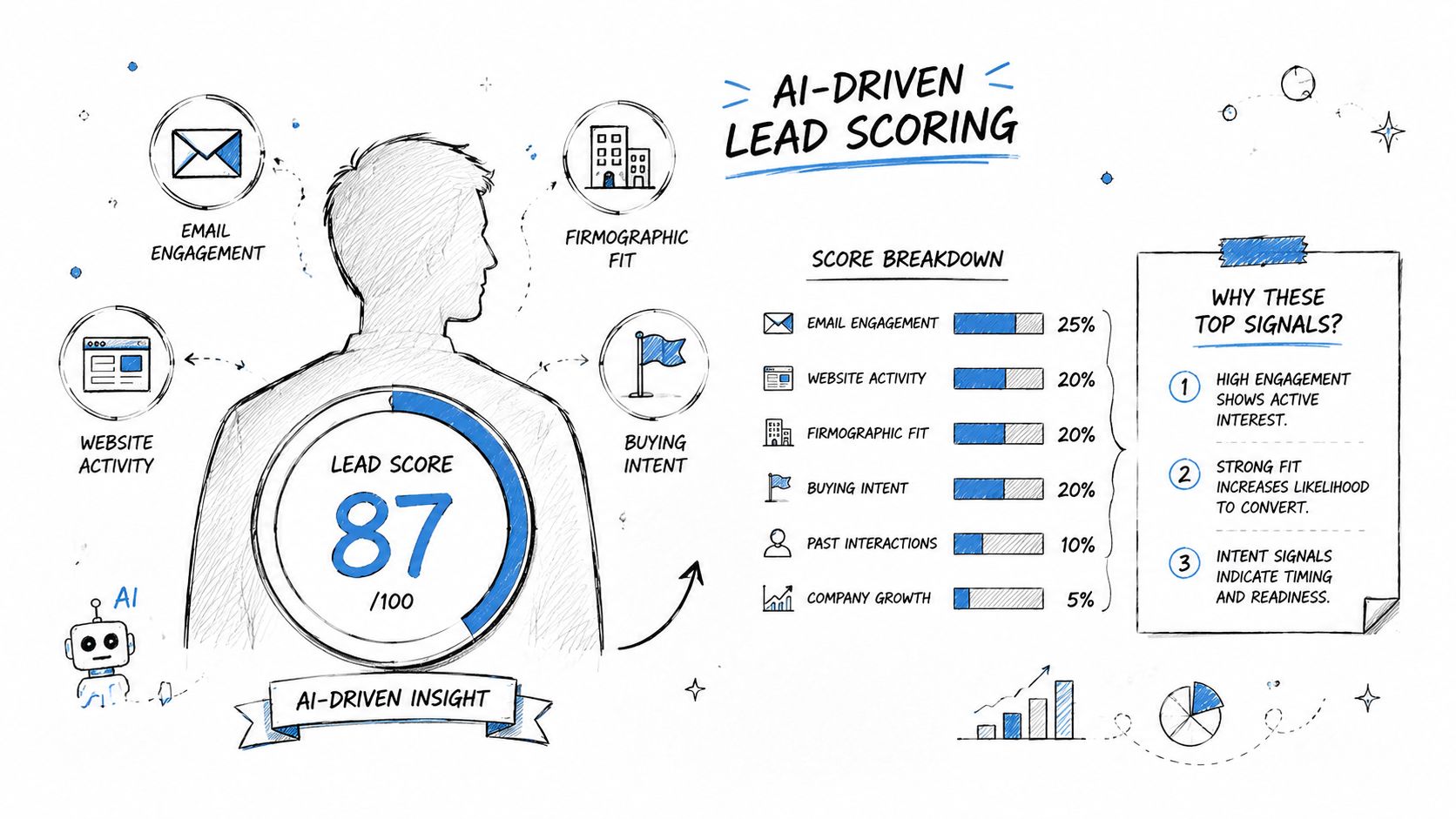
AI scoring helps when it ranks leads using multiple signals instead of one simplistic rule. That can include firmographic fit, engagement history, website behavior, inbound activity, and outbound responsiveness. Done well, it narrows focus and reduces wasted follow-up.
Start with signals you already trust
You don't need an elaborate data science project. Start with your closed-won and closed-lost history. Look for common traits among deals that progressed. Then feed those signals into your scoring logic.
Useful inputs often include:
Firmographic fit: Industry, company size, geography, and use case
Behavioral intent: Repeat site visits, content engagement, form fills, reply activity
Sales readiness: Calendar booking, multiple stakeholders involved, pricing interest
Platforms like Stamina pair CRM data with Zara, its AI SDR, to research prospects and surface stronger-fit accounts before a rep spends manual time. If you're building that process, lead scoring automation is worth reviewing.
The trade-off is straightforward. AI can improve focus, but bad data will train bad models. That's why scoring only works when your CRM hygiene is solid. It should support rep judgment, not replace it.
If your team handles both inbound and outbound motions, this gets even more useful. AI can flag warm accounts and help connect pipeline management with lead generation for SaaS and ecommerce, so your team spends more time on accounts that already show buying signals.
4. Create Automated Sales Engagement Sequences
A leaky pipeline often starts with weak follow-up. Reps do the hard part, get a conversation started, then fail to maintain momentum consistently across channels. That isn't usually laziness. It's workload and inconsistency.
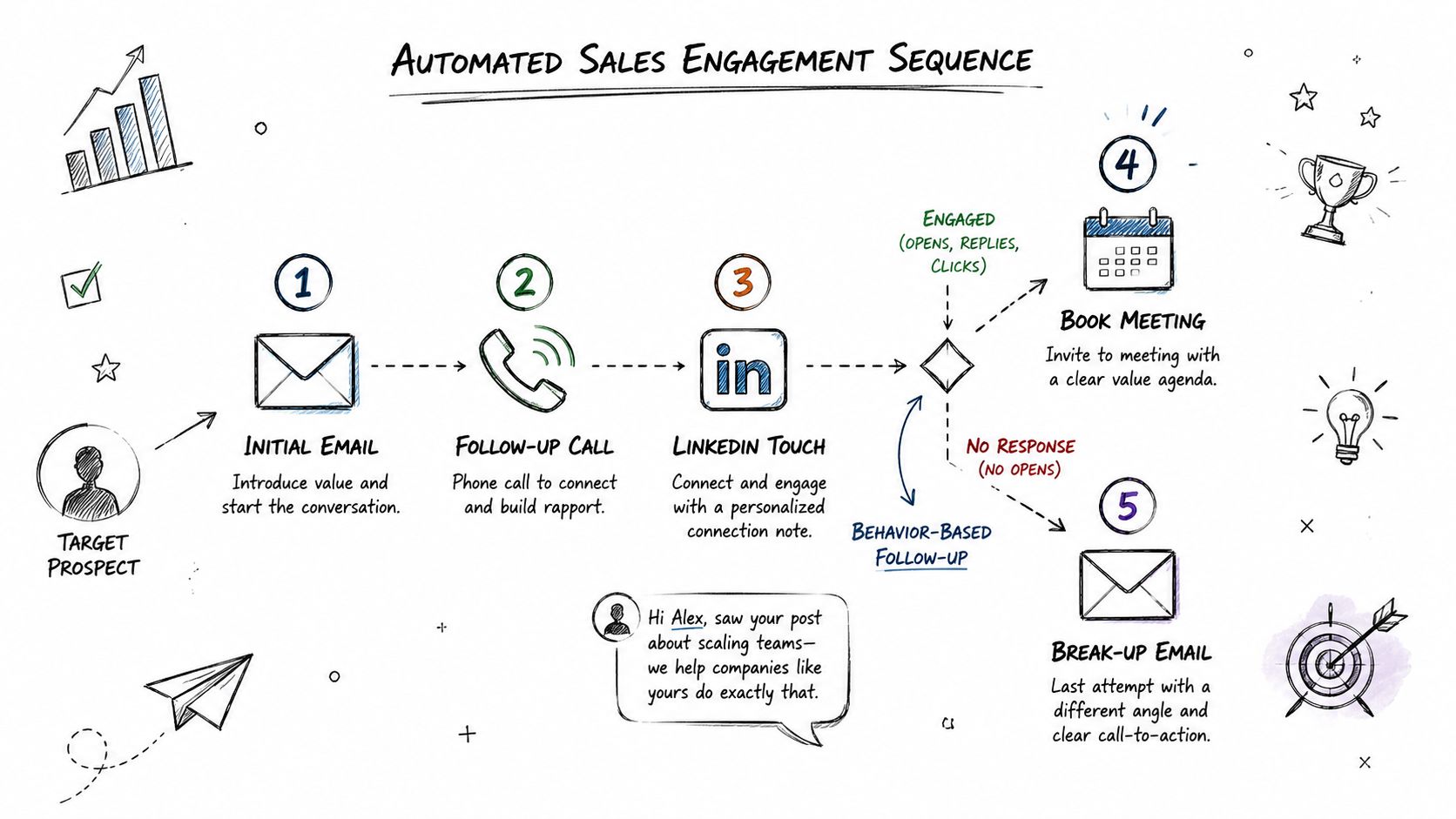
Automated engagement sequences fix that. They create a structured series of touches across email, calls, and social, while still leaving room for personalization. For SMB teams, that matters because a small sales org can't afford to rebuild follow-up manually for every prospect.
Build sequences around real buyer friction
The best sequences don't repeat the same message five times. Each step should add a different angle. One email might focus on the pain. Another might share a relevant use case. Another might ask for a low-friction next step.
A sequence works better when it includes:
Message variation: Change the reason to respond, not just the wording
Conditional logic: Stop or reroute prospects based on opens, replies, or meetings booked
Stage alignment: Use one sequence for new outreach, another for no-shows, another for stalled proposals
Stamina can generate multi-step sequences using Zara research and route engaged prospects into the next workflow automatically. If you're refining that motion, the breakdown of drip campaign meaning helps clarify how to structure longer follow-up without turning it into spam.
What doesn't work is over-automating with generic copy. Buyers can spot a fake “personalized” email quickly. AI should speed up customization, not remove relevance.
5. Integrate Marketing and Sales Data for Unified Insights
You can't manage what you can't see across teams. When marketing engagement lives in one tool, outbound lives in another, and pipeline data sits in CRM with gaps, nobody has the full picture. Sales blames lead quality. Marketing blames follow-up. Leadership gets noise instead of signal.
This is where a unified platform approach matters. Your team needs one source of truth for lead status, activity history, ownership, and engagement across channels.
One record, one timeline, one handoff
Technical best practices call for go-to-market teams to operate from a single source of truth in CRM, with lead-handoff SLAs of MQL to first sales touch within 24 hours, Sales Acceptance within 48 hours, and qualification feedback within 72 hours, according to Elephant RevOps pipeline guidance. Those handoff rules aren't enterprise theater. They prevent lead rot.
For an SMB, this usually means:
Shared definitions: Marketing and sales agree on what counts as MQL, SQL, and opportunity
Shared routing rules: Everyone can see who owns the lead and what should happen next
Shared dashboards: Pipeline progression from first touch to closed revenue is visible in one place
Separate systems create fake debates. Unified systems show where the handoff actually broke.
Stamina is built for this kind of setup. Broadcasts, automated flows, sales engagement, and CRM activity all live together. If you're comparing fragmented tools versus connected systems, a broad Lemlist comparison can help frame what you're trading off. For a more direct integration view, see marketing automation and CRM integration.
What doesn't work is stitching together point tools and hoping discipline alone will solve visibility.
6. Maintain CRM Data Quality and Hygiene Standards
Bad data poisons everything. Forecasting, coaching, routing, AI scoring, rep accountability. If the CRM is full of duplicates, stale contacts, missing fields, and zombie deals, every downstream decision gets weaker.
This is why data hygiene isn't admin work. It's revenue work. Companies with accurate, up-to-date sales pipelines are 10% more likely to grow revenue year over year, according to Forbes as cited in the verified data provided for this article.
Make clean data the default
Don't rely on reps to remember every field manually. Configure the system so quality is easier than sloppiness.
Good hygiene usually includes:
Required fields by stage: Deal size, champion, next step, and buying timeline before advancement
Weekly cleanup habits: Remove outdated owners, stale opportunities, and incomplete records
Automated enrichment: Pull in account and contact details where your platform allows it
Technical best practices also call for weekly pipeline hygiene audits to remove stalled opportunities and outdated ownership. That's one of the simplest habits an SMB can adopt because it doesn't require more meetings. It requires standards.
A strong unified platform helps here. In Stamina, teams can combine CRM validation, enrichment, workflows, and activity tracking in one system instead of depending on multiple cleanup tools. That lowers friction, which is half the battle.
What doesn't work is asking reps to “keep the CRM updated” without giving them rules, automation, or consequences. Vague expectations produce vague data.
7. Establish Clear Deal Ownership and Accountability Metrics
Pipeline leaks often come from ambiguity. Who owns the lead after qualification? Who follows up after a no-show? Who updates the next step after a pricing call? If the answer is “the team,” nobody really owns it.
Clear ownership matters at every stage. So do metrics that tell you whether activity is translating into movement.
Track the right layers of accountability
A useful accountability system doesn't obsess over vanity activity and ignore outcomes. It connects effort to progression.
That means measuring:
Activity metrics: Calls, emails, meetings booked, follow-ups completed
Conversion metrics: Meeting to opportunity, opportunity to proposal, proposal to close
Outcome metrics: Pipeline created, closed revenue, forecast accuracy
Best practices also include bi-weekly 1:1 coaching sessions where managers review 5 to 10 key deals using real-time data such as stage aging, missing next steps, and recent email activity. That structure is more useful than generic rep scorecards because it links accountability to actual deal execution.
A founder-led sales team can apply the same principle even without a formal manager layer. Pick a small set of metrics, make them visible, and review them the same way every time.
Accountability works when metrics answer “what should this person do next,” not just “how did they do last month.”
What doesn't work is tying compensation and performance conversations to numbers that reps can't influence directly or can't see in real time.
8. Use Pipeline Analytics and Early-Warning Systems
You don't need a huge RevOps team to spot risk earlier. You need a small set of analytics that tell you where deals stall and which opportunities need intervention now, not at month end.
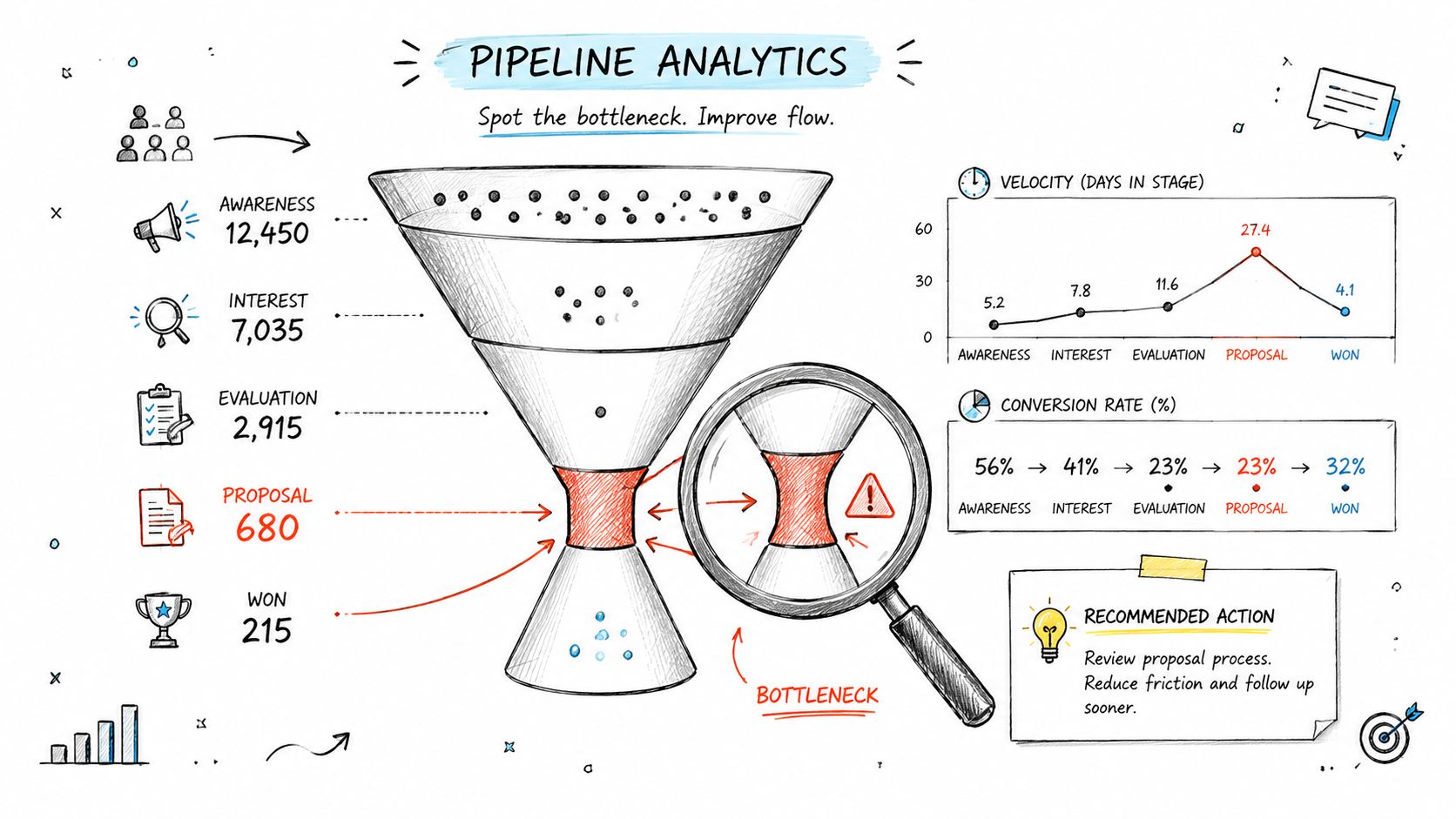
Most SMB teams benefit more from simple warning systems than from complex forecasting models. Start with engagement decay, stage aging, and conversion drop-offs. Those are practical and actionable.
Build alerts around movement
The point of analytics isn't prettier dashboards. It's intervention.
Useful warning signs include:
Deal inactivity: No replies, no meetings, no logged progress after a defined period
Stage bottlenecks: A visible buildup in one stage over time
Rep-level outliers: One seller's pipeline aging or conversion trend diverges from the rest
Best practices in sales pipeline management also emphasize monitoring pipeline velocity and stage-by-stage conversion rates closely so leaders can identify bottlenecks and improve productivity. If proposal-stage deals suddenly pile up, that's not just a reporting issue. It may point to pricing friction, weak proof, poor follow-up, or the wrong stakeholders in the deal.
Many modern platforms can surface these risks automatically. Stamina can use workflows and engagement signals to flag inactivity and trigger tasks. The key is pairing alerts with a playbook. If a deal goes cold, what should happen next? Escalation, re-engagement sequence, manager review, or downgrade.
What doesn't work is noticing the pattern and still leaving every at-risk deal in forecast because “it might come back.”
9. Implement Account-Based Marketing Aligned With Sales Pipeline
ABM fails when it becomes a marketing side project. It works when sales and marketing agree on target accounts, shared messaging, and what account progress looks like in the pipeline.
For SMBs selling into larger accounts, ABM can prevent a common mistake. Reps chase individual contacts while ignoring the wider buying group. Then the deal stalls because nobody built support beyond one champion.
Run account plays, not isolated touches
A strong ABM motion starts with account selection, then expands into coordinated outreach to multiple stakeholders. That can include email, LinkedIn, content, retargeting, and direct rep follow-up.
Use account-level signals such as:
Stakeholder coverage: Have you engaged the likely users, technical evaluators, and decision-makers
Intent activity: Is the account showing repeat engagement across channels
Pipeline progression: Is the account moving, or are you just logging activity against one contact
Stamina's Zara can help identify target accounts, research decision-makers, and generate customized outbound at scale. That's especially useful for lean teams that want ABM discipline without hiring a large SDR function.
What doesn't work is calling something ABM because you uploaded a named account list into your ad platform. If sales doesn't know the play, it isn't ABM. It's segmented marketing.
10. Coordinate Campaigns That Blend Inbound Marketing With Outbound Sales Outreach
Inbound and outbound should reinforce each other. Too often they compete. Marketing runs content and paid campaigns. Sales runs cold outreach. Prospects get disconnected messages, duplicated touches, or no follow-up on warm intent at all.
The better approach is coordinated orchestration. When someone engages with your content, visits key pages, or responds to a campaign, sales should know. When sales learns what objections are recurring, marketing should feed that back into content and nurture.
Use inbound signals to sharpen outbound timing
Modern workflows earn their keep. For instance, a prospect reads a case study, revisits the pricing page, or clicks through an email nurture. That activity should influence who sales contacts and what they say.
Practical coordination looks like this:
Trigger outreach from engagement: Website visits, content downloads, and email engagement can move a contact into a rep sequence
Reference what happened: Sales messages should reflect the content or behavior that signaled interest
Control channel pressure: Don't hit the same prospect with every channel at once
Organizations that keep pipeline coverage at 3x to 4x quota are better positioned to absorb normal deal attrition and still hit targets. Coordinated inbound and outbound programs help create that coverage more predictably because they reduce wasted effort and improve timing.
The biggest mistake here is volume without orchestration. More campaigns don't fix a weak pipeline if your systems can't coordinate who touched the account, what they saw, and what should happen next.
10-Point Sales Pipeline Management Comparison
Strategy | Implementation complexity | Resource requirements | Expected outcomes | Ideal use cases | Key advantages |
|---|---|---|---|---|---|
Define Clear Pipeline Stages and Qualification Criteria | Medium, requires process design and stakeholder alignment | Low–Medium, CRM configuration and cross-team workshops | More accurate forecasts, reduced cycle time, clearer hand-offs | Teams with unclear stage definitions or frequent handoff issues | Consistency, alignment, easier bottleneck detection |
Implement Regular Pipeline Reviews and Forecasting | Medium, cadence and reporting workflows to establish | Medium, meeting time, analytics tools, disciplined hygiene | Early issue detection, improved forecasts, higher accountability | Scaling sales organizations wanting predictable revenue | Data-driven decisions, risk flagging, better resource planning |
Leverage AI-Driven Lead Scoring and Prioritization | High, model building and signal integration | High, historical data, ML tooling, data engineering | Higher conversion rates, shorter cycles, prioritized outreach | High-volume lead environments and intent-driven sales | Scalable prioritization, focus on high-probability leads |
Create Automated Sales Engagement Sequences | Medium, sequence design, personalization logic | Medium, content creation, automation platform, testing | Increased responses, consistent follow-up, time savings | SDR/outbound teams and follow-up cadences (no-shows, nurture) | Multi-touch scale, consistent execution, A/B optimization |
Integrate Marketing and Sales Data for Unified Insights | High, data consolidation, migration, and governance | High, platform consolidation, ongoing data ops | Better attribution, faster handoffs, improved lead quality | Organizations using multiple tools needing single-source reporting | Single source of truth, cross-team visibility, unified reporting |
Maintain CRM Data Quality and Hygiene Standards | Medium, standards, validation rules, audits | Medium, automation, enrichment services, training | Accurate forecasting and analytics, improved AI performance | Any CRM-dependent org or teams using predictive models | Reliable data, fewer duplicates, better personalization |
Establish Clear Deal Ownership and Accountability Metrics | Low–Medium, rule definitions and dashboarding | Low–Medium, dashboards, manager coaching time | Clear accountability, measurable rep performance, targeted coaching | Teams needing fair assignment and transparent compensation | Transparency, data-driven coaching, incentive alignment |
Pipeline Analytics & Predictive Early-Warning Systems | High, advanced analytics and ML models | High, historical data, analytics tools, analysts | Bottleneck identification, proactive interventions, fewer surprises | Large/revenue-focused orgs wanting predictive alerts | Targeted interventions, predictive risk detection, prioritized attention |
Implement Account-Based Marketing (ABM) Aligned with Sales Pipeline | High, account research and coordinated playbooks | High, personalized content, account intelligence, coordination | Higher conversion and deal sizes for target accounts | Enterprise or strategic-account selling with few high-value targets | Multi-stakeholder influence, higher ROI on targeted accounts |
Coordinate Inbound Marketing with Outbound Sales Outreach | High, cross-channel orchestration and tracking | High, content, ads, workflows, integrated CRM | Improved engagement, consistent messaging, higher conversions | Growth teams combining demand gen with proactive outreach | Multi-channel coherence, improved lead-to-opportunity conversion |
Your Pipeline Is a Product, Not a Report
Most SMB teams don't fail at pipeline management because they don't care. They fail because the pipeline became an after-the-fact reporting layer instead of the operating system for revenue. Reps update fields late. Managers review too many deals with too little evidence. Marketing and sales work from different definitions. Forecast calls become storytelling sessions.
That setup doesn't scale. It creates fake confidence in good months and panic in bad ones.
The stronger approach is to treat the pipeline like a product. Products need design, rules, maintenance, user adoption, and iteration. Your pipeline does too. Stages need clear definitions. Data needs standards. Reviews need rhythm. Automation needs guardrails. AI needs clean inputs. When those pieces work together, pipeline management becomes less about inspection and more about control.
This is also where a unified platform approach becomes practical, not theoretical. SMBs usually don't need more tools. They need fewer disconnected ones. When marketing activity, outbound engagement, CRM records, workflows, and AI support all live together, your team can then see the full path from first signal to closed deal. That visibility changes behavior. Reps act faster. Managers coach with evidence. Founders stop relying on gut feel.
There are trade-offs, of course. Tightening stage criteria can make the pipeline look smaller at first. Weekly hygiene can feel tedious. Enforcing ownership can expose uneven rep performance. But those are healthy tensions. A smaller, cleaner pipeline is more valuable than a large fictional one. Short-term discomfort is usually the cost of long-term predictability.
If you're trying to improve sales pipeline management best practices inside a growing business, don't attempt all ten changes at once. Pick one structural fix and one execution fix.
A sensible starting pair is:
Structural fix: Define stage exit criteria and required CRM fields
Execution fix: Run a weekly review with clear next steps and stale-deal cleanup
Once those habits stick, layer in AI scoring, automated sequences, better handoff SLAs, and account-based plays. That's how teams improve. Not with a giant sales transformation project, but with a set of operating decisions that compound.
The goal isn't a prettier dashboard. It's a pipeline your team trusts enough to act on. When that happens, revenue gets less reactive. Forecasting gets less political. Sales and marketing start rowing in the same direction. And your CRM stops being a graveyard of half-managed opportunities.
Treat the pipeline like something you're building, not something you're explaining after the fact.
If you're ready to replace disconnected sales, marketing, and CRM tools with one AI-powered system, Stamina gives SMB teams a practical way to do it. You can manage pipeline stages, automate outreach, unify handoffs, keep CRM data clean, and use Zara AI SDR to identify and engage better-fit prospects without stitching together a fragile stack.

