Outbound Lead Generation: Your Blueprint for 2026

Build a powerful outbound lead generation engine. Our guide offers a step-by-step blueprint for SMBs on ICP, personalization, AI-driven sequences, and scaling.

0 - Minute Read

You're probably in one of two situations right now. Pipeline is soft, inbound isn't producing enough qualified conversations, and the team keeps asking for more leads. Or pipeline looks healthy on the surface, but too much of it depends on referrals, founder-led selling, or a few channels you don't fully control.

That's where outbound lead generation earns its keep.

Done badly, outbound is still the fastest way to burn a list, annoy a market, and confuse your sales team. Done well, it gives SMBs something they rarely get from inbound alone: a way to create pipeline on demand. You choose the accounts, the roles, the message, the timing, and the sequence. You don't wait for perfect intent signals. You build your own motion.

The catch is that the old playbook is gone. Generic cold emails, loose targeting, and disconnected tools don't hold up anymore. Modern outbound lead generation is tighter, more selective, and far more operational than most advice suggests. It depends on data quality, message relevance, sequencing discipline, and clear economics. It also depends on knowing where AI helps and where it hurts.

The Modern Case for Proactive Outreach

A lot of SMB leaders hold out hope that inbound will save them. Publish content. Run some paid campaigns. Improve the website. Wait for demand to show up. That works up to a point, especially when you already have strong brand awareness or a mature referral engine.

Most growing companies don't have that luxury.

Lead generation is the top priority for 91% of B2B marketers, and 58% say it's their biggest challenge. The same 2025 research shows 87% of B2B businesses rely on email and 89% use LinkedIn, which tells you something important. Outbound hasn't disappeared. It has become a multi-channel motion that combines channels instead of treating each one as a separate campaign, according to Pepper Content's 2025 lead generation summary.

The old version of outbound was volume-first. Build a broad list, load a sequence, send a lot, and hope a few people respond. That model breaks fast. Deliverability suffers. Messaging sounds interchangeable. Reps spend time on accounts that were never a fit.

Modern outbound lead generation works for a different reason. It starts with precision, not activity.

Practical rule: Outbound works best when you use it to create conversations in accounts that should buy, but haven't raised their hand yet.

That's why a unified system matters. If your prospect data lives in one tool, email in another, LinkedIn tasks in a spreadsheet, and pipeline in a CRM nobody trusts, execution falls apart. Small teams feel this first because they can't hide behind headcount. They need one process that connects targeting, outreach, follow-up, and handoff.

Laying the Foundation with a Precise ICP

Weak targeting is the root cause behind most failed outbound programs. Teams usually blame copy, channel mix, or rep performance. In practice, the problem starts earlier. They aimed at the wrong accounts, the wrong roles, or both.

That's not a messaging issue. That's an ICP issue.

A useful way to think about an ideal customer profile is this: it's not a persona doc for a strategy deck. It's a live filter that decides who gets your team's time. Outbound gets expensive when you let broad assumptions drive list building.

Content marketing is often cited as 3x more efficient than outbound, which is exactly why outbound teams have to be more precise about who they target and why, as noted in this lead generation statistics roundup. If inbound can attract broad demand more efficiently, outbound only works when it's selective.

A hand holding a magnifying glass over a digital sketch of a woman analyzing marketing demographics.

Build tiers, not one giant market

Teams often need three account tiers.

Tier

What it means

How to treat it

Tier 1

Best-fit accounts with strong need, clear use case, and reachable buying committee

Highest personalization, multithreaded outreach, rep-owned research

Tier 2

Good-fit accounts that resemble wins but lack one strong signal

Templated personalization with lighter research

Tier 3

Plausible accounts with weaker alignment or less urgency

Test segments carefully, limit effort until they prove response quality

Not every account warrants the same level of effort. If your team personalizes extensively for everyone, throughput collapses. If they personalize for no one, reply quality collapses.

Use more than firmographics

A practical ICP has three layers:

  • Firmographic fit
    Industry, company size, geography, and business model. This is the starting point, not the finished answer.

  • Operational fit
    The conditions that make your product useful right now. That might include team structure, process complexity, or channel mix.

  • Buying signals
    Hiring activity, leadership changes, recent launches, or other signs that a problem is active enough to discuss.

The biggest improvement most SMB teams can make is moving from broad labels to narrow operating contexts. “Healthcare” is too broad. “Multi-location healthcare groups with growing admin complexity” is more useful. “SaaS” is too broad. “Series A to B SaaS teams building an outbound motion for the first time” is something a rep can work with.

Define negative personas early

Good ICP work also says who to avoid.

That includes companies too small to absorb your product, teams without budget ownership, roles that care about the problem but can't influence action, and segments where sales cycles become education projects. Negative personas save more time than positive personas because they stop bad leads from entering the system.

A simple test helps. Look at closed-won customers, stalled deals, and no-show demos. Then ask which traits repeat. That exercise usually produces sharper targeting than brainstorming ever will.

If your team needs a tighter process for deciding who is sales-ready, this guide on how to qualify leads in sales is a useful companion to ICP work.

The best ICPs are operational. A rep should be able to look at an account and decide in minutes whether it belongs in Tier 1, Tier 2, or the discard pile.

Sourcing and Segmenting High-Quality Prospects

A bad list can sink a good outbound program in a week. The usual failure pattern is familiar. A team buys or scrapes a large batch of contacts, pushes them into sequences, then discovers too late that half the records are outdated, poorly matched, or missing the context needed for a credible message.

That hurts productivity first. Then it hurts deliverability.
Screenshot from https://stamina.io

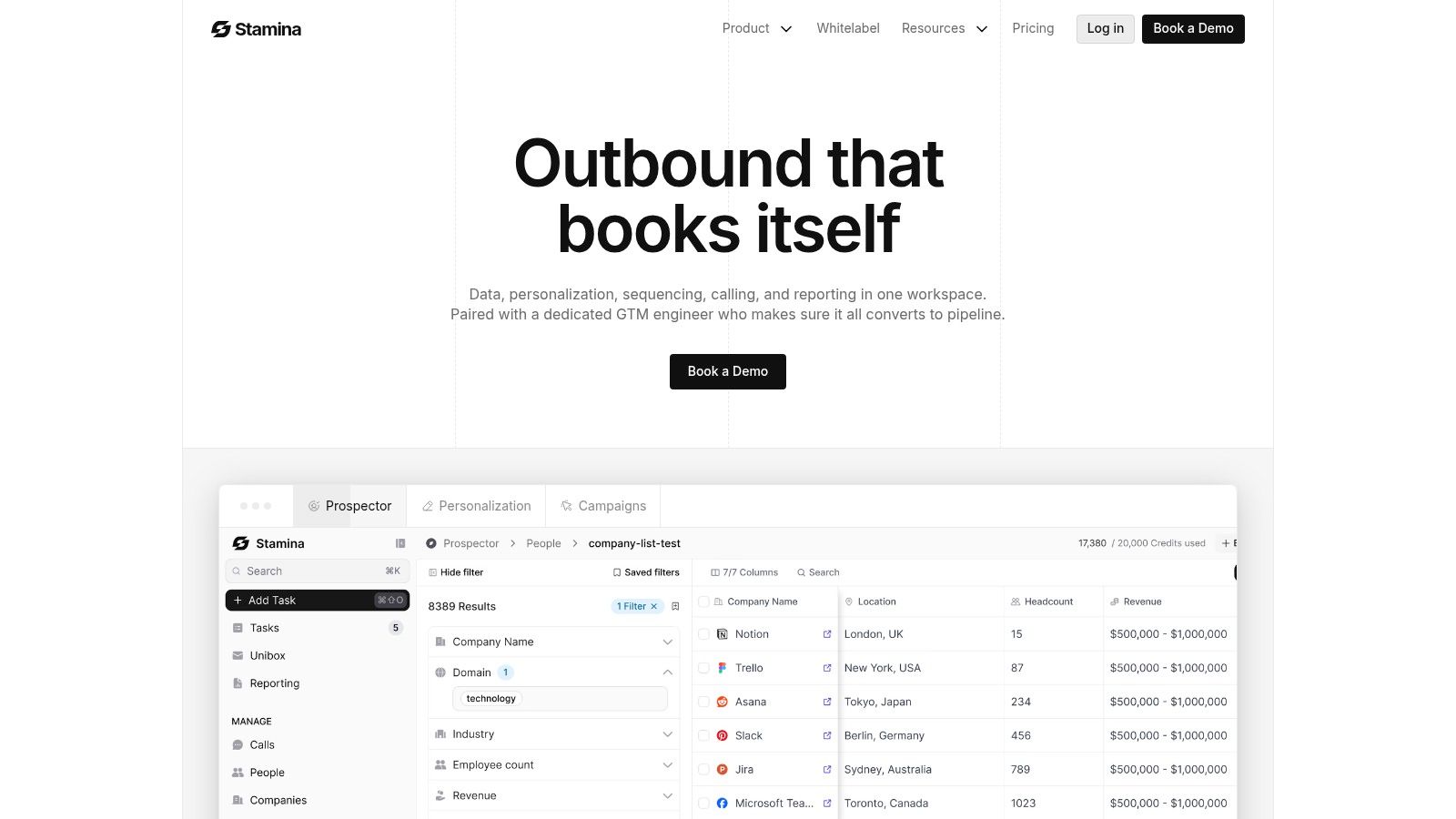
For SMBs, economics are critical. Enterprise teams can absorb some waste with larger SDR benches, separate ops support, and extra tooling. Smaller teams cannot. If one rep spends two hours a day working bad data, the problem is not minor. It means the outbound engine is built on the wrong unit economics. A unified system like Stamina helps because sourcing, enrichment, validation, and segmentation can happen in one workflow instead of getting split across spreadsheets and disconnected point tools.

Start with accounts, then build contacts

The cleanest way to source is to decide which companies deserve attention before collecting individual names. That keeps volume under control and improves message relevance from the start.

A practical workflow looks like this:

  1. Build the account list first
    Identify companies that match the ICP, then assign tiers based on fit, timing, and expected deal value.

  2. Map the buying committee
    Include likely users, economic buyers, and blockers. One contact rarely reflects how a B2B decision is reached.

  3. Enrich the record with context
    Add business unit, reporting line, region, recent company changes, and anything else that changes the message or offer.

  4. Verify before outreach
    Validation belongs upstream. Once bad records enter sequences, reps spend time fixing preventable problems.

That order sounds simple, but it is where many outbound teams slip. They start with a contact dump and try to sort for fit later. By then, the CRM already contains noise, duplicates, and people who were never good prospects.

Treat data decay as an operating constraint

Prospect data changes constantly. People switch roles, companies reorg, inboxes get retired, and territories change hands. Outbound teams that treat list quality as a one-time setup project usually pay for it with bounce risk, poor reply rates, and wasted rep effort.

The fix is operational discipline:

  • Verify new imports before they enter campaigns

  • Refresh older records on a schedule

  • Re-check dormant contacts before reactivation

  • Review role changes before sending the same message again

If your team pulls leads from LinkedIn, this guide on how to find someone's email on LinkedIn is useful for turning profile research into a usable contact record.

Segment for relevance, not CRM convenience

Weak segmentation usually comes from exporting whatever fields are easy to filter. Strong segmentation comes from grouping accounts that can receive the same message without sounding generic.

“CMOs in SaaS” is broad enough to fill a list. It is rarely specific enough to earn replies.

A better model combines a few dimensions at once:

Segment dimension

Weak example

Stronger example

Industry

SaaS

Vertical SaaS serving field teams

Role

Marketing leader

VP Marketing responsible for pipeline creation

Company context

Mid-market

Recently added SDR headcount

Problem angle

Needs growth

Needs cleaner handoff between marketing and sales

The goal is not tiny lists. The goal is coherence. A segment should be tight enough that a rep can write one message framework that feels informed across the full audience.

Protect infrastructure before scaling volume

List quality and infrastructure quality are tied together. Bad records create bounces and spam complaints. Poor mailbox setup makes even strong lists underperform. SMB teams often treat these as separate projects because the work lives in different tools. In practice, they belong in the same outbound operating model.

That is one reason to document your send logic and sequencing rules early. Teams working on mastering sales cadences with AI support usually improve faster because cadence design, data hygiene, and send volume are managed as one system instead of isolated tasks.

Mailbox warm-up should be handled before campaigns are under pressure. A rushed domain setup followed by immediate volume is expensive to recover from, especially if your team depends on a small number of sender accounts.

Build campaign lists from one master database

The strongest outbound programs keep one validated source of truth, then create focused campaign slices from it. That prevents the common SMB problem where every rep builds a private spreadsheet, definitions drift, and nobody knows which record is current.

In Stamina, that usually means one master prospect database with filters for persona, trigger, account tier, and campaign status. The benefit is practical. Ops gets consistency, reps get cleaner lists, and leadership can see which segments create pipeline.

A few examples:

  • Persona segment
    Heads of Sales at companies already investing in outbound

  • Trigger segment
    Accounts that recently hired a new revenue leader

  • Industry segment
    Agencies trying to centralize client prospecting

  • Expansion segment
    Existing target accounts where a second team could use the product

That structure gives a small team room to scale without losing control. You get focused campaigns, cleaner handoffs, and a sourcing process that stays compliant and economically sound as volume grows.

Crafting High-Impact Outreach Sequences

Most outbound sequences fail because they aren't sequences. They're just repeated asks across different channels. The prospect experiences the same pitch three times, not a progression.

The better approach is to treat each touch as a small step forward. The first email earns attention. The next touch builds familiarity. A call tests urgency. LinkedIn adds context. Follow-ups clarify why the conversation is worth having.

Benchmarks from Sopro's outbound lead generation guidance reinforce why this matters. High-performing outbound is a sequenced, multi-channel workflow, and their reported lead-to-meeting conversion benchmarks show email at 25.4%, cold calling at 14.1%, and LinkedIn at 5.0%. That doesn't mean email always wins. It means channel choice and sequence design affect how efficiently you create meetings.
Screenshot from https://stamina.io

A practical 15-day sequence

For a fictional SaaS company selling revenue operations software to SMB sales teams, I'd structure a sequence like this:

Day

Touch

Purpose

1

Email 1

Low-friction opener tied to a relevant problem

3

LinkedIn profile view and connection request

Familiarity without a hard ask

5

Email 2

Sharpen problem statement and add context

7

Call 1

Test urgency and collect live signal

9

LinkedIn message

Reference the issue in a lighter format

11

Email 3

Handle likely objection or inertia

13

Call 2

Try direct booking or referral inside account

15

Breakup email

Close the loop cleanly

The point of an 8-touch sequence isn't to pressure the buyer. It's to give them multiple chances to engage in the channel that fits them.

Sample copy for Touch 1

The first email should not sound like a proposal. It should sound like a relevant observation from someone who understands the operating problem.

Subject: quick question on outbound workflow

Hi Sarah,

Saw that your team is growing sales coverage across new accounts.

That usually creates a familiar problem. Prospecting, follow-up, and CRM updates start spreading across too many tools, which makes it harder for reps to keep outreach personal and managers to trust pipeline data.

If that's on your side too, worth comparing notes.

Open to a short conversation?

Best,
James

Why this works:

  • It starts with context, not a pitch.

  • It names an operational pain, not a vague business outcome.

  • It asks for a conversation, not a demo.

If you need more starting points, this collection of sales email templates is useful for shaping early touches without defaulting to stale cold email patterns.

Keep the first email low-pressure. You're trying to start a conversation, not compress discovery, positioning, and closing into five lines.

Sample copy for Touch 3 on LinkedIn

Connection request or direct message:

Hi Sarah, reaching out because a lot of SMB sales teams hit process friction once outbound starts scaling across email, calls, and CRM. Thought it made sense to connect.

This works because it mirrors the email theme without repeating it word for word. LinkedIn shouldn't feel like copied email copy pasted into another channel.

Later in the sequence, a short message can work well:

Wanted to follow up here in case email got buried. I've been speaking with teams that are trying to keep outbound personalized without adding more admin overhead. Happy to share what's working if useful.

Sample copy for Touch 5 call

A workable call opener:

“Hi Sarah, this is James. I sent a note earlier this week because I work with sales teams that are trying to keep outbound organized as volume rises. I'm calling to see if that's even relevant on your side, or if I should leave you alone.”

Why it works:

  • It lowers resistance.

  • It gives the buyer an easy out.

  • It sounds like a professional call, not a script performance.

If Sarah says yes, ask one operational question. Don't unload the pitch.

For teams working on mastering sales cadences with AI support, cadence design matters less as a theory exercise and more as a response to buyer behavior. Your sequence should adapt by persona, not just by channel.

Here's a useful walkthrough before you operationalize sequences at scale:

Where unified execution helps

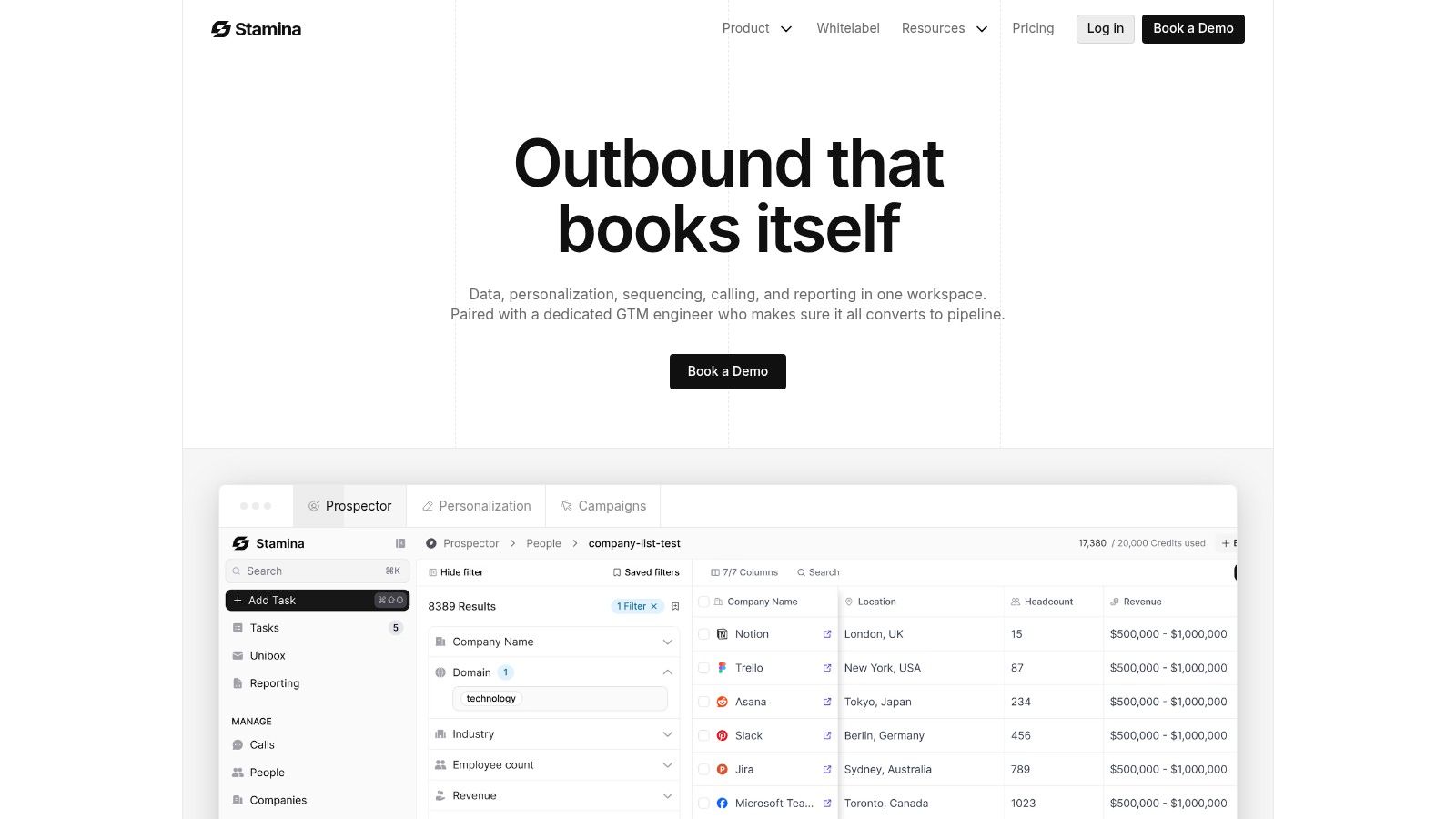
The biggest advantage of a connected outbound platform is not sending more messages. It's managing the logic behind outreach in one place. One option teams use is Stamina, which combines prospecting, outreach, CRM, and an AI SDR called Zara so reps can research accounts, generate personalized variants, and manage follow-up without stitching together separate tools.

That matters most for small teams. If your sequence lives in one system but your pipeline notes, tasks, and account context live elsewhere, reps eventually stop following the sequence properly.

Using AI and Automation to Scale Smart

The wrong way to use AI in outbound is obvious once you've seen it. Messages sound polished but empty. Personalization looks technically correct and commercially useless. Reps send more activity, but trust goes down.

The right way to use AI is narrower and far more valuable. Let it handle the repeatable parts of research, drafting, and workflow management. Keep humans responsible for judgment, tone, and deal-level context.

That trade-off matters because the core question for SMBs isn't whether AI can increase output. It's how to use AI-assisted research and personalization without sounding generic or creating compliance risk, as discussed in Chili Piper's outbound lead generation article.

Screenshot from https://stamina.io

The 80 percent AI can handle

In most outbound workflows, AI is useful for:

  • Prospect research
    Summarizing a company's positioning, market, and likely use case from public signals.

  • Message drafting
    Producing first-pass email variants based on role, industry, and problem angle.

  • Subject line generation
    Creating multiple options for testing without making reps write from scratch.

  • CRM hygiene
    Logging activity, updating fields, and surfacing next-step reminders.

  • Prioritization support
    Flagging accounts with stronger fit based on your internal rules.

Small teams gain an advantage. The work gets done faster, and reps spend more time on live conversations and less on copy assembly.

The 20 percent that should stay human

AI shouldn't own the parts that depend on judgment.

Keep these with reps or managers:

Task

Why human review matters

Final first-touch approval

Generic language is easiest to catch before send

Strategic account selection

Important accounts often need context beyond available signals

Objection handling

Real objections are nuanced and situational

Call execution

Tone, pacing, and curiosity still decide outcomes

Compliance review

Risk tolerance varies by market and message type

That split keeps AI in its lane. It supports the motion instead of impersonating a rep badly.

Use automation to reduce admin, not empathy

Automation is most helpful when it removes operational drag. Activity logging, follow-up reminders, routing, and sequence branching all belong here. Reps shouldn't spend the best part of their day updating systems.

For teams reviewing essential tools for B2B prospecting, the useful question isn't how many tools to add. It's which tools reduce manual work without fragmenting execution further.

If you're building that muscle now, this guide on how to use AI for lead generation is a practical place to start.

AI should make your outreach more relevant per rep hour. If it only increases output volume, you haven't solved the real problem.

Measuring Iterating and Staying Compliant

Outbound breaks when teams reward activity instead of outcomes. A rep can send more emails, log more calls, and still create less pipeline if targeting slips or follow-up quality drops.

Measure the system end to end. That is how you see where performance improves, where it stalls, and where scale starts getting expensive.

For SMBs, that matters more than it does for larger teams with extra headcount to absorb inefficiency. If one rep is doing prospecting, outreach, follow-up, and CRM hygiene, every weak segment and every low-yield sequence carries a cost. In Stamina, that usually shows up fast. Reply volume can look fine while booked meetings flatten, or meetings rise while opportunity creation stays weak. Those are different problems and they need different fixes.

A useful place to get stricter is outbound economics. The question is not how much activity the team can produce. The question is whether each additional meeting is getting cheaper, staying flat, or becoming more expensive. That is why tighter segmentation often beats list expansion, as argued in Convoso's discussion of modern outbound lead generation.

The metrics that matter

Track performance in layers so you can diagnose the issue instead of guessing.

Engagement metrics

These show whether the market is responding to the outreach at all.

  • Reply rate
    Useful for judging whether the message and targeting are relevant enough to earn a response.

  • Positive reply quality
    More useful than raw reply volume. A short brush-off and a serious buying signal should not count the same.

  • Connection and conversation rate on calls
    Good for evaluating contactability, data quality, and whether the segment is reachable through phone.

If engagement is weak, start with the list and segment. Then review the first-touch message. Timing comes after that.

Conversion metrics

These show whether outbound is turning attention into pipeline.

  • Meeting booking rate

  • Lead-to-opportunity rate

  • Opportunity-to-close rate

Each drop-off points to a different issue. Replies without meetings usually mean the offer is weak, the CTA asks for too much too early, or follow-up lacks structure. Meetings without opportunities usually point to poor qualification, weak discovery, or a segment that can engage but does not have enough pain to buy.

Economic metrics

Here, smaller teams protect margin.

Metric

What it indicates

What to do with it

Cost per meeting

How much rep time and tooling go into creating one booked conversation

Compare segments, channels, and sequence types

Meetings per rep capacity

Whether reps can handle follow-up well after the calendar fills

Avoid flooding the team with low-quality meetings

Pipeline per active segment

Which segments justify more spend and attention

Shift effort toward segments that create revenue, not just responses

You do not need a complicated model. Start with rep hours, software cost, meetings booked, and opportunities created. That is enough to spot diminishing returns before the team burns time on volume that looks efficient in a dashboard and fails in the pipeline review.

Run controlled tests

Sequence optimization gets messy when teams change targeting, copy, timing, and channel mix at the same time. Then nobody knows what caused the result.

Use a simple testing discipline:

  1. Change one variable at a time.

  2. Hold the segment steady.

  3. Let the sequence run long enough to produce a pattern.

  4. Write down the change and the outcome.

Good early tests include subject line style, opening angle, CTA strength, send timing, and whether the first call happens before or after the second email. Keep the test narrow. That is how outbound becomes repeatable instead of opinion-driven.

Compliance is an operating rule

Compliance should sit inside the outbound process, not beside it.

A practical baseline for SMB teams:

  • Use accurate sender identity

  • Make opt-out paths clear

  • Avoid deceptive subject lines

  • Respect region-specific consent and data handling rules

  • Keep records of suppression and unsubscribe status

  • Review AI-generated copy before launch

The operational risk is not limited to fines or deliverability issues. AI can produce copy that sounds confident and still crosses a line by implying research that never happened, overstating familiarity, or obscuring why the message was sent. Buyers notice that immediately.

That is why compliance and message quality should be reviewed together. A message can pass a technical send check and still damage trust, reply quality, and conversion rates. For SMBs building outbound with a small team, that discipline is what makes AI-assisted execution scalable instead of sloppy.

Activating Your Outbound Playbook

Strong outbound lead generation isn't one tactic. It's a system.

It starts with a precise ICP so your team knows who deserves attention. It gets operational with disciplined sourcing, validation, and segmentation. It becomes effective when your sequence reflects how buyers respond across email, LinkedIn, and phone. It scales when AI handles the repetitive work without replacing human judgment. It becomes sustainable when you measure conversion and economics, not just output.

Most SMBs don't need a giant outbound department. They need a process that stays coherent as activity increases. That's the difference between a campaign and an engine.

If you're putting this into motion, start with these three moves:

  • Define your Tier 1 accounts
    Pick a narrow segment with clear fit, real pain, and reachable decision-makers.

  • Build one clean campaign list
    Source accounts first, map the buying committee, verify data, and segment around one strong problem angle.

  • Launch one sequence and measure the full funnel
    Watch replies, meetings, opportunity creation, and cost per meeting before expanding volume.

Outbound improves through iteration, not through ambition alone. Start tighter than feels comfortable. Outbound efforts benefit from less list and more precision.

If you want one place to run prospecting, outreach, CRM, and AI-assisted follow-up, Stamina is built for that connected workflow. It gives SMB teams a unified system for identifying target accounts, generating personalized outreach, managing pipeline, and keeping marketing and sales activity in sync without relying on a patchwork of point tools.

You're probably in one of two situations right now. Pipeline is soft, inbound isn't producing enough qualified conversations, and the team keeps asking for more leads. Or pipeline looks healthy on the surface, but too much of it depends on referrals, founder-led selling, or a few channels you don't fully control.

That's where outbound lead generation earns its keep.

Done badly, outbound is still the fastest way to burn a list, annoy a market, and confuse your sales team. Done well, it gives SMBs something they rarely get from inbound alone: a way to create pipeline on demand. You choose the accounts, the roles, the message, the timing, and the sequence. You don't wait for perfect intent signals. You build your own motion.

The catch is that the old playbook is gone. Generic cold emails, loose targeting, and disconnected tools don't hold up anymore. Modern outbound lead generation is tighter, more selective, and far more operational than most advice suggests. It depends on data quality, message relevance, sequencing discipline, and clear economics. It also depends on knowing where AI helps and where it hurts.

The Modern Case for Proactive Outreach

A lot of SMB leaders hold out hope that inbound will save them. Publish content. Run some paid campaigns. Improve the website. Wait for demand to show up. That works up to a point, especially when you already have strong brand awareness or a mature referral engine.

Most growing companies don't have that luxury.

Lead generation is the top priority for 91% of B2B marketers, and 58% say it's their biggest challenge. The same 2025 research shows 87% of B2B businesses rely on email and 89% use LinkedIn, which tells you something important. Outbound hasn't disappeared. It has become a multi-channel motion that combines channels instead of treating each one as a separate campaign, according to Pepper Content's 2025 lead generation summary.

The old version of outbound was volume-first. Build a broad list, load a sequence, send a lot, and hope a few people respond. That model breaks fast. Deliverability suffers. Messaging sounds interchangeable. Reps spend time on accounts that were never a fit.

Modern outbound lead generation works for a different reason. It starts with precision, not activity.

Practical rule: Outbound works best when you use it to create conversations in accounts that should buy, but haven't raised their hand yet.

That's why a unified system matters. If your prospect data lives in one tool, email in another, LinkedIn tasks in a spreadsheet, and pipeline in a CRM nobody trusts, execution falls apart. Small teams feel this first because they can't hide behind headcount. They need one process that connects targeting, outreach, follow-up, and handoff.

Laying the Foundation with a Precise ICP

Weak targeting is the root cause behind most failed outbound programs. Teams usually blame copy, channel mix, or rep performance. In practice, the problem starts earlier. They aimed at the wrong accounts, the wrong roles, or both.

That's not a messaging issue. That's an ICP issue.

A useful way to think about an ideal customer profile is this: it's not a persona doc for a strategy deck. It's a live filter that decides who gets your team's time. Outbound gets expensive when you let broad assumptions drive list building.

Content marketing is often cited as 3x more efficient than outbound, which is exactly why outbound teams have to be more precise about who they target and why, as noted in this lead generation statistics roundup. If inbound can attract broad demand more efficiently, outbound only works when it's selective.

A hand holding a magnifying glass over a digital sketch of a woman analyzing marketing demographics.

Build tiers, not one giant market

Teams often need three account tiers.

Tier

What it means

How to treat it

Tier 1

Best-fit accounts with strong need, clear use case, and reachable buying committee

Highest personalization, multithreaded outreach, rep-owned research

Tier 2

Good-fit accounts that resemble wins but lack one strong signal

Templated personalization with lighter research

Tier 3

Plausible accounts with weaker alignment or less urgency

Test segments carefully, limit effort until they prove response quality

Not every account warrants the same level of effort. If your team personalizes extensively for everyone, throughput collapses. If they personalize for no one, reply quality collapses.

Use more than firmographics

A practical ICP has three layers:

  • Firmographic fit
    Industry, company size, geography, and business model. This is the starting point, not the finished answer.

  • Operational fit
    The conditions that make your product useful right now. That might include team structure, process complexity, or channel mix.

  • Buying signals
    Hiring activity, leadership changes, recent launches, or other signs that a problem is active enough to discuss.

The biggest improvement most SMB teams can make is moving from broad labels to narrow operating contexts. “Healthcare” is too broad. “Multi-location healthcare groups with growing admin complexity” is more useful. “SaaS” is too broad. “Series A to B SaaS teams building an outbound motion for the first time” is something a rep can work with.

Define negative personas early

Good ICP work also says who to avoid.

That includes companies too small to absorb your product, teams without budget ownership, roles that care about the problem but can't influence action, and segments where sales cycles become education projects. Negative personas save more time than positive personas because they stop bad leads from entering the system.

A simple test helps. Look at closed-won customers, stalled deals, and no-show demos. Then ask which traits repeat. That exercise usually produces sharper targeting than brainstorming ever will.

If your team needs a tighter process for deciding who is sales-ready, this guide on how to qualify leads in sales is a useful companion to ICP work.

The best ICPs are operational. A rep should be able to look at an account and decide in minutes whether it belongs in Tier 1, Tier 2, or the discard pile.

Sourcing and Segmenting High-Quality Prospects

A bad list can sink a good outbound program in a week. The usual failure pattern is familiar. A team buys or scrapes a large batch of contacts, pushes them into sequences, then discovers too late that half the records are outdated, poorly matched, or missing the context needed for a credible message.

That hurts productivity first. Then it hurts deliverability.

Screenshot from https://stamina.io

For SMBs, economics are critical. Enterprise teams can absorb some waste with larger SDR benches, separate ops support, and extra tooling. Smaller teams cannot. If one rep spends two hours a day working bad data, the problem is not minor. It means the outbound engine is built on the wrong unit economics. A unified system like Stamina helps because sourcing, enrichment, validation, and segmentation can happen in one workflow instead of getting split across spreadsheets and disconnected point tools.

Start with accounts, then build contacts

The cleanest way to source is to decide which companies deserve attention before collecting individual names. That keeps volume under control and improves message relevance from the start.

A practical workflow looks like this:

  1. Build the account list first
    Identify companies that match the ICP, then assign tiers based on fit, timing, and expected deal value.

  2. Map the buying committee
    Include likely users, economic buyers, and blockers. One contact rarely reflects how a B2B decision is reached.

  3. Enrich the record with context
    Add business unit, reporting line, region, recent company changes, and anything else that changes the message or offer.

  4. Verify before outreach
    Validation belongs upstream. Once bad records enter sequences, reps spend time fixing preventable problems.

That order sounds simple, but it is where many outbound teams slip. They start with a contact dump and try to sort for fit later. By then, the CRM already contains noise, duplicates, and people who were never good prospects.

Treat data decay as an operating constraint

Prospect data changes constantly. People switch roles, companies reorg, inboxes get retired, and territories change hands. Outbound teams that treat list quality as a one-time setup project usually pay for it with bounce risk, poor reply rates, and wasted rep effort.

The fix is operational discipline:

  • Verify new imports before they enter campaigns

  • Refresh older records on a schedule

  • Re-check dormant contacts before reactivation

  • Review role changes before sending the same message again

If your team pulls leads from LinkedIn, this guide on how to find someone's email on LinkedIn is useful for turning profile research into a usable contact record.

Segment for relevance, not CRM convenience

Weak segmentation usually comes from exporting whatever fields are easy to filter. Strong segmentation comes from grouping accounts that can receive the same message without sounding generic.

“CMOs in SaaS” is broad enough to fill a list. It is rarely specific enough to earn replies.

A better model combines a few dimensions at once:

Segment dimension

Weak example

Stronger example

Industry

SaaS

Vertical SaaS serving field teams

Role

Marketing leader

VP Marketing responsible for pipeline creation

Company context

Mid-market

Recently added SDR headcount

Problem angle

Needs growth

Needs cleaner handoff between marketing and sales

The goal is not tiny lists. The goal is coherence. A segment should be tight enough that a rep can write one message framework that feels informed across the full audience.

Protect infrastructure before scaling volume

List quality and infrastructure quality are tied together. Bad records create bounces and spam complaints. Poor mailbox setup makes even strong lists underperform. SMB teams often treat these as separate projects because the work lives in different tools. In practice, they belong in the same outbound operating model.

That is one reason to document your send logic and sequencing rules early. Teams working on mastering sales cadences with AI support usually improve faster because cadence design, data hygiene, and send volume are managed as one system instead of isolated tasks.

Mailbox warm-up should be handled before campaigns are under pressure. A rushed domain setup followed by immediate volume is expensive to recover from, especially if your team depends on a small number of sender accounts.

Build campaign lists from one master database

The strongest outbound programs keep one validated source of truth, then create focused campaign slices from it. That prevents the common SMB problem where every rep builds a private spreadsheet, definitions drift, and nobody knows which record is current.

In Stamina, that usually means one master prospect database with filters for persona, trigger, account tier, and campaign status. The benefit is practical. Ops gets consistency, reps get cleaner lists, and leadership can see which segments create pipeline.

A few examples:

  • Persona segment
    Heads of Sales at companies already investing in outbound

  • Trigger segment
    Accounts that recently hired a new revenue leader

  • Industry segment
    Agencies trying to centralize client prospecting

  • Expansion segment
    Existing target accounts where a second team could use the product

That structure gives a small team room to scale without losing control. You get focused campaigns, cleaner handoffs, and a sourcing process that stays compliant and economically sound as volume grows.

Crafting High-Impact Outreach Sequences

Most outbound sequences fail because they aren't sequences. They're just repeated asks across different channels. The prospect experiences the same pitch three times, not a progression.

The better approach is to treat each touch as a small step forward. The first email earns attention. The next touch builds familiarity. A call tests urgency. LinkedIn adds context. Follow-ups clarify why the conversation is worth having.

Benchmarks from Sopro's outbound lead generation guidance reinforce why this matters. High-performing outbound is a sequenced, multi-channel workflow, and their reported lead-to-meeting conversion benchmarks show email at 25.4%, cold calling at 14.1%, and LinkedIn at 5.0%. That doesn't mean email always wins. It means channel choice and sequence design affect how efficiently you create meetings.

Screenshot from https://stamina.io

A practical 15-day sequence

For a fictional SaaS company selling revenue operations software to SMB sales teams, I'd structure a sequence like this:

Day

Touch

Purpose

1

Email 1

Low-friction opener tied to a relevant problem

3

LinkedIn profile view and connection request

Familiarity without a hard ask

5

Email 2

Sharpen problem statement and add context

7

Call 1

Test urgency and collect live signal

9

LinkedIn message

Reference the issue in a lighter format

11

Email 3

Handle likely objection or inertia

13

Call 2

Try direct booking or referral inside account

15

Breakup email

Close the loop cleanly

The point of an 8-touch sequence isn't to pressure the buyer. It's to give them multiple chances to engage in the channel that fits them.

Sample copy for Touch 1

The first email should not sound like a proposal. It should sound like a relevant observation from someone who understands the operating problem.

Subject: quick question on outbound workflow

Hi Sarah,

Saw that your team is growing sales coverage across new accounts.

That usually creates a familiar problem. Prospecting, follow-up, and CRM updates start spreading across too many tools, which makes it harder for reps to keep outreach personal and managers to trust pipeline data.

If that's on your side too, worth comparing notes.

Open to a short conversation?

Best,
James

Why this works:

  • It starts with context, not a pitch.

  • It names an operational pain, not a vague business outcome.

  • It asks for a conversation, not a demo.

If you need more starting points, this collection of sales email templates is useful for shaping early touches without defaulting to stale cold email patterns.

Keep the first email low-pressure. You're trying to start a conversation, not compress discovery, positioning, and closing into five lines.

Sample copy for Touch 3 on LinkedIn

Connection request or direct message:

Hi Sarah, reaching out because a lot of SMB sales teams hit process friction once outbound starts scaling across email, calls, and CRM. Thought it made sense to connect.

This works because it mirrors the email theme without repeating it word for word. LinkedIn shouldn't feel like copied email copy pasted into another channel.

Later in the sequence, a short message can work well:

Wanted to follow up here in case email got buried. I've been speaking with teams that are trying to keep outbound personalized without adding more admin overhead. Happy to share what's working if useful.

Sample copy for Touch 5 call

A workable call opener:

“Hi Sarah, this is James. I sent a note earlier this week because I work with sales teams that are trying to keep outbound organized as volume rises. I'm calling to see if that's even relevant on your side, or if I should leave you alone.”

Why it works:

  • It lowers resistance.

  • It gives the buyer an easy out.

  • It sounds like a professional call, not a script performance.

If Sarah says yes, ask one operational question. Don't unload the pitch.

For teams working on mastering sales cadences with AI support, cadence design matters less as a theory exercise and more as a response to buyer behavior. Your sequence should adapt by persona, not just by channel.

Here's a useful walkthrough before you operationalize sequences at scale:

Where unified execution helps

The biggest advantage of a connected outbound platform is not sending more messages. It's managing the logic behind outreach in one place. One option teams use is Stamina, which combines prospecting, outreach, CRM, and an AI SDR called Zara so reps can research accounts, generate personalized variants, and manage follow-up without stitching together separate tools.

That matters most for small teams. If your sequence lives in one system but your pipeline notes, tasks, and account context live elsewhere, reps eventually stop following the sequence properly.

Using AI and Automation to Scale Smart

The wrong way to use AI in outbound is obvious once you've seen it. Messages sound polished but empty. Personalization looks technically correct and commercially useless. Reps send more activity, but trust goes down.

The right way to use AI is narrower and far more valuable. Let it handle the repeatable parts of research, drafting, and workflow management. Keep humans responsible for judgment, tone, and deal-level context.

That trade-off matters because the core question for SMBs isn't whether AI can increase output. It's how to use AI-assisted research and personalization without sounding generic or creating compliance risk, as discussed in Chili Piper's outbound lead generation article.

Screenshot from https://stamina.io

The 80 percent AI can handle

In most outbound workflows, AI is useful for:

  • Prospect research
    Summarizing a company's positioning, market, and likely use case from public signals.

  • Message drafting
    Producing first-pass email variants based on role, industry, and problem angle.

  • Subject line generation
    Creating multiple options for testing without making reps write from scratch.

  • CRM hygiene
    Logging activity, updating fields, and surfacing next-step reminders.

  • Prioritization support
    Flagging accounts with stronger fit based on your internal rules.

Small teams gain an advantage. The work gets done faster, and reps spend more time on live conversations and less on copy assembly.

The 20 percent that should stay human

AI shouldn't own the parts that depend on judgment.

Keep these with reps or managers:

Task

Why human review matters

Final first-touch approval

Generic language is easiest to catch before send

Strategic account selection

Important accounts often need context beyond available signals

Objection handling

Real objections are nuanced and situational

Call execution

Tone, pacing, and curiosity still decide outcomes

Compliance review

Risk tolerance varies by market and message type

That split keeps AI in its lane. It supports the motion instead of impersonating a rep badly.

Use automation to reduce admin, not empathy

Automation is most helpful when it removes operational drag. Activity logging, follow-up reminders, routing, and sequence branching all belong here. Reps shouldn't spend the best part of their day updating systems.

For teams reviewing essential tools for B2B prospecting, the useful question isn't how many tools to add. It's which tools reduce manual work without fragmenting execution further.

If you're building that muscle now, this guide on how to use AI for lead generation is a practical place to start.

AI should make your outreach more relevant per rep hour. If it only increases output volume, you haven't solved the real problem.

Measuring Iterating and Staying Compliant

Outbound breaks when teams reward activity instead of outcomes. A rep can send more emails, log more calls, and still create less pipeline if targeting slips or follow-up quality drops.

Measure the system end to end. That is how you see where performance improves, where it stalls, and where scale starts getting expensive.

For SMBs, that matters more than it does for larger teams with extra headcount to absorb inefficiency. If one rep is doing prospecting, outreach, follow-up, and CRM hygiene, every weak segment and every low-yield sequence carries a cost. In Stamina, that usually shows up fast. Reply volume can look fine while booked meetings flatten, or meetings rise while opportunity creation stays weak. Those are different problems and they need different fixes.

A useful place to get stricter is outbound economics. The question is not how much activity the team can produce. The question is whether each additional meeting is getting cheaper, staying flat, or becoming more expensive. That is why tighter segmentation often beats list expansion, as argued in Convoso's discussion of modern outbound lead generation.

The metrics that matter

Track performance in layers so you can diagnose the issue instead of guessing.

Engagement metrics

These show whether the market is responding to the outreach at all.

  • Reply rate
    Useful for judging whether the message and targeting are relevant enough to earn a response.

  • Positive reply quality
    More useful than raw reply volume. A short brush-off and a serious buying signal should not count the same.

  • Connection and conversation rate on calls
    Good for evaluating contactability, data quality, and whether the segment is reachable through phone.

If engagement is weak, start with the list and segment. Then review the first-touch message. Timing comes after that.

Conversion metrics

These show whether outbound is turning attention into pipeline.

  • Meeting booking rate

  • Lead-to-opportunity rate

  • Opportunity-to-close rate

Each drop-off points to a different issue. Replies without meetings usually mean the offer is weak, the CTA asks for too much too early, or follow-up lacks structure. Meetings without opportunities usually point to poor qualification, weak discovery, or a segment that can engage but does not have enough pain to buy.

Economic metrics

Here, smaller teams protect margin.

Metric

What it indicates

What to do with it

Cost per meeting

How much rep time and tooling go into creating one booked conversation

Compare segments, channels, and sequence types

Meetings per rep capacity

Whether reps can handle follow-up well after the calendar fills

Avoid flooding the team with low-quality meetings

Pipeline per active segment

Which segments justify more spend and attention

Shift effort toward segments that create revenue, not just responses

You do not need a complicated model. Start with rep hours, software cost, meetings booked, and opportunities created. That is enough to spot diminishing returns before the team burns time on volume that looks efficient in a dashboard and fails in the pipeline review.

Run controlled tests

Sequence optimization gets messy when teams change targeting, copy, timing, and channel mix at the same time. Then nobody knows what caused the result.

Use a simple testing discipline:

  1. Change one variable at a time.

  2. Hold the segment steady.

  3. Let the sequence run long enough to produce a pattern.

  4. Write down the change and the outcome.

Good early tests include subject line style, opening angle, CTA strength, send timing, and whether the first call happens before or after the second email. Keep the test narrow. That is how outbound becomes repeatable instead of opinion-driven.

Compliance is an operating rule

Compliance should sit inside the outbound process, not beside it.

A practical baseline for SMB teams:

  • Use accurate sender identity

  • Make opt-out paths clear

  • Avoid deceptive subject lines

  • Respect region-specific consent and data handling rules

  • Keep records of suppression and unsubscribe status

  • Review AI-generated copy before launch

The operational risk is not limited to fines or deliverability issues. AI can produce copy that sounds confident and still crosses a line by implying research that never happened, overstating familiarity, or obscuring why the message was sent. Buyers notice that immediately.

That is why compliance and message quality should be reviewed together. A message can pass a technical send check and still damage trust, reply quality, and conversion rates. For SMBs building outbound with a small team, that discipline is what makes AI-assisted execution scalable instead of sloppy.

Activating Your Outbound Playbook

Strong outbound lead generation isn't one tactic. It's a system.

It starts with a precise ICP so your team knows who deserves attention. It gets operational with disciplined sourcing, validation, and segmentation. It becomes effective when your sequence reflects how buyers respond across email, LinkedIn, and phone. It scales when AI handles the repetitive work without replacing human judgment. It becomes sustainable when you measure conversion and economics, not just output.

Most SMBs don't need a giant outbound department. They need a process that stays coherent as activity increases. That's the difference between a campaign and an engine.

If you're putting this into motion, start with these three moves:

  • Define your Tier 1 accounts
    Pick a narrow segment with clear fit, real pain, and reachable decision-makers.

  • Build one clean campaign list
    Source accounts first, map the buying committee, verify data, and segment around one strong problem angle.

  • Launch one sequence and measure the full funnel
    Watch replies, meetings, opportunity creation, and cost per meeting before expanding volume.

Outbound improves through iteration, not through ambition alone. Start tighter than feels comfortable. Outbound efforts benefit from less list and more precision.

If you want one place to run prospecting, outreach, CRM, and AI-assisted follow-up, Stamina is built for that connected workflow. It gives SMB teams a unified system for identifying target accounts, generating personalized outreach, managing pipeline, and keeping marketing and sales activity in sync without relying on a patchwork of point tools.

Share this article

Share this article

Send a shareable link to your team or anyone who might find it useful.

Send a shareable link to your team or anyone who might find it useful.

Copy link

Copied

Share directly to

Table of contents

Give Your Business the Stamina it needs to Thrive

PRODUCT

COMPANY

RESOURCES

© 2026 Stamina Software Technologies Inc. All rights reserved.

PRODUCT

COMPANY

RESOURCES

© 2026 Stamina Software Technologies Inc. All rights reserved.

PRODUCT

COMPANY

RESOURCES

© 2026 Stamina Software Technologies Inc. All rights reserved.